The four-foot line decides half your budget here
Most waterfall quotes in Buncombe County do not blow up because of the rock. They blow up because the yard is not flat, and turning a slope into a cascade means building a wall to hold the terrace behind the pond. In unincorporated Buncombe County and inside Asheville, a retaining wall that holds more than four feet of unbalanced soil is treated as a structure: it needs stamped engineering, a building permit, and inspection before backfill is placed. Under that height, most simple landscape walls go in without a permit. That single line is often the difference between a $9,000 project and a $22,000 one, and it has nothing to do with how the water looks.
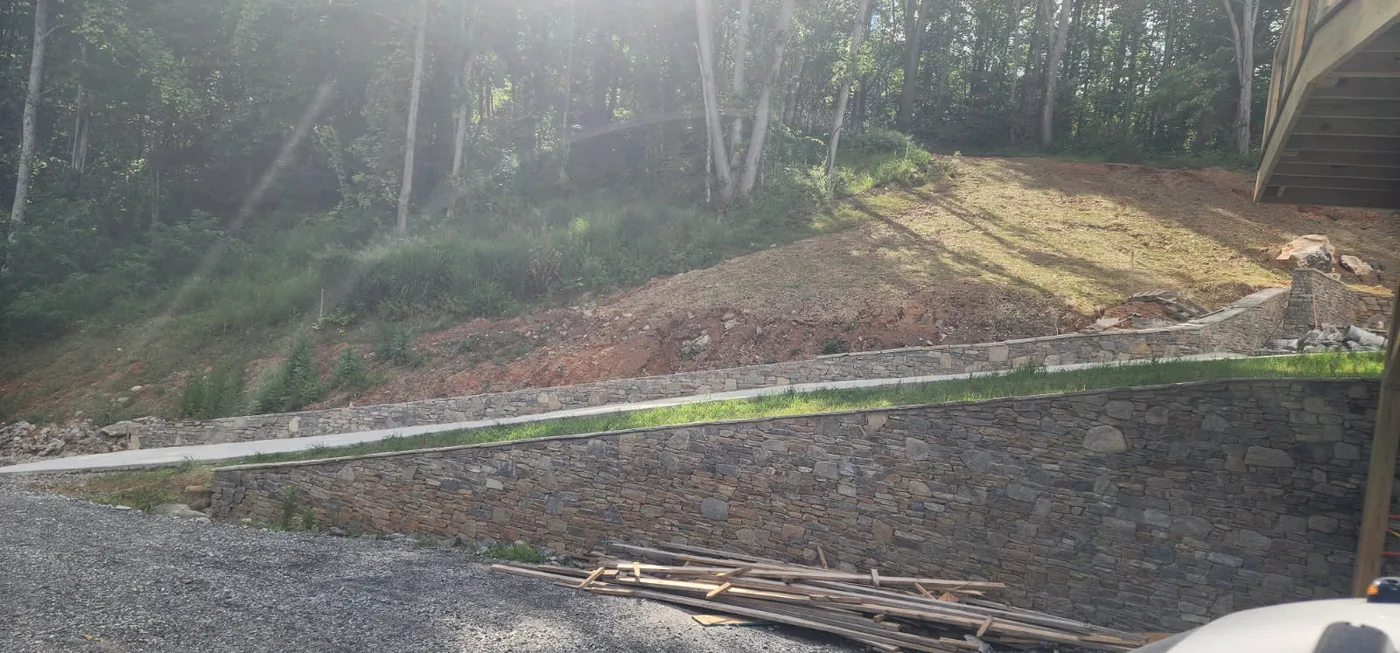
Because so much of this county is hillside, the four-foot line gets tested constantly. A wall stepping a quarter-acre yard down toward a creek, a cut bank behind a West Asheville bungalow, a lakefront lot near Black Mountain: each one is a candidate. A contractor who tells you the wall height does not matter is telling you they have not pulled a permit here. Ask before you sign, not after the excavator is already sitting in your driveway.
It helps to understand why the rule exists in this particular place. Buncombe County soils are largely clay over weathered rock, and on a steep grade that clay holds water after a storm. A wall taller than four feet is carrying serious lateral load, and when it fails it does not fail gently — it dumps soil, stone, and water toward whatever sits downhill. The engineering requirement is not bureaucratic friction for its own sake; it is the county's way of making sure the footing is deep enough, the drainage behind the wall actually works, and the backfill is placed in lifts instead of shoved in all at once. If your lot drops more than four feet from the flat spot you want for a patio or pond to the next flat spot below it, you are in engineered-wall territory whether or not a waterfall is part of the plan.
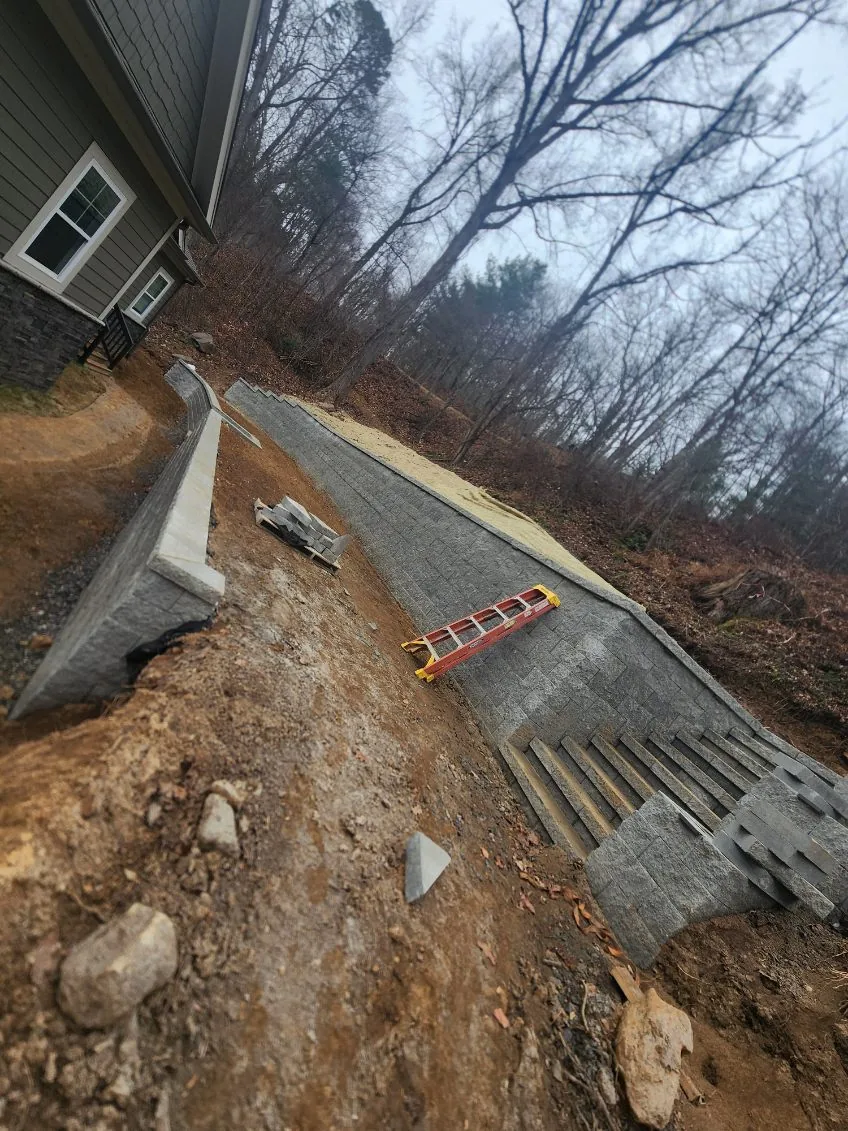
The place this catches people is the middle of a project. You start out wanting a small pond with a spilling boulder, the excavator opens up the bank, and suddenly the only way to make the pond sit level is a wall that is five and a half feet at its tallest point. Now you are into engineering, a permit review, and an inspection sequence that all have to happen before the liner ever goes down. Good builders flag that possibility in the first walkthrough so it is a planned cost, not a mid-job surprise. If a bidder shrugs at the grade and says they will figure it out, that is the bid to be skeptical of.
What Buncombe County projects actually run
These are working regional ranges, not quotes. They assume a typical Asheville-area backyard with reasonable equipment access and soil that is mostly clay over weathered rock.
| Scope of work | Typical NC mountain range | What drives it |
|---|---|---|
| Small recirculating waterfall, no pond | $2,500 – $6,000 | stone size, pump, liner, yard access |
| Waterfall into a lined pond, up to 8x10 ft | $8,000 – $18,000 | pond depth, filtration, boulder count |
| Mid-size cascade with pond and plantings | $14,000 – $32,000 | vertical drop, pump sizing, lighting |
| Retaining wall under 4 ft, integrated | $3,000 – $9,000 | height, cap stone, drainage behind wall |
| Retaining wall over 4 ft, engineered and permitted | $12,000 – $35,000+ | engineering, footing depth, inspection |
| Slope rebuild with terraces and cascades | $30,000 – $60,000+ | grading, wall run, drainage, access |
Depth to rock is the other quiet variable. Two neighboring lots in Haw Creek can need very different footing work, and that difference shows up in the wall line, not the pump line. A lot where the builder hits competent rock at eighteen inches will hold a wall footing cheaply; the lot next door with six feet of soft clay before anything solid means a deeper pour, more concrete, and more excavation time. That is why two bids on what sounds like the same wall can land thousands apart and both be honest.
Access is the third variable that catches out-of-town bidders. A lot on a narrow, switchbacked private drive in the Riceville area may only take a compact machine, which slows every yard of excavation and every stone placement. A flat lot off a county road with a wide gate moves three times as fast. When you compare quotes, ask each bidder what equipment they plan to bring and whether they walked the drive. The number that assumes a full-size excavator on a lot that can only fit a mini is the number that grows.
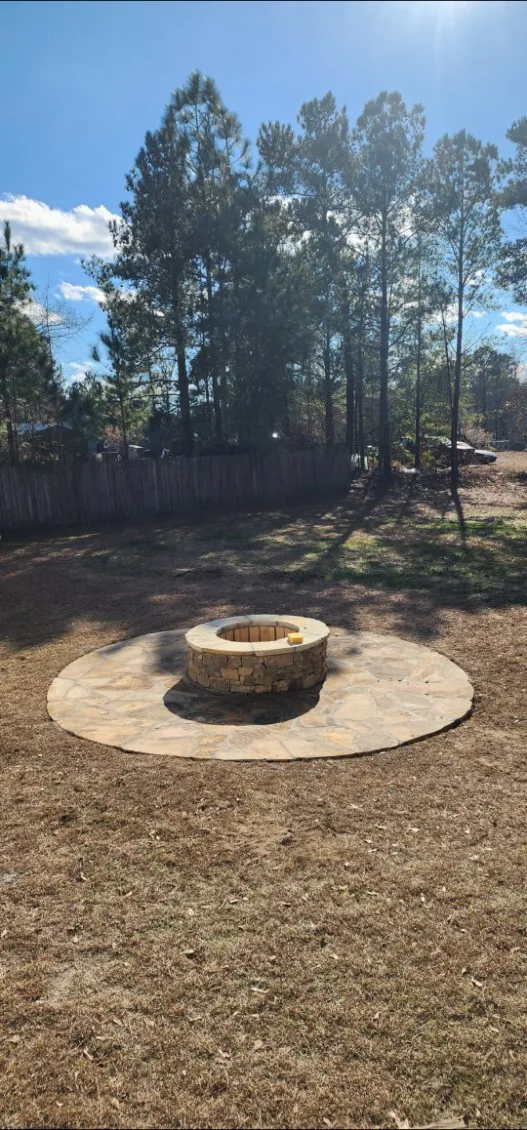
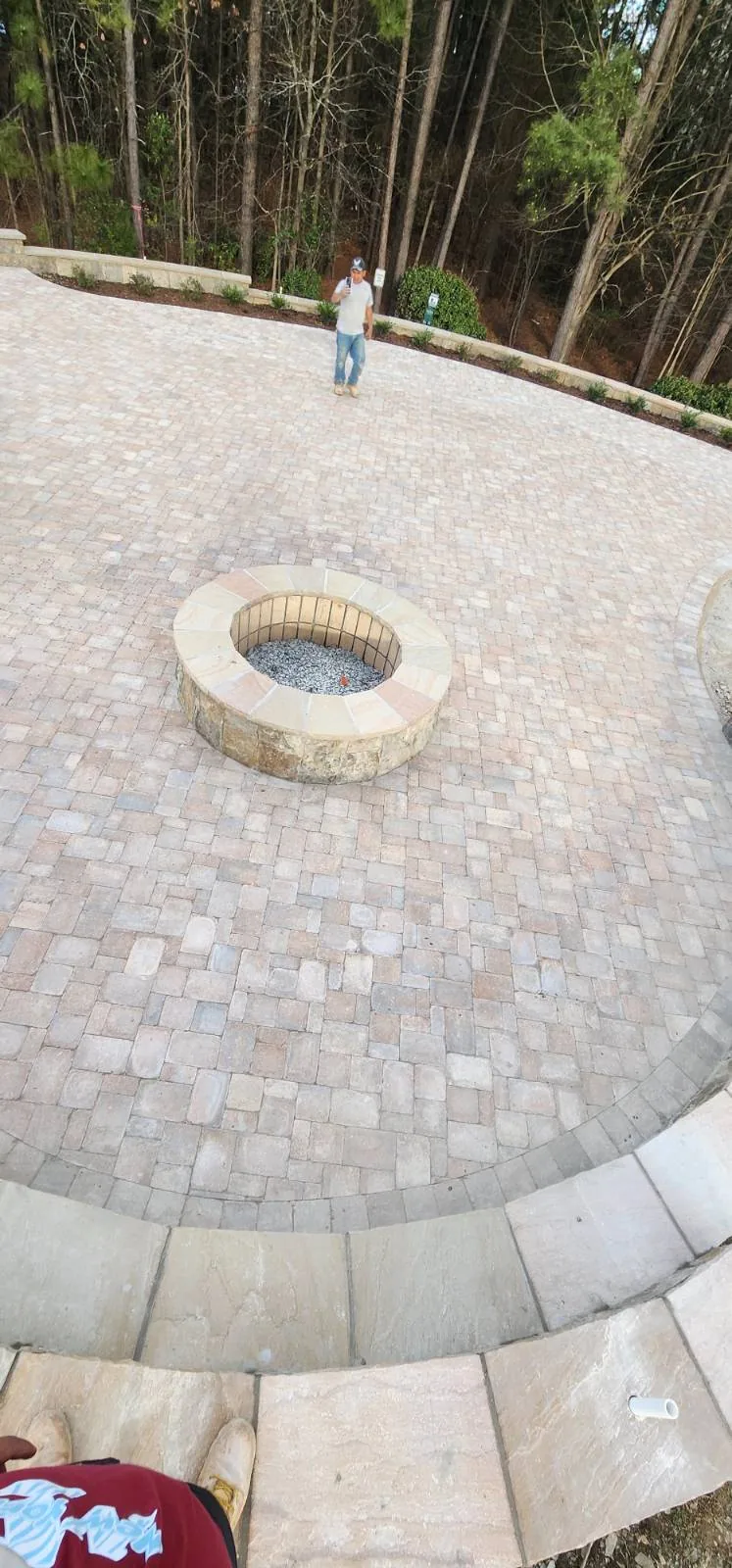
Stone selection also moves the total more than people expect. Fieldstone and boulder that reads as native to these mountains is available locally and tends to be the most economical choice, especially when it matches existing stone on the property. Imported or hand-selected specimen rock adds cost fast, and it usually has to be moved by hand once the machine cannot reach it. If you already have a stone patio or a stone-faced foundation, carrying that same palette into the waterfall keeps the yard reading as one project instead of two.
Why water here is not just decorative
This is a wet county on a steep slope, and the federal record shows it: 19 federally declared disaster events touch Buncombe County across 1973-2026, most of them storm and flood family. That matters for a water feature because anything you build still has to pass stormwater downhill without pooling against a foundation or washing out the neighbor's yard.
Practical rule: a waterfall or pond should be designed to overflow and drain where you want it to, not where gravity decides. The National Weather Service tracks local rainfall and flood outlook, and a contractor who plans for a normal rain will be back after the next training event. Route overflow to a daylight drain, keep the pond edge above the uphill grade, and tie the whole thing to your existing drainage plan. If your yard already ponds during storms, fix that before adding water to it.
The mountains add a wrinkle that flatland builders miss: water that comes off an uphill neighbor's property does not always show up where you expect it. On a graded slope, a storm can sheet across the surface and also move underground through the soil, then surface lower down right where you planned a pond. That is why a good local builder walks the grade above your feature, not just the spot where the water will sit. If there is a swale or a spring line uphill, the feature needs a way to handle that flow before it ever reaches the liner. The EPA has plain-language material on stormwater and runoff that is worth a skim if you want to understand why managing the overflow matters as much as the pretty part.
Freeze-thaw is the other local reality. Western North Carolina sits in a zone where winter nights routinely dip below freezing and daytime sun warms the stone back up, and that cycling is hard on poorly built edges and shallow footings. A pond that is edged correctly and a wall that is footed below the local frost line will ride through it. One that is not will show you the problem in its second or third spring. Ask any builder you interview how they handle winter on a water feature, and listen for a real answer about depth, edging, and pump shutdown rather than a vague reassurance.
Permits, licensing, and where the lines sit
Water features themselves are generally treated as landscaping, not structures. The walls are the exception, and that is what triggers the county review. Structural retaining walls over four feet need an engineered plan, and the county inspects footing, drainage, and backfill before it signs off.
Contractor licensing is separate from the permit. Under North Carolina rules, general contracting work past a certain dollar threshold brings the project into the NC Licensing Board for General Contractors territory, and the top of my cost table can cross that line. The NC Office of State Fire Marshal publishes the statewide residential code that counties like Buncombe enforce, and it is the document your contractor should be able to point at when the four-foot question comes up. If they cannot, they are guessing.
Two other code references are useful when you are checking a builder's seriousness. The International Code Council publishes the model codes that most of the North Carolina residential code is built from, and the soil and foundation provisions there are what an engineer applies to your wall. On the financing and site side, if the improvement is part of a larger property project, HUD has consumer guidance on home improvement that is worth reading before you sign anything large.
Here is how the inspection sequence usually runs for a permitted wall under a water feature. The engineer's stamped plan goes in with the permit application. Once approved, the footing is dug and typically inspected before concrete is placed. Drainage behind the wall — the gravel, the drain pipe, the filter fabric — is the next checkpoint, because a wall with no way to relieve water pressure is a wall that leans. Only after that does backfill go in, in lifts, and only after backfill is signed off does the pond excavation and liner work proceed. That order matters. Skipping ahead to make the waterfall look finished faster is exactly how walls fail two winters later. A builder who understands the sequence will schedule it that way without being told, and they will tell you up front that the permit adds calendar time, not just money.
Keeping the number honest
Three things protect a waterfall budget in this market:
- Get the wall question answered first. Before you talk pumps and lighting, ask every bidder whether your grade needs a permitted wall. That answer sets the floor of the project.
- Price the wall per linear foot, the waterfall per feature. Walls move when digging reveals rock; per-foot pricing keeps change orders fair.
- Match stone to the rest of your hardscape. If you are already planning a patio, one stone palette and one crew save real money versus two projects. The flagstone patio cost guide covers how that combines, and the stone waterfall and pond service page shows the finish quality difference between builder-grade and crafted.
If your yard needs a wall on its own, outside any water feature, the retaining wall guide is the honest starting point — most waterfall budgets in Buncombe County are really retaining wall budgets in disguise.
One more habit worth building: ask each bidder to separate the number into three buckets — the wall, the water, and the finish. When a single lump sum hides all three, you cannot tell whether a change is fair or not, and you have no way to compare bids that took different approaches to the same slope. A builder who is willing to break it down is usually the one who has done this enough times on these specific hills to know where the money actually goes. That transparency, more than any single number, is what keeps a mountain water feature from turning into an open-ended bill.