How Clyde's lot shapes decide the repair
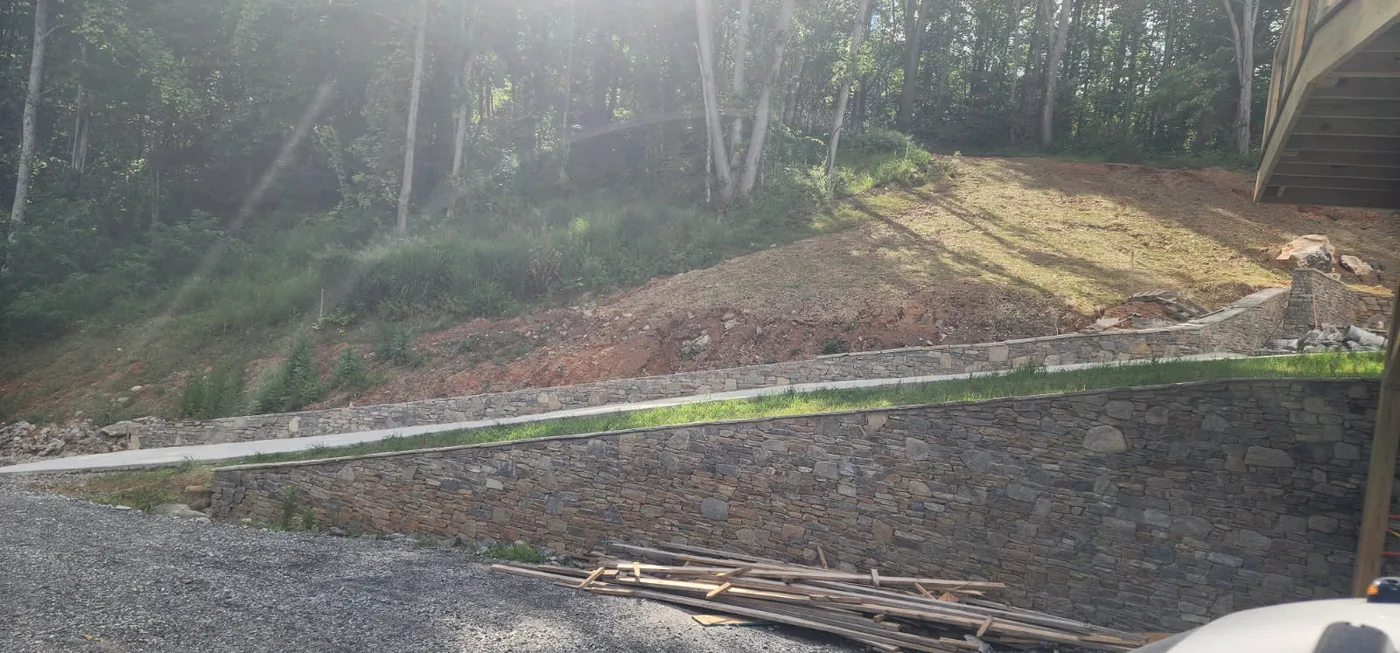
Clyde sits in the Pigeon River valley in Haywood County, and the housing tells you what the ground is doing. Older homes cluster on narrow, long lots that step up a bank behind the house, with a timber or stacked-block wall holding the hill off the foundation. Newer builds spread toward the valley edges where the cut bank is taller and the fill behind the wall was placed by the same crew that built the house. Both kinds of walls move — but for different reasons, and the repair scope is not the same.
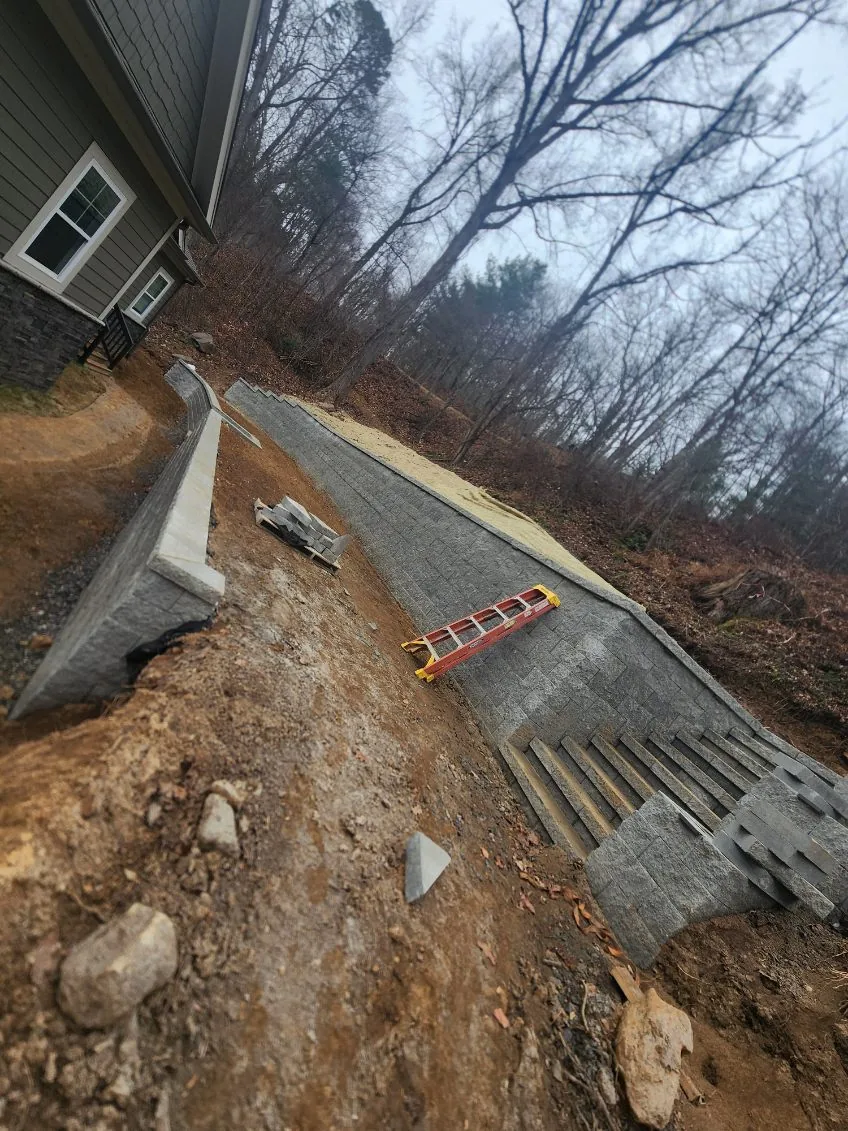
The first one fails on water. A six-foot timber wall at the back of a quarter-acre Clyde lot sheds roof runoff, driveway runoff, and an uphill neighbor's runoff all at once. The wood rots at the soil line, the wall bows out, and posts start to lean. The second kind fails on design: tall block walls built with too little geogrid, or with backfill that was never compacted in lifts, tip rather than bow. If you're still sorting out what you own, the retaining wall repair overview walks through the failure modes before you call anyone.
What you won't see in Clyde much: the wide, gently sloped lots that make some mountain towns easy. Here, almost every wall is doing real work.
When a wall is worth repairing and when it isn't
Not every leaning wall needs to come out. A timber wall under four feet with surface rot on a few boards and a slight lean is usually a repair: replace the failed members, fix the drainage behind it, and it holds for years. A block wall that has rotated more than a couple of inches at the top, has visible cracking through the courses, or has soil pushing out at the base is a rebuild, because the grid and backfill are already compromised and patching the face hides the actual problem.
Height matters to both cost and code. In North Carolina, retaining walls above a threshold height generally require engineering and may trigger permitting review, and any wall that supports a building's foundation load falls under stricter rules. The NC Licensing Board for General Contractors sets the dollar threshold at which a project needs a licensed general contractor, so a large rebuild in Clyde can cross into licensed-work territory even if the original wall was a homeowner job. Ask any bidder how they handle that line.
Clyde repair cost picture
Walks and small fixes sit at the bottom, full rebuilds of tall engineered walls sit at the top, and drainage correction is the line item most homeowners forget. The working table for the county is in the Haywood County retaining wall cost breakdown; the short version is below.
| Scope | Typical range | What drives it |
|---|---|---|
| Drainage correction only (weep holes, back drain, regrade) | $600–$2,200 | Wall length, slope above, where water currently goes |
| Timber wall repair — replace failed boards, reset posts | $1,200–$4,000 | Rot depth, number of posts, height under four feet |
| Block wall rebuild — under four feet, no engineering | $2,500–$6,500 | Length, cap, whether geogrid must be added |
| Block wall rebuild — four to six feet, engineered | $5,500–$12,000 | Engineering letter, geogrid lifts, excavation access |
| Tall wall or foundation-load wall rebuild | $12,000–$30,000+ | Engineer stamp, soils report, staging on tight lot |
On Clyde's tighter lots, staging and machine access add real cost. A wall a Bobcat can reach from the driveway is a different job than one where every block is carried through a side gate.
Water, slope, and the FEMA record
Haywood County has seen 19 federally declared disaster events across a record span of 1973-2026, and the dominant family is storm and flood. That history is why retaining wall repair in Clyde is a water problem as often as a structure problem. When the ground above a wall is saturated, the pressure it puts on the wall multiplies. Fix the wall without fixing the water and you'll be back in the same spot the next heavy summer.
The practical steps: clean and enlarge the weep holes, verify the back drain actually drains to daylight instead of into the neighbor's yard, check that the gutters discharge well away from the top of the wall, and look at whether the uphill slope is graded toward or away from the wall. The EPA has plain-language guidance on stormwater management for homeowners if you want the background. None of this is glamorous, and it is the difference between a repair that lasts and one that doesn't.
Picking a crew in Clyde
Two checks separate the crews that build walls from the crews that sell them. First: does the bid include the drainage scope, in writing, as a line item? If it doesn't, it isn't a real bid for a Clyde wall. Second: for anything over four feet or carrying a foundation load, does the bid say who stamps the design? The International Code Council publishes the model codes that most North Carolina wall design references, and a reputable crew can tell you which edition the town is working from without pausing.
Ask for references on walls of similar height on similar slopes. A crew that has only done flat-lot garden walls is not the crew for a six-foot engineered wall on a bank. When you've got the basics sorted, the Clyde retaining wall contractor guide covers what a first visit should include and how to compare the quotes you get.