What actually drives the number on a Mills River lot
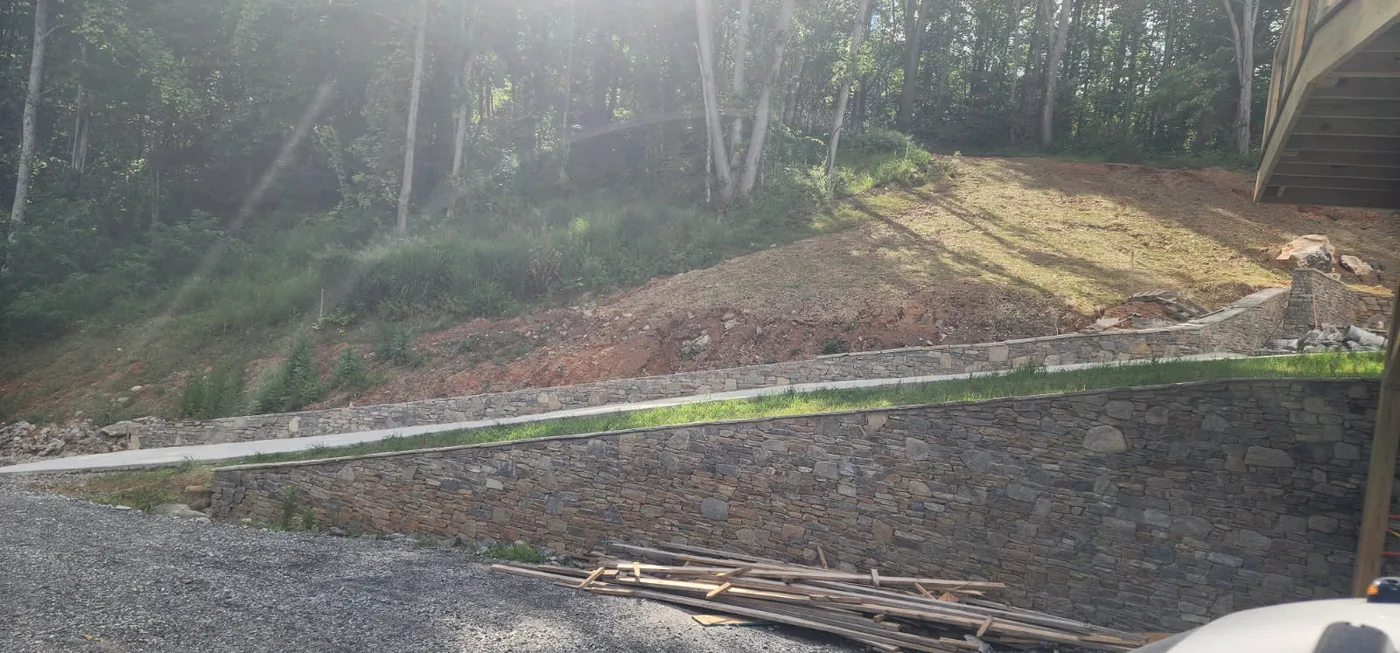
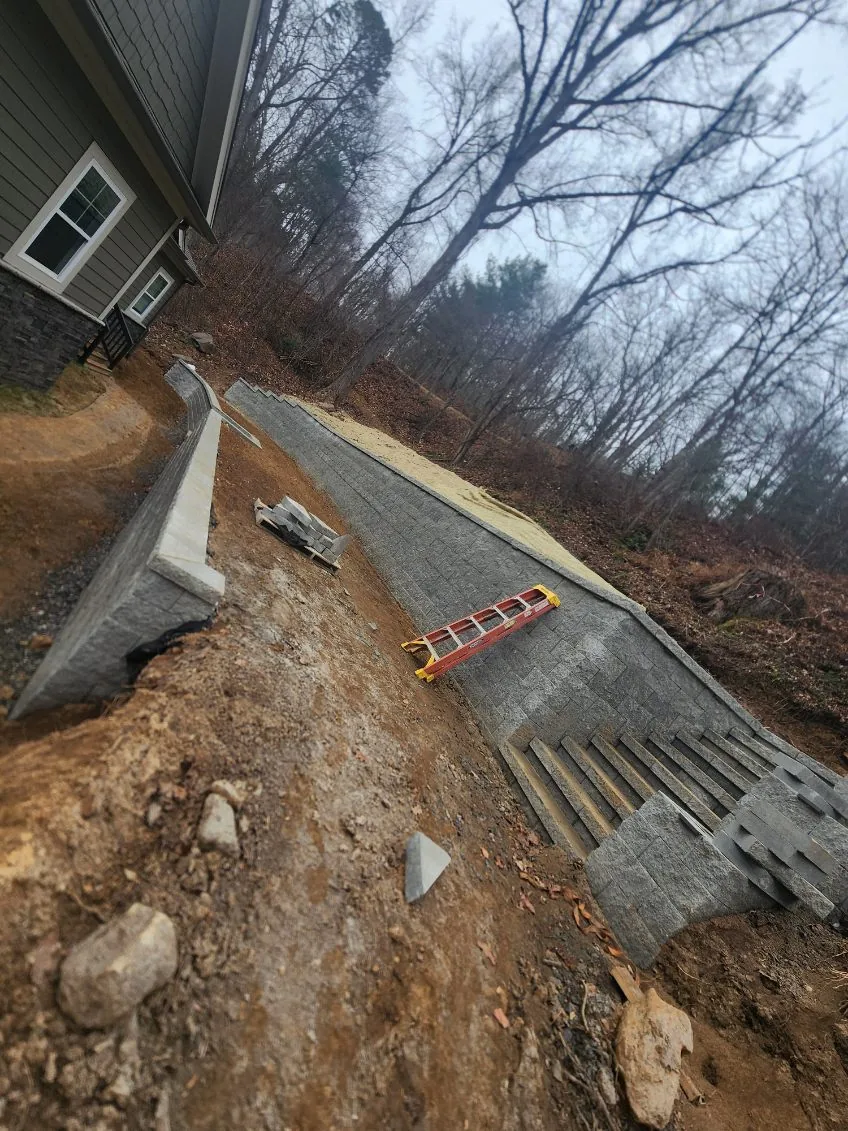
The first thing a real quote does is separate the pit from everything around it. A fire pit builder in Mills River is usually pricing three things at once: the pit itself, the flat ground it needs to sit on, and the gas line that feeds it. On the flatter bottomland off Highway 191, the ground work can be almost nothing. On the rising lots toward the Rugby Road side of the county, the retaining required to make a level ring around the pit can cost more than the masonry.
The gas run is the silent price mover. A pit placed near the house where the meter already is might need 20 feet of trenched line. A pit set out at the edge of a pasture view might need 150 feet, a trench deeper than a spade, and a permit inspection. That single line item can swing a project by two or three thousand dollars, and it is the one homeowners most often forget to ask about up front.
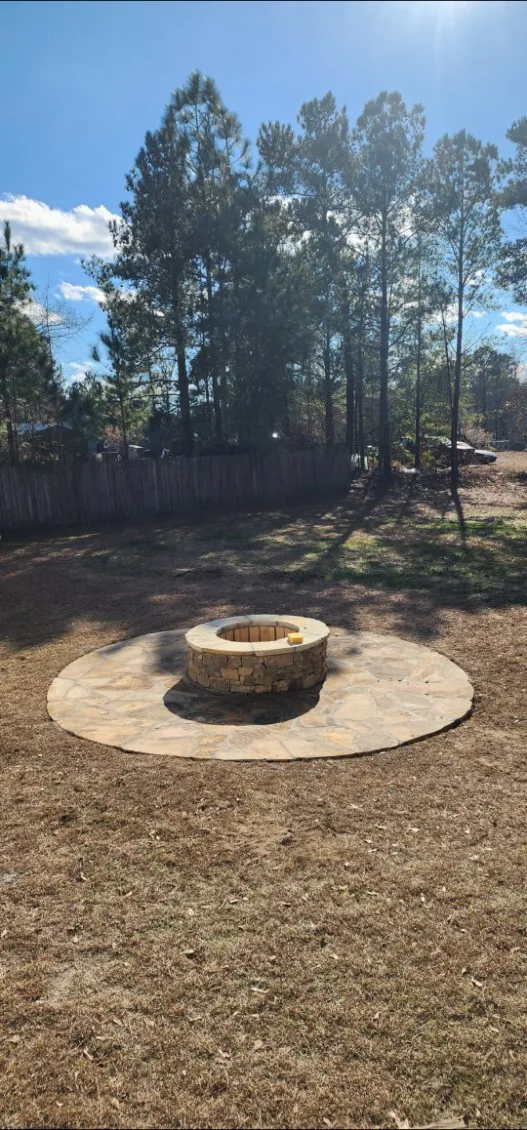
Stone choice is the third lever. Mills River sits in a county with real local stone available, and a dry-stacked fieldstone ring reads differently than a manufactured block kit with veneer. It also prices differently. The honest answer on which is right depends on how you will use the pit and how the rest of the house is finished, not on which one a salesperson prefers to sell. Our fire pits overview walks through the material families in more detail.
The cost table: scope versus range
The ranges below reflect what built-in masonry and hardscape fire features realistically cost across Henderson County when the work is done to code and the site is not a surprise. Treat them as bands, not quotes. A real number requires a site visit.
| Scope | Typical range | What moves it |
|---|---|---|
| Simple stacked-block kit on a flat pad, no gas | $1,200-$2,500 | Block type, cap stone, whether the pad already exists |
| Dry-stacked fieldstone pit, natural wood burn, flat lot | $3,200-$6,000 | Stone source, ring diameter, hearth apron |
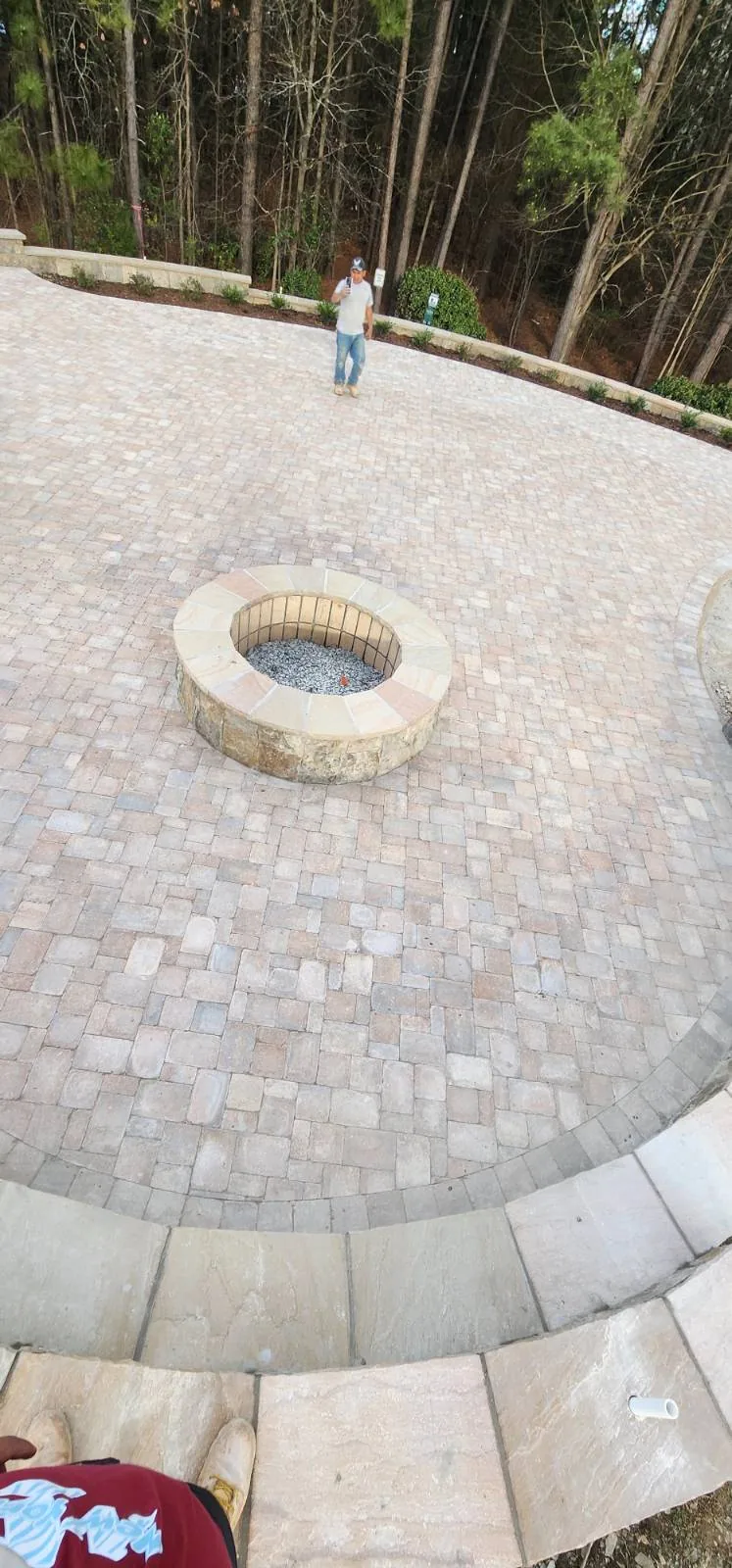
| Mortared stone pit with gas line from nearby meter | $5,500-$9,000 | Gas run length, trench depth, shutoff and key valve |
| Gas pit with long run, retaining, and integrated seating wall | $9,000-$16,000 | Grade change, wall linear feet, seat cap material |
| Full outdoor fireplace or dual-purpose masonry structure | $12,000-$28,000 | Chimney height, footing design, veneer and firebox spec |
Anything involving a gas connection falls under state oversight. The NC State Board of Examiners of Plumbing, Heating and Fire Sprinkler Contractors is the authority on who may legally make that connection, and a builder who tells you the gas side is no big deal is telling you something useful about how they work. Structural masonry above a certain scope also triggers general contractor licensing thresholds set by the NC Licensing Board for General Contractors. Ask the question before you sign.
Grade, drainage, and why this county punishes shortcuts
Henderson County gets serious rain, and the federal record backs that up: 16 declared disaster events touch this county across 1978-2026, mostly storm and flood family. That history matters for a fire pit because a pit is a hole in the ground that collects water. If the ring is set on ground that does not drain, the mortar spalls, the stone shifts, and the pit that looked perfect in October looks like a mistake by March.
The fix is boring and cheap if it happens at build time: set the pit on compacted base above the surrounding grade, direct runoff away from the ring, and never let the pit become the low point of the yard. If the yard naturally sheds toward the pit location, the builder needs to address that with grading or a swale before anything is laid. This is the same logic that governs retaining wall work in Mills River, and crews that do both tend to get it right on the first pass.
Site work on a sloped lot is where the budget conversation gets real. Building a level ring on a 10-degree slope means either cutting into the hill, building up the downhill side, or both. Each has a cost, and each has a look. A good builder shows you the options on paper before breaking ground, because retrofitting drainage or retaining after the pit is built costs more than doing it right the first time.
Stone, fuel, and the decisions that outlast the build
Two choices will define how the pit ages. The first is fuel. Wood-burning pits are simpler, cheaper to build, and produce smoke that neighbors in tighter subdivisions may not appreciate. Gas pits cost more up front, need a licensed connection, and burn clean and instant. Many Mills River lots have the space for wood, but homeowners increasingly choose gas for convenience. There is no wrong answer, only a wrong answer for your lot and your habits.
The second is stone. Local fieldstone has weight and character and matches the region. Manufactured stone is uniform, lighter, and often cheaper on long walls. For a fire pit specifically, the stone must handle heat cycling, which rules out some veneers regardless of how they look new. The International Code Council publishes the standards that govern masonry and outdoor fireplace construction, and a builder who knows them will steer you away from a material that will crack in year two. The EPA also maintains guidance on outdoor burning and air quality that is worth a look if you plan to burn wood often.
How to read a bid before you commit
A complete bid for a Mills River fire pit names the stone and its source, states the ring diameter and wall thickness, specifies the footing or base depth, lists the gas run length and who pulls the permit, and states who is responsible for restoring the yard after. A bid missing any of those is not a bid, it is an estimate, and the difference will show up as a change order.
Compare at least two bids line by line, not on total alone. A low total that omits the gas permit or the base compaction is not cheaper, it is just incomplete. If the retaining around the pit is significant, cross-check against our Henderson County retaining wall cost breakdown so you can see whether the wall portion of the bid is in line. Then schedule the site visit. The number that matters is the one written after someone has stood on your ground.