The order a Lake Junaluska patio actually gets built in
Most Lake Junaluska yards don't offer a clean rectangle. The community sits along the lake edge in Haywood County's mountain valley, and lots that look level from the street often drop toward the water or step up toward the road. That's why the schedule matters as much as the stone: on this terrain, a crew that sets flagstone before it has solved drainage is finishing a patio that will heave, settle, and shed joints within a few winters.
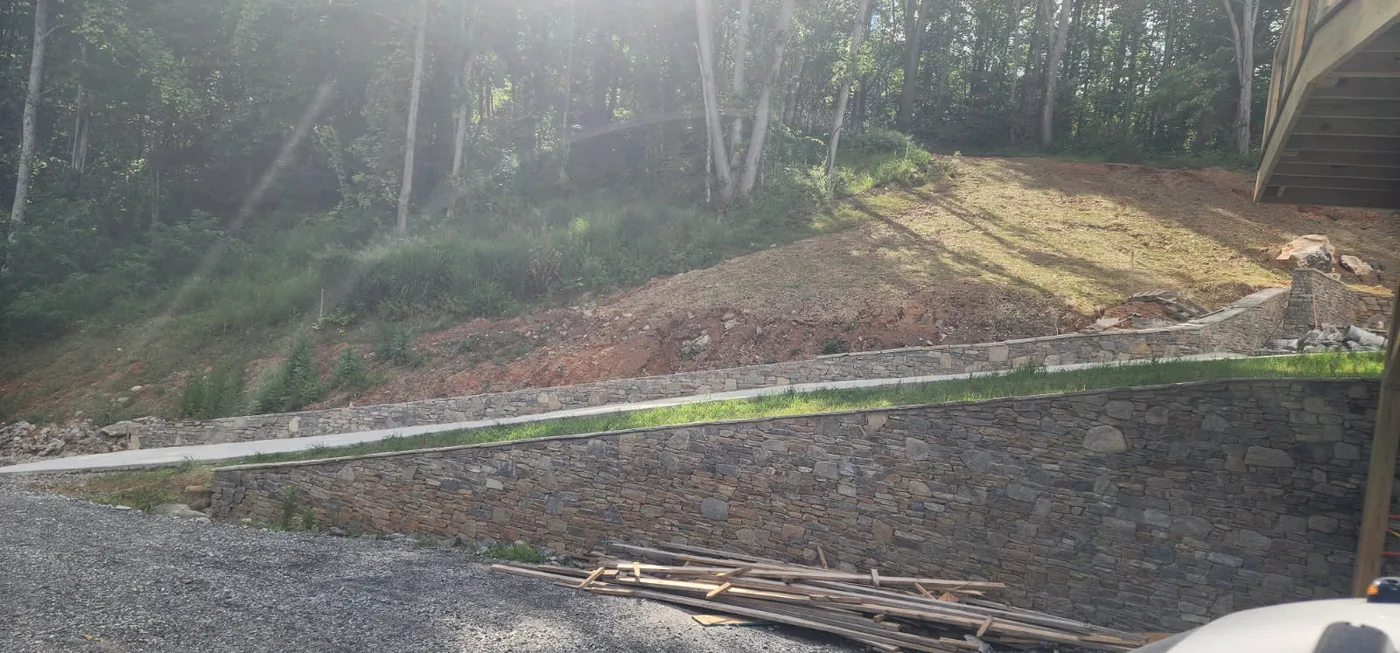
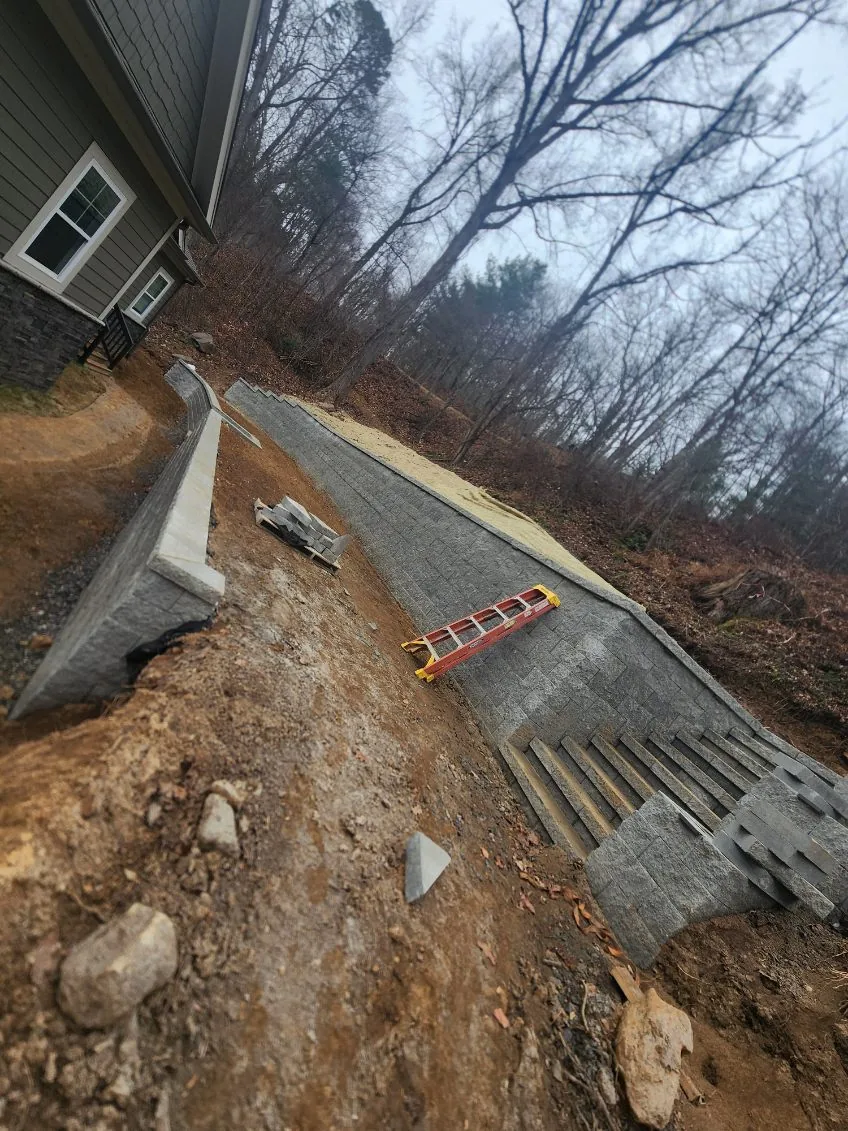
Here's how a typical job sequences. Days 1–2: walk the site, shoot grades, call 811, and locate irrigation and any buried lines. Days 2–3: excavation to subgrade. On a Lake Junaluska slope lot, this is usually the step that surprises homeowners, because a patio that meets grade on the lake side needs depth on the uphill side. Days 3–7: base installation in lifts, compacted, with a drainage plane. If the yard drops more than about 18 inches across the patio footprint, retaining wall contractors in Lake Junaluska should be involved before stone goes down, not after. Days 7–12: stone set on a bedding course. Days 12–20: joints, edge restraint, final grading, and planting repair. Two to four weeks is normal. Straightforward flat work runs shorter. Tiers, curves, and an integrated wall run the full four and sometimes beyond, because material lead times on natural stone can add a week on their own.
Why the base and drainage decide the price here
Lake Junaluska's wet side is legitimately wet. The federal disaster record for Haywood County — 19 declared events spanning 1973-2026 — is dominated by storm and flood events, and that history shows up in local yards as saturated subgrade every spring. A patio built on frozen or saturated soil fails fast. The practical answer is a deeper, better-drained base than flatland patios require, and that's where budget goes that homeowners don't initially expect.
Water management has a code dimension too. The International Code Council standards that local permitting references treat site drainage as part of the building envelope, not an afterthought, and that framing is honest here. Get grading, gutter discharge, and downslope flow handled, and the patio has a chance. Skip it, and the flagstone becomes a decorative lid on a mud pit.
Flagstone patio scope and realistic Haywood County pricing
These ranges reflect what regional crews charge for materials and labor on mountain-valley lots. Treat them as planning bands, not quotes — access, stone type, and wall work move the number a lot.
| Scope | Typical range | Notes |
|---|---|---|
| Small patio, 150–250 sq ft, simple shape, at grade | $5,200–$9,000 | Assumes reasonable access and no significant retaining |
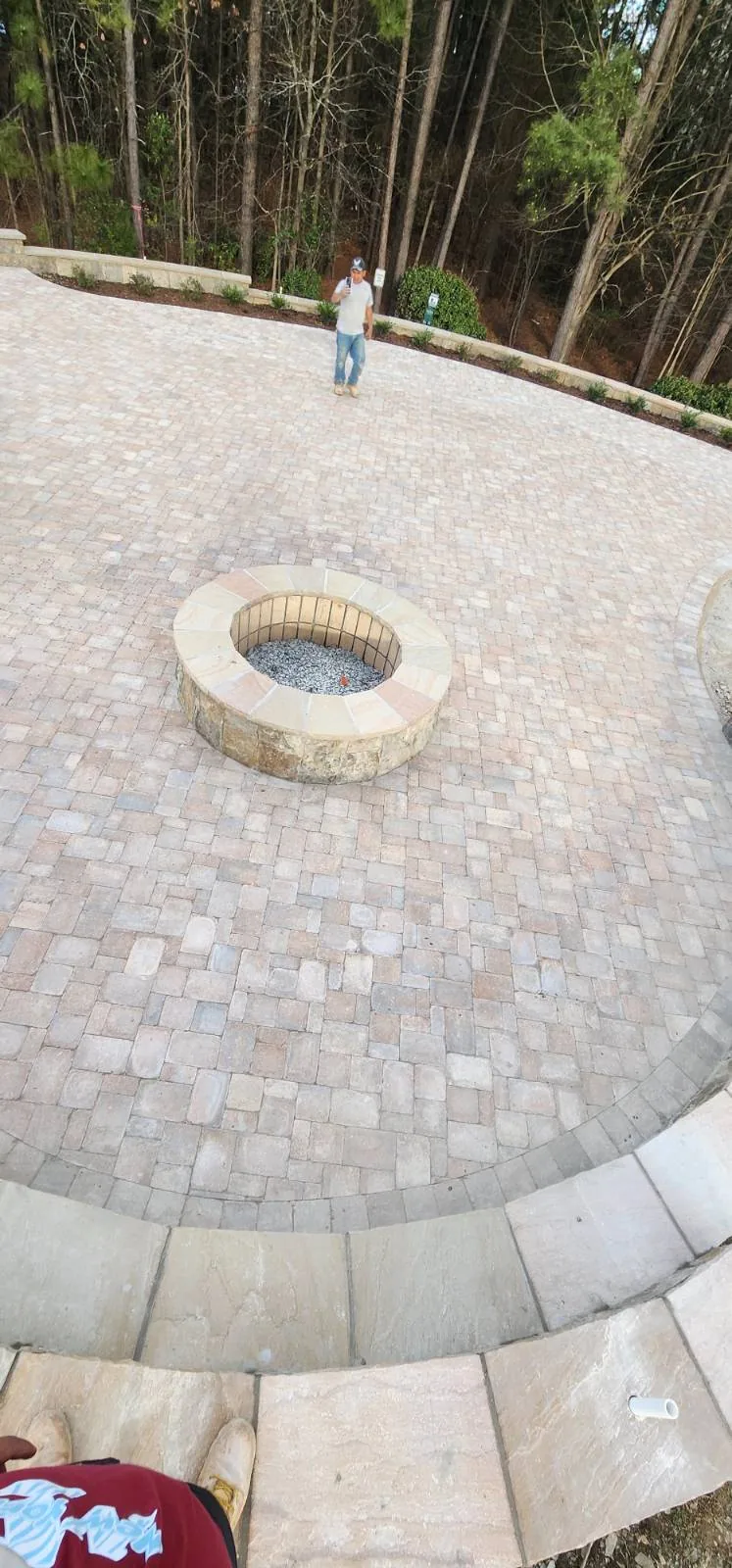
| Standard patio, 300–500 sq ft, natural stone, curves | $9,500–$16,500 | Cuts, thicker base, joint detailing |
| Integrated retaining wall or tiered build | Add $2,000–$8,000+ | Priced per wall, height-dependent; see the Haywood County retaining wall cost table |
| Drainage additions (French drain, gutter routing, regrading) | $800–$3,500 | Almost always worth it on sloped lots |
| Sealing, joint stabilization, or repair of an existing patio | $500–$2,400 | Depends on how much stone is reset |
Nothing on that table is a flat rate, and any bid that arrives as one number without a scope breakdown deserves a second look.
Stone choice, freeze-thaw, and what holds up here
Haywood County sits at an elevation where winter actually matters — freeze-thaw cycling is real through the cold months, and it separates stone that performs from stone that spalls. Locally common options include Tennessee fieldstone and Pennsylvania bluestone (a dense, tight-grained sandstone that handles wet-dry cycling well), plus regional sandstone quarried in the mountains. The stones aren't interchangeable from a cost or lifespan standpoint, and a crew that only carries one material may steer you toward it regardless of your site.
Ask two questions. What does the bedding look like — sand-set, sand-set with stabilizer, or mortar? And how are the joints finished? On a slope lot the answers should be site-specific, not a default. On a wet, freeze-exposed site, that decision is the difference between a patio that needs a repair visit every few years and one that just quietly works.
Checks before you sign, and the paperwork side
Ask for references on sloped or waterside lots in the area specifically — a flagstone patio in a flat subdivision is a different job. Ask how they handle wall work over a certain height; retaining structures above a threshold typically fall under general contractor rules administered by the North Carolina Licensing Board for General Contractors, and a crew that knows that boundary is a crew that won't hand you a problem later.
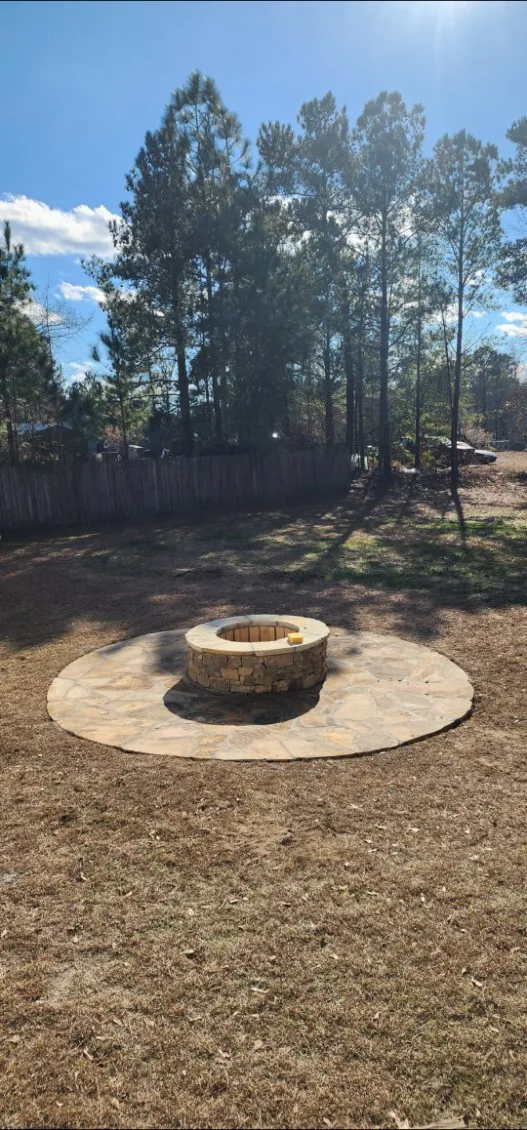
If the plan includes gas lines to a fire feature or outdoor kitchen, that work falls under the NC State Board of Examiners of Plumbing, Heating and Fire Sprinkler Contractors, so a licensed subcontractor should be in the plan from the start — not discovered mid-build. Get everything in a written scope with the base depth, drainage plan, and stone specified, and check the flagstone patio guide for the full question list before you compare bids. Compare scope first, price second. Every patio built here on a good base started with somebody asking those questions.