Read the wall before you price the pavers
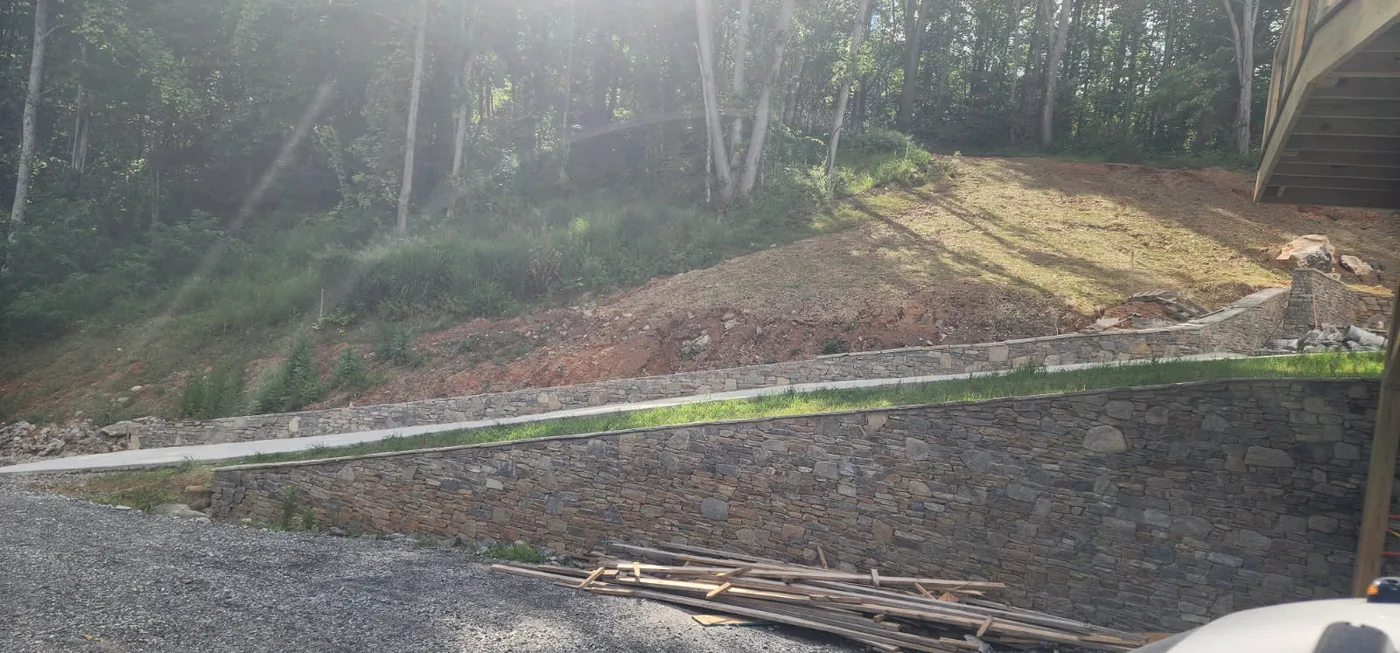
Etowah sits on the transition ground between the French Broad valley and the Blue Ridge escarpment, and that terrain shows up in every backyard patio here. A property off Etowah School Road might drop eight feet from the house to the tree line; a lot near the golf course can be nearly flat until it isn't. When a homeowner calls about a sagging or heaved patio, the first thing worth doing is not measuring pavers — it's reading what is under them.
Three things decide repair versus rebuild: whether the subgrade is still draining, whether the base aggregate is intact or pumping mud, and whether any retaining structure holding the patio in place has moved. If the base is sound and only the top course has shifted, a lift-and-relay is often a fraction of a new install. If the base has failed or the retaining wall behind it is bulging, adding pavers is spending money on a symptom. See how we frame the decision on our paver patio overview before assuming replacement.
The reading itself is not glamorous. It means pulling a few pavers at the low corner and at the high corner, digging a small test hole at each, and looking at what comes out. Clean, angular aggregate that still locks together when you squeeze it is a good sign. Rounded, muddy gravel that squishes is a bad one. On Etowah's hillside lots, the test hole at the low corner usually tells the story first, because that is where water has been arriving for years.
Henderson County pricing, scope by scope
Local pricing tracks scope far more than material brand. The table below reflects realistic Henderson County bands for Etowah-area work; steep lots and complex drainage push toward the top of each row, straightforward flat lots toward the bottom.
| Scope | Typical range | What drives the number |
|---|---|---|
| Small patio repair / relay (up to ~200 sq ft) | $800–$3,500 | How much base is reusable, edge restraint condition, paver salvage rate |
| New patio, simple grade (300–500 sq ft) | $4,000–$9,000 | Excavation depth, base thickness, paver tier, drainage tie-in |
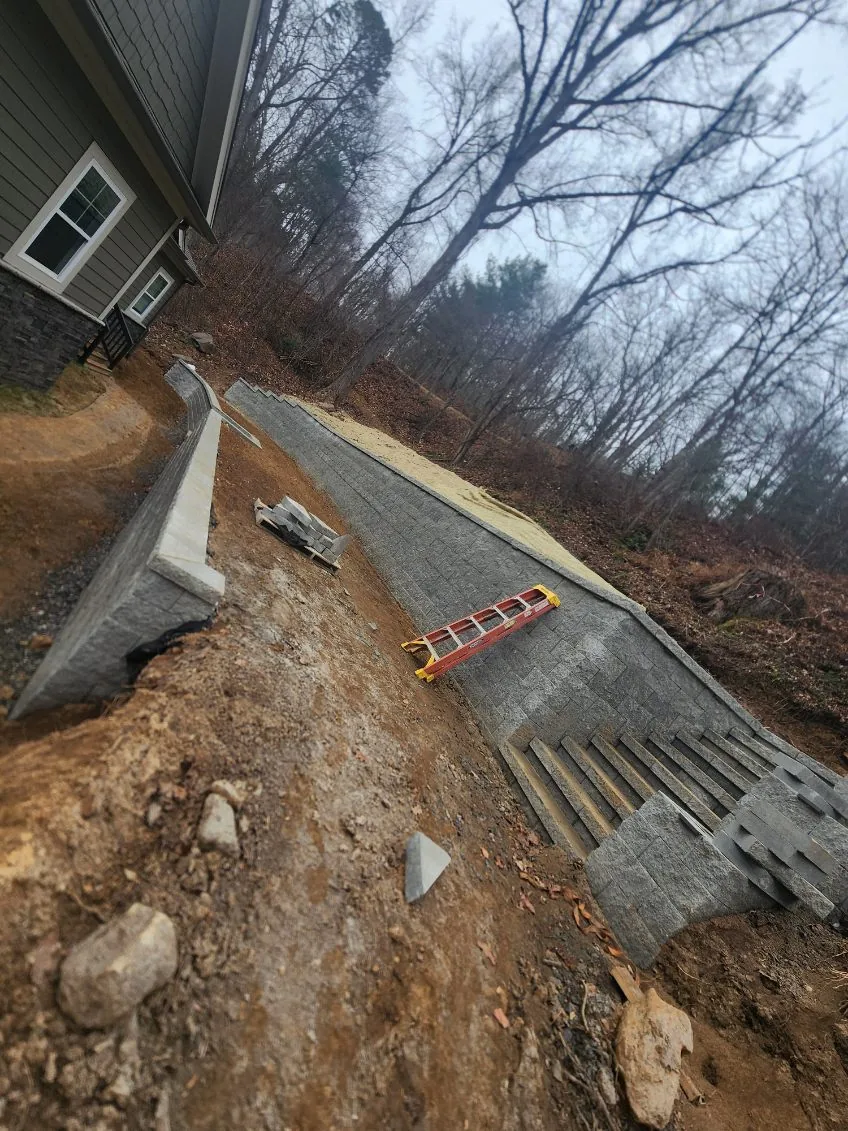
| New patio, slope or multi-level (400–700 sq ft) | $9,000–$18,000 | Retaining and step work, haul-off, engineered transitions |
| Full rebuild over failed base | $11,000–$22,000+ | Demo, geotextile, compacted base, drainage correction, new surface |
| Drainage correction as a line item | $1,200–$5,500 | French drain length, dry well, regrade, outlet location |
Rebuilds almost always carry drainage as a separate line, and any quote that folds it into "miscellaneous" is one to question. For walls specifically holding a patio in place, the numbers and decision process live on our retaining wall cost page for Henderson County.
Two Henderson County realities drive the spread inside each row. The first is haul-off: on lots where the only machine access is a narrow side yard or a driveway with a slope, excavation spoils come out bucket by bucket, and that labor shows up in the price without a line item calling it out. The second is the age of the housing stock. Around Etowah and the older stretches of the county, patios were sometimes laid on a thin sand bed with no real aggregate base at all, and those jobs behave like new construction once you open them up, even though the patio on top looks twenty years old.
Water is the whole story on Etowah slopes
Henderson County's federal disaster record — 16 declared events across 1978-2026 — is dominated by storm and flood family events, and the pattern matters here because Etowah's hillside lots shed water onto patios that were sited as if the ground were flat. When a patio heaves in one corner and settles in another, that is rarely a paver problem. It is water finding a path it did not have before.
Drainage on a sloped patio has to be designed at the base layer, not sprinkled on afterward. That means correct fall away from the house, geotextile separation so fines don't migrate into the aggregate, and an outlet that does not just dump onto the neighbor's grade. The International Code Council publishes the residential provisions most North Carolina jurisdictions adopt, and drainage requirements there exist because patios, footings, and walls all fail the same way when water is ignored.
On Etowah ground specifically, the failure usually starts uphill of the patio. A downspout that discharges at the foundation, a driveway that sheets water across the yard, or a spring that surfaces after a wet winter all deliver water to the same low corner season after season. Regrading that path — or capturing it in a French drain with a real outlet — often costs less than the rebuild it prevents. Where a drainage outlet discharges matters too; the U.S. Environmental Protection Agency maintains guidance on managing stormwater runoff, and the principle that water should be slowed, spread, and directed rather than dumped is the one worth applying on any Etowah hillside lot.
When the work crosses into licensed territory
Straight paver patios on grade are typically a landscaping scope. But once a project involves a retaining wall above a threshold height, structural tie-ins, or utility relocation for drainage, the licensing picture changes. North Carolina draws that line clearly, and the NC Licensing Board for General Contractors is the authority on when a project needs a licensed general contractor. If your patio rebuild includes a tall retaining wall or regrading that moves water toward a structure, confirm who is licensed for which portion before work starts.
Where drainage work touches irrigation, exterior plumbing, or anything tied into a home's water system, the NC State Board of Examiners of Plumbing, Heating and Fire Sprinkler Contractors governs the trades involved. This is not a reason to avoid a project — it is a reason to ask one clear question during bidding: who holds the license for each part of this scope?
For most Etowah patio repairs, none of this comes into play, and saying so honestly is part of the job. A lift-and-relay on a failing edge course is not a licensed trade. But a rebuild that adds a two-tier patio cut into a slope, with a wall holding the upper tier and a drain moving water around the house, is a different project, and the homeowner deserves to hear that distinction before signing anything.
What the site visit should actually cover
A serious Etowah patio quote starts with a walk of the whole drainage path, not just the patio footprint. Expect the estimator to look uphill of the patio, at the house foundation it drains toward, at any existing retaining wall, and at where the water goes when it leaves. Expect probing of the existing base to see how deep the aggregate runs and whether it is still compacted. Expect a conversation about what can be salvaged.
If the visit produces a per-square-foot price within ten minutes and no discussion of base or drainage, treat that as a sales visit, not an estimate. Homeowners comparing multiple quotes on hillside lots should also read our retaining wall contractors page for Etowah, since patio and wall work on slope almost always travel together.
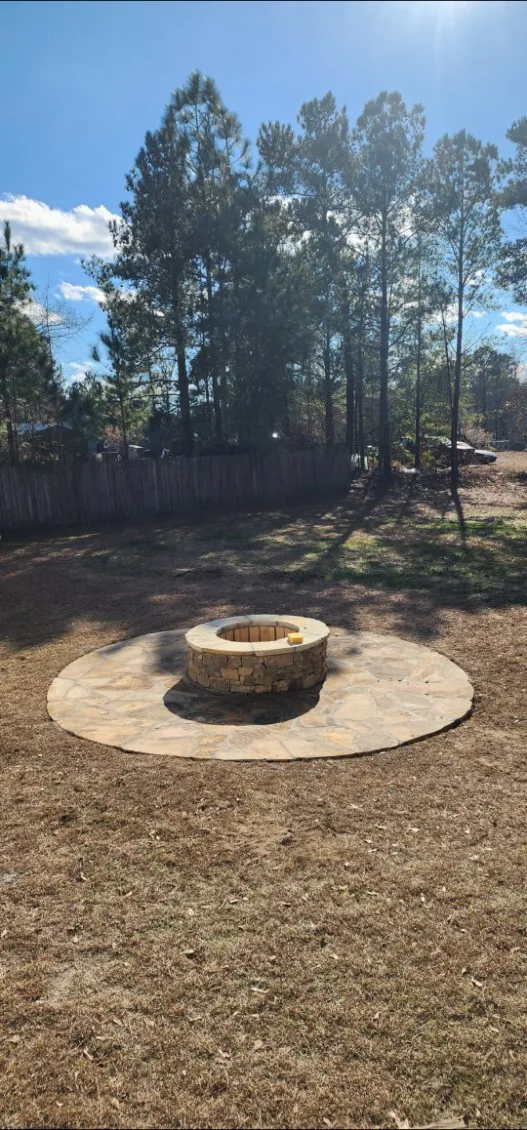
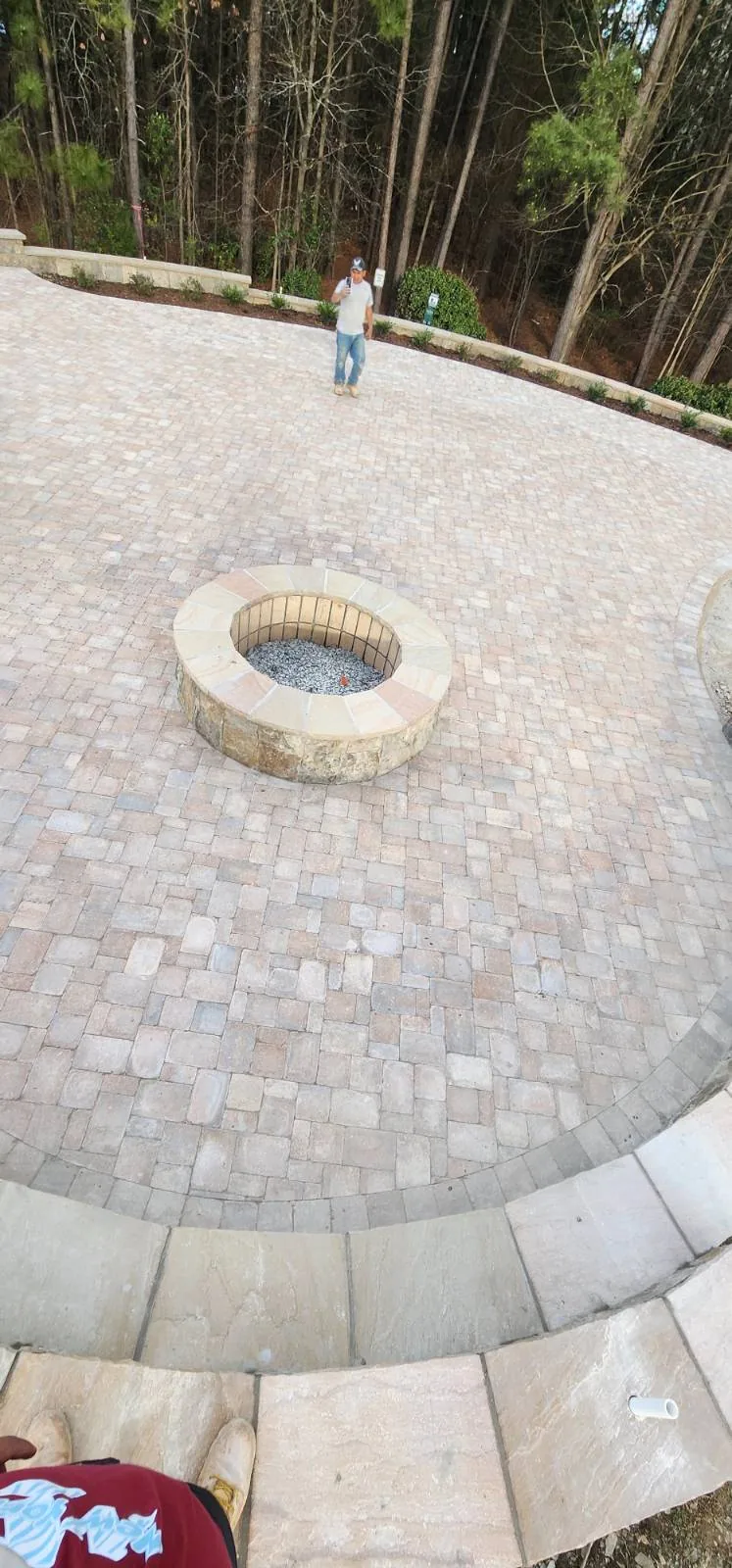
One more thing worth watching for: whether the estimator asks what you want the patio to do. A flat grilling pad, a dining terrace off the kitchen door, and a path down to a fire pit are three different builds on Etowah ground, and the pricing follows the build. A quote that prices the square footage without asking the question is a quote that will change once the work starts. Ask for the scope in writing, including what happens to excavated material and how the drainage outlet is finished, and compare quotes on that basis rather than on the bottom number alone.