What stone veneer actually is (and what it isn't)
Stone veneer is a decorative cladding — a thin layer of natural or manufactured stone adhered to a backup surface. It doesn't carry structural load. It's applied over a weather-resistant barrier, lath, and scratch coat, then the stone is set in mortar. Done right, it gives a house the look of full masonry at a fraction of the weight and cost.
But 'veneer' doesn't mean 'low-stakes.' Water gets behind it, it fails. In Buncombe County, with our freeze-thaw cycles and clay soils that drain poorly, the hidden details — flashing, weep screeds, drainage plane — are what keep the stone stuck to the wall and the water out of your framing. The NC Department of Insurance – Office of State Fire Marshal adopts the building code that governs these assemblies, and it's not optional.
Why mountain weather changes the installation
Asheville sits in a valley surrounded by peaks, which means more rain, more humidity, and more freeze-thaw cycles than the Piedmont. Our storms aren't just a footnote — 19 federal disaster declarations have hit Buncombe County since 1973-2026, and each one reminds us that water finds every gap. That's why the best local installers don't just trowel on mortar — they build a drainage system behind the stone.
The substrate has to be absolutely sound. If the wall moves, the stone cracks. If moisture gets behind, the lath rusts and the scratch coat delaminates — you get bulges, pops, and eventually stone falling off. That's not a stone problem; that's a water-management problem. It's why a $2,000 waterproofing detail now saves you a $15,000 re-do in five years.
What installation involves, step by step
Here's what a professional, code-compliant stone veneer install looks like on a typical Asheville residential project:
- Surface prep. The substrate is inspected — concrete, block, or framed wall — and any movement issues are fixed first. On framewalls, that means a drainage plane behind the weather-resistant barrier.
- Flashing and weep screeds. These are installed at the bottom of the wall to let any water that gets back out, not pool at the base. This is the detail that separates a 20-year install from a 5-year liability.
- Lath and scratch coat. Metal lath is mechanically fastened, then a scratch coat of mortar is applied and scored. This gives the stone something to bite into.
- Stone placement. Each piece is buttered with mortar and pressed onto the scratch coat — no spot-bonding. In Asheville's humidity, the crew works in smaller sections so the mortar doesn't flash-set.
- Tooling and cleaning. Joints are tooled to shed water, and the surface is cleaned before the mortar sets too hard to remove. Letting mortar dry on the stone is the easiest way to ruin the look.
If the project touches exterior walls, it's under ICC building codes, which the NC OSFM enforces. General contractor licensing matters for projects over $30,000 — check NC Licensing Board rules before you hire.
What it costs and what moves the number
For stone veneer installation in Asheville, NC, you'll see most bids land between $12–$20 per square foot installed. That's the whole job — materials, labor, lath, mortar, flashings. The spread comes from the stone choice (natural quarried stone costs more than manufactured, and our local stone like French Broad river rock is gorgeous but heavier to hang), the square footage that's straight wall versus corners and arches, and the height (anything above 20 feet needs more staging and fall protection, which costs).
But the biggest price driver is actually the substrate. If you're covering new construction, the wall's already flashed and sheathed right — cheap. If you're adding veneer to an existing house, the crew has to pull off old siding, fix the sheathing, add a drainage plane, and redo the flashing around windows and doors. That can double the bid and it's the difference between a job that lasts and one that leaks.
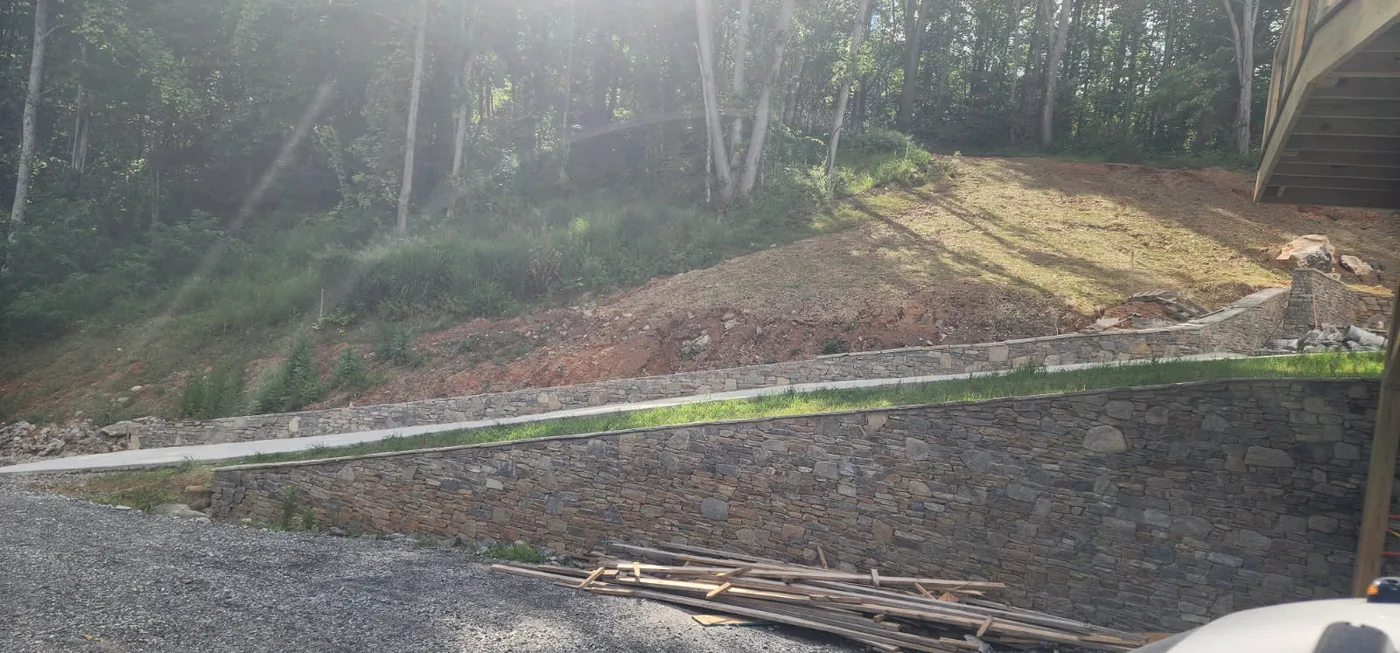
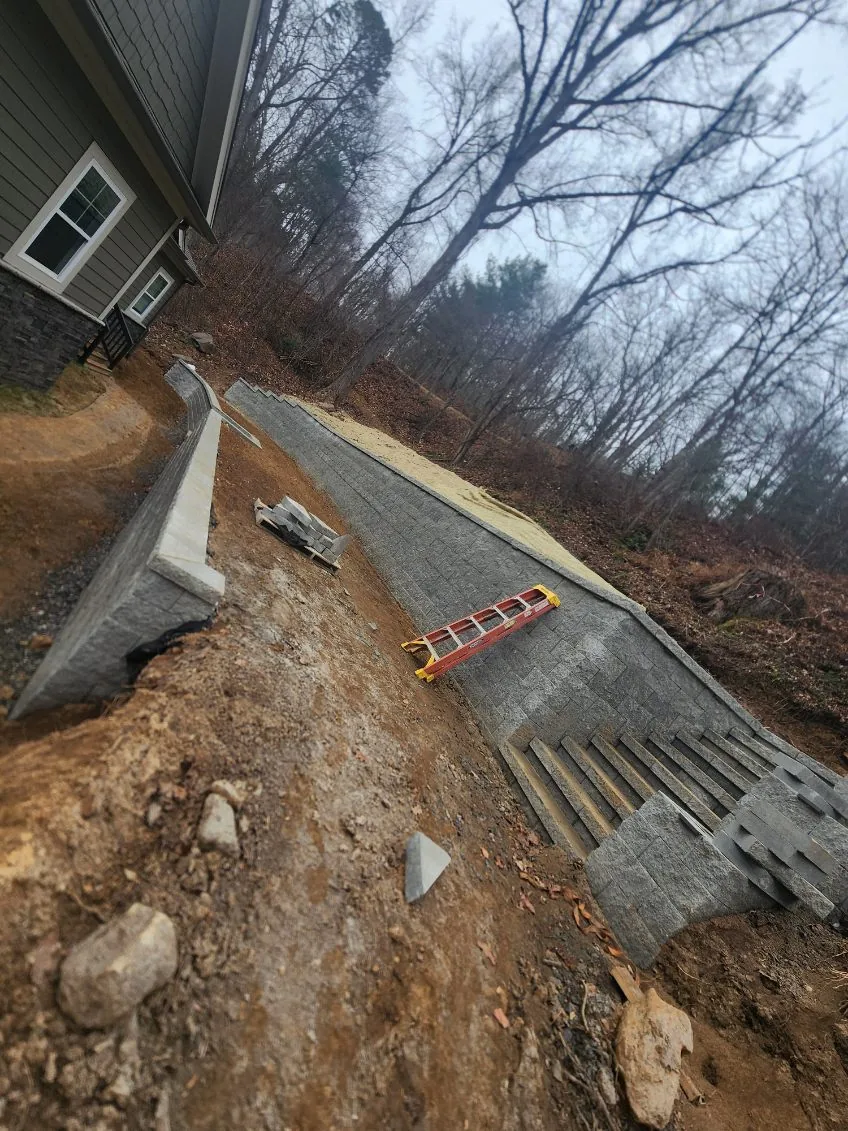
These retaining wall projects and stone steps and walkways follow similar rules — the substrate and drainage determine the cost and the lifespan.
Cost table: what's in each price range
| Scope | Price range | What's included | Key considerations |
|---|---|---|---|
| Prep + install (new construction) | $12–$16/sq ft | Drainage plane, lath, scratch coat, stone, mortar, flashing | Wall's already flashed; easiest scenario |
| Retrofit over existing siding | $16–$22/sq ft | Demo, sheathing repair, new WRB, flashing integration | Window and door flashings must be reworked |
| Natural stone (quarried) | $18–$26/sq ft | Material cost of natural stone + install | More weight, thicker bed needed, slower install |
| Full masonry (block + brick/stone) | $25–$40/sq ft | Structural masonry wall, not veneer | Requires footing, engineering, permits — different beast |
These are honest ranges for Buncombe County. If a bid comes in way under $10/sq ft for a real install, ask what they're skipping — it's usually the drainage plane or the flashing, and you'll pay for it later.
The questions that keep a veneer bid honest
“Do you have a building permit for this, and will you pull it?” In Buncombe County, exterior changes often require a permit — check with the county's current process; a pro won't flinch. “What's the drainage detail behind the stone?” If they mention 'tar paper' and stop, that's a red flag. The ICC code requires a water-resistive barrier, which isn't tar paper. “How do you handle freeze-thaw?” Our temperatures swing past freezing hundreds of times a year — mortar and stone must be rated for exterior use in this climate, not just decorative interior wall.
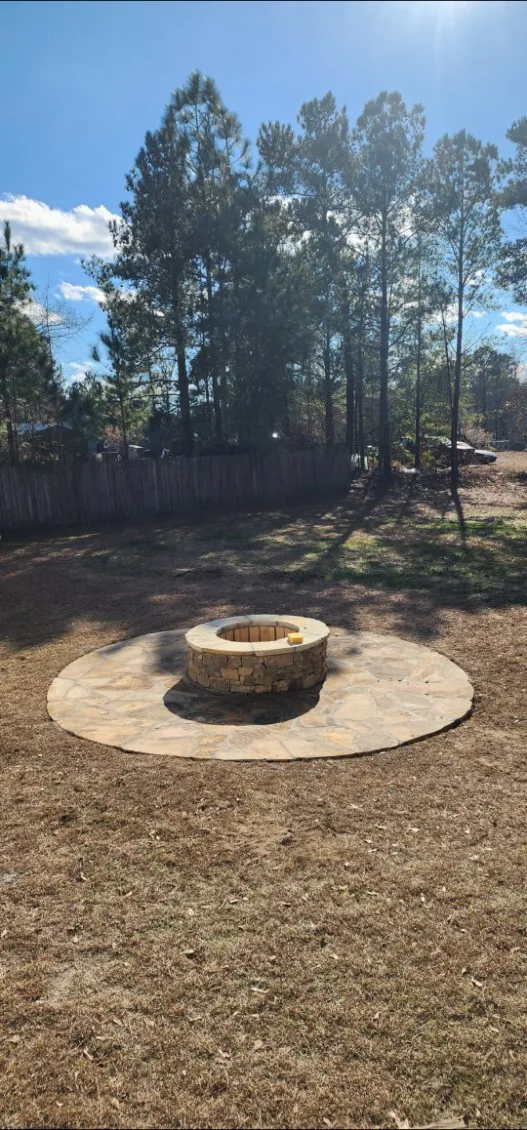
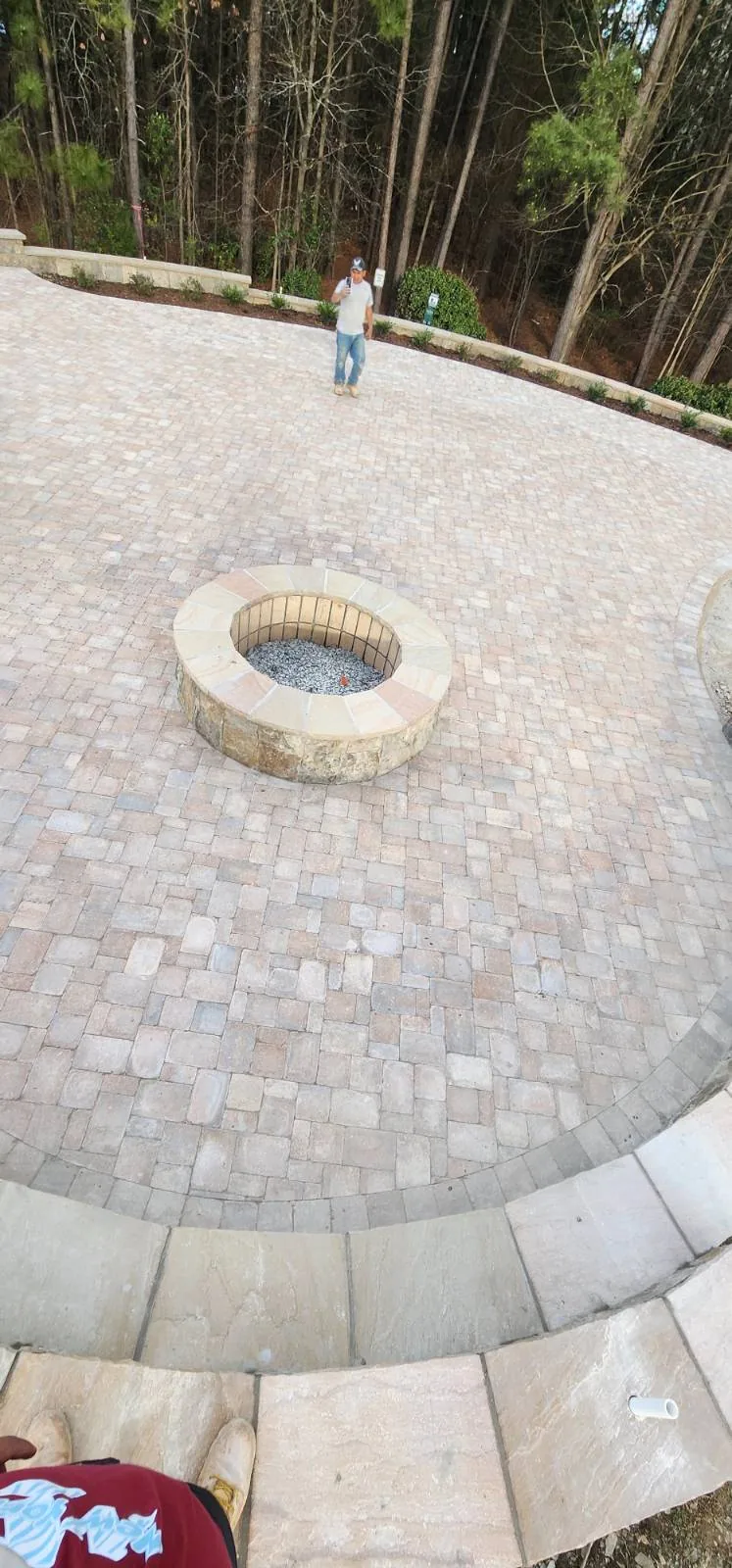
Also ask if they've worked on outdoor fireplaces and kitchens — if they have, they understand heat, water, and structural weight in one assembly. That's the crew that won't be surprised when your mountainside home's gray clay starts moving under a heavy stone wall.