What a fire pit builder in Asheville actually does
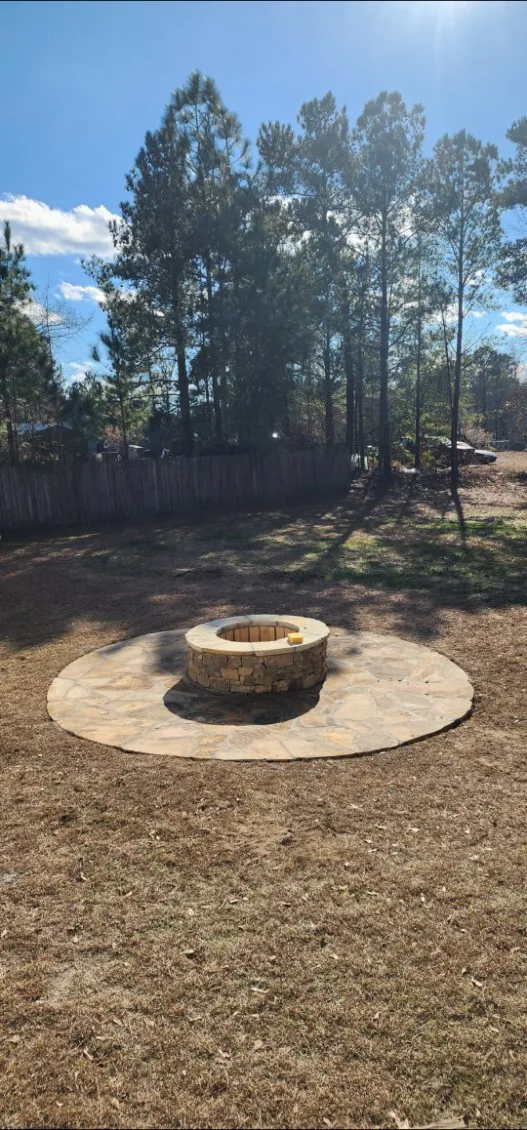
A fire pit builder does more than stack stone. In Buncombe County, where the Blue Ridge frost line reaches ~12–14 inches and rainfall runs toward 40 inches a year, the craft is foundation and drainage first, aesthetics second. The builder excavates for a stable base, lays a gravel pad, sets a steel or concrete ring, then stone—whether that’s locally sourced river rock, quarried bluestone, or a manufactured block system.
The honest part most ads skip: fire pits are load structures with heat rules. A paver patio gets you a grade for chairs. A fire pit gets you a burn hazard near a wood-framed house. North Carolina adopts the International Building Code, and the Office of State Fire Marshal enforces clearances—typically 10 feet from combustible walls, overhangs, and property lines. Ask your builder to cite the clearance for your specific yard before pouring a single stone.
The terrain around Asheville is rarely flat, which changes the job from the start. A yard in Montford or Grove Park might sit on fill dirt from a century-old estate; a lot in West Asheville or Fairview could be carved into a hillside with exposed bedrock two feet down. A builder who treats every site like a suburban slab will miss the point. The first visit should involve walking the drainage path, checking for buried utility lines, and looking at what your neighbors burn—because in a hollow or a ridge-top lot, smoke behavior and wind patterns are part of the design conversation.
Installation steps, in the order they matter
A proper build runs one to three days depending on size and dry weather:
- Grading and drainage. If your yard slopes toward the house, the pit location must not redirect runoff toward your foundation—a common error in mountain lots. A 12-inch rain event in late summer can turn a poorly graded yard into a mudslide risk.
- Frost footing. A 8–12 inch compacted gravel base prevents frost heave that cracks a pit wall by spring. In the higher elevations of Buncombe County, the ground can freeze and thaw repeatedly from November through March, and a shallow base will shift within two winters.
- Steel fire ring placement. This contains the gravel core and protects the stone from thermal spalling—the #1 reason cheap pits crumble after two seasons. A ring rated for continuous high heat is non-negotiable for wood-burning units.
- Stone setting. Whether dry-stacked or mortared, the wall needs a taper or a rated adhesive; vertical walls fail outward under freeze-thaw. Local river rock has a rounder profile that requires more careful fitting than the flat faces of bluestone.
- Cap and detail. A broad cap doubles as seating or a ledge for s’mores. The outdoor kitchen cousins of this service get gas lines—those require a licensed plumber in NC via state board rules, not just a mason.
In practice, the sequence matters more than the calendar. A dry week in October is ideal—the ground has had the summer heat to dry out, and the forecast is stable enough to let mortar cure properly. A rainy stretch in April can turn a two-day job into a five-day ordeal as the base keeps getting saturated. Good builders watch the 10-day forecast before committing to a start date.
What it costs to build a fire pit in Buncombe County
Expect a realistic range for a custom stone unit. Material availability shifts with the season—after a wet winter, river rock from the French Broad tributaries is easier to source; after a dry summer, the quarries may be running behind on bluestone orders:
| Scope | Price range (installed) | What’s included |
|---|---|---|
| Prefab kit, installed | $1,200–$2,800 | Manufactured block, steel ring, gravel base, cap. Not custom. |
| Custom stone, seated height | $2,500–$5,000 | River rock or bluestone, 16–18” wall, rated ring, cap. |
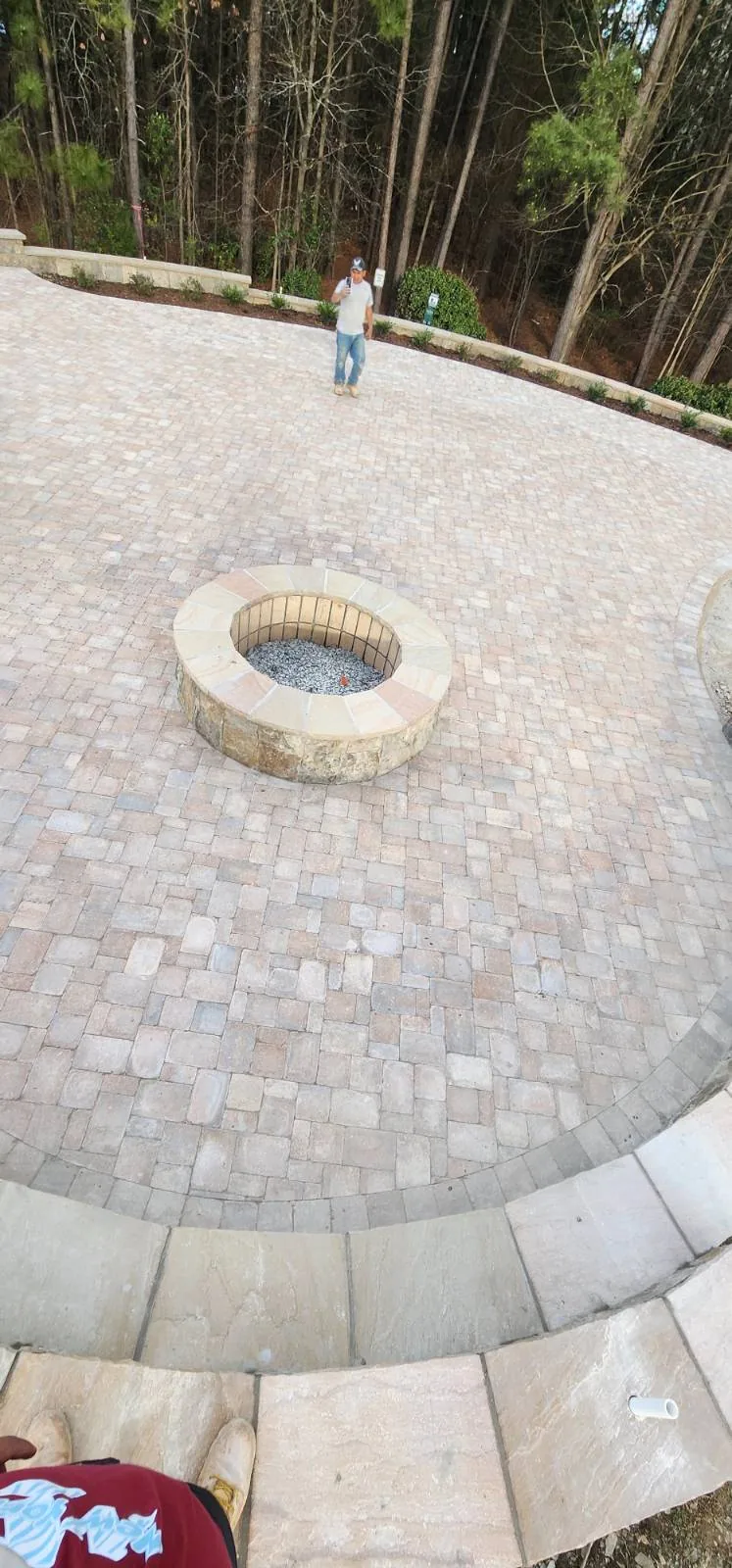
| Custom build + paver seating wall | $6,000–$12,000 | Full patio integration, curved seats, drainage tie-in. |
| Full outdoor kitchen with pit fire feature | $12,000–$25,000+ | See fire pit cost breakdown for line items. |
Material is the wildcard. Local river rock is abundant in Asheville—you can watch trucks hauling it from the Swannanoa River valley on a weekday—and it typically lands at $2–$4 per square foot installed. Imported Oklahoma flagstone adds $3–$6 per square foot, and full veneer kits from national brands can push the stone cost alone past the prefab total. Labor in Asheville runs $60–$90 per hour for a skilled mason, and a 10-foot-diameter project with a curved seat wall will consume 20 to 30 man-hours before the cap goes on. For detailed budget math, the cost breakdown page breaks down labor vs. stone.
One hidden cost that surprises homeowners in this county is hauling. If your access is a narrow gravel driveway off a ridge road, delivery of stone pallets and a mini-excavator adds a trip charge that can run $150–$400. Urban lots in Asheville city limits might have street parking only, requiring hand-carry over a lawn. That's not a rip-off—it's a real logistics line item that any honest bid will show as 'delivery and access.'
Why mountain weather and your site decide the details
Asheville sits at ~2,100 feet elevation, where frost, freeze-thaw cycles, and stormwater are relentless. The National Weather Service records for the region show winter lows that dip into the teens, which means your mortar must tolerate expansion. The EPA also flags wood-burning emissions in mountain valleys due to inversion layers—this isn't a legal ban here, but it clues you into why vented gas or seasoned hardwood is the local norm.
That’s also why the outdoor fireplace and kitchen professionals in this county push for a covered pit or a chimney cap—not luxury, but protection from the 40+ inches of rain that will find your firebox. In the higher elevations near Black Mountain or on the south slopes of Mount Pisgah, snow can linger into early April, and a pit that sits wet for weeks will test every joint. And if your property drains toward a neighbor or a slope, the grading work is part of the bid, not an extra.
Flood history in Buncombe County matters more than most homeowners know. Federal disaster declarations tied to water events have shaped building practice here—entire neighborhoods in the river valleys have had to rethink retaining walls and drainage after major storms. A builder who has worked through these events knows to check whether your site sits in a mapped floodplain or a drainage swale that swells during a stalled thunderstorm. The 19 federal declarations between 1973-2026 in this county are not abstract history—they are why your footer needs to survive a saturated ground, not just a dry afternoon.
The smoke direction also changes the conversation here. In the winter, prevailing winds come from the northwest down the ridge lines; in the summer, valley breezes shift toward the mountains at dusk. A pit placed on a north-facing patio that seems protected in July will blow smoke into your dining room in January when the wind wraps around the roofline. Builders in Asheville talk about 'smoke testing' with a leaf blower or a handful of dry leaves before they set the ring—an informal check that costs nothing and saves a season of wind complaints.
Three questions to ask before you sign
“What clearance are you building to?” The International Code Council publishes standard fire separation rules; a local builder should cite your setback and height. If they can't tell you the distance between your proposed pit and your roofline without looking it up on the job site, that's a red flag.
“What’s your drainage plan on a wet week?” If the answer is “we’ll level it,” walk away. The right answer includes where the water goes after it hits your pit base—whether that's a dry well, a French drain tied to the yard, or a swale that routes to the street. In Buncombe County, a 3-inch rain over two days is normal hurricane season weather, and that water has to move somewhere.
“Who pulls the permit if a structural wall is over 30 inches?” In Buncombe County, retaining walls tied to a fire pit over a certain height may need a permit; NC’s general contractor licensing threshold catches anything structural via the NC Licensing Board. A verbal “we don’t need one” isn’t a code answer. Also ask about the gas line if you're considering vented propane or natural gas—that work must be done by a licensed plumbing contractor under North Carolina state rules, and the pit builder's role ends at the shutoff valve.
A fourth question worth asking, though it feels awkward: “What happens if you hit ledge rock or a buried spring?” On a mountain lot, this is not hypothetical. Several Asheville neighborhoods sit on decomposed granite or old creek beds, and the base excavation can double in time. An honest builder will tell you their standard change-order policy before you sign, not after the machine starts digging.