Where the money actually goes on a Hot Springs yard
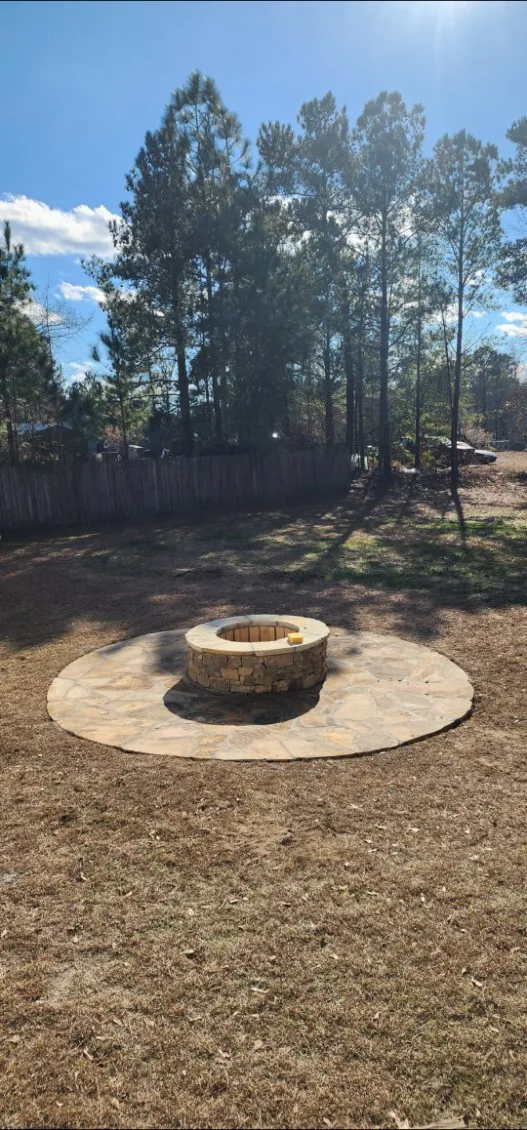
Call three masons in Madison County and the unit prices will look close. The bids will not. That gap is the cost anatomy of the lot, not the fire ring. On a graded flat lot near the town center, a dry-stacked stone pit with a gravel base and a couple of adirondack chairs' worth of surround is a short job. On the river terraces and ridge shelves that make up most of the county, the pit is the cheap part and the ground under it is the expensive one.
The line items that move a Hot Springs number: access (can a truck and wheelbarrow reach the back yard, or does every stone get carried down a path), grade correction (a fire feature needs a level, stable pad, and a slope means retaining, not just digging), stone selection (local fieldstone against quarried or manufactured block), fuel (wood-burning simplicity versus a gas line trench, burner, and valve), and clearance (distance from structures, overhangs, and property lines that code and common sense require). Those five decide whether you are at the bottom or top of the range.
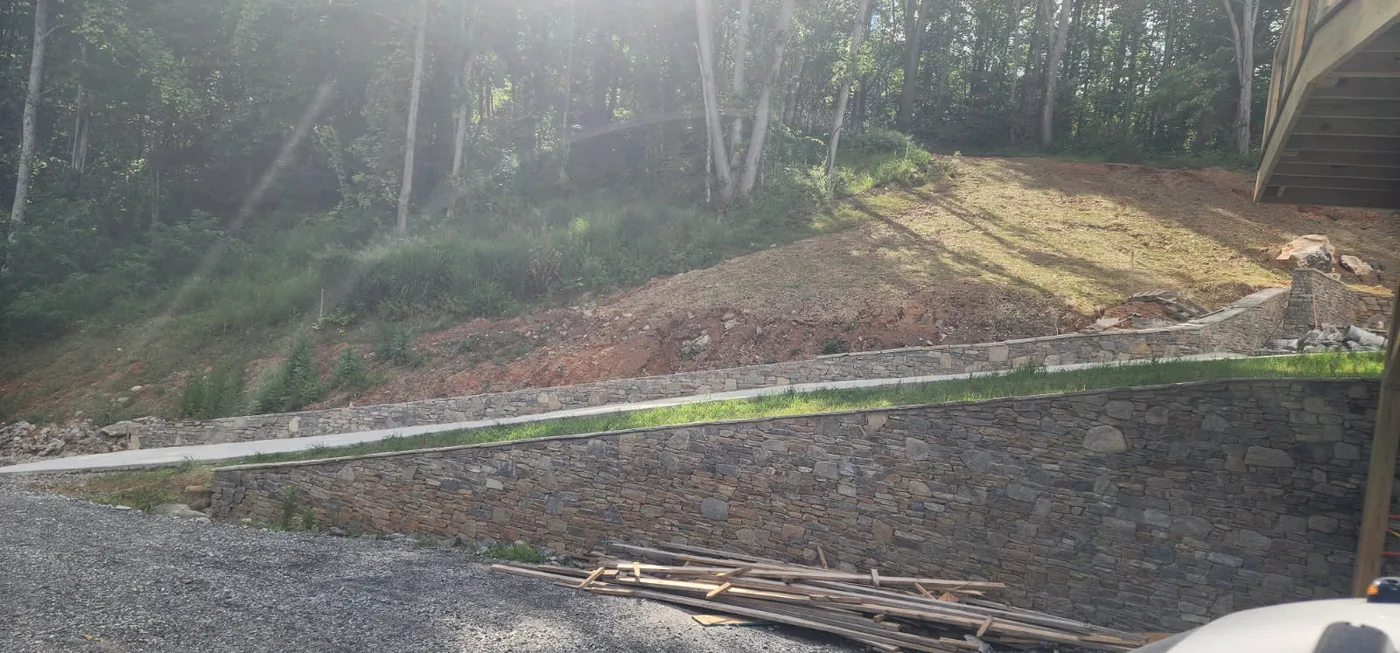
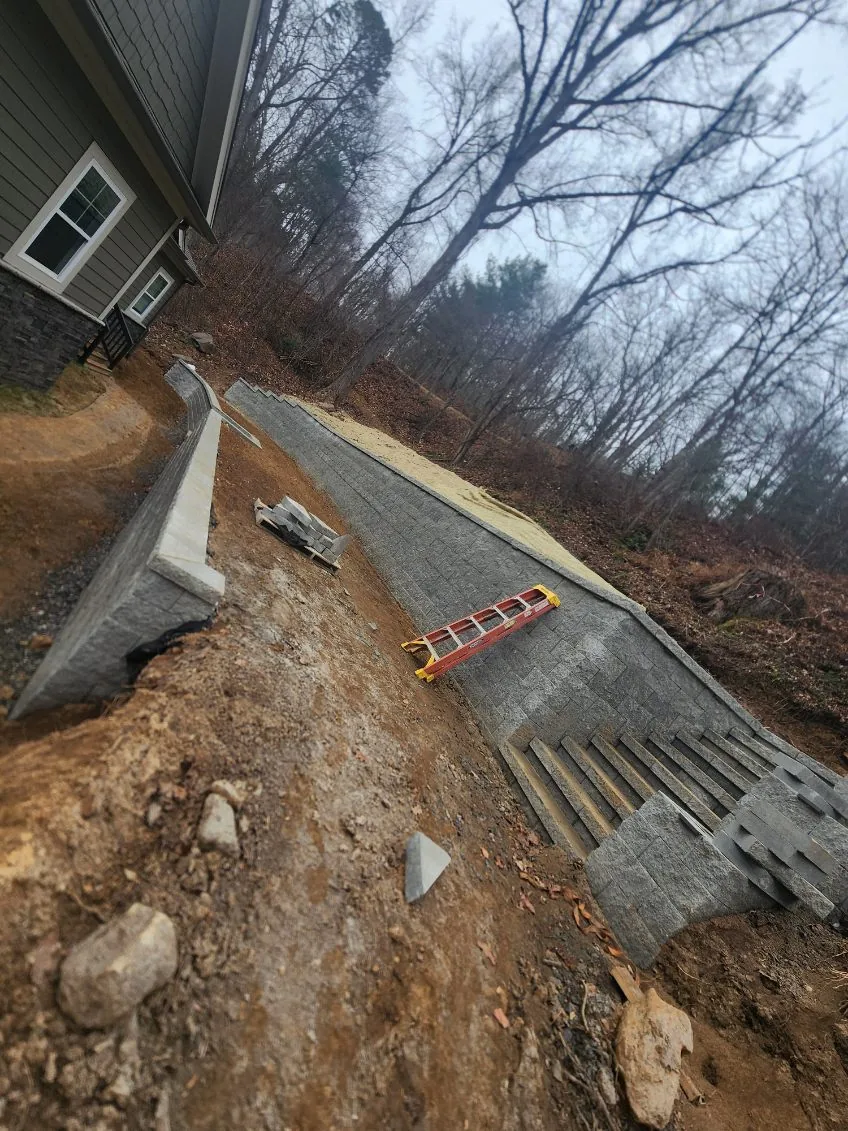
Walk a few yards along the French Broad corridor and the anatomy repeats: a house sits on a bench cut into the hillside, the drop to the water is steep, and the only flat ground is the parking spot. That topography is why two neighbors with identical pits can be thousands of dollars apart. The one whose pit sits on the natural bench pays for stone and labor. The one whose pit wants to overlook the river pays for the bench itself — hauling, digging, compacting, and often a low wall holding the new edge in place.
The scope-versus-price table
Ranges below are regional and honest, not a quote. Every one assumes a workable path to the site; a yard that needs a retaining wall first prices on top of this.
| Scope | Typical range |
|---|---|
| Simple kit pit, gravel base, customer-supplied block | $450-$1,200 |
| Dry-stacked fieldstone pit, 36-48 in., gravel base, level lot | $1,800-$3,800 |
| Mortared stone pit with cap, seat wall or bench surround | $3,500-$7,500 |
| Gas line run, burner, key valve, and lava rock or fire glass | $2,500-$6,000 |
| Grade correction or low retaining to create a level pad | $1,200-$8,000+ |
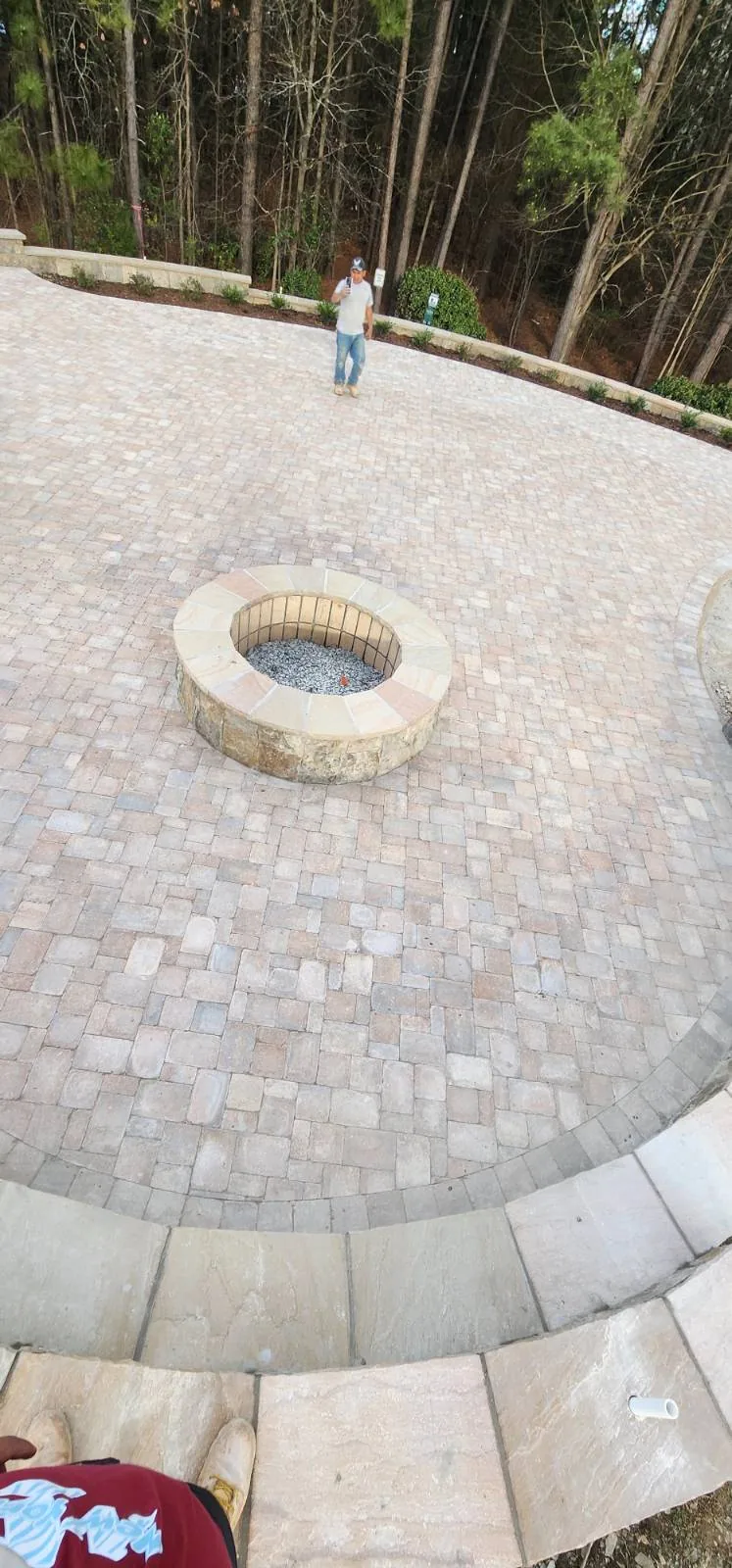
| Paver or flagstone apron and path to the pit | $2,000-$6,500 |
Notice the last two rows outweigh the first four on many Madison County lots. If your site needs a wall before it needs a pit, price the wall honestly first: the Madison County retaining wall cost breakdown covers the same anatomy for that scope, and the Hot Springs retaining wall contractors page shows what a good wall crew looks like here.
Two line items are easy to forget and hard to absorb later. First, the path: if the fire pit is the destination, guests need a safe, lit way to reach it after dark, and a set of stone steps or a short paver run up a grade is its own scope. Second, the seating surround: a bench wall doubling as the pit rim is efficient, but a separate crescent bench behind the pit often costs more than the pit's own stone because it is longer and needs its own footing. Ask whether each is inside or outside the bid before you compare totals.
Why water and weather set the floor price
The federal record is blunt: 21 declared events touch this county across 1978-2026, overwhelmingly storm and flood family. A fire pit is a hole in the ground with a stone rim, which makes it a small drainage decision whether you intend one or not. A pit that sits in a low corner or below a hillside seep will hold water, pop mortar, and heave in a freeze. Builders here set pits on compacted gravel, crown the surrounding grade away from the feature, and keep the ring above the wet line. The National Weather Service freeze and flood outlook for the mountains is the same data a good builder plans around, and the NC Department of Environmental Quality matters when a project touches a river buffer or stream bank, which is common along the French Broad corridor.
Mountain freeze cycles deserve their own line in the budget conversation. Water that gets into a mortar joint, a stone crevice, or the base gravel expands when it freezes overnight, and repeated cycles in a Madison County winter are what turn a hairline crack into a loose cap. That is why a slightly higher base cost — deeper gravel, better compaction, a drain plane that sheds water away from the ring — is not upsell; it is the difference between a pit that looks the same in five years and one that gets rebuilt. A builder who shrugs at the drainage question is telling you something.
Wood or gas, and what changes at the permit line
Wood is the default in Hot Springs and it is the cheaper build. Gas is cleaner and permanent, but the trench, burner, and valve easily add the row shown above, and a plumbed line belongs to a licensed trade. Permanent built-in features, gas connections, and any structure or wall over the state threshold bring licensing rules into play: the NC Licensing Board for General Contractors sets when a job needs a licensed general contractor, and the building code that applies to site-built masonry and clearances comes from the International Code Council's model codes as adopted in North Carolina. Ask any builder which parts of your job cross that line; a straight answer is a good sign.
There is also a practical fire-safety layer that has nothing to do with paperwork. A wood pit under a low tree canopy, close to a wooden deck rail, or hard against a slope of dry leaf litter is a hazard the code distance rules exist to reduce. Recessing a pit into a hillside bench, which is tempting on a Madison County slope, shortens the effective clearance on the uphill side and can trap heat and smoke. A good builder moves or raises the pit rather than fighting the grade for a look.
Choosing a builder on a county of slopes
Madison County terrain rewards crews who build walls for a living, because a fire pit on a slope is a small retaining job with a fire in it. Three checks: ask to see a built pit on ground like yours, not a brochure photo of a flat suburban yard; ask how they handle the base and drainage, because that answer predicts whether the ring stays level; and ask what happens if the grade needs correction mid-build, since surprise retaining is where budgets actually move. The main fire pit service page covers materials, sizes, and what a proper site visit includes before anyone quotes a number.
For a Hot Springs lot, the site visit should include walking the actual path a wheelbarrow will take, not just standing where the pit will go. A crew that measures the gate, the turn, and the slope to the drop point before quoting understands the job. And because so much of this county's housing sits on cut benches and river terraces, ask the builder to name a project they did on a similar grade, then look at how that pit has held up after a couple of winters. Longevity on a slope is the honest test.