Read the wall before you replace it
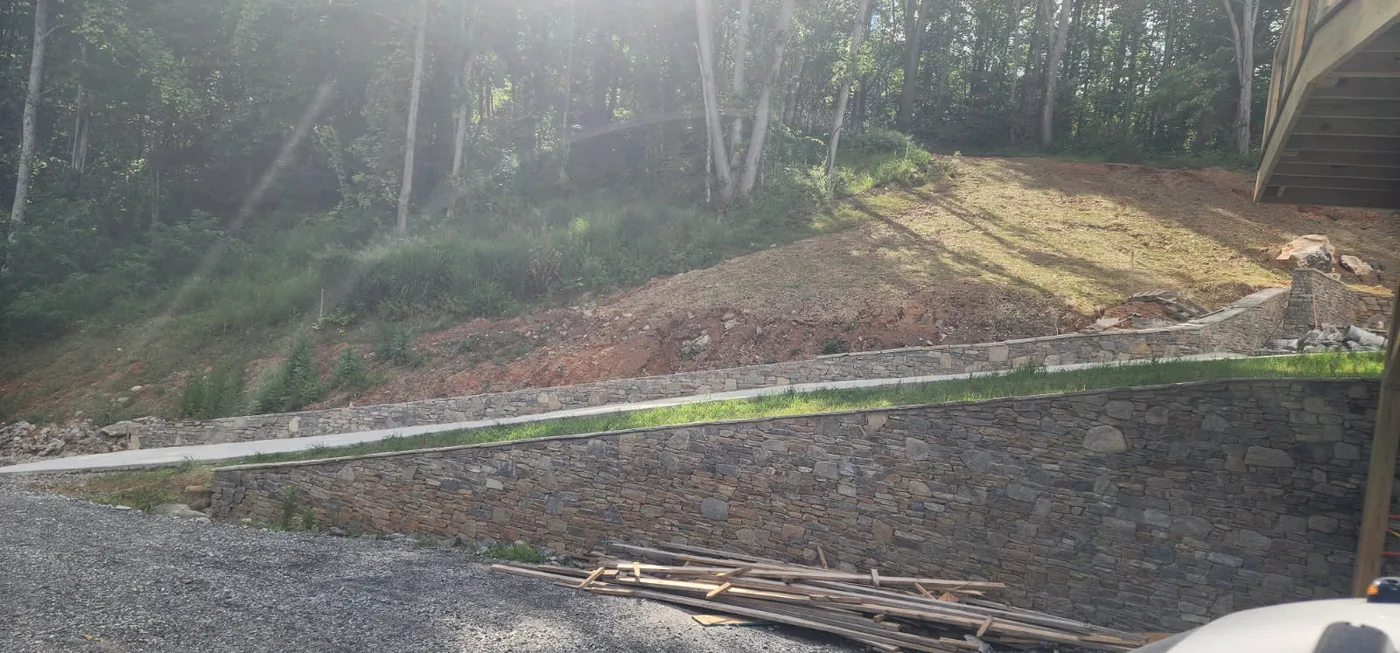
Most stonework calls we get along the French Broad corridor start the same way: a homeowner points at a leaning garden wall above the river bottoms and asks for a price to tear it out. Usually they don't need a tear-out. They need to know why it moved. A dry-laid terrace wall on a Marshall hillside that has bulged after two wet springs is often failing at the footing and the drainage behind it, not in the stones themselves. If the stone is sound and the batter is intact, repointing, re-setting the top course, and fixing the water behind it is a fraction of replacement — and the original stone, which in this county is frequently fieldstone pulled off the same slope, is worth keeping.
Rebuild is the right call when the base course has rolled out, when the wall is taller than roughly three feet with no engineering, or when a prior owner mortared over a dry-laid wall that needed to drain. Mortared dry-stack traps water, freezes, and spalls. That failure mode is common enough here that we ask about it on the first visit.
Before you spend on replacement stone, spend an hour reading what you have. Look at the base course: is it still buried and level, or has it washed out at the toe? Look at the face for bulges that start low and push outward, not just stones knocked loose at the top. On a Marshall hillside, that low bulge almost always means water is sitting behind the wall and the footing is moving, not that the stone is bad. If the wall is dry-laid fieldstone, pull a few cap stones and look at what is behind them. Gravel, filter fabric, and a clear drain path mean the wall was built right and can likely be saved. Solid dirt packed tight against the back of the stone means the wall was built to fail and you are looking at a rebuild.
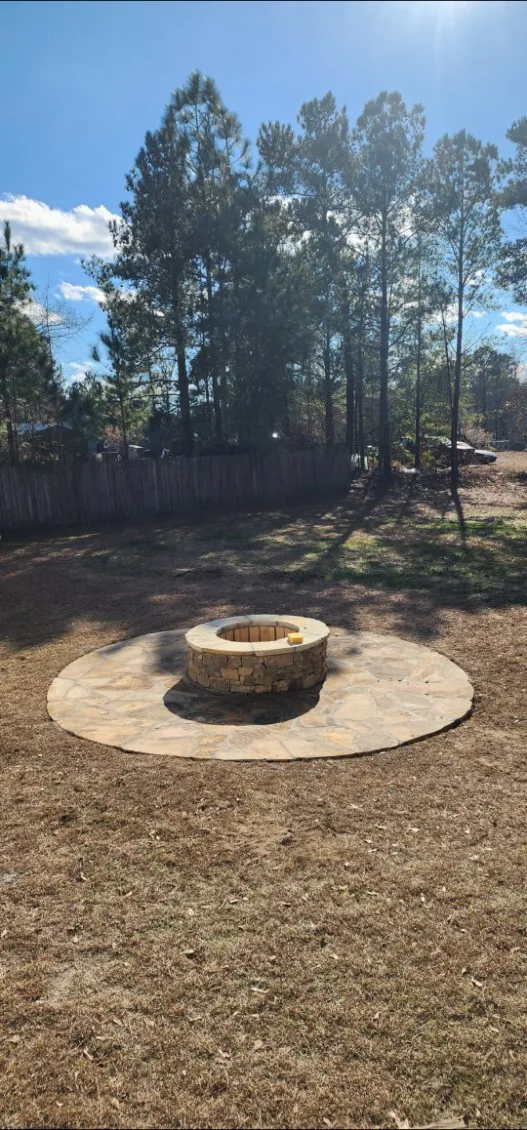
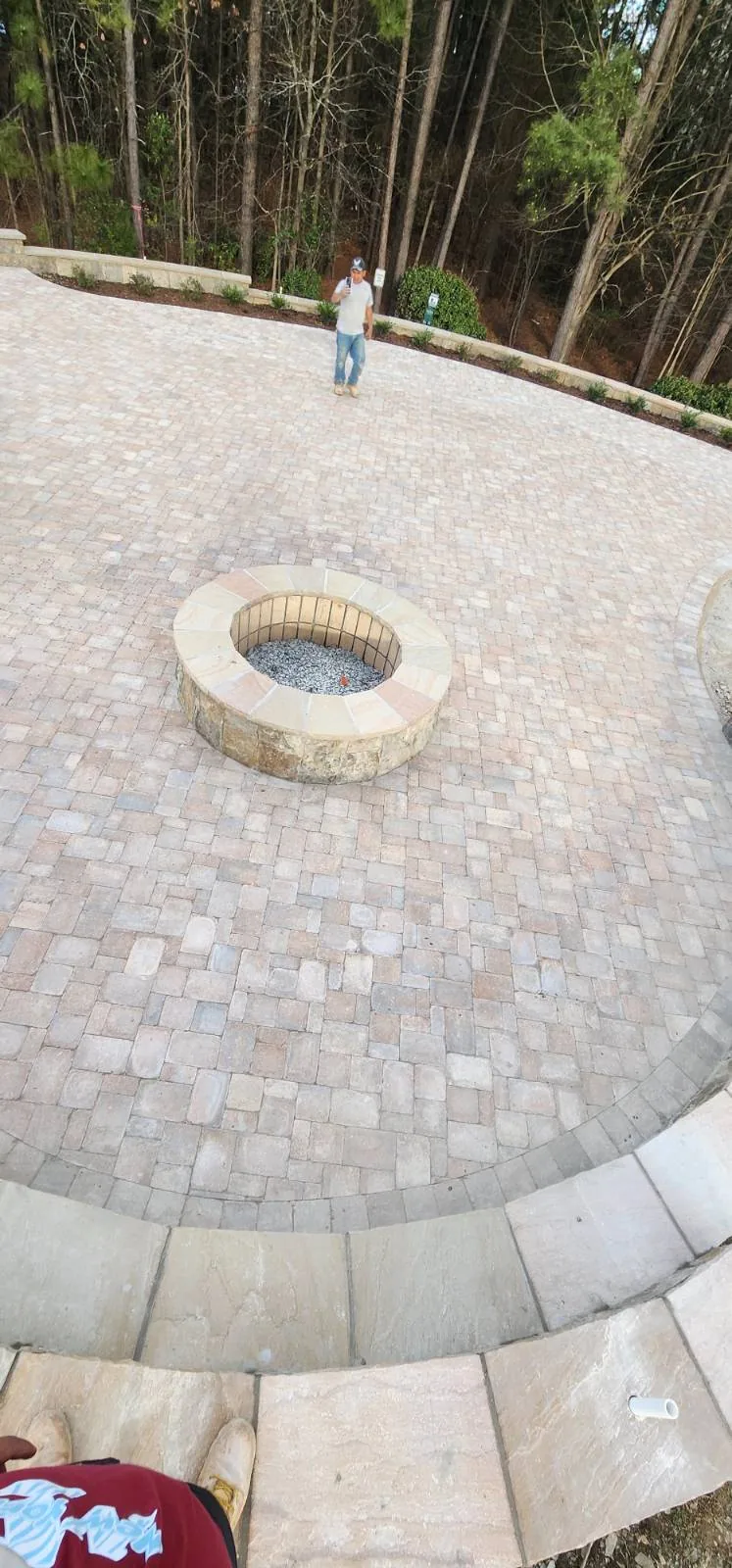
Stone patios and walkways fail on the same logic. A patio that heaves in one corner each winter usually has a base problem, not a stone problem. The stone can be lifted, the base re-graded, and the same stone re-set. That is honest repair, and it keeps the native Tennessee or fieldstone character that imported veneer cannot match.
What stone and slope do to the number
Madison County is not flat and it is not stone-poor. Almost every job is on a grade, which means hauling, staging, and machine access drive cost as much as the stonework itself. Walls off a paved driveway in the Woodfin area price very differently from a wall on a switchback above Marshall with a quarter-mile of narrow gravel between the truck and the work. Stone source matters too: salvaged fieldstone from the property is cheapest and often the best match, native Tennessee and North Carolina stone is mid-range, and imported veneer is the top of the band. The table below is the honest working picture for this county, not a quote.
| Scope | Typical range | What moves it |
|---|---|---|
| Repoint / repair existing wall | $600-$4,500 | Linear feet, height, access, mortar matching |
| Rebuild failed retaining wall | $4,000-$14,000 | Wall height, footing depth, drainage, haul-off |
| New dry-laid garden wall | $3,500-$9,000 | Stone source, batter, cap stone |
| Stone patio or walkway | $6,000-$18,000 | Base prep on grade, square footage, pattern |
| Stone veneer / facing | $2,500-$12,000 | Substrate, square footage, stone type |
Two jobs the same size can land thousands apart on access alone. A wall at the end of a paved Woodfin driveway where a truck can back up to the work is a different job than the same wall up a steep gravel switchback above Marshall, where stone has to be staged by hand or with a small machine and the spoil has to be hauled back down. We price that honestly instead of pretending it is the same job.
Terrain also decides how deep a footing has to go. On a slope, the bottom of the wall sits lower than a flat-lot wall of the same height, which means more excavation, more base stone, and more drainage gravel. A wall on a river-bottom flat above the French Broad is simpler than a wall cut into a hillside on the same property. That is not upselling, it is the ground doing the pricing.
For a narrower line-item view of what retaining work costs specifically, the Madison County retaining wall cost breakdown is the right next page.
Water, freeze, and why walls here fail
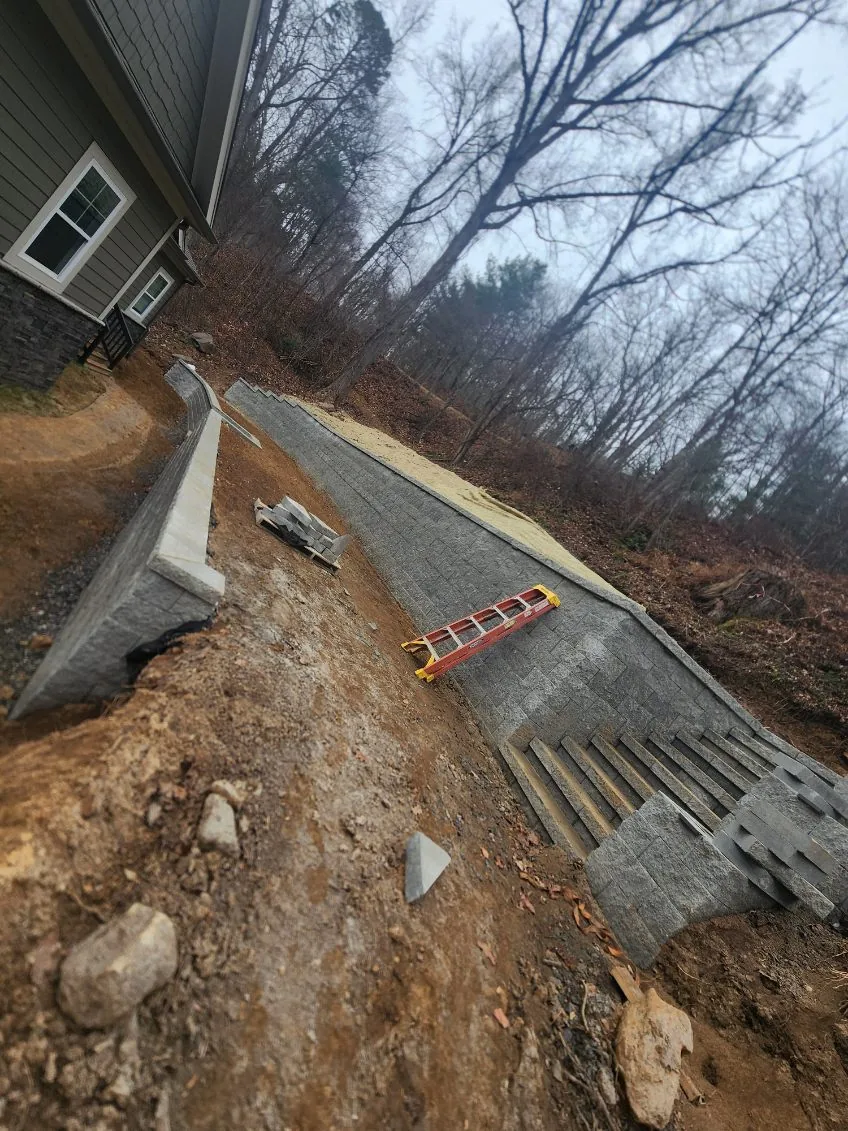
This county sits in a wet, freeze-thaw climate in a river valley, and the federal record reflects it — 21 declared events touch Madison County across 1978-2026, overwhelmingly storm and flood family. Every one of those events pushed water at walls and patios built on assumptions that the ground stays put. It doesn't here. Behind every retaining wall belongs gravel, filter fabric, and a drain that actually discharges somewhere downhill; a wall built without them will lean within a few seasons no matter how good the stonework is.
The National Weather Service freeze-thaw cycling in the French Broad valley is hard on mortar joints and on any wall that holds water. On the regulatory side, wall height and proximity to slopes and waterways can trigger permitting and stormwater rules under the NC Department of Environmental Quality, especially near the river. We flag those early rather than after a stop-work.
There is also the working reality of a county where a lot of homes sit on slopes and hollows that shed water toward the house. On those sites, a retaining wall often does double duty: it holds back the slope and it redirects stormwater. That is fine if the wall is built for it, with a gravel backfill zone and a drain that carries water around the wall, not through it. A wall built only to hold stone and nothing else will pass water straight into the face and freeze-thaw it apart in a couple of winters. On a patio, the same logic applies to grading: a stone patio set flat into a slope with no pitch will pond, and ponding water under stone is what turns a good base into a heaving mess.
When the job crosses into licensed territory
Small repair and dry-laid work generally sits below North Carolina's general contractor licensing threshold. Taller retaining walls, structural work tied to a foundation, and larger hardscape projects can cross it. The NC Licensing Board for General Contractors sets where that line falls, and a wall that fails because it was built by an unlicensed outfit on a job that required a license is a real financial exposure for a homeowner. Ask the question before the first stone is set, not after.
If you are still choosing a crew rather than a scope, the Marshall retaining wall contractor page covers what to check on references and insurance. If you already have a failing wall in mind and want it looked at, the retaining walls service page explains how we assess a wall before recommending repair or rebuild.