The 4-foot line: why half the veneer jobs in Swannanoa need an engineer
Drive the Swannanoa River corridor from Bee Tree Road toward Warren Wilson and you'll pass three wall types in a mile: patched masonry on 1940s mill-era homes, new veneer facades on rebuilds after the last flood cycle, and tall retaining walls holding valley lots back from the creek. The first two are usually cosmetic. The third is where money, permits, and engineering live.
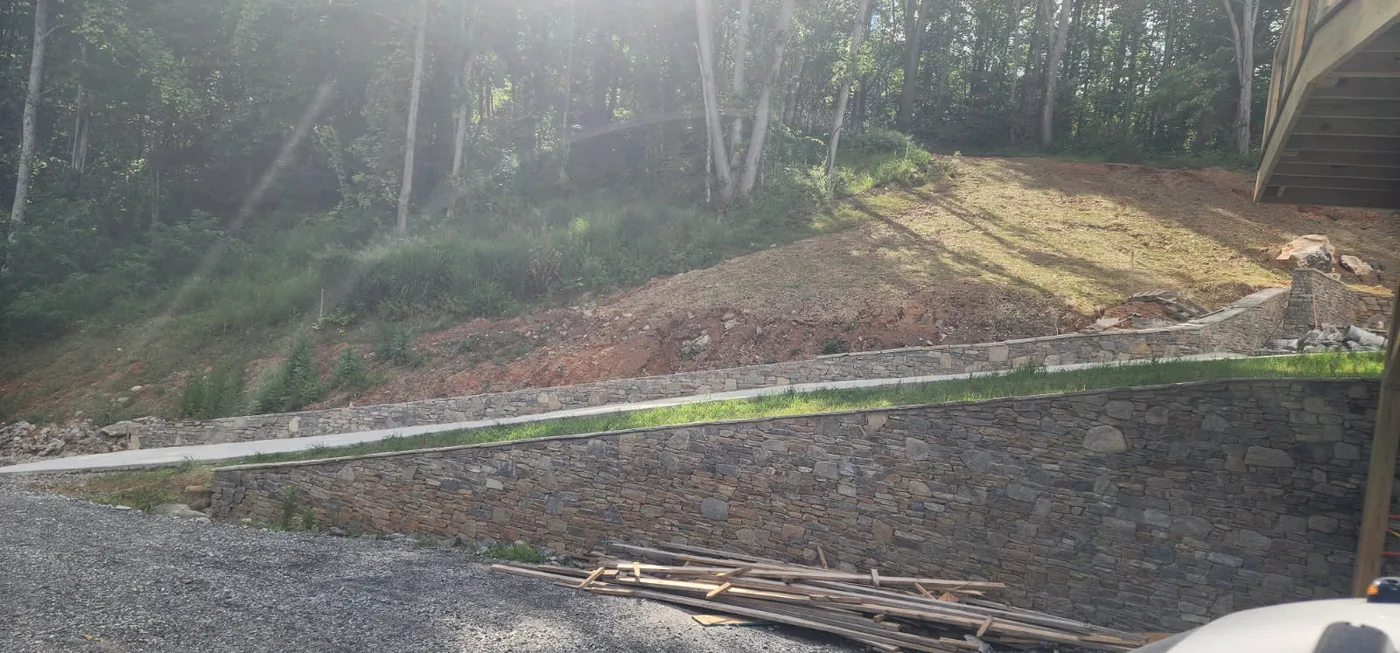
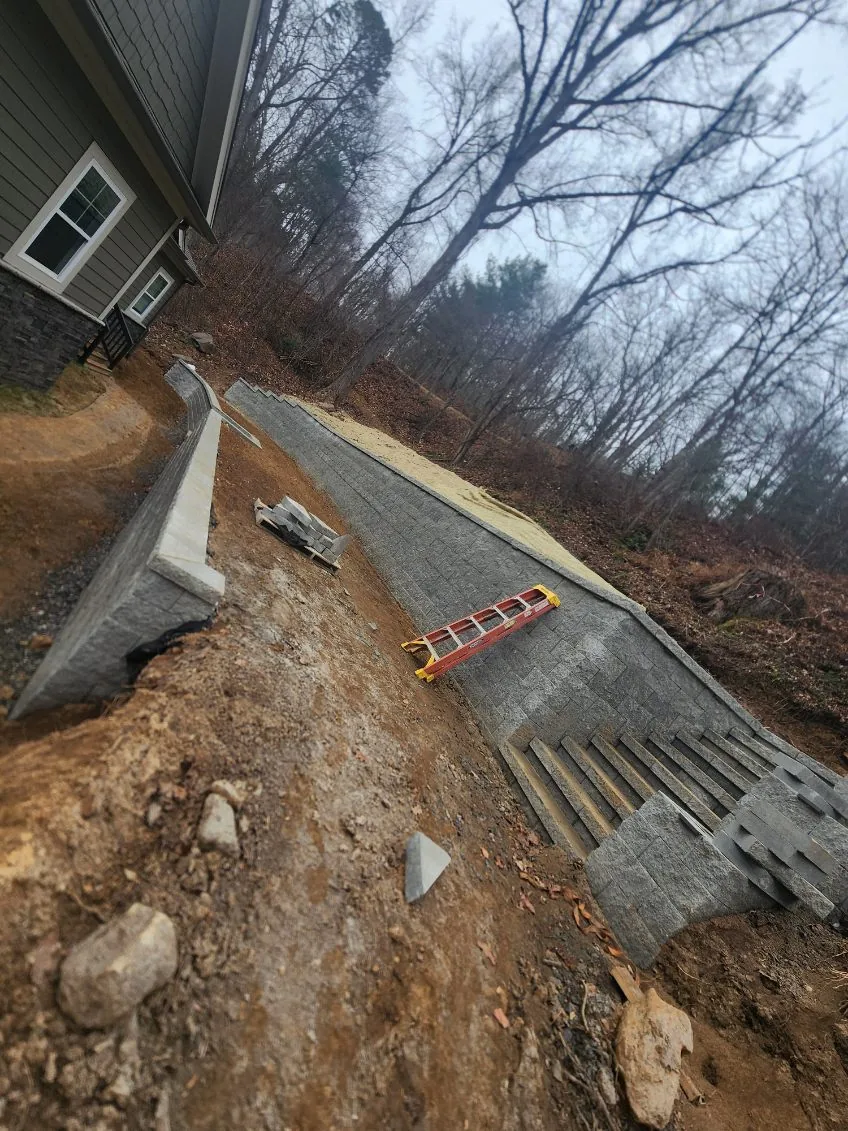
North Carolina draws a hard line at 4 feet. Below it, most freestanding veneer and low retaining walls can be permitted as ordinary construction. Above it, and especially when the wall retains soil rather than just facing a house, you cross into engineered-territory: stamped drawings, a footing design, drainage calcs, and inspection milestones. The NC Licensing Board for General Contractors threshold kicks in at $40,000 for the project as a whole — so a big veneer-and-wall package can require a licensed general contractor even when the masonry sub isn't one. The full picture on engineered wall scopes is on our Swannanoa wall contractor page.
The practical consequence: a homeowner quoting a 6-foot creek-side wall and a homeowner quoting a fireplace surround will get numbers that look 3x apart, and both are correct. The scope is the difference. On the creek side, the wall isn't decoration; it's a piece of civil infrastructure that happens to be clad in stone. On the fireplace side, it's finish work. Bidders who don't ask which one you're describing aren't listening. Also worth knowing: the NC Department of Insurance – Engineering & Codes maintains the statewide code adoption that local inspectors enforce, so the 4-foot threshold isn't a Swannanoa quirk — it's the baseline, and Buncombe County applies it to unincorporated valley parcels and town lots alike.
What Swannanoa's housing stock does to veneer
Swannanoa is not Asheville. It's flatter, wetter, and older in a different way — mill housing, small farmhouses on large parcels, and a wave of rebuilds concentrated on the floodplain. Three patterns drive most veneer calls here:
Rebuild facades. After a flood-damaged house is gutted and rebuilt, the finish decisions happen fast. Adding stone veneer to the front of a rebuild is cheaper than brick, faster than stucco, and reads as permanent. But the substrate matters: veneer over new frame needs a proper drainage plane and weep system, or the wall rots from the inside out in a wet valley climate. On the rebuilds along the river bottoms, we often see the same sequencing mistake: stone scheduled before the WRB inspection. Move the stone later. It costs nothing to wait and everything to redo.
Chimneys and fireplaces. Pre-1970 homes here often have masonry chimneys that need re-facing rather than replacement. Veneer over an existing chimney is legitimate when the underlying structure passes inspection; it is dangerous when it's hiding spalling brick. Valley winters freeze-thaw hard, and a chimney that sheds its face in February is a chimney that was already failing. We probe the brick, check the crown, and look at the flashing before quoting a re-face. Sometimes the honest answer is that the chimney needs rebuilding first.
Entry and foundation bands. The low stone skirt across the front of a ranch is the most common cosmetic veneer job in the valley, and the least likely to trigger engineering. These are the jobs that come in near the low end of the cost table, and they're where a homeowner can see the most visual change for the least structural risk. The stone veneer guide covers assembly choices for exactly this kind of band.
Cost picture: Swannanoa veneer and adjacent wall work
Regional bands for Buncombe County, quoted as ranges for real scopes. Anything with an engineer, a new footing, or drainage work goes up from here. The Buncombe County wall cost breakdown covers the retaining side in detail.
| Scope | Typical price range | Notes |
|---|---|---|
| Thin veneer over existing masonry (interior or exterior) | $12–$22 / sq ft | Wall in good condition; no footing work |
| Thin veneer over new frame with drainage plane | $18–$28 / sq ft | Rebuilds; includes lath, WRB, weep system |
| Full-bed veneer (real stone thickness) with new footing | $28–$45 / sq ft | Freestanding facade or chimney; may cross the 4-ft rule |
| Retaining wall under 4 ft, veneer-faced | $45–$85 / lin ft | Permit typically administrative |
| Retaining wall over 4 ft, engineered | $110–$220 / lin ft | Stamped drawings, footing, drainage, inspections |
| Chimney re-face (existing masonry, sound) | $2,400–$6,500 | Scaffold + staging drives half the spread |
Engineer's letter on an over-4-foot wall typically adds $800–$2,000 to the project before a single stone is set. It is not padding. It's a stamped, sealed document that the county accepts, and it takes a licensed engineer time to produce — time that includes looking at your actual slope and soil, not a template. On valley lots the slope varies block to block, so a generic letter often gets rejected and redone.
Two other cost movers deserve naming. First, staging: a chimney re-face or a tall facade on a narrow lot may need scaffold, and scaffold on a slope is slower than scaffold on flat ground. Second, stone selection: local fieldstone, Tennessee ledge, and manufactured veneer sit in different price bands, and a homeowner who falls in love with a specific stone before getting the bid can end up paying more for the material than the labor. Get the scope first, pick the stone second.
Water history changed the spec sheet here
Swannanoa sits in one of the most flood-exposed valleys in western North Carolina. The county's federal disaster record is 19 declared events across 1973-2026 years, and the pattern is overwhelmingly storm and flood — see the National Weather Service for local hydrology context. That history has one direct veneer consequence: anything below the likely flood line should be built to get wet and dry out, not to seal water in.
Practically, that means weep screeds at the base, drainage planes behind the stone, and no face-sealed assemblies on creek-side walls. The International Code Council exterior-wall provisions cover this; the stone veneer guide walks through the assembly choices in plain language.
There's a second water story here that's less obvious: the water that comes from above. Swannanoa's valley position means heavy rain events and saturated ground, and a retaining wall that looks fine in July can show movement after a wet spring. Drainage behind the wall — gravel, filter fabric, and a outlet that actually goes somewhere — is what keeps an engineered wall inside its design assumptions. When we quote an over-4-foot wall, the drainage is a line item, not an afterthought, because the engineer who stamped the drawing assumed it would be built. Skip it, and the wall fails on a schedule, not on a whim.
Hiring and sequencing on a Swannanoa veneer job
Three questions separate the crews that build veneer right from the crews that sell it by the square foot. First: what's behind the stone? A drainage plane, lath, and weep system is a real line item, and a bid that omits it is a bid that will fail in five years. Second: who stamps the drawings on the over-4-foot wall, and does that engineer know the lot? Slope and soil vary block to block here. Third: what happens to the water the wall pushes? On a valley lot, the retaining wall and the veneer are the same water-management conversation, and the licensing rules that govern the general contractor — again, see the NC Licensing Board — apply to the whole package.
For rebuilds specifically, sequence matters: veneer goes on after the substrate and WRB are inspected, not before. It's the single most common ordering mistake on flood rebuilds. On a rebuild, the trades are stacked tight — framing, rough-in, insulation, drywall — and it's tempting to slot the stone crew in wherever there's a gap. Don't. Stone over an uninspected substrate is a problem you pay for twice.
One more honest note for Swannanoa specifically: because the rebuild wave followed flood damage, some parcels have older homes next to brand-new ones, and the veneer scope should respect that context. A mid-century ranch with a low stone skirt doesn't need to look like a 2024 build. The best jobs here match the valley's existing character — modest, durable, and built to shed water — rather than importing a look that belongs somewhere else. If a bidder is steering you toward an expensive assembly without asking about the lot's grade, the creek's proximity, or the home's age, that's a signal. The Swannanoa wall contractor page digs into the retaining side of that conversation.