What paver patio installers in Asheville actually do
A paver patio is a compacted stone base, a sand setting bed, and interlocking concrete pavers — but in Buncombe County, the base is the whole job. Mountain lots mean shallow topsoil over clay or decomposed granite, and every square foot of patio is only as permanent as the material beneath it. A crew that digs 8 inches, compacts in lifts, and edges with real restraint is worth more than the paver color you pick.
The honest part most bids skip: a patio is a drainage event first. If the grade sends water toward your foundation or a neighbor's property line, you've built a problem. That's why the NC building code authority cares about site drainage, and why any hardscape installer worth hiring starts with where the water goes — not where the pavers look nice. For patios attached to a house, the International Code Council's residential provisions govern the structural connection, and the county inspection office enforces it.
What installation involves, step by step
A typical residential patio runs one to two weeks, depending on size and slope:
- Site layout and grade. The patio shape is staked out, and the fall is set — typically 1/8 to 1/4 inch per foot away from structures. This is the drawing to ask for by name.
- Excavation. The crew digs out 8–12 inches on a flat lot; more on a slope. In West Asheville or Montford, that often means hand-digging around existing roots and utility lines.
- Base stone and compaction. Crushed stone goes in 4–6 inch lifts, each compacted with a plate compactor. The base is the structure; the pavers are just the wearing surface.
- Edge restraints and bedding. Plastic or concrete edging locks the perimeter, and a 1-inch sand layer gets screeded flat. This is where most sloppy installs fail — low edges let sand wash out, and the pavers sink.
- Paver layout and cutting. Pavers get laid in your chosen pattern, then cut at the edges with a wet saw. The cut quality around curves is the difference between a custom job and a kit.
- Compaction and joint sand. The surface gets a final compact, and polymeric sand gets swept into the joints. It hardens with moisture, locking the pavers — but only if the joints were clean first. A half-hour of sweeping saves a year of ants and weeds.
On a sloped lot in places like Haw Creek or Riceville, the excavation can take twice as long as the laying. That's honest math, and a cost breakdown that separates base prep from pavers is the one to trust.
What a patio costs in Buncombe County and what drives the number
Per-square-foot pricing in this region runs $18–$35 installed for standard concrete pavers, with premium products (large-format porcelain, natural stone look-alikes) pushing higher. The table below shows realistic scope bands — the low end assumes a flat, accessible backyard; the high end carries slope, tree work, or removal of an existing slab.
| Scope | Square Feet | Price Range (Installed) |
|---|---|---|
| Small mountain patio, limited prep | 150–250 | $4,500–$8,500 |
| Average Asheville backyard patio | 300–500 | $9,000–$22,000 |
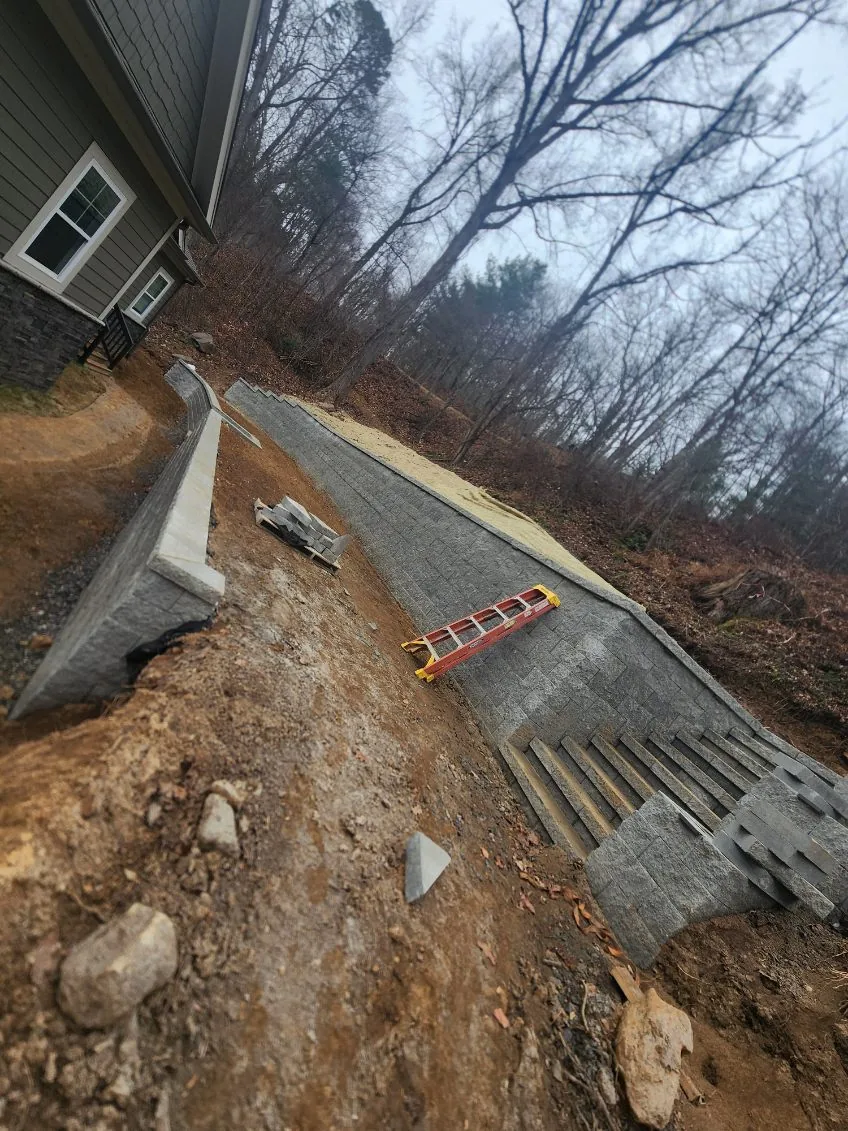
| Sloped lot with retaining wall edge | 400–700 | $18,000–$35,000+ |
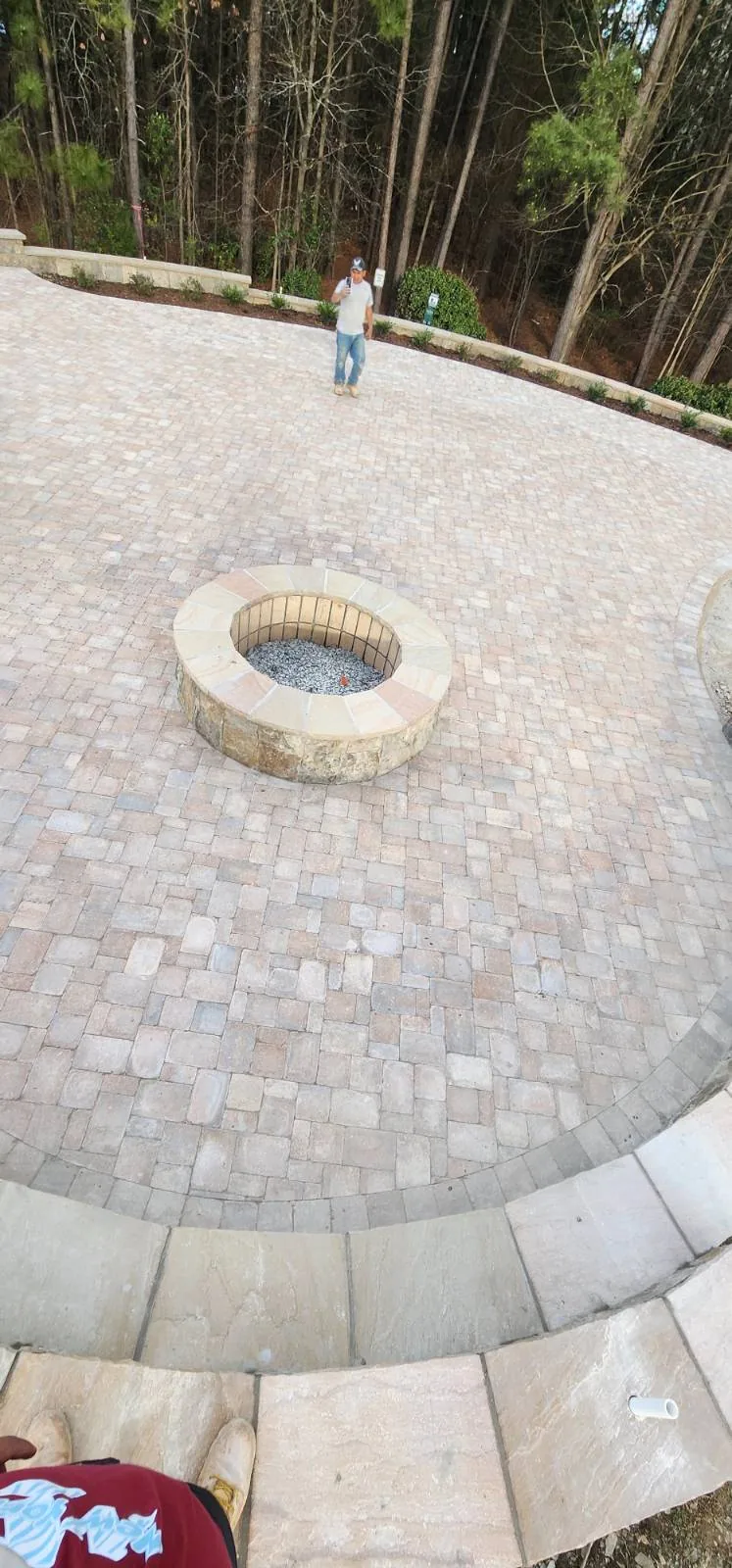
| Full hardscape: patio + walkway + fire pit | 500–800 | $25,000–$55,000+ |
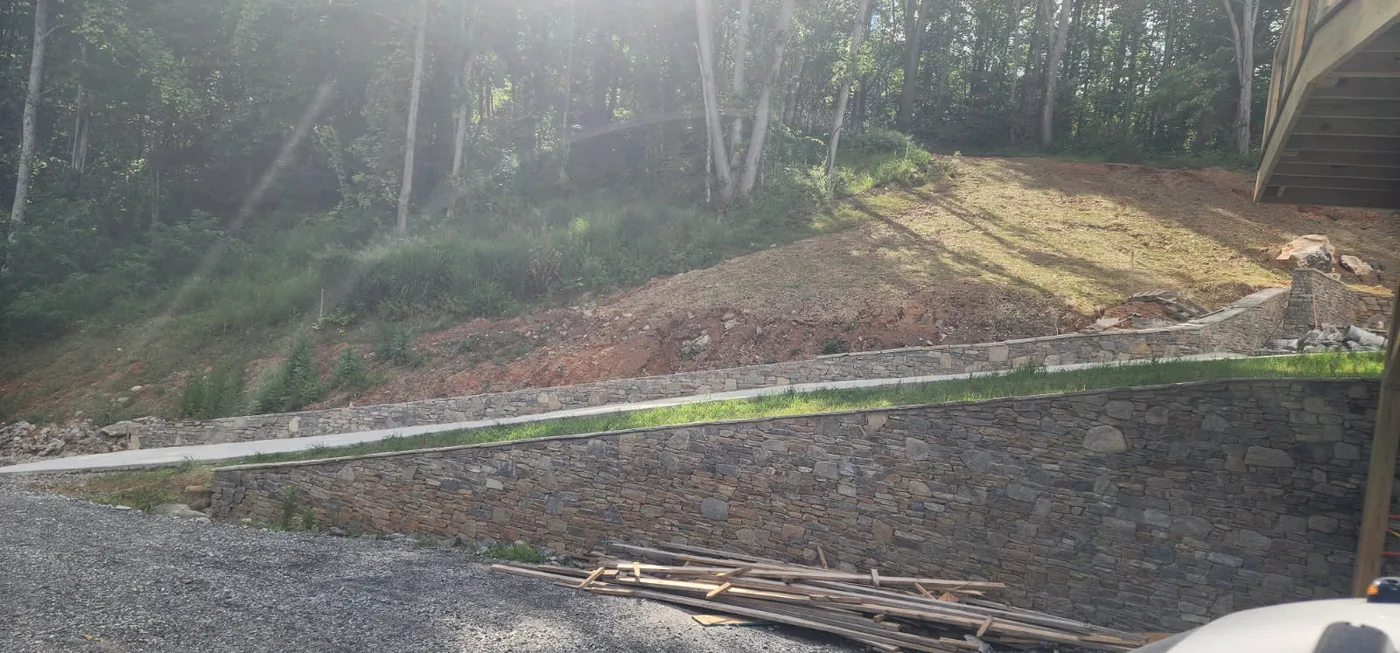
The biggest line-item swing is excavation and haul-off. A flat lot in Fairview with clean access might need three dumpster loads; a terraced lot in Kenilworth with 12 feet of grade change needs engineered retaining and machine placement by crane. Storm history matters too: with 19 federal disaster declarations in 1973-2026 spanning this region, saturated-slope failures are a known risk — which is why the National Weather Service's flood and landslide awareness exists, and why a good installer reads the terrain, not just the paver catalog.
The three questions that keep a paver bid honest
“Can I see the base cross-section in writing?” If the bid doesn't specify base depth in inches and compaction passes, the hardscape will settle — paving stones hide nothing. “How do you handle the water that hits this patio?” A qualified installer should know the local stormwater rules for directing runoff onto a neighbor's lot or into the street — your HUD-backed neighborhood covenants and local watershed rules may weigh in if you're in a floodplain overlay. “What does change-order day two look like?” When they uncover a buried spring or a rotted tree stump mid-dig, you want the pricing structure agreed to upfront, not invented on the spot.
And because this is a hardscape that touches the ground, licensing matters across trades. In North Carolina, a paver patio alone typically falls under general contracting — check with the NC Licensing Board for general contractor thresholds. If the job runs over the threshold, verify the contractor's license number directly rather than trusting a logo on a truck. Environmental rules can also apply if you're moving stormwater — the EPA's construction stormwater guidance covers the kind of sediment control a mountain site demands.
Paver patios next to other hardscape features
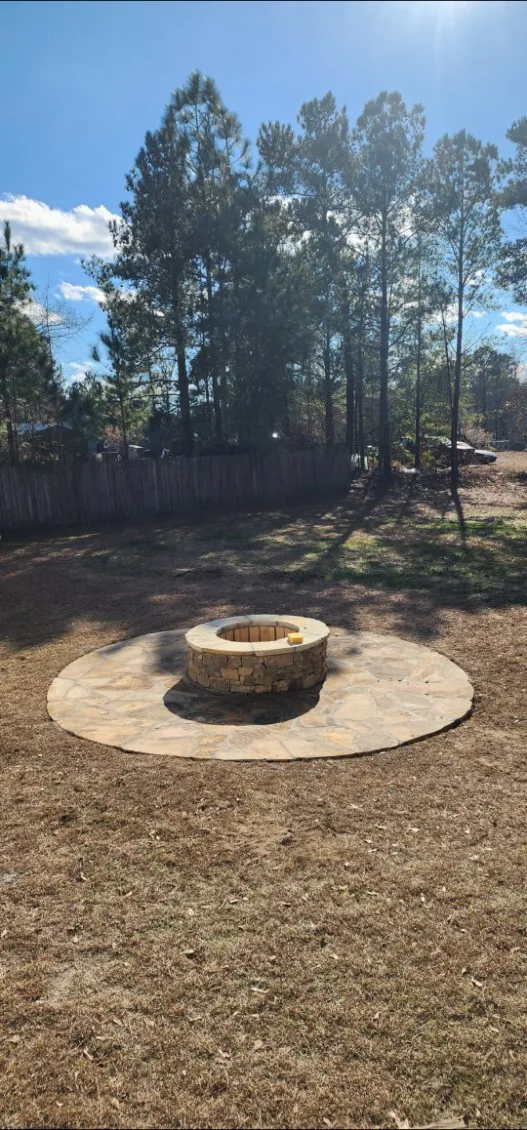
Most Asheville paver projects aren't isolated patios — they're part of a larger outdoor room. A walkway leading from the patio to a driveway, a flagstone transition, and a seat wall with a built-in fire feature all change the geometry and the drainage plan. The best approach is to build the patio as the anchor, then layer the connections so the water flows across each surface in one disciplined direction. On a mountain lot, that sequencing is what separates an outdoor room from a series of sunk-cost puddles.