The water has to leave as well as it arrives
Candler's residential terrain is mostly graded fill and cut slopes off the Enka and Pisgah Church corridors, with a lot of walk-out basements and driveways that push runoff at the same low point in the yard. That low point is where most homeowners want the pond, and it is the one place a re-circulating waterfall should never sit without a plan for the storm water. A feature that recirculates its own supply still has to survive the water the mountain sends it, which means the overflow and the downhill outlet get designed before the first boulder moves. Get that sequence backwards and you spend the第二年 rebuilding the same basin.
The working rule here: the pond should not be the lowest thing on the property. If it is, the design needs a raised berm, an overflow that daylight, or a dry creek bed carrying storm flow around the feature rather than through it. The EPA guidance on storm water and runoff control is written for larger sites, but the principle holds on a half-acre backyard — slow it, spread it, send it somewhere intentional.
What that looks like on a typical Candler lot: you are standing at the top of a cut slope behind a house off Pisgah Church Road, and the neighbor's driveway across the fence line sheets water into your yard every time it rains hard. The pond goes in the flattest pocket you have, which is also where that sheet flow lands. A waterfall builder who knows this county will walk that line before talking about stone. They will flag where the water crosses the property line, where it pools now, and where a buried 4-inch line or a rock-lined swale can carry it past the basin entirely. If nobody mentions drainage on the first walk, that is the bid to set aside.
What Candler stone waterfall projects actually cost
Candler sits in Buncombe County, so pricing tracks the Buncombe County cost picture for rock work and excavation. Ponds and waterfalls add liner, pump, filtration, and electrical line items on top of that. The table below is the honest shapes these scopes take, not a quote.
| Scope | Typical range | What moves the number |
|---|---|---|
| Small pond with short cascade, liner and pump included | $6,500–$12,000 | Depth, liner type, distance from power |
| Pondless waterfall, boulderless or stacked ledge rock | $4,500–$11,000 | Total drop, rock weight and haul, access for equipment |
| Pond-and-cascade system with filtration and skimmer | $12,000–$22,000 | Volume, fish load, filtration grade, auto-fill |
| Engineered rock waterfall on slope with retaining structure | $22,000–$28,000+ | Engineering, block core, drainage, permit needs |
| Rebuild or repair of an existing feature | $1,800–$7,500 | Liner failure, settling, pump and electrical condition |
Any bid that arrives before someone has walked the slope, located the power, and found the low point is a guess. Treat it that way.
The gap between the low and high end of any row is usually labor and access, not materials. A Candler yard with a wide, gently graded side lot lets a mini-excavator reach the basin, which keeps hand-digging hours down. A steep back slope behind a walk-out basement, or a narrow gate between houses, means rock gets moved by wheelbarrow and machine time drops off. Two projects with identical stone lists can land thousands apart for that reason alone, and no reputable builder can tell you which one yours is until they have stood in the yard.
Where the water comes from on a Candler lot
Two sources feed every backyard water feature here, and only one of them is under your control. The first is the recirculated supply — the pump and liner you are paying for. The second is the water arriving from uphill: the neighbor's graded yard, a shared driveway crown, spring seepage that shows up every wet season in the same corner. Recirculated water is a closed loop and easy to size. Uphill water is not, and it is the reason some Candler basins hold beautifully and others silt in after two seasons.
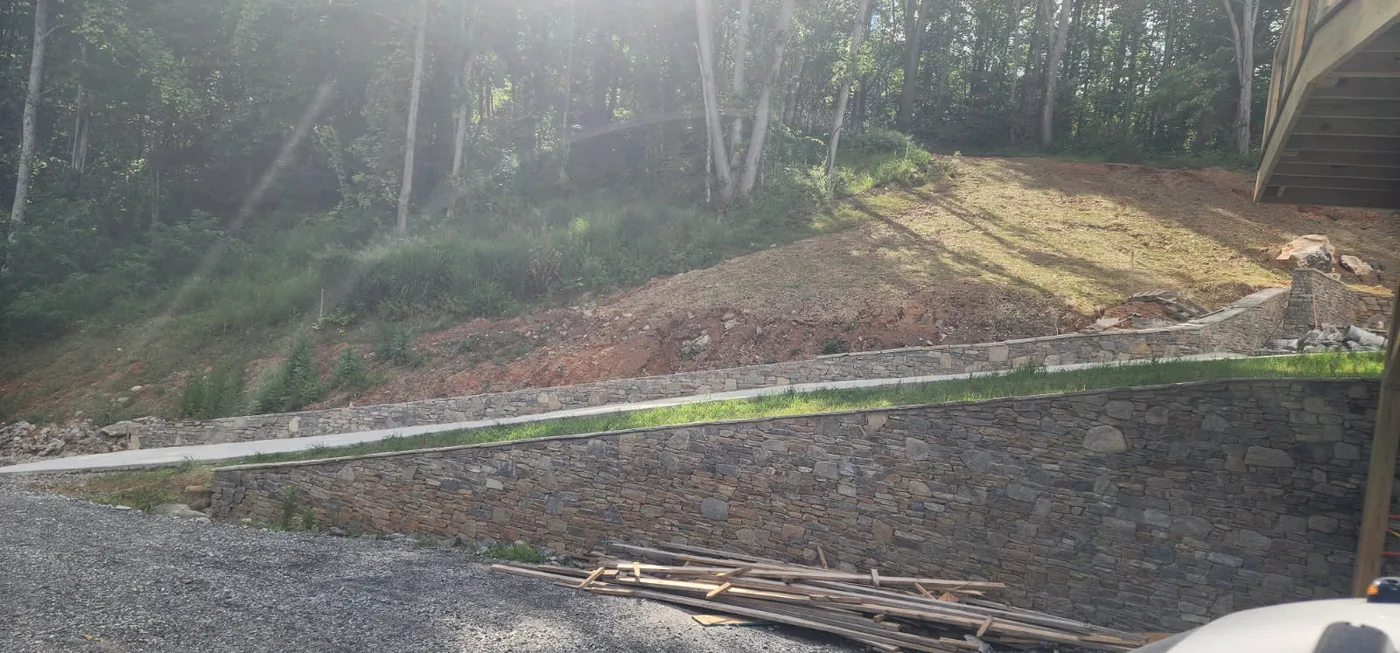
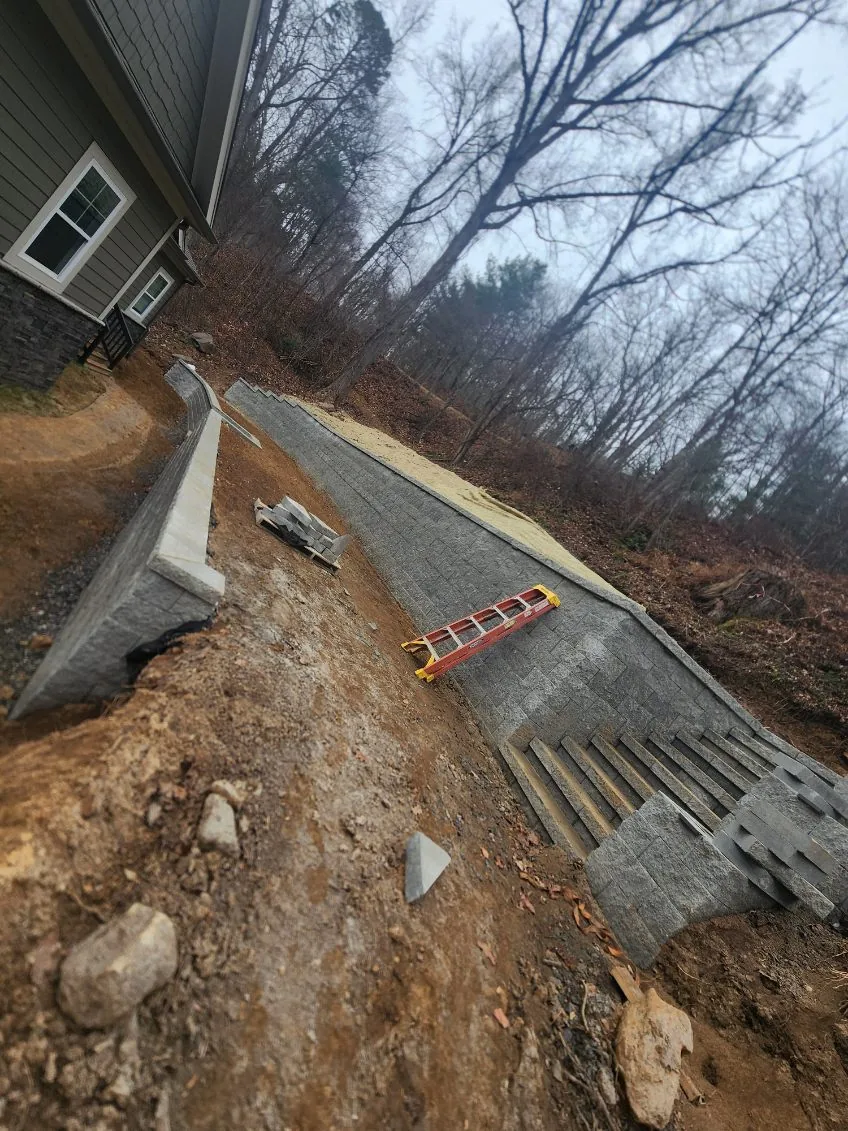
Solving it usually means combining the feature with a drainage strategy rather than treating them as separate projects. That is also where the retaining question shows up, since any pond that sits against a grade change has a wall in it whether you call it one or not. If the design includes stacked rock above knee height, look at the Candler retaining wall contractors page for how that work is scoped locally.
The second source is quieter and easier to miss: groundwater. In the clay-heavy soils common on these graded lots, a wet-weather spring can emerge from a slope face for weeks after a storm and then disappear. If the pond excavation cuts into that seam, the basin will not hold a stable water level — it will either stay topped up on its own or push the liner out from underneath, depending on which way the pressure runs. A builder who has worked Candler slopes will probe for that seam before digging, and if it is there, the fix is usually a gravel-filled collection trench behind the basin wall that relieves the pressure and sends the water to daylight downhill. That is a line item worth paying for up front, because retrofitting it means pulling the feature apart.
Code, licensing, and the electrical nobody budgets for
Two hard rules shape these projects more than homeowners expect. First, pumps and lighting are electrical work, and North Carolina treats outdoor submersible and low-voltage installations as real electrical scope, not an extension cord — the NC Building Code Council sets the standards, and any bonded, grounded circuit near water gets inspected. Second, once the scope crosses into structural retaining work, engineered drainage, or a project over the state's cost threshold, licensed general contracting applies. The NC Licensing Board for General Contractors publishes the thresholds; the short version is that a waterfall tall enough to need a block core is a different license conversation than a stacked boulder cascade.
Ask any builder how they handle the electrical circuit, the liner warranty, and the overflow outlet. Those three answers tell you more than a portfolio.
On the electrical specifically, the detail that trips people up is the circuit run from the house to the pump vault. If the panel is on the far side of the house from the feature, that trench and conduit is a real cost that shows up in the bid as a separate line. A GFCI-protected circuit, a weather-rated box at the vault, and enough slack to lift the pump without disconnecting anything are the marks of a job done to code rather than to the minimum. Ask to see where the disconnect goes and whether the circuit is dedicated. If the answer is vague, the inspection will make it specific.
Buying this well in Buncombe County
Water features in this county age on the same schedule regardless of budget, and the failures are predictable: liner punctures from rock settling, pumps undersized for the head height, and filtration that was never sized for the fish the homeowner actually added. Ask about service access — can the pump be pulled without draining the pond? — and ask what happens in a 19 declaration year. Buncombe has seen federal disaster events spanning 1973-2026, and the storms in that record are a fair test to run a design against.
The full range of feature types, from pondless to koi systems, is covered on the stone waterfalls and ponds service page. Start there if you are still deciding what shape the project takes, then get a site walk before you compare bids.
One more piece of local advice: schedule the work for late spring or early fall if you can. Candler's summer storms arrive fast and dump hard, and a freshly excavated basin with an open liner is the worst possible target for a gully-washer rolling off an uphill yard. A builder who watches the forecast and stages the liner and pump installation between weather windows is worth waiting for. The cheapest bid from someone who wants to start tomorrow, in the middle of an unsettled stretch, is rarely the cheapest project by the time the water clears.