The line items that move your Asheville patio bid
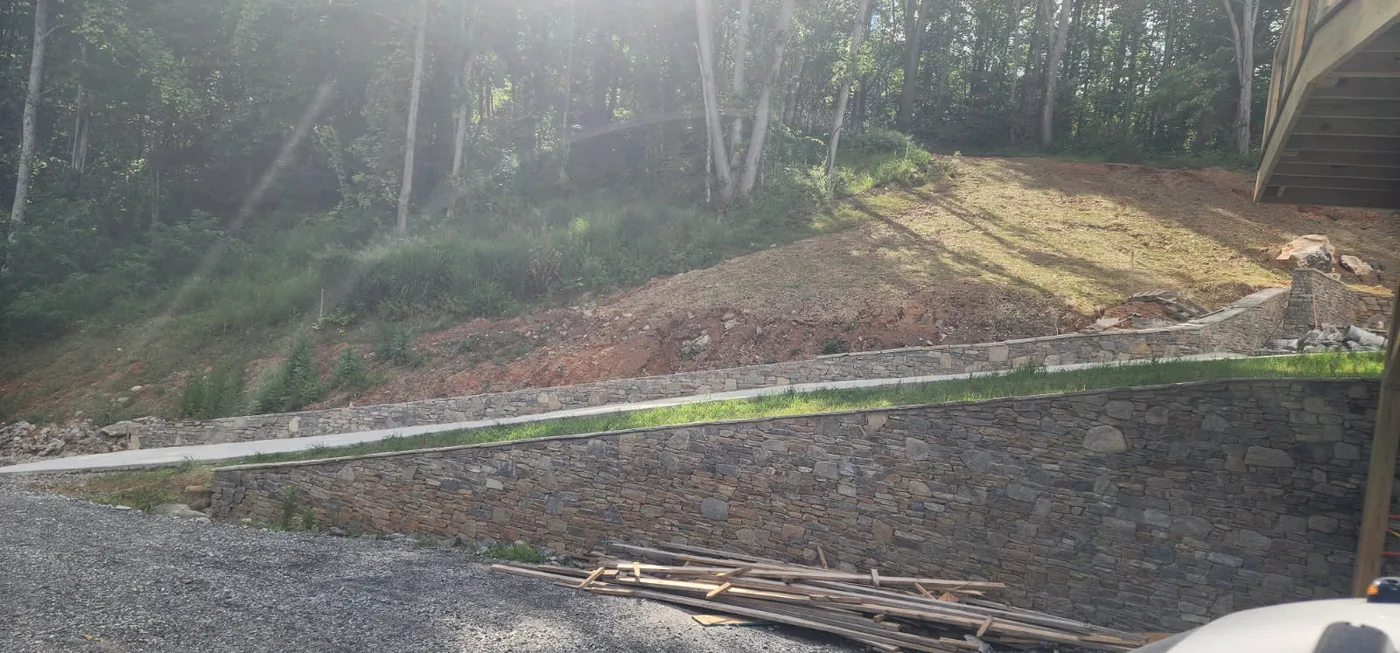
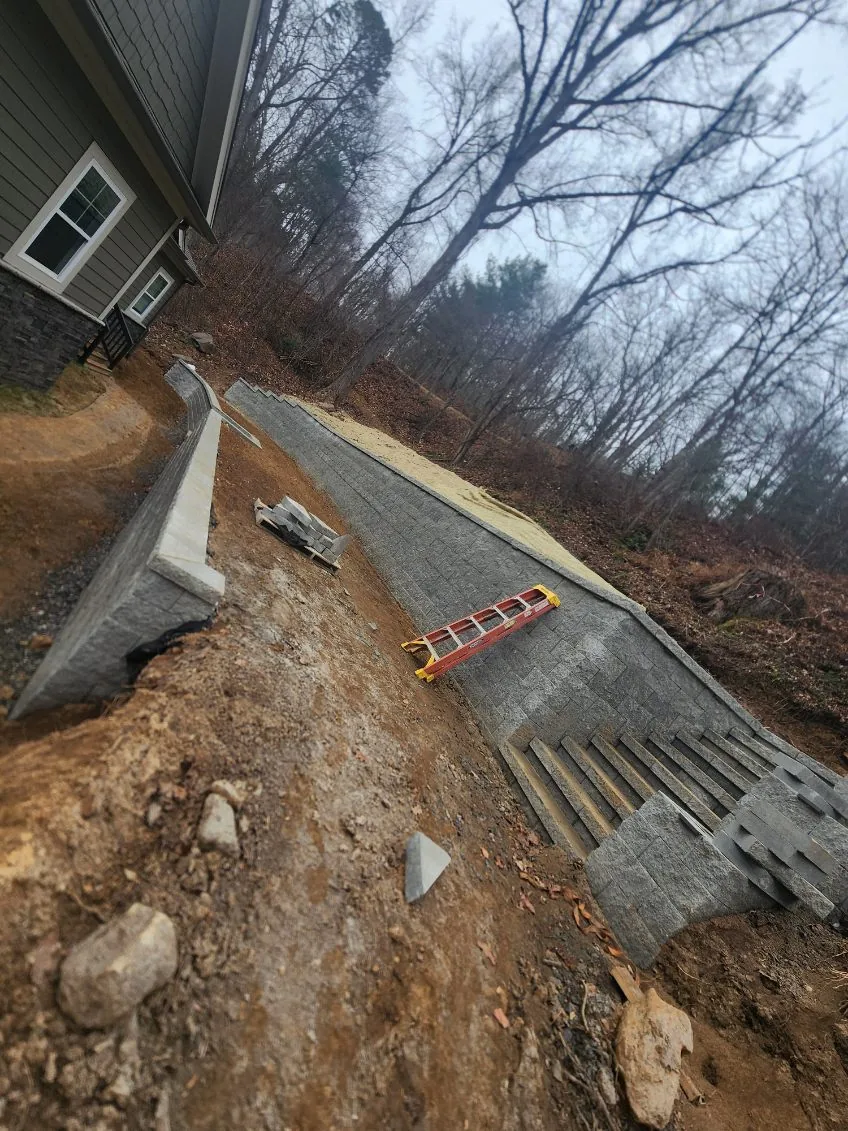
A flagstone patio estimate around Asheville rarely hinges on the stone alone. On a typical lot in this county, three or four line items do most of the moving: how much earth has to come out to reach a stable base, how far stone and base material must be carried from where a truck can park, how many cuts the layout needs, and whether the patio ties into a slope. A flat, truck-adjacent backyard in a Weaverville subdivision prices very differently from a ridge lot off Town Mountain Road where a wheelbarrow is the only access and the patio edge needs a low retaining course to hold grade.
Access is the quiet multiplier. In older West Asheville neighborhoods, driveways are narrow and mature trees overhang the only path to the back yard, so a mini-skid or even a conveyor might be the largest machine that fits. In the Kenilworth and Haw Creek areas, many lots step down sharply from the street, meaning every pallet of stone and every yard of base gravel gets moved twice: once from the truck to the staging area, and again from staging to the actual patio excavation. That is labor you cannot see in a finished patio, but it shows up in the bid.
| Scope of work | Typical Buncombe range (per sq ft) | What drives it |
|---|---|---|
| Thin flagstone over compacted base, simple rectangle | $18 – $26 | stone thickness, base depth, minimal cuts |
| Full-depth flagstone, mortared or dry-set, irregular shape | $26 – $38 | stone weight, joint style, cut count, edge restraint |
| Sloped lot with grading and drainage tie-in | $32 – $45+ | excavation, retaining, drain line, access |
| Add-ons (steps, seat wall, fire pit pad, lighting) | priced separately | each is its own scope, not a per-foot number |
Those are working ranges for planning, not quotes. Any firm per-foot number given before a contractor walks the grade and sees where stone can actually be staged is a guess. The range exists because two patios of identical square footage on the same street can be 40 percent apart once slope and access are measured.
Climate adds another line item that is easy to miss. Asheville sits in a transition zone where freeze-thaw cycles happen repeatedly through winter, especially on north-facing slopes and at higher elevations. That means base depth and compaction matter more here than in the flat, warmer parts of the state. A patio that would hold up fine on the coast can heave and crack in a single season on a Buncombe County hillside if the base was built shallow.
Why the base costs more here than the stone
Buncombe County ground is not flat clay. It is slope, fill, and rock in close succession, and patios fail on bad base long before they fail on bad stone. Our rain pattern makes this worse: 19 federally declared disaster events have touched Buncombe County across 1973-2026, and the storm-and-flood family dominates that record. Practically, that means a patio cut into a hillside catches uphill runoff against its edge every time a front stalls over the Blue Ridge. If base prep does not account for where that water goes, the patio will heave, settle, or shift within a few seasons.
That is not a hypothetical risk. In a hollow like Beaverdam Valley or along the steep streets above the French Broad River, water sheets off the ridge during summer thunderstorms and has to go somewhere. A patio that was built without a plan for that water becomes a dam. The stone stays put for a year or two, then the joints open, the surface rocks, and the fix costs more than doing it right the first time.
The consequence for cost is honest: on sloped lots around Asheville, excavation and drainage typically run a larger share of the bill than the flagstone surface. A bid that quotes stone and labor but stays quiet about water is not a cheaper job, just an incomplete one. Our fire pit cost guide covers how much the drainage and base work adds when you combine a patio with a built-in fire feature.
Base material itself is worth a conversation. Crushed stone compacted in lifts is the standard, but the depth and the number of lifts change with the slope and the soil. On a lot with expansive clay, you may need to over-excavate and bring in better material. On a lot with shallow rock, you may need to drill and pin, or adjust the patio elevation to work with what is already there. None of that is optional if you want the patio to stay flat, and all of it shows up in the bid before a single stone is set.
Stone choice and layout: where cuts quietly add up
Flagstone comes in thicknesses and formats that change both the look and the labor. Thin veneer-style stone is lighter, easier to handle, and cheaper per square foot; full-depth stone reads more substantial and lasts longer under foot traffic but costs more to move and set. Irregular, random-shaped stone looks natural but demands more cutting and fitting around edges, steps, and curves. A clean rectangular layout with straight borders uses fewer cuts and prices lower.
If you have walked a patio in the Montford or Grove Park neighborhoods, you have probably seen the difference. Older homes there often have stone that was set decades ago with thick, full-depth pieces and wide, sandy joints. It has settled into the landscape and still reads well because the base was built to last. Matching that look on a new build means paying for the thickness, the weight, and the skill to set it, not just the surface area.
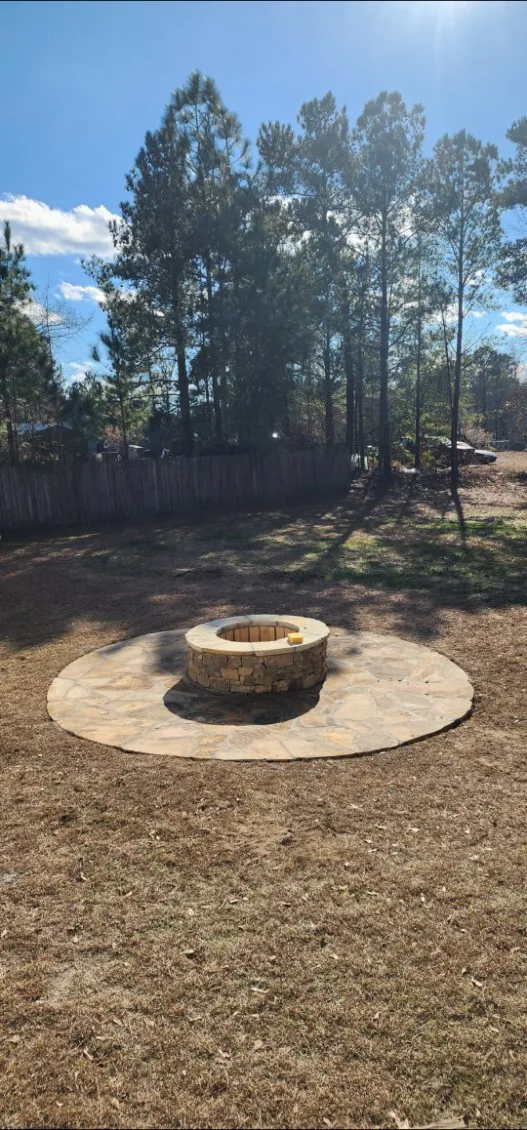
On a patio with a seat wall, steps, or an integrated fire pit, each feature is priced on its own scope rather than folded into the per-foot rate. That is normal and worth asking about up front, so you can see which features are driving the total. If you want the paving-only comparison, see our paver patio cost page for how concrete pavers price against flagstone in this market.
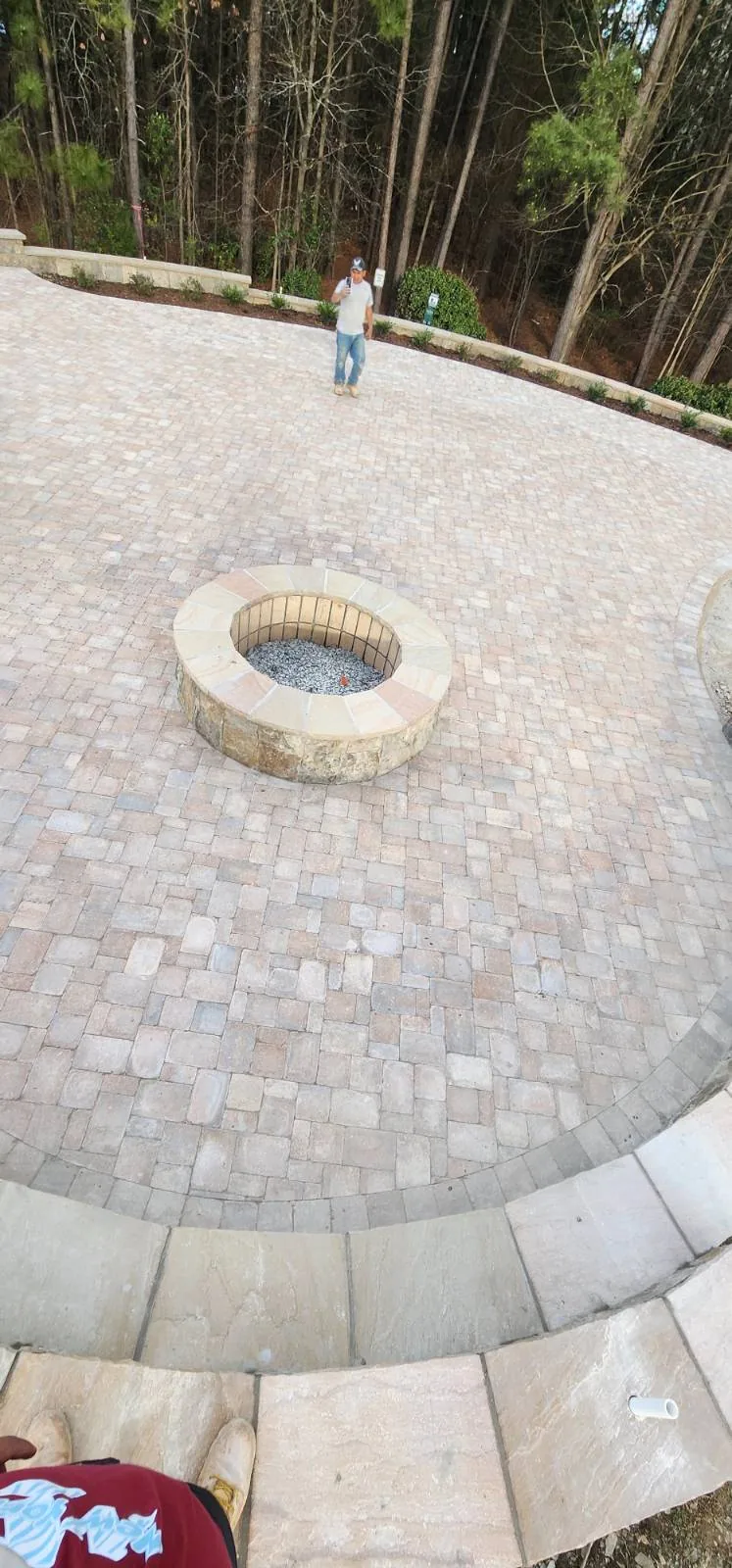
Cut work is where two bids for the same patio can diverge sharply. A curved border, a circular fire pit surround, or a set of irregular steps each require a saw and a skilled hand, and the time adds up. If your design is mostly straight lines and the flagstone can be laid with minimal trimming, you save on labor. If the design follows the natural contour of the yard, expect more cuts and a higher number. Neither is wrong, but the design choice is a cost choice.
Permits, licensing, and what North Carolina requires
A straightforward patio at grade usually does not require a building permit in Buncombe County. But once a project involves retaining walls above a certain height, attached structures, or significant grading, the picture changes, and the county enforces the residential code provisions that govern those elements (International Code Council publishes the model codes NC adopts). Structural and site work of significant scope falls under North Carolina's general contractor licensing threshold rules (NC Licensing Board for General Contractors) once a job crosses the state's dollar figure. For drainage components that touch stormwater or erosion control, the U.S. EPA maintains the reference material on stormwater best practices that local rules follow. A hardscape contractor who tells you permits and licensing never apply to patios is telling you how they handle the parts you cannot see.
Erosion control is a real consideration on sloped lots here. If your project disturbs more than a small area, you may need a plan for keeping soil on site during construction. That is not just bureaucracy; it is the same principle that keeps your patio base from washing out later. Contractors who work regularly in the county know the thresholds and can tell you when a project crosses them.
It also helps to know who is actually doing the work. North Carolina does not license specialty hardscape contractors the way it licenses general contractors, electricians, or plumbers. That means the burden is on you to ask about experience, insurance, and whether the person quoting the job will be the person on site. A written scope, a certificate of insurance, and a clear payment schedule are reasonable requests for any patio project, regardless of size.
How to compare flagstone bids in this market
Three moves keep the comparison honest:
- Ask for the base spec in writing. Depth of excavation, type and compaction of base material, and how water leaves the patio. This is where bids differ most and where cheap jobs fail first.
- Price the extras separately. Steps, seat walls, fire pit pads, and lighting should each appear as their own line, not blended into a per-foot number that hides the driver.
- Compare against the county range and against pavers. Line your bids up against the table above, and against our flagstone patio overview for what a complete build includes. If a number lands far outside the range, make the contractor explain why before you sign.
One more thing worth doing: ask each bidder to walk the lot with you and point out where they expect water to go. The answer tells you whether they have actually thought about your site or are just applying a template. On mountain lots, the contractor who talks about grade, drainage, and access before talking about stone is usually the one who will build a patio that lasts.
Want the wider regional picture before you commit? The paver patio cost guide shows how the two materials stack up across Western North Carolina.