What Buncombe County homeowners actually pay
Fire pit pricing in Western NC does not match the flat-ground national averages you see on national remodeling sites. The clay-heavy hillsides around Asheville, the narrow driveway access on lots above the French Broad River, and the cost of hauling stone up switchback gravel drives all change the number. Here is the honest working range for Buncombe County in 2025:
| Scope of work | Typical Buncombe range | What drives it |
|---|---|---|
| Prefab steel or copper fire bowl on gravel base | $900 – $2,300 | bowl size, gravel type, site prep |
| Paver base with concrete or stone ring (DIY kit assembled by crew) | $1,800 – $4,000 | paver square footage, material grade |
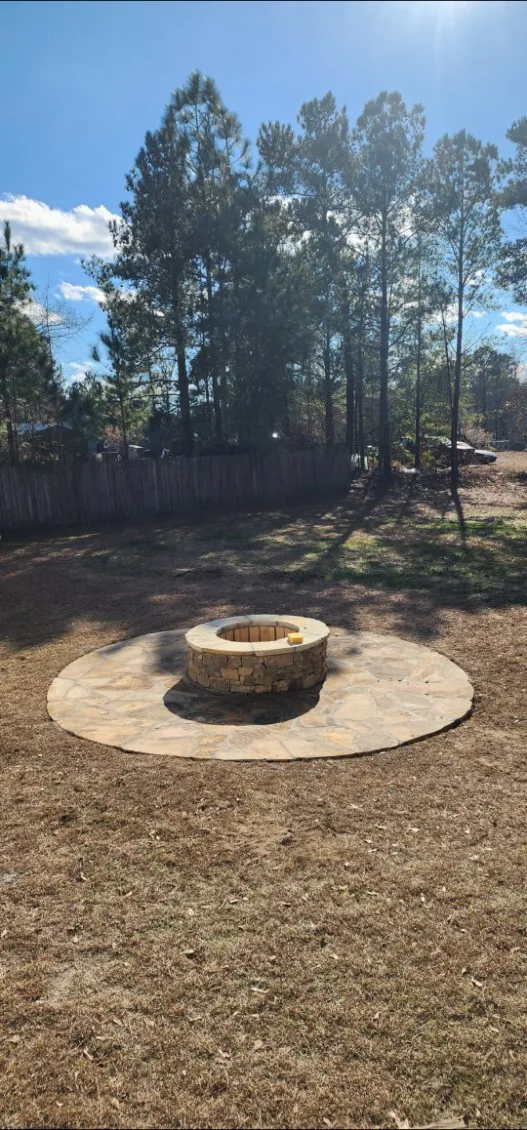
| Natural dry-stack stone fire pit with seating wall | $4,500 – $9,500 | stone sourcing, wall height, cap course |
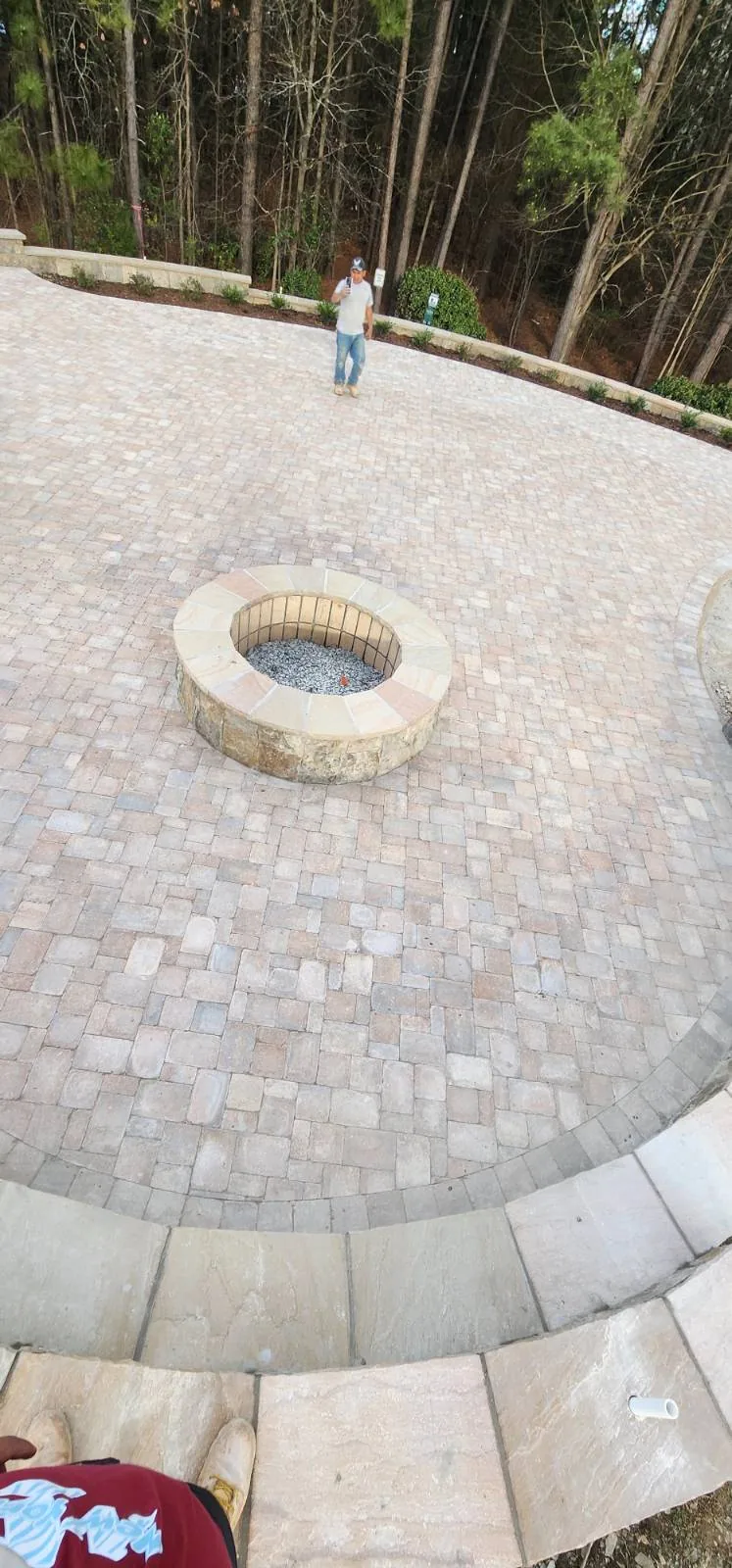
| Gas fire pit with flagstone surround and hookup | $5,800 – $12,000+ | gas line run, burner size, stone hearth |
Those are ranges, not quotes. A contractor who bids without walking your slope and measuring the haul distance is pricing someone else's yard, not yours. In neighborhoods like Kenilworth or Haw Creek, where the lots tuck into hillsides above the city, moving a pallet of fieldstone from the street to the backyard can be a two-hour job all by itself. The physical reality of your address matters more than any per-square-foot calculator you find online.
The gap between the low and high end of the table is not a contractor guessing. It is the difference between a flat, open side yard off Tunnel Road and a terraced back garden that backs up to a mountain laurel thicket. When a bid comes in suspiciously low, often it is missing the demolition, the soil removal, or the cost of having a second crew member show up just to carry buckets of mortar. Labor is the biggest line item on any fire pit project in this county, and it is also the place where underbidding shows up later in the form of a rushed install.
Why Asheville's terrain changes the estimate
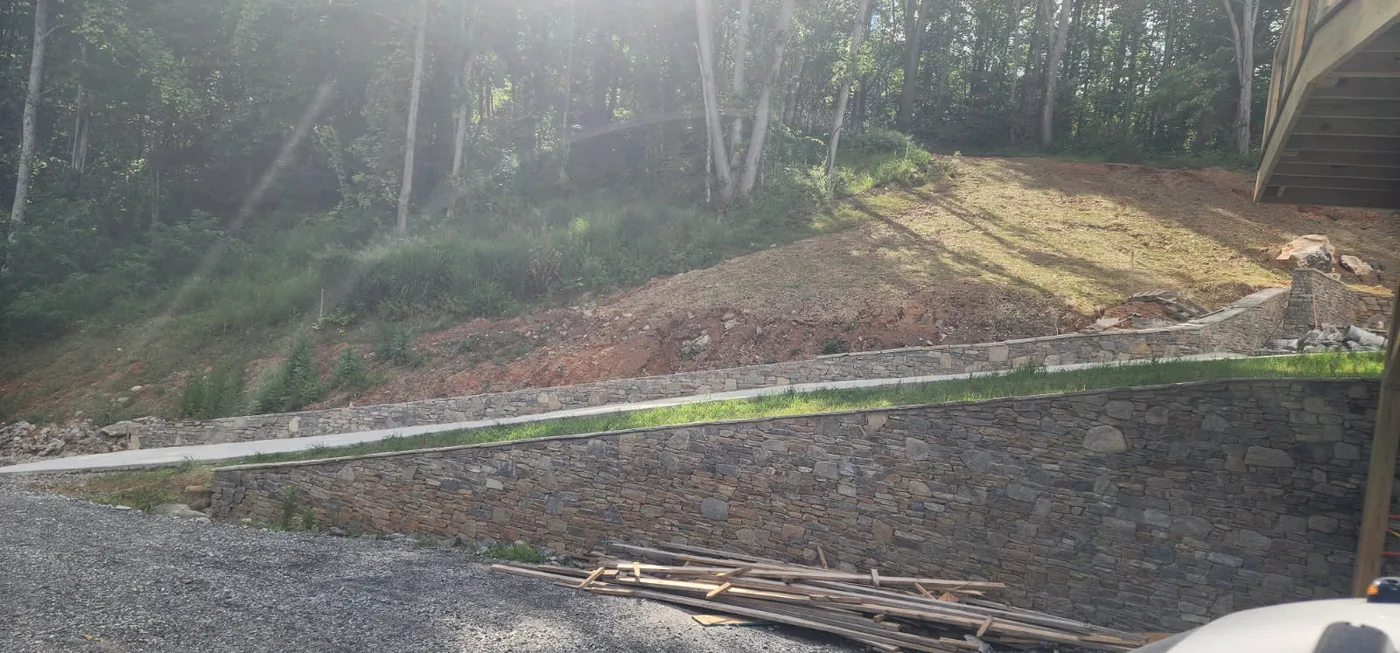
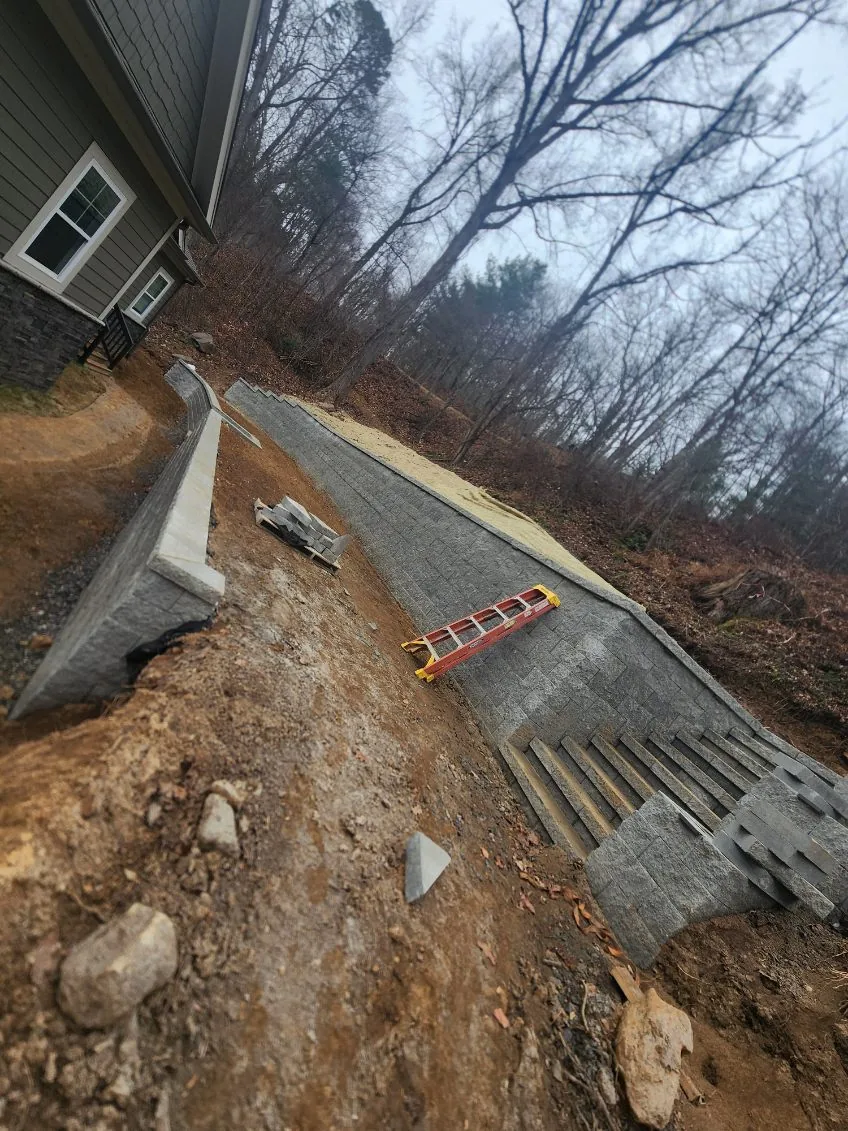
The Blue Ridge foothills around Asheville are not a forgiving site for hardscape. A level backyard off Hendersonville Road is a different job than a terraced lot in Montford or a steep patch in Riceville. Every stone delivery that requires hand-carrying a wheelbarrow up a grade adds labor hours that a flat-lot quote never shows. If your house sits on a slope with a retaining wall already doing heavy lifting to keep the yard in place, the fire pit base must be designed to respect that wall's drainage, not fight against it.
Water is the second factor. Rain moving downhill toward a fire pit undermines the gravel base over time — and this county's storm history is not theoretical. 19 federally declared disaster events touched Buncombe County between 1973-2026, most of them storm and flood family. That is why our fire pit installation guide insists on a drainage look first; water moving through your yard will move under your fire pit too. A pit dug into a clay bowl without an aggregate drainage layer will hold water like a bathtub after a spring thunderstorm, and that moisture will heave the stones out of level within two winters.
Contractors here also have to read the county's tree protection and setback rules before digging. Mature oaks and tulip poplars are protected in many Asheville neighborhoods, and a root zone that extends into your proposed pit area is a reason to relocate the whole project. The NC Office of State Fire Marshal sets the fuel and clearance code for gas-burning outdoor fire features, and jurisdictional rules on open burning can affect what type of pit you are allowed to build at all. A wood pit in a densely built neighborhood like Chestnut Hill has different practical constraints than one on a five-acre tract in Leicester.
Licensing and code reality for hardscape in North Carolina
Stone masonry and hardscape work falls under general contracting rules in NC, not the plumbing or fire-sprinkler boards — a licensed general contractor is required once a job crosses the state's $40,000 threshold. Most fire pit projects sit well below that line, but if you are bundling a fire pit with a full paver patio and an outdoor kitchen, the combined number can trip the limit fast. The $40,000 threshold is cumulative for all the work performed under one contract, not split out per feature, so a homeowner who plans a full backyard transformation needs to verify the contractor's license before any dirt moves.
Gas lines are the exception. Any licensed plumber or mechanical contractor doing a gas hookup must hold a license from the NC State Board of Examiners of Plumbing, Heating and Fire Sprinkler Contractors. The fire pit mason builds the stone; the gas fitter runs the line. Never combine those roles. The gas fitter will pull a separate permit, and Buncombe County inspections will schedule a pressure test on the line before the trench gets covered. That inspection is not a formality; an unlicensed gas line under a stone hearth is the kind of hidden defect that shows up as a slow leak into a crawlspace or under a patio.
The International Residential Code — adopted by North Carolina — governs clearances from combustible walls and structures for open-flame appliances. A fire pit within 10 feet of a vinyl-sided home or a wooden pergola is usually a code violation and a genuine fire hazard. The NC Office of State Fire Marshal enforces those provisions at the state level, and Buncombe County inspections apply them. Clearance rules also apply to overhead branches; a low-hanging limb over a wood-burning pit is a risk that a code inspector will flag, and a safe contractor will flag it before the build begins. The code book is not a suggestion box — it is the baseline for keeping a structure fire from becoming a home fire.
The material decision: honest tradeoffs for this climate
The biggest single choice in a Buncombe County fire pit is the stone itself. Locally quarried Blue Ridge cobblestone and fieldstone match the regional architecture and handle freeze-thaw well — but they cost more per ton than the imported Pennsylvania bluestone or Georgia granite you will see at national yard suppliers. The freeze-thaw cycle at 2,200 feet elevation punishes soft stone; porous river rock that looks great in August can spall by February. Ask your mason what the stone's water absorption rate is — honest crews know that number because they have replaced enough spalled caps to learn the expensive lesson.
Gas versus wood is the second fork. Wood is simpler, cheaper, and messier; gas requires a licensed plumber from the NC plumbing board to run the line, and the IRC's clearance rules get more strict if the burner sits near a covered porch. If you want the look and function of a fireplace rather than a freestanding pit, gas is worth the extra permitting cost — the architectural anchor justifies it. But consider the fuel reality in your neighborhood: a gas line extension from a meter on the far side of the house could mean trenching under an existing walkway, which adds mobilization cost that has nothing to do with the fire pit itself.
There is also the matter of the cap stone — the top course that takes the most thermal stress. A good mason will use a denser, lower-absorption stone for the cap than for the body of the wall, even if it costs more per square foot. That is the kind of detail that separates a build that looks new for a decade from one that looks worn after two seasons of Sunday fires. Ask about the base aggregate, too: crushed stone with sharp edges locks together better than smooth river gravel, and in clay soil that shifts with moisture, that base is the difference between a level fire pit and one that leans toward the downhill side of your yard.
How to keep your fire pit bid honest
Three moves protect you in this market, same as they do for foundation or retaining wall work. The first is asking for the haul distance as a line item. If the crew walks the site and cannot tell you how many wheelbarrow trips the slope requires, they have not planned the install. A flat quote from a company that has never seen your switchback driveway is a wish, not a bid. The second is getting the drainage plan in writing. A proper base is 4–6 inches of compacted gravel with a slope away from the pit. If the bid has no aggregate line item, the base is an afterthought — and in Buncombe County clay, that afterthought becomes a sinking, water-filled pit within a year.
The third is pricing stone per ton, not per pit. Stone prices fluctuate with quarry supply and shipping diesel; a per-ton price keeps the change order honest when the build grows by a foot of seating wall. A per-ton quote also tells you whether the mason is sourcing local stone or hauling it from another state, which matters for both the look and the carbon cost of your project. Watch the crane or delivery access too: a truck that cannot back up to the site means a helper hand-carrying stone, and that labor shows up in the final invoice even if it was not in the original estimate.
- Ask for the haul distance line item. If the crew cannot estimate wheelbarrow trips on a sloped site, they are guessing at the labor half of the bid.
- Get the drainage plan in writing. The base is 4–6 inches of compacted gravel, sloped away from the pit. No aggregate line item means the base is an afterthought.
- Price stone per ton, not per pit. That keeps change orders honest when you add a seat wall or widen the hearth.
Want to compare this against a full outdoor build? Our paver patio cost guide covers the adjoining work, and the outdoor fireplace and kitchen guide shows what happens when a pit becomes a structure. Good fire pits earn their spot in the yard; great bids earn their spot in your budget because they are honest about the slope. A contractor who warns you that the site needs French drains before the pit goes in is saving you from a rebuild — that is the kind of honesty that should win the job, not the low bid that ignores the water running through your yard.