What makes Biltmore Forest lots different from the rest of Buncombe County
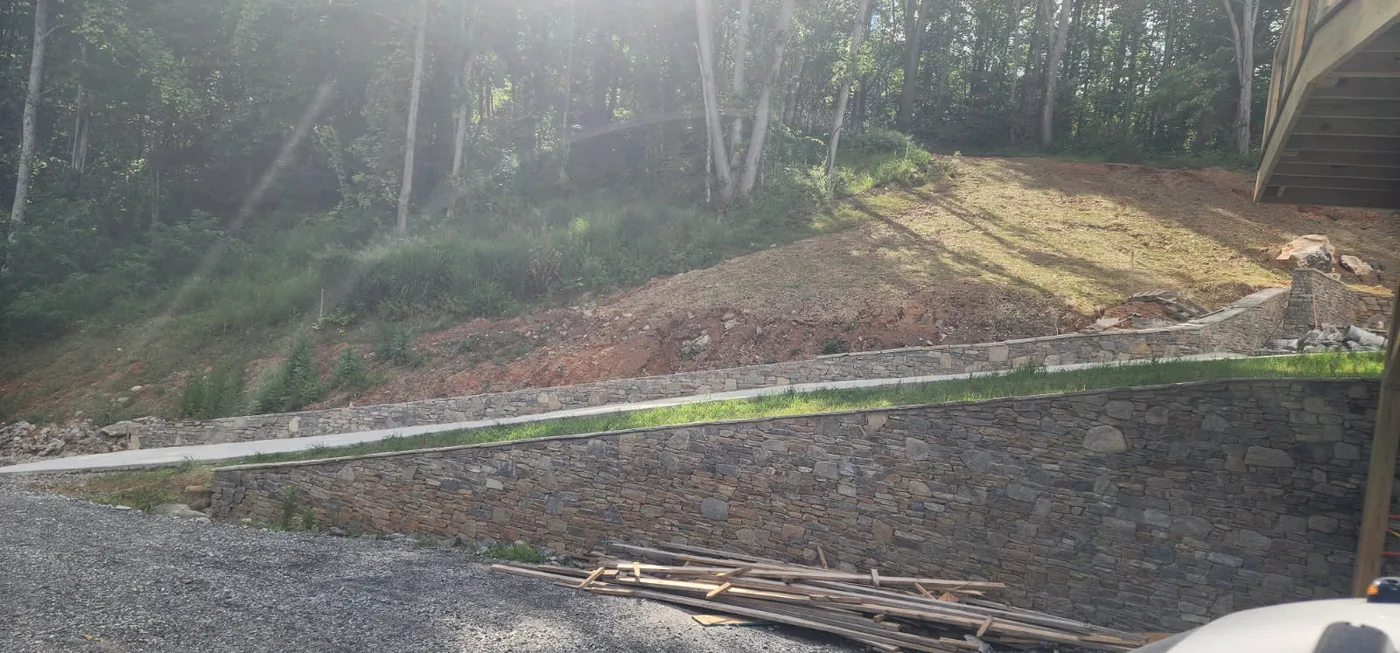
Drive through Biltmore Forest and the first thing you notice is that almost nothing here is flat. The town sits on rolling ridge ground south of Asheville, wrapped around the Biltmore Estate's edges, with lots that were platted long before anyone thought about how a patio would sit on them. A typical parcel is one to three acres, thick with mature white oak, tulip poplar, and hemlock, and sloped enough that a 12-by-16 patio becomes a retaining situation on at least one side.
Two local realities shape every job. First, the soil: heavy red clay over weathered rock, the same ground that makes retaining wall cost in Buncombe County higher than mountain towns with sandier ground. Second, the town's tree canopy and zoning habits mean mature trees are treated as features, not obstacles — which pushes patios into smaller, more carefully shaped footprints tucked between root zones rather than big open rectangles.
The practical translation: a paver patio here is rarely a simple 400-square-foot layout. It's a scale, drainage, and shade puzzle that starts with where the water goes and how the trees above it are protected.
Realistic patio scope and price bands for this town
Biltmore Forest patios are priced by the square foot, but the multiplier is site work. Two patios the same size can differ by five figures depending on slope, access, and how much base excavation the clay demands. Below are working ranges we see on this side of the county; they assume a paver install with proper 4-to-6-inch compacted base, polymeric joint sand, and edge restraint.
| Scope | Typical size | Price range |
|---|---|---|
| Small terrace off a garden-level door | 120–180 sq ft | $6,500–$11,000 |
| Standard family patio, minimal slope | 300–450 sq ft | $13,000–$24,000 |
| Slope-tied patio with one retaining edge | 400–600 sq ft | $22,000–$38,000 |
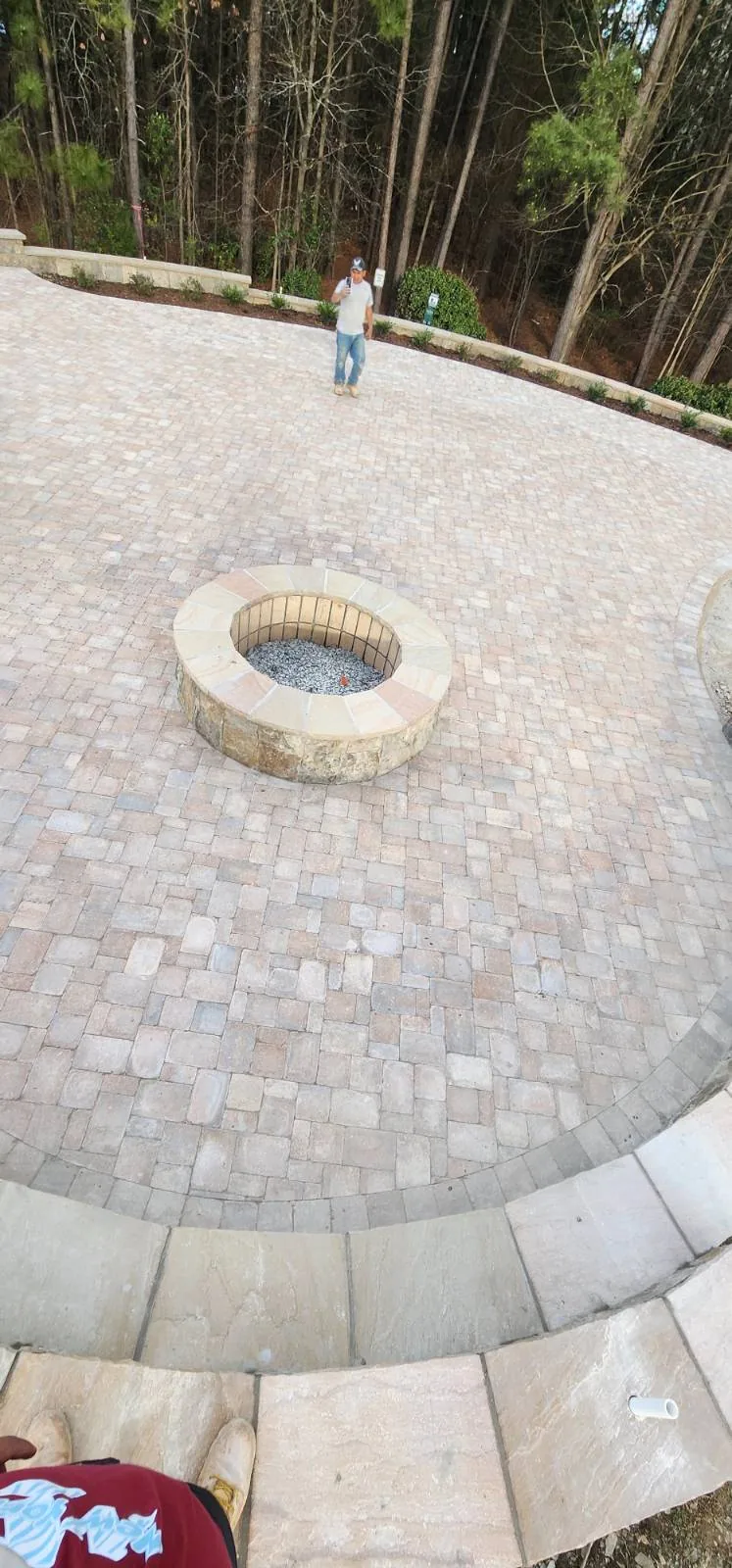
| Multi-level patio with steps and seat wall | 600–900 sq ft | $38,000–$70,000 |
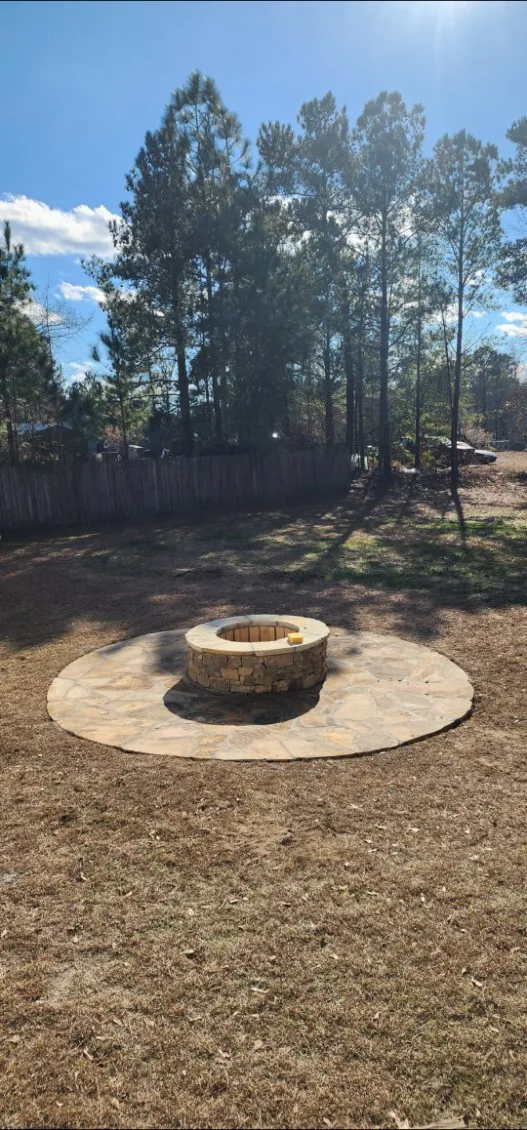
| Patio + matching walkway or fire-pit pad | Add-on | $4,500–$14,000 |
Concrete paver products land in the middle of those bands. Natural stone (bluestone, Tennessee flagstone) and porcelain pavers push toward the top or above it. What rarely moves the price is the paver selection itself — the base, the drainage, and the retaining edges do that.
Drainage is the design, not the afterthought
Buncombe County's federal disaster record is heavy on storm and flood family events — 19 declared events across a 1973-2026 span. Biltmore Forest sits high enough that creek flooding isn't the issue, but saturated hillside runoff absolutely is. Water that sheets off an uphill neighbor's lawn or dumps off a roof downspout into a patio bed will heave pavers within two winters, no matter how well the base was compacted.
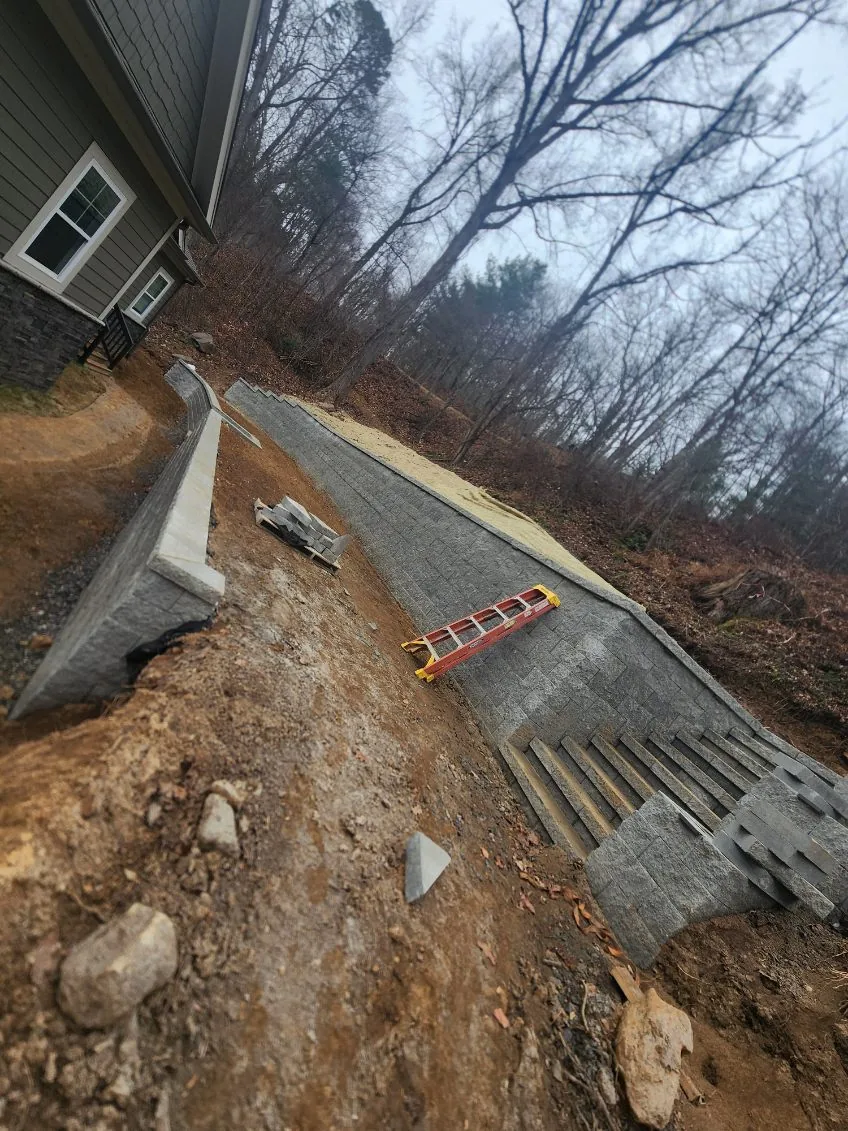
Any serious patio plan here starts with three questions: where does the water come from uphill, where does it want to go, and does the patio's slope carry it there. That is also where retaining wall contractors in Biltmore Forest and patio installers overlap — most slope-tied patios need at least a segment of engineered wall to hold the grade change. The International Code Council treats exterior drainage and retaining-wall loads as structural matters for a reason, and residential code in North Carolina follows that lead.
Skipping this step to save a few thousand dollars is the single most common reason a five-year-old Biltmore Forest patio already looks fifteen.
Permits, licensing, and how to check a crew
North Carolina draws a licensing line for general contractors at project values that many patio-plus-wall builds cross once retaining is involved. The NC Licensing Board for General Contractors maintains the searchable registry — a quick check tells you whether the company bidding your job is properly licensed for the scope, and whether complaints exist. For patios that stay purely flatwork under the threshold, licensing isn't always required, but insurance and workers' comp still matter.
Buncombe County and the Town of Biltmore Forest each handle their own permit and inspection process; retaining walls above a certain height and any work touching a right-of-way typically trigger review. Ask the contractor who pulls the permit and who calls for inspection — a crew that shrugs at that question is telling you something.
What a good Biltmore Forest patio scope actually includes
Because the lots are wooded and sloped, the line items that distinguish a real bid from a cheap one are mostly invisible after the pavers go down. A complete scope for this town looks like:
Full excavation to the required depth, not just raking off topsoil. Compacted crushed-stone base in lifts, verified with a plate compactor. Geotextile fabric over clay subgrade, which Biltmore Forest's soil essentially demands. Edge restraint pinned or cemented, not just plastic edging. Polymeric joint sand, properly wetted. Drainage — French drain, swale, or tie-in to existing storm path — spelled out by name. Downspout extensions or buried lines accounted for. Tree-root protection zones noted on the plan. Cleanup and haul-off of spoils.
If a bid skips three of those, the number is lower for a reason. See the full paver patio overview for how these pieces fit together across different lot types.