Get the truck to the hole first
In Mills River the hardest part of a paver patio is often getting the material and the machine to the spot. A lot off North Mills River Road with a paved, low-grade driveway lets a mini-excavator and pallets of pavers roll straight to the work zone. A property on a switchback gravel drive up toward the Blue Ridge escarpment may not. When a full-size dump truck can't back to the excavation, you're paying for small loads, wheelbarrow labor, or a conveyor — and that line item can add 15-30% to a job that looks identical on paper to one down the road.
Haul distance is the second multiplier. Mills River sits within reasonable range of Henderson County aggregate sources, but base rock, bedding sand, and pavers still move by truck. Every extra mile is fuel, time, and truck cycles, and those get passed through. This is why two bids for the same 400 sq ft patio can differ by thousands: one crew priced a straightforward driveway approach and the other priced a steep, long carry.
When you read a quote, look for the access assumptions. A bid that doesn't state how equipment reaches the site and where material gets staged is incomplete rather than cheap. The paver patio overview walks through what a full scope includes before pricing starts.
Driveway grade is not just a convenience issue; it can also determine what equipment is legal and safe on your property. A slope that's too steep for a loaded dump truck may still work for a tracked mini-excavator, but that changes the number of trips and the labor hours. Ask any bidder to walk the approach with you and point out where they would stage pallets, where the excavator would track, and where spoil from excavation would go. If they can't answer those three questions on the spot, the bid is a guess.
Mills River also has a mix of older farm lanes and newer subdivision streets. A farm lane off a two-lane road may be wide enough for a truck but not have a turn-around, so the crew loses time backing out. A subdivision cul-de-sac may be easy to reach but have HOA rules about where equipment can park or how long a dumpster can sit. Those are real costs that show up in labor, not in materials. Good crews ask about them before signing.
The Mills River price picture
Regional bands for Henderson County run roughly $18-$38 per square foot installed for a standard patio on prepared ground, with complexity pushing the top end. Retaining, drainage, and any wall work get priced separately — see the Henderson County retaining wall cost table because patios and walls almost always arrive together on slope lots.
| Scope | Typical installed range | What moves it |
|---|---|---|
| Small patio, simple access (200-350 sq ft) | $6,000-$11,000 | Base depth, paver tier, edge restraint |
| Mid-size patio, standard driveway access (400-600 sq ft) | $11,000-$19,000 | Excavation volume, drainage, pattern cuts |
| Large or tiered patio (700+ sq ft or multi-level) | $19,000-$30,000+ | Grade change, retaining, engineering |
| Steep or long-carry access surcharge | +15-30% on labor/haul | Equipment size, load cycles, staging |
| Base and drainage build-up on heavy clay | $4-$9 per sq ft added | Geotextile, compacted lifts, French drain |
These are bands, not quotes. A real number requires a site visit that measures slope, checks soil, and confirms how a truck actually reaches the work. A 300 sq ft patio with easy access might come in near the low end, while a 600 sq ft patio on a slope with a long carry can easily hit the top of the mid-size band or beyond.
It helps to separate the quote into three buckets: excavation and base, pavers and setting materials, and access/haul. When a bid lumps everything into one number, you can't tell whether the premium is in the stone or in the dirt. Ask for the breakdown. If the contractor won't provide one, that's a sign the number isn't built from a real takeoff.
Water on clay and slope: the Henderson County variable
Much of Mills River's residential ground is heavy clay over ridgeline and valley lots, and clay does not drain. A patio built on a shallow base over clay will heave, shift, and pool within a season or two. The federal disaster record backs the local experience: 16 declared events touch this county (1978-2026), overwhelmingly storm and flood family, and each one pushed water at grade assumptions that were already marginal. Before paver selection, the drainage question has to be answered — where roof runoff goes, how the uphill slope sheds, and whether the patio needs a French drain or a swale.
The North Carolina Building Code Council (ncosfm.gov) treats site drainage as a first-class requirement, and the International Code Council (iccsafe.org) standards for exterior hardscape support the same logic. A crew that prices excavation depth and drainage before pavers is the crew that expects the patio to still be flat in five years.
On a slope lot, the patio is often the flat spot in a yard that otherwise sheds water fast. That makes it a collection point unless the base is built to move water. Standard practice in Henderson County is a compacted aggregate base of 6-10 inches on clay, separated with geotextile, and sloped away from the house at roughly 2%. If the patio sits below an uphill lawn, a swale or French drain at the uphill edge intercepts surface flow before it reaches the pavers. Those details are not extras; they are the difference between a patio that lasts and one that becomes a repair project.
Who you're actually hiring, and the licensing line
North Carolina draws a licensing threshold that matters here: general contracting rules administered by the NC Licensing Board for General Contractors (nclbgc.org) kick in once a project crosses a defined dollar value, and a paver patio plus retaining wall and drainage can cross it. Ask any contractor how they're licensed for the full scope, not just the pavers. A patio installer who subcontracts the wall and drainage is fine — as long as you know who holds the license for each piece. For the wall-and-yard side of the job, the retaining wall contractors serving Mills River page covers what to verify on the structural portion.
Licensing in North Carolina is not a formality. If a project crosses the threshold, the person contracting with you is expected to hold the right license or to work under one. That protects you if something goes wrong, and it also means the contractor has demonstrated at least a baseline of experience and financial responsibility. When you ask, don't just ask "are you licensed?" Ask which license, for what scope, and whether the wall and drainage portions are covered by that license or a subcontractor's.
Sequencing: patios don't get built alone in Mills River
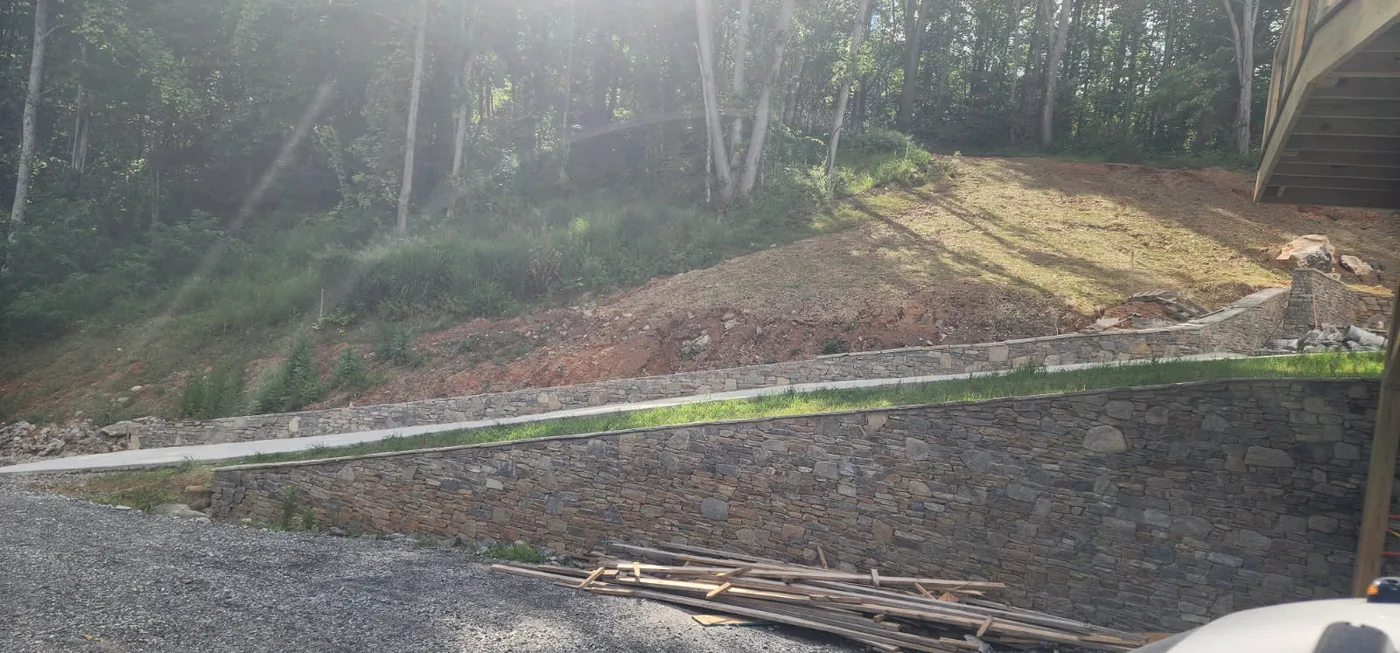
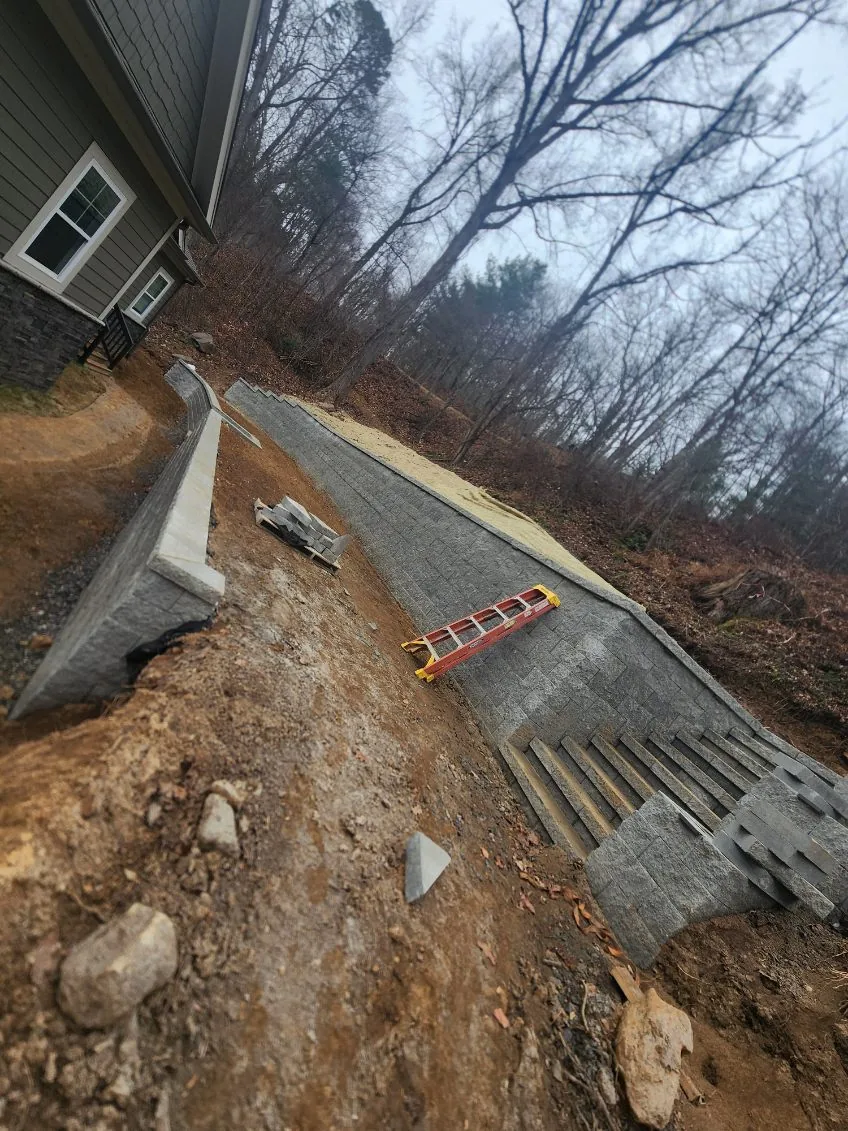
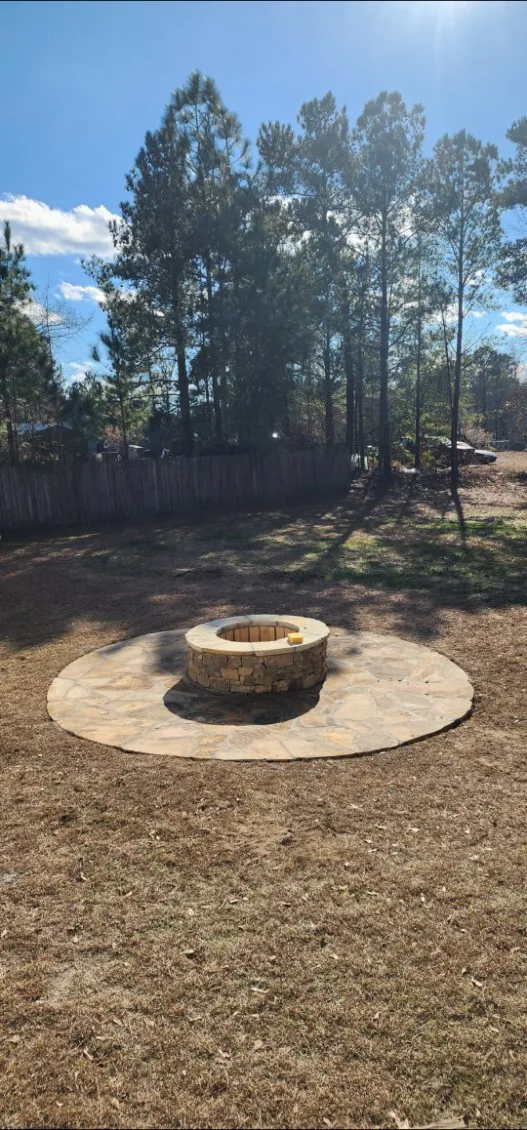
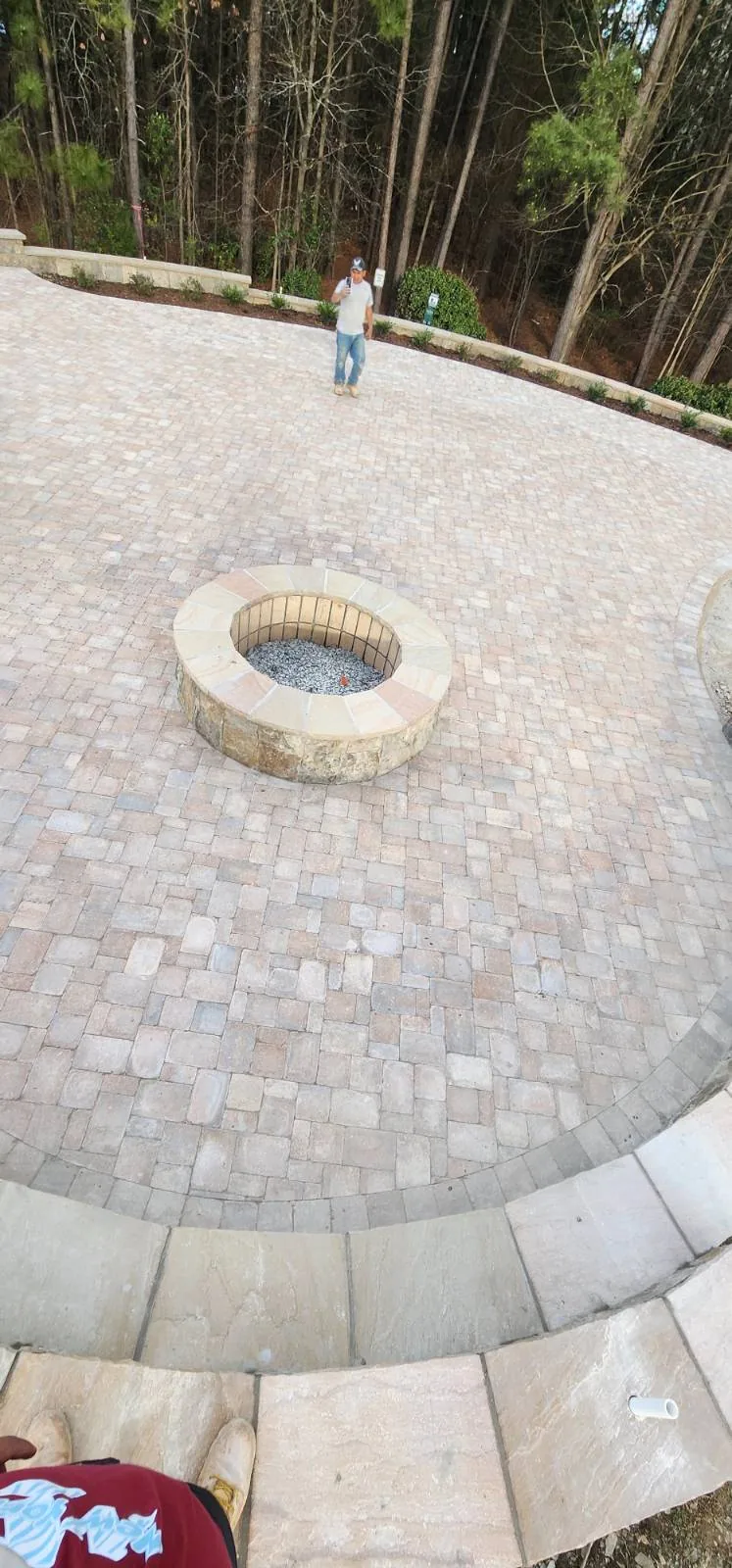
Most Mills River patios share a yard with a retaining wall, a fire pit, a grill island, or a walkway tie-in. That means the patio scope and the wall scope need to be priced and permitted together, because the wall's drainage plan and the patio's base plan are the same plan. If a crew quotes the patio in isolation and treats the wall as an afterthought, water will find the seam. Ask for a single site plan showing grades, drainage, and both structures before you sign anything.
Sequencing also matters for the calendar. In Henderson County, late fall and winter can bring freeze-thaw cycles that make excavation and compaction harder, and spring rains can turn a clay yard into a mud pit. A crew that knows the local weather pattern will schedule base work for drier windows and will protect open excavation from runoff. If a contractor promises a fixed start date months out without mentioning weather risk, ask how they handle delays and what happens to the price if the site is too wet to compact.