Barnardsville access is the price list
Drive out Barnardsville Highway past the fire department and the road starts telling you what a fire pit will cost. Flat gravel pads in the valley bottom near Dillingham take a dump truck and a mini excavator with no drama. Head up Big Ivy, Paint Fork, or any of the switchback hollows feeding the Pisgah ridge, and the same pit gets expensive fast: narrow single-lane gravel, steep grade, turnaround that won't accept a loaded truck, and stone that has to be shuttled the last hundred yards in a wheelbarrow or a compact track loader. That last hundred yards is often the difference between a $3,000 pit and a $9,000 one.
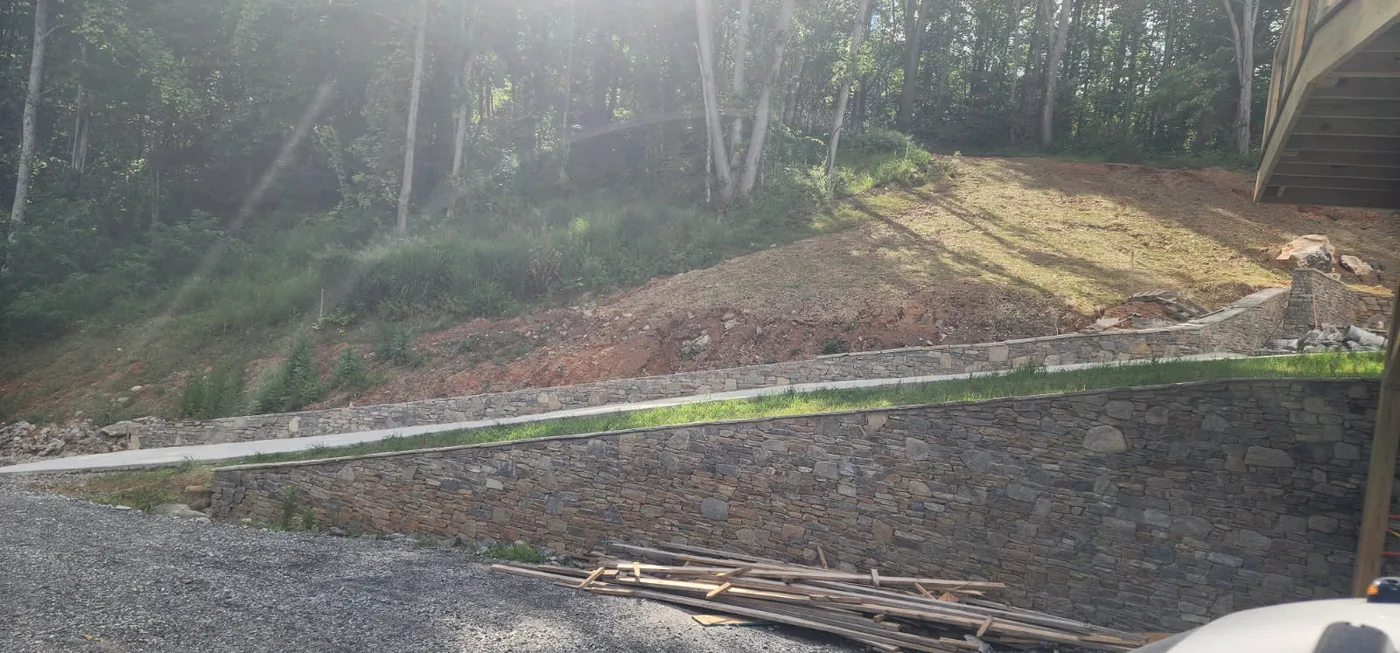
This is mountainous Buncombe County, not a subdivision trade. Barnardsville lots are frequently 1-5 acres of sloped ground, often with a house cut into the hill and a yard that is really a graded bench. The fire pit has to sit on something that will not migrate downhill in a wet spring, which means the base matters as much as the stone you see.
What drives the quote up or down
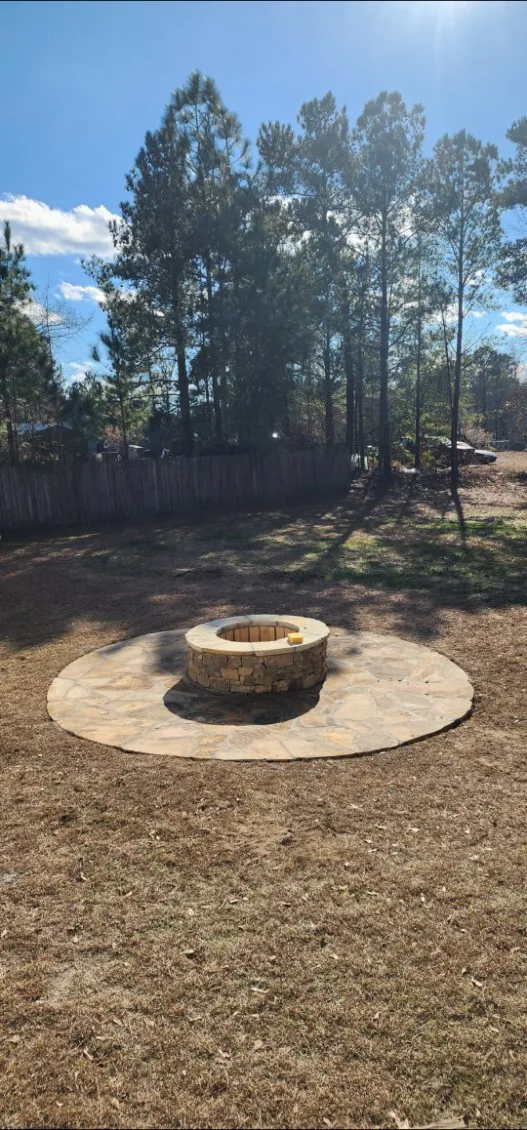
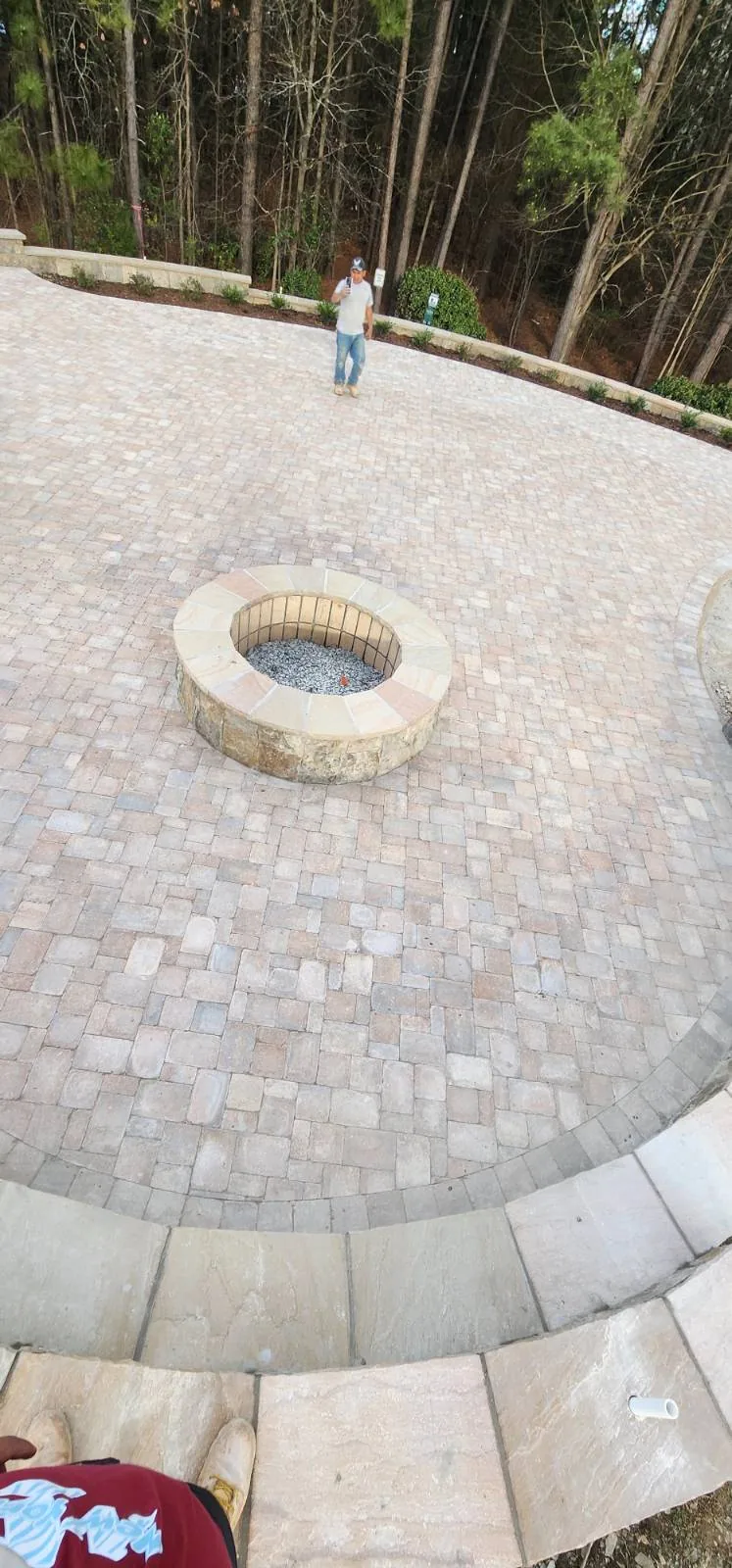
Four things separate a Barnardsville fire pit bid: how close a stone truck can park, how much grade has to be cut or filled to make a level circle, whether the pit needs a retaining lip on the downhill side, and what the pit is made of. Kit-and-block pits are the cheapest assembly; mortared stone with a steel or cast insert in the middle; dry-stacked native stone with a heavy cap is the top of the local range and the look most Barnardsville owners actually want on a ridge lot.
Gas lines change the number too. A propane or natural gas pit needs a trenched line and a shutoff, and on a slope the trench is a real line item, not a footnote. Ask any builder to break the quote into base prep, stone or block, burner or wood, and gas if applicable, so you can compare bids line-to-line rather than bottom-line to bottom-line.
Barnardsville fire pit scope and price ranges
Ranges below are what we see in this corner of Buncombe County, access included. Steep-driveway jobs, of which Barnardsville has plenty, ride the top of every band.
| Scope | Typical range |
|---|---|
| Prefab steel or kit pit, existing flat pad, no base work | $2,500-$4,000 |
| Block pit with veneer, new gravel base, wood-burning | $4,000-$6,500 |
| Dry-stacked native stone pit with cap, base and bench | $6,500-$10,000 |
| Gas or propane pit with trenched line and shutoff | $7,000-$12,000 |
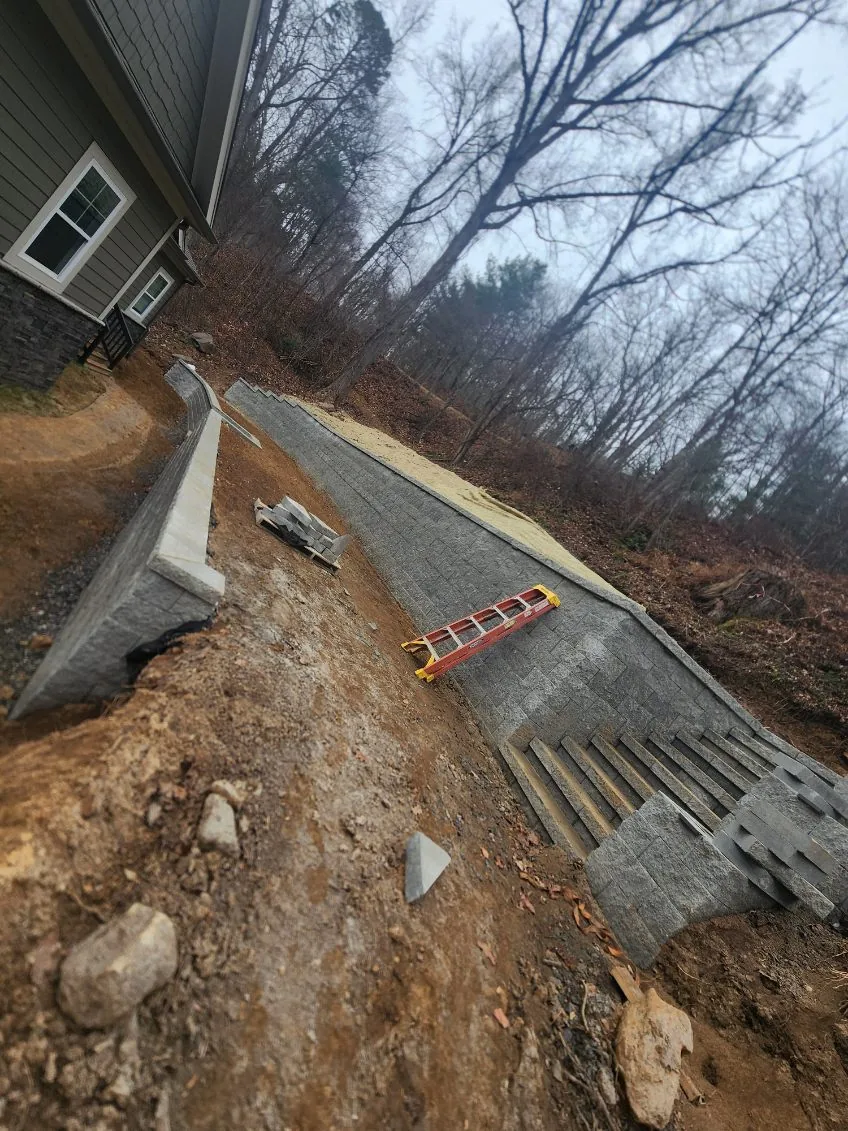
| Slope-side pit needing retaining lip or crib | Add $1,500-$4,000 |
For the broader county picture on stone hardscape work, the Buncombe County retaining wall cost breakdown uses the same access logic and is worth reading before you commit to a number.
Stone, gravel, and the haul nobody quotes
Stone is heavy and Barnardsville is far from the quarry. A tandem load of gravel or native stone delivered to a Big Ivy address costs more per ton than the same load dropped in Weaverville, because the truck spends an hour each way on a two-lane mountain road and sometimes can't make the final turn. Honest builders put that in the bid as a haul line. Bids that don't will find it later, usually as a change order.
If the pit is wood-burning, the surrounding surface has to be non-combustible and the clearance to siding, decking, and overhanging limbs is not a style choice. The International Code Council publishes the model language most North Carolina inspectors work from, and county inspection of permanent outdoor burning appliances follows it. On a wooded Barnardsville lot, the overhang question is the one that surprises people. If the pit is close to a slope, the Barnardsville retaining wall contractors page covers how a hillside seat wall and a fire pit pad are usually built together rather than as two separate jobs.
Permits, burn rules, and who can legally build it
A freestanding fire pit that is not a permanent structure often needs no building permit, but a permanent masonry pit, a gas line, or any retaining structure over a modest height crosses into permit territory. The NC Licensing Board for General Contractors sets the dollar threshold where a project must be run by a licensed general contractor, and gas work requires a licensed trade regardless of the fireplace itself. Separately, Buncombe County burn rules restrict open burning on air-quality action days, and in a dry mountain autumn that matters. The NC Department of Environmental Quality publishes the burn bans and air-quality notices that govern whether you can legally light the thing you just paid for.
Storm and flood history is part of the siting conversation here. 19 federal disaster declarations touch this county across a 1973-2026 record, and the recurring theme in the mountains is water on steep ground. A pit at the toe of a cut slope, or below a driveway that sheets runoff, will undermine. Grade, drainage, and where the water goes when it rains hard are first visits, not afterthoughts.