Why access decides your Maggie Valley flagstone price before design does
Most of the calls that come through here don't start with a stone question. They start with a driveway question. A patio on a flat lot off Soco Road and a patio 300 feet up a switchback above Jonathan Creek are not the same job, even at identical square footage. Flagstone is heavy, it arrives on pallets, and the truck that delivers it has to either reach the build site or the crew has to hand-carry every piece from wherever the truck can safely stop. That hand-carry is where budgets quietly move.
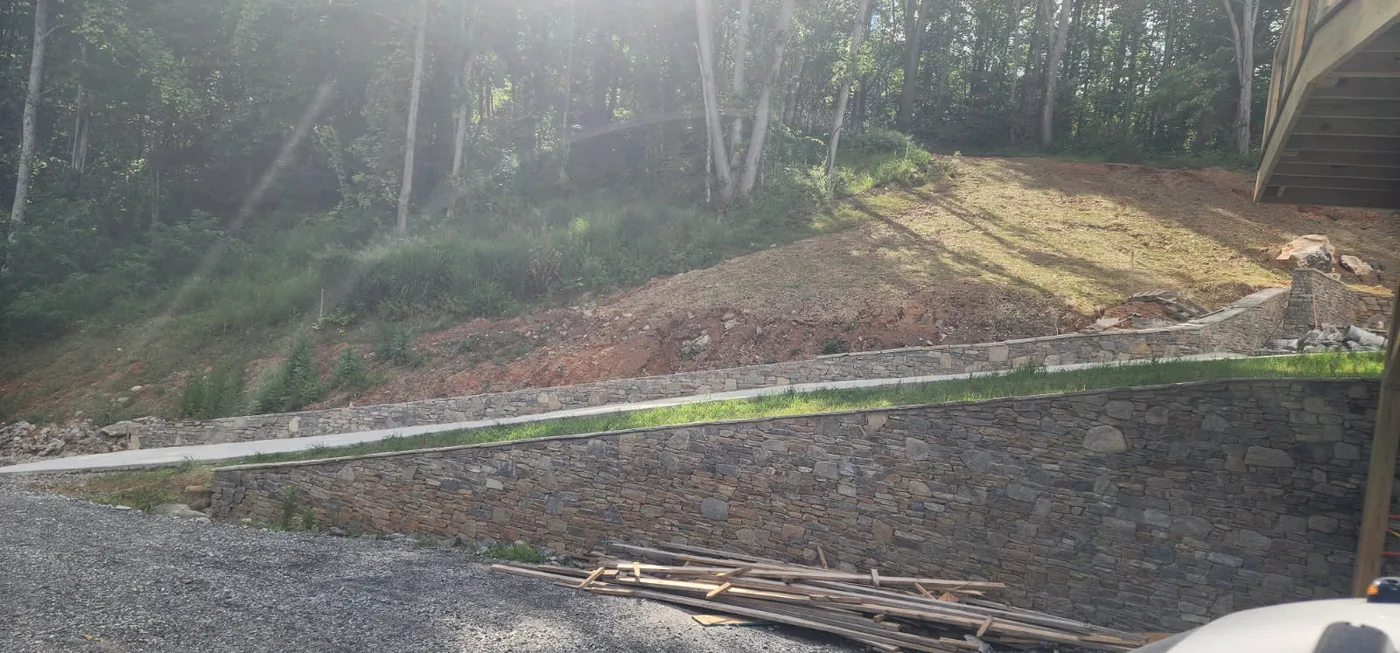
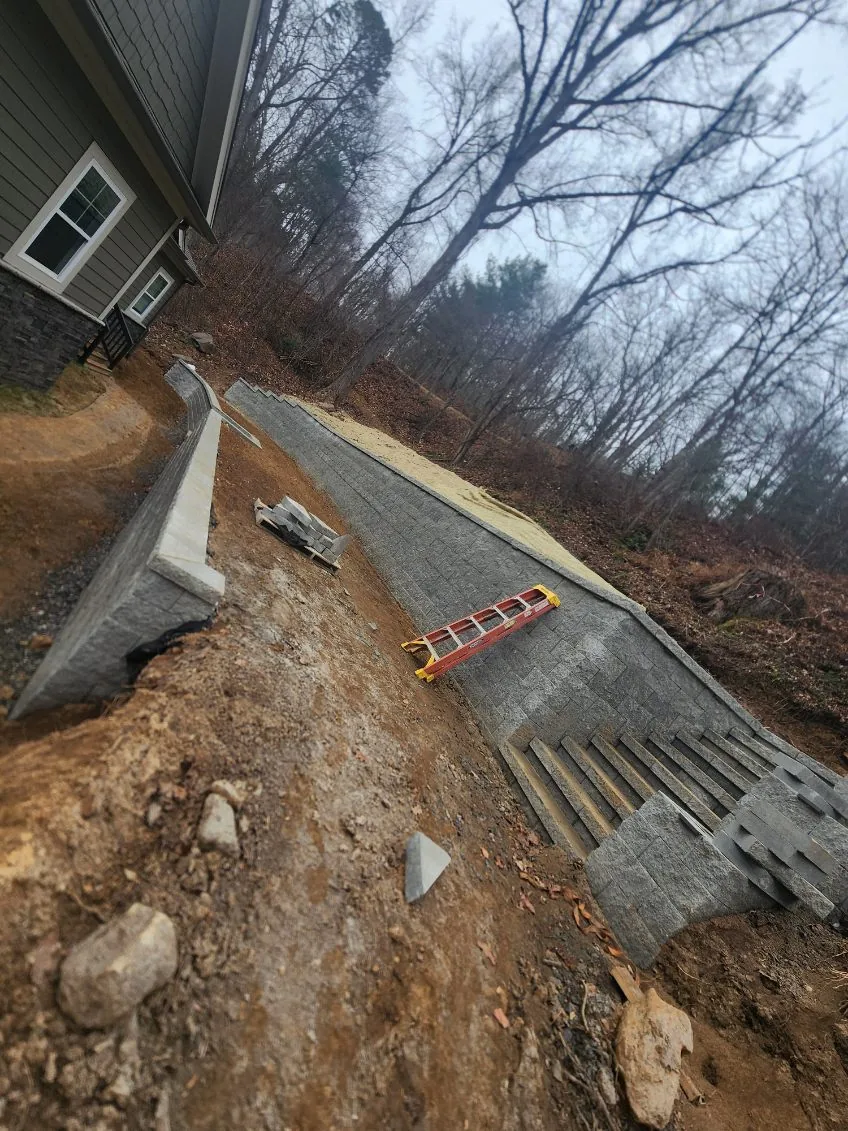
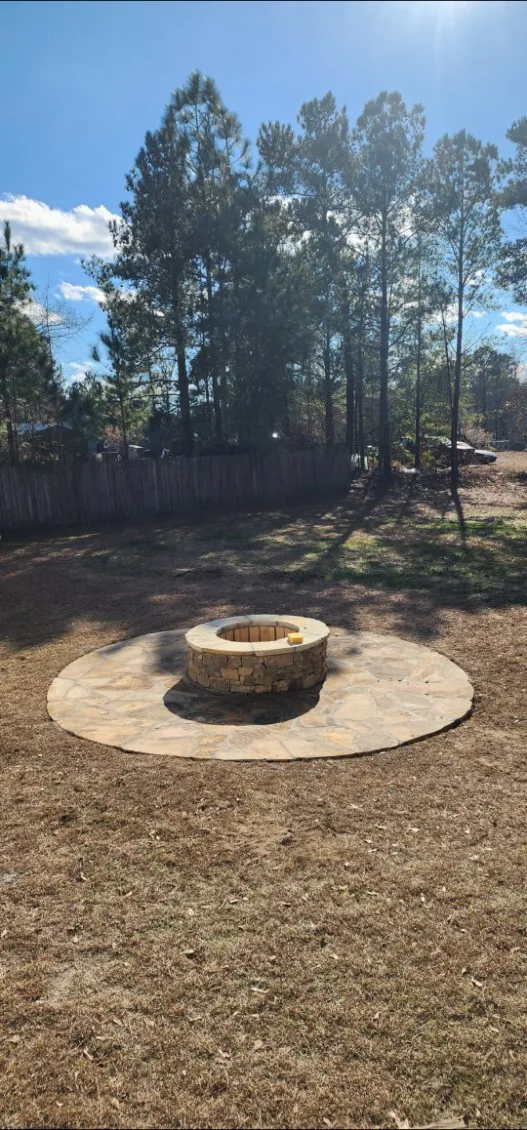
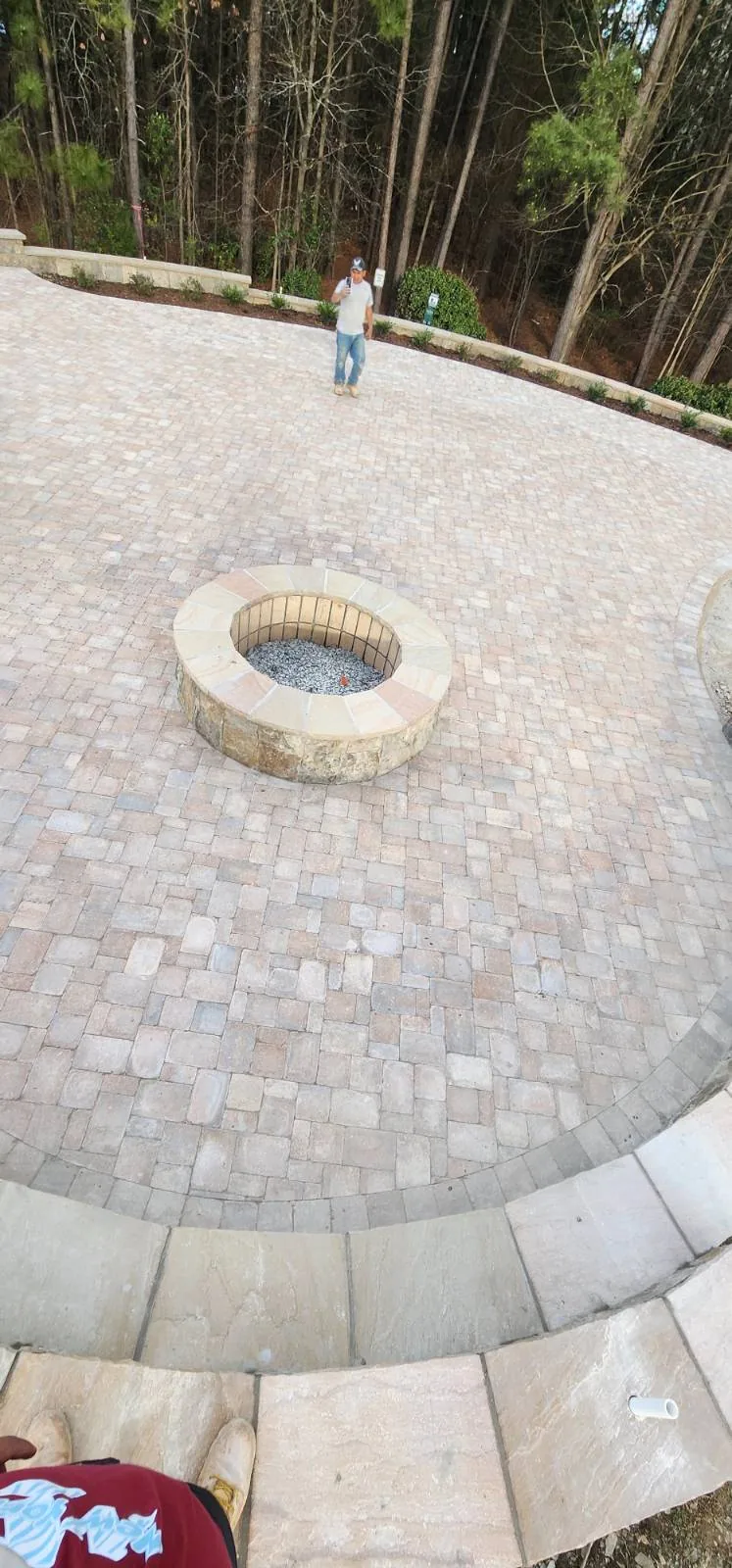
Maggie Valley's housing sits on terrain that varies block to block: valley-floor lots near the creek bottoms, mid-slope homes tucked between ridge lines, and ridge-top builds off Fie Top Road and the high roads north of town. Grading, retaining, and drainage all change with that terrain. A patio cut into a hillside needs a wall to hold the uphill side and a drain to move water away from the downhill side. A patio on a valley lot may need the opposite: raising the base to keep seasonal ground water from wicking up through the stone. Same material, different construction, different price. The flagstone patio overview covers what a finished install includes.
The quarry haul: what stone actually costs here
Western North Carolina has genuine flagstone sources, but not every stone in a Maggie Valley patio comes from ten minutes away. Tennessee and north Georgia quarries supply much of the regional market, and a loaded flatbed running over the mountain passes costs more per trip than a local pickup. Ask any contractor where the stone is coming from. "Local" and "regional" are both real answers, but they are not the same invoice.
The practical effect: stone delivered across the passes carries a freight component that gets quoted into the material line. There's no way around it, and there's no honest way to hide it. A bid that shows a suspiciously low stone price is either using a thinner veneer product, a different stone, or planning to surprise you later. The Haywood County retaining wall cost breakdown shows the same freight logic applied to wall stone, and the pattern tracks: material is a real number, not a rounding error.
Scope versus price, line by line
Below is a working table of scopes and regional ranges. These are meant to frame a conversation, not replace a site visit. Grade, access, and drainage condition move every one of these up or down.
| Scope | Typical range | What moves it |
|---|---|---|
| Small patio, 150–250 sq ft, walk-out grade | $6,800–$9,500 | Access, stone type, base prep |
| Mid-size patio, 300–450 sq ft, slight slope | $10,500–$14,500 | Retaining or grading on one edge |
| Large patio, 500+ sq ft, mixed grade | $15,000–$22,000+ | Full drainage plan, wall, hand-carry |
| Bluestone or premium stone upgrade | +20%–45% over regional flagstone | Stone source and freight |
| Hand-carry from street to build site | Often $1,500–$4,500 | Distance and slope |
| Retaining wall tying into patio edge | $45–$85 per face sq ft | Height, drainage, engineering |
Two rows in that table are the ones most out-of-county quotes miss. Hand-carry and the retaining tie-in. They are not optional line items here; they are structural to the scope.
Storm and water history shape what a patio has to do
Western North Carolina has absorbed a long run of declared federal disaster events — 19 touching this county over 1973-2026 — and the overwhelming share of them have been storm and flood family. In a mountain valley, that history is not abstract. Water that comes off your uphill neighbor's property during a hard summer storm has to go somewhere, and if it crosses your patio it will find the weak point in the base.
The engineering side of that concern is not a contractor's invention: the North Carolina Building Code Council treats site drainage as a first-class requirement because foundation and hardscape failures downstream of bad drainage are expensive. A proper flagstone patio on a Maggie Valley slope starts with a drainage plan. That plan may include a French drain, a swale, a below-patio drain field, or grading designed to push water around rather than through. It is not glamorous, but it is the difference between a patio that holds for twenty years and one that heaves after two winters of freeze-thaw.
Choosing a crew in Haywood County
Flagstone is a trade with hands-on skill: stone setting, joint work, base compaction. It is not a task to hand to a general crew as a side job. When vetting a contractor, ask specifically for flagstone work in Haywood County and ask how they handle steep driveways and hand-carry. The retaining wall contractor guide for Maggie Valley covers the same vetting questions and applies here.
Licensing matters too. North Carolina's general contracting rules kick in at project thresholds set by the North Carolina Licensing Board for General Contractors, and a patio with a structural retaining wall can cross that line. Ask before you sign. A crew that can explain the licensing threshold for your specific scope is a crew that has done this before.
What a good site visit looks like
Before any number is firm, a good contractor walks the site. They check the driveway for grade and turning radius, look at where water currently runs during a storm, measure the actual build footprint, and ask how you plan to use the space. The patio itself is one conversation; how you get to it, how water leaves it, and what holds the uphill side is the other. If a bid arrives before that walk-through, it is a guess. When you are ready to move, the project information form on this page reaches our crew directly.