How a Haywood County fire pit build actually runs, start to finish
Most of the work here is scheduled around weather, not the calendar. A crew that shows up in Waynesville in March and a crew that shows up in October are running the same sequence but very different timelines.
The order is fixed. First, a site walk: where does the pit go relative to the house, the trees, and the slope. Second, marking the footprint and confirming setbacks from structures and property lines. Third, excavation and base prep — digging out the ring, laying and compacting a gravel sub-base, then verifying level. Fourth, the stone or block course, which is where the labor concentrates. Fifth, the cap or seating ring, if the design includes one. Sixth, backfill, gravel or flagstone surround, and a final walkthrough.
A simple stacked-stone pit on flat ground is often a one- to two-day job. A gas-fed pit with a trenched line, a paver apron, and a low retaining course on a sloped yard can run three to five days across two visits, often because the gas line inspection is scheduled separately. The mountain grade matters: a flat quarter-acre in Clyde is not the same working site as a stepped backyard off a ridge road near Maggie Valley.
What the numbers look like across the county
These are working ranges, not quotes. The spread is real — a homeowner in Bethel and a homeowner on a graded lot outside Waynesville can get bids $3,000 apart for what sounds like the same pit, because the sites are not the same site.
| Scope of work | Typical Haywood range | What drives it |
|---|---|---|
| Prefab steel or kit pit, DIY or light install | $250 – $900 | diameter, material, whether delivery and gravel are included |
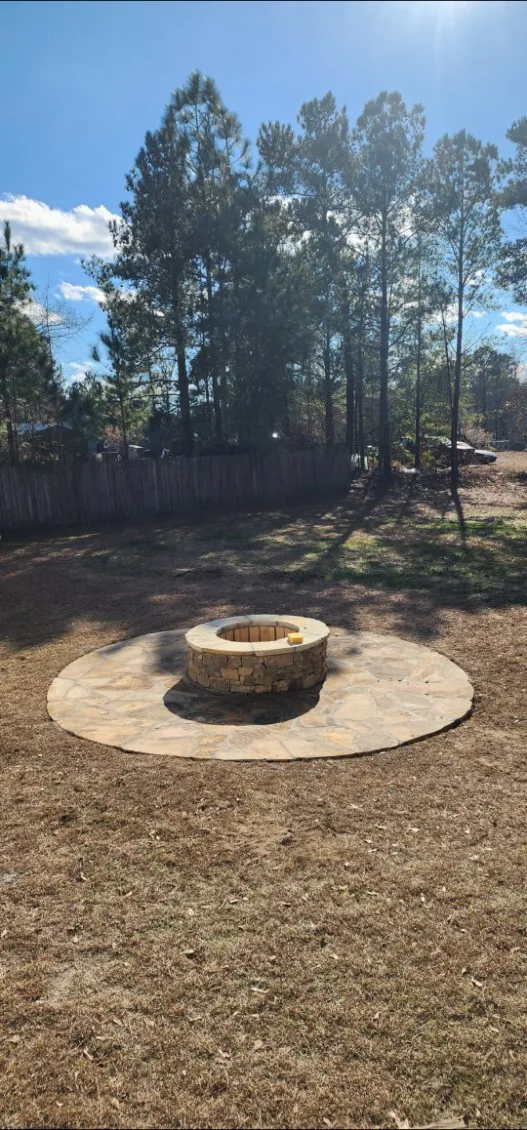
| Simple stacked-stone pit, flat lawn | $850 – $2,200 | stone type, wall thickness, cap or no cap |
| Mason-built stone pit with seating ring | $2,200 – $5,500 | cut stone vs. fieldstone, mortar vs. dry-stack, seat height |
| Gas-fed pit with trenched supply line | $3,500 – $7,500 | run length, trenching through rock or roots, burner and valve |
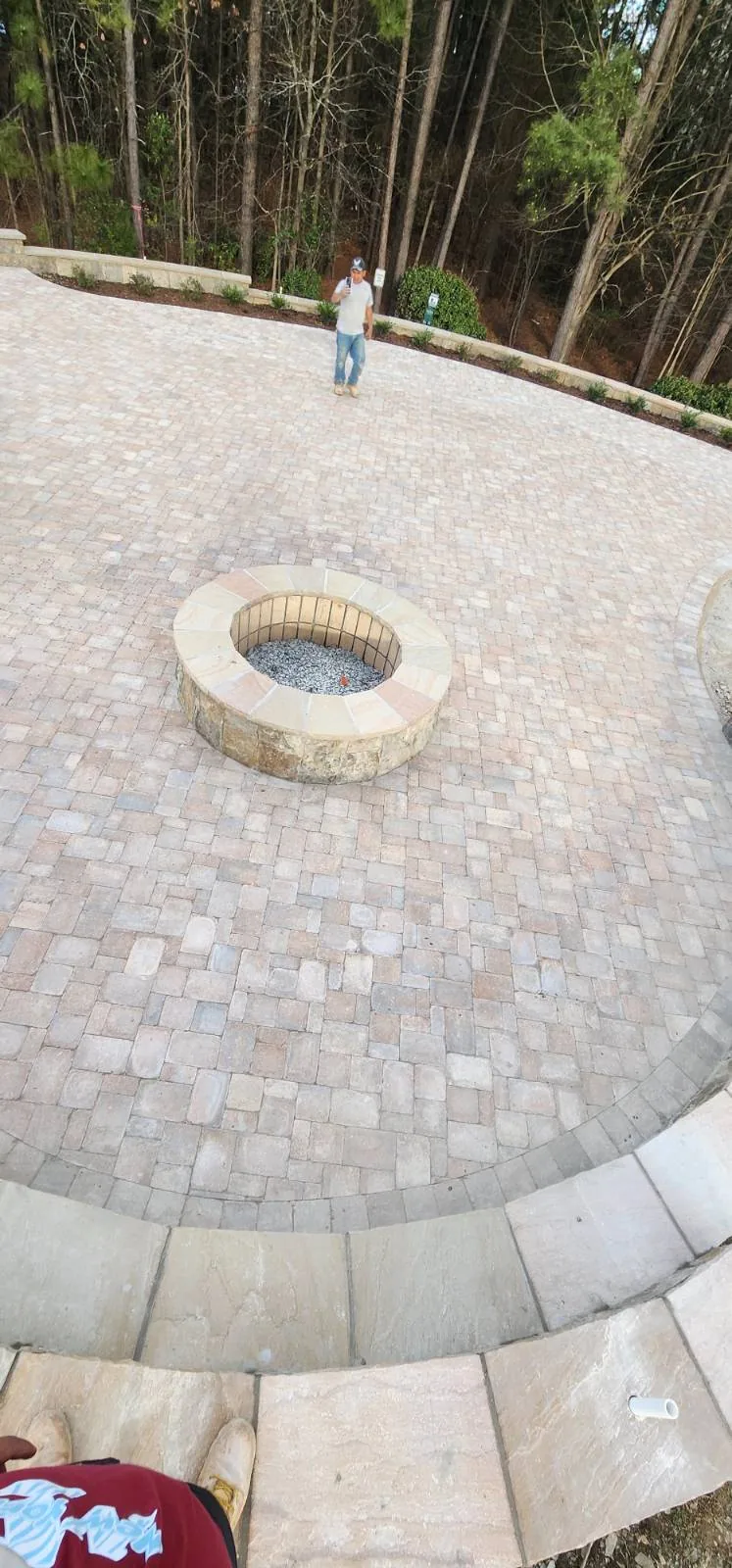
| Full hardscape surround with retaining on slope | $6,500 – $9,500+ | excavation, retaining course, paver apron, drainage tie-in |
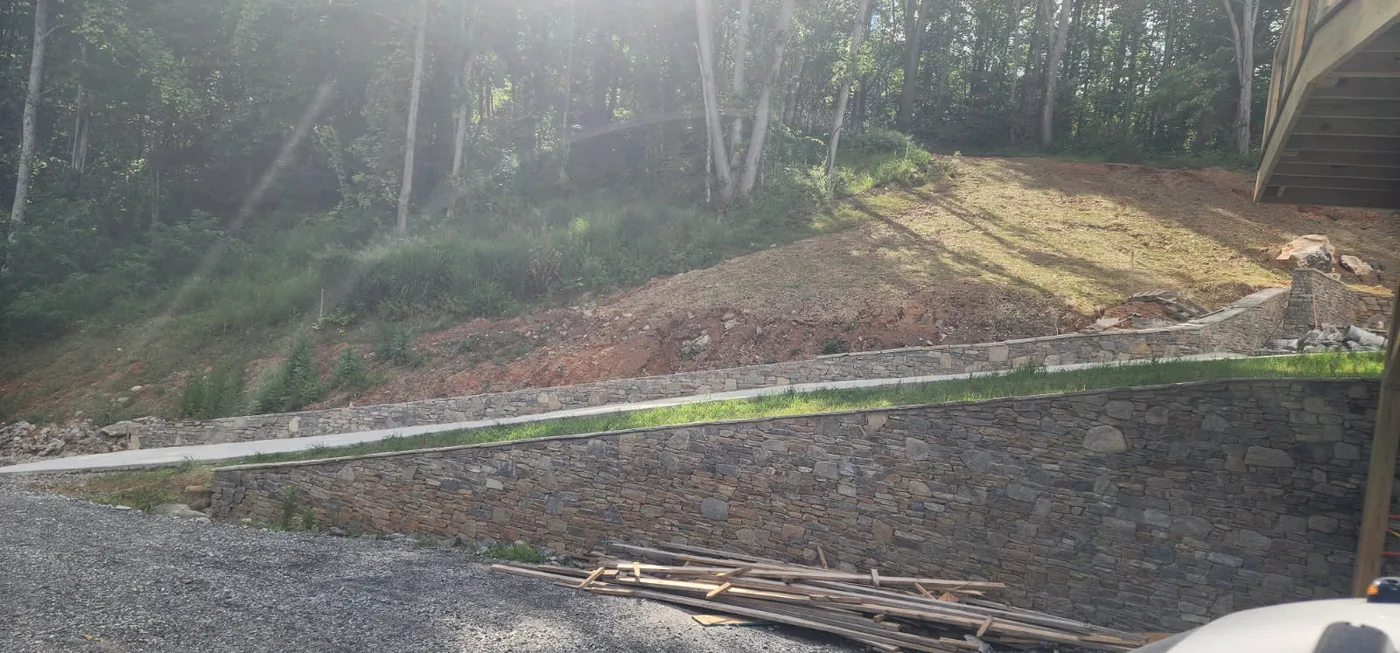
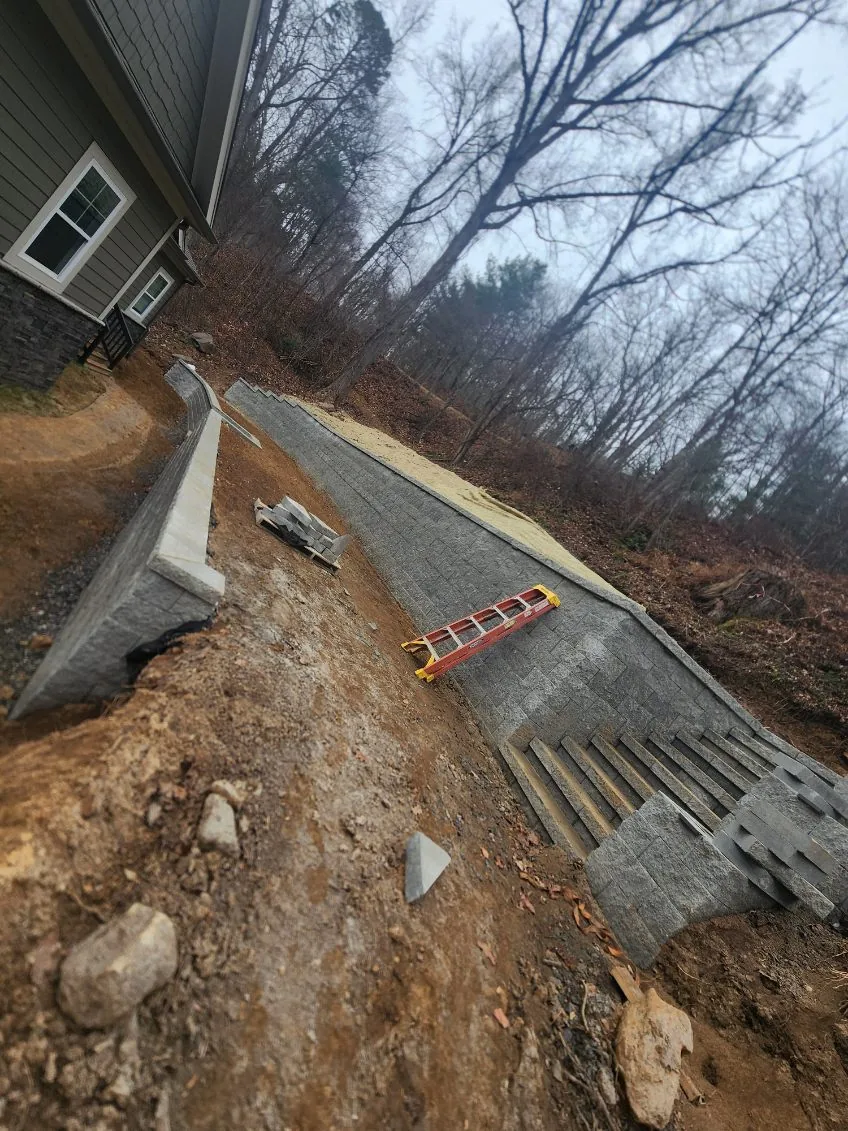
A gas line alone can swing the total by a few thousand dollars if the trench crosses bedrock, which it often does on Haywood hillsides. If your yard has been cut into a slope, the retaining component is not decorative — it holds the pit pad, and our retaining wall cost guide for Haywood County covers what that piece adds on its own.
Fuel, code, and who is allowed to run the gas line
Wood-burning pits are mostly a local setback question — distance from structures, overhanging branches, and burn bans during dry stretches. Gas pits are a licensing question. In North Carolina, fuel-gas piping and appliance connection fall under the state's plumbing and heating licensing structure, and the NC State Board of Examiners of Plumbing, Heating and Fire Sprinkler Contractors is the body that governs who can legally run and connect that line. A landscaper who offers to 'tie in the gas' without a licensed fuel-gas contractor is a problem, not a discount.
On the structural side, any pit built as a permanent masonry structure is subject to the state residential code and local permitting, and the NC Building Code Council publishes the adopted code editions the county enforces. General contracting thresholds also matter: the NC Licensing Board for General Contractors sets the dollar figure at which a project legally requires a licensed general contractor. For most residential fire pits that threshold is not crossed, but a full outdoor-living build with masonry, gas, and retaining can approach it — worth asking before the contract is signed.
Stone selection and the Waynesville backyard reality
Haywood County sits in a stone-rich pocket of the Blue Ridge, and the material palette reflects that. Fieldstone gathered on-site, regional granite, and manufactured veneer are all common. The cost difference between them is bigger than most homeowners expect.
- Fieldstone: lowest material cost, highest labor cost, best fit for a rustic pit. Irregular shapes mean more cutting and fitting time.
- Cut or dimensional stone: higher material cost, faster stack, cleaner lines. Common on new-construction terraces outside Waynesville.
- Concrete block with veneer: structural core plus a thin stone face. Reliable for gas pits where the burner and internal clearances matter.
- Prefab steel or cast-concrete ring: fastest to install, cheapest, least permanent. Fine for a rental or a first pit on a lot you may re-grade later.
A useful starting point if you are still weighing whether the pit belongs at all: our general fire pit cost guide walks through the national ranges and how they break down. Our fire pit services page covers what a full install includes when a mason handles the whole job rather than just the ring.
Rain, slope, and the reason a fire pit here is a drainage project too
Western North Carolina gets hit. Between 19 federally declared disaster events touching Haywood County across 1973-2026, most of them storm and flood family, the pattern is well-documented: intense rainfall on steep terrain. That matters to a fire pit because a pit is a hole in a yard, and holes collect water.
Practical consequence: on a sloped Haywood lot, the pit pad should be graded to shed water away from the ring, and the excavation should include drainage gravel below the base. A pit built like a bowl will hold water, heave in freeze-thaw, and need rebuilding within a few seasons. If the surrounding yard already has a drainage problem, fix that first — a pit installed on top of a wet slope is a repair waiting to happen.
Timeline note: this is also why crews here often want the pit pad finished in late spring or early fall, when the ground is workable and the pad has time to settle before the first hard freeze.
Keeping the bid honest
Three things to ask before signing anything:
- Who runs the gas line? If the answer is not a licensed fuel-gas contractor, get a separate quote from one. The licensing question is not negotiable in North Carolina.
- What is under the pit? A bid that does not mention base prep and drainage on a sloped lot is a bid for the visible half of the job.
- What is the timeline in writing? Stone delivery and gas inspection scheduling are the two most common delays. A crew that gives you a sequence, not just a start date, is a crew that has done this before.
Compare any bid against the table above. If it lands far outside the range, make them walk you through why — sometimes the reason is real (bedrock, access, a long gas run), and how they explain it tells you what the build will actually be like.