Where the money actually goes on a Waynesville grade
Walk the older streets off Main and the side lanes climbing toward the ridges, and you notice the same thing: few yards around Waynesville are truly flat. The valley floor gives way fast, and most homes were sited into a cut rather than on a graded pad. That single fact shapes a flagstone patio budget here more than the stone selection or the square footage a homeowner sketches on a napkin.
The line items that move a quote, roughly in order of impact: excavation and haul-off of unsuitable subsoil, base aggregate depth and compaction in lifts, retaining or seat-wall construction on the uphill side, drainage (French drain, channel drain, or a tie-in to existing storm), stone thickness and source, and cutting labor for irregular edges. A layout that lands over old fill, a former gravel drive, or a filled-in pool pit will need over-excavation nobody sees in the line items until the machine is in the yard.
Access is the quiet cost multiplier. A narrow drive above town, a switchback with no equipment path, or a gate too tight for a mini-ex means hand-carry of base material and stone, and that labor shows up as a number rather than a sentence. Ask about it before signing, not after the pallets arrive.
A working cost table for Haywood County
Ranges below reflect typical regional pricing for a residential flagstone patio in this market. They assume decent equipment access, a straightforward home wall tie-in, and no buried surprises. Steep-lot work, long carries, and heavy cut-in add real line items on top of these.
| Scope component | Typical price range |
|---|---|
| Small entry or stoop patio (80-120 sq ft) | $4,500-$8,000 |
| Mid-size terrace (200-350 sq ft), simple grade | $9,000-$14,000 |
| Large terrace (400-600 sq ft), stepped or multi-level | $16,000-$26,000 |
| Base prep, excavation, and compacted aggregate per sq ft | $8-$16 |
| Retaining wall or seat wall, per linear foot | $55-$140 |
| Integrated drainage (French or channel) | $1,200-$4,500 |
| Flagstone material, per sq ft installed | $14-$30 |
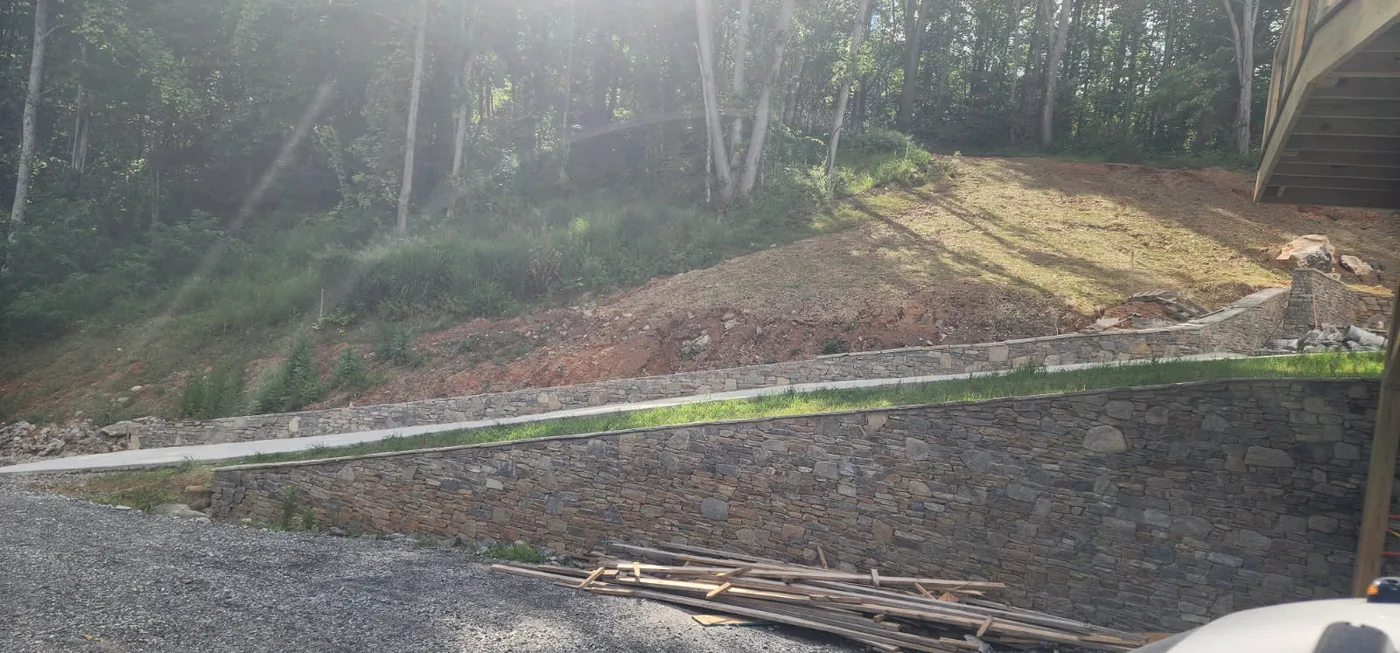
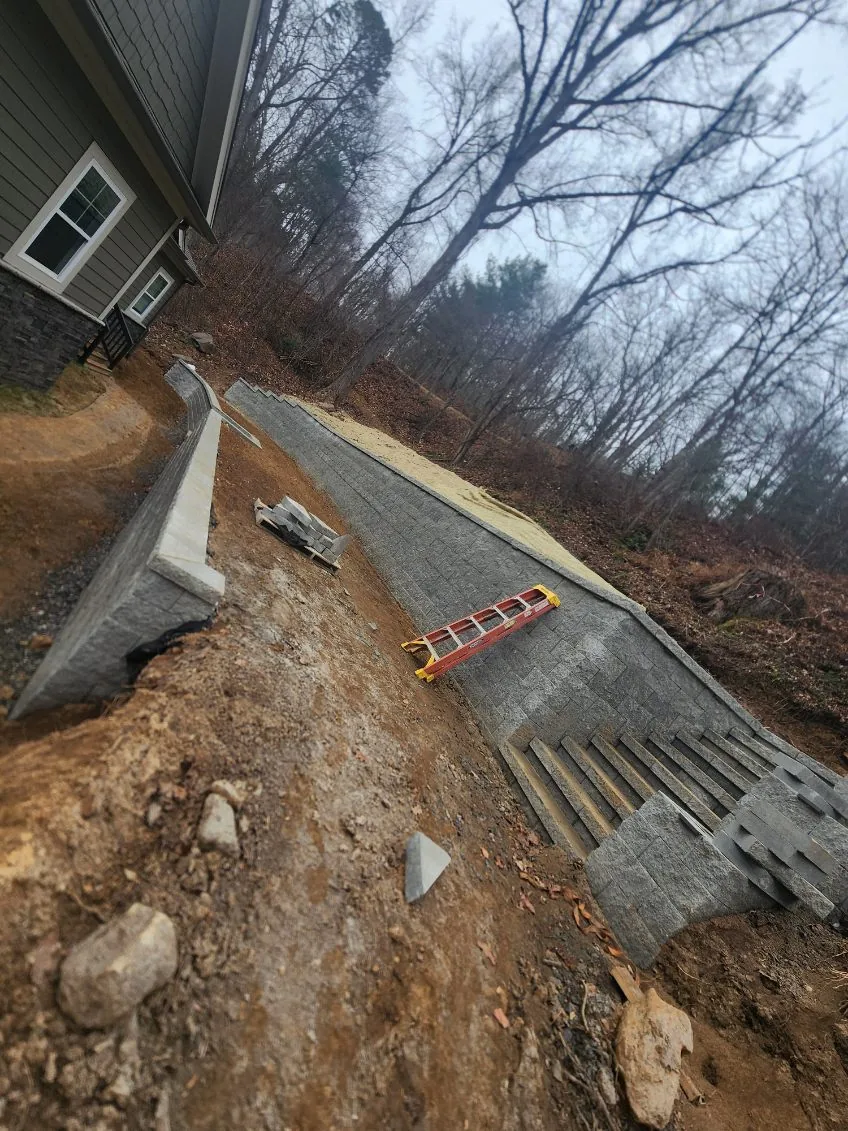
A small stoop patio off a kitchen door reads like a weekend project until the door sits three feet above grade. Then it is a stair-and-landing job with a seat wall, and the number lands near the top of that first row. The Haywood County retaining wall cost breakdown goes deeper on the wall line items, which are often the single largest swing factor on a slope lot.
Freeze-thaw, mountain clay, and why base depth is not negotiable
Waynesville's winters are milder than the high peaks above it but cold enough that the ground moves. The county's soil is largely mountain clay and weathered rock, which holds water and heaves when it freezes. A flagstone patio laid on two inches of sand will look great in October and look like a warped chessboard by March. Base depth here typically runs deeper than what a flatland installer would quote, and compaction is done in lifts, not one pass.
The federal disaster record tells the water half of the story: 19 declared events have touched this county across 1973-2026, mostly storm and flood family. That history is why drainage is not an upsell on a Waynesville patio. If the uphill side of your yard sheds toward the house, water is going to find the patio base, and the base is going to move. The National Weather Service freeze and flood outlooks for the southern Appalachians are worth a look before scheduling a spring build.
The practical test for any bid: ask how deep the aggregate goes and what compaction equipment is used. If the answer is a plate compactor and four inches regardless of the lot, the quote is built for a different county.
Stone choice and the look that fits this town
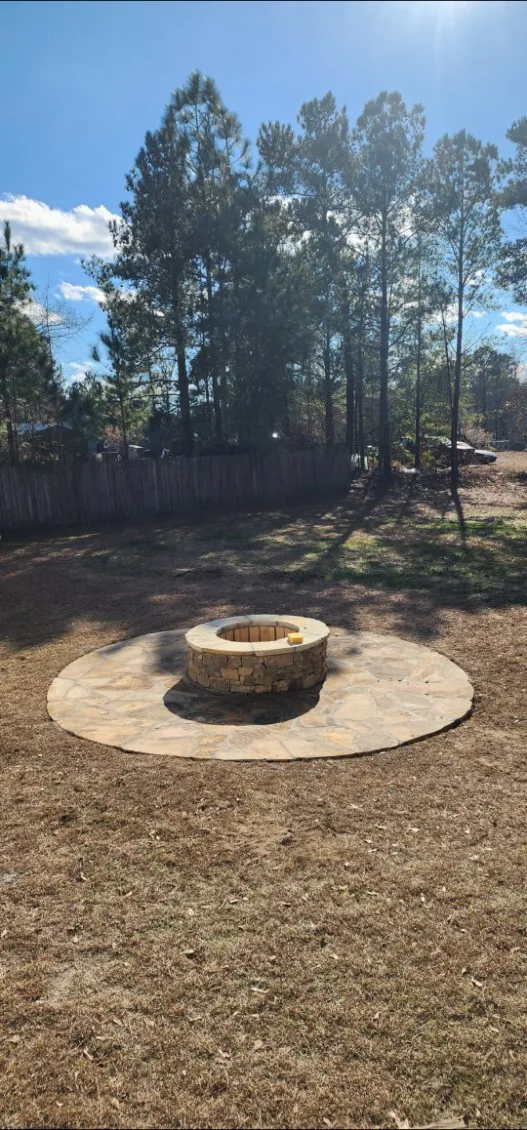
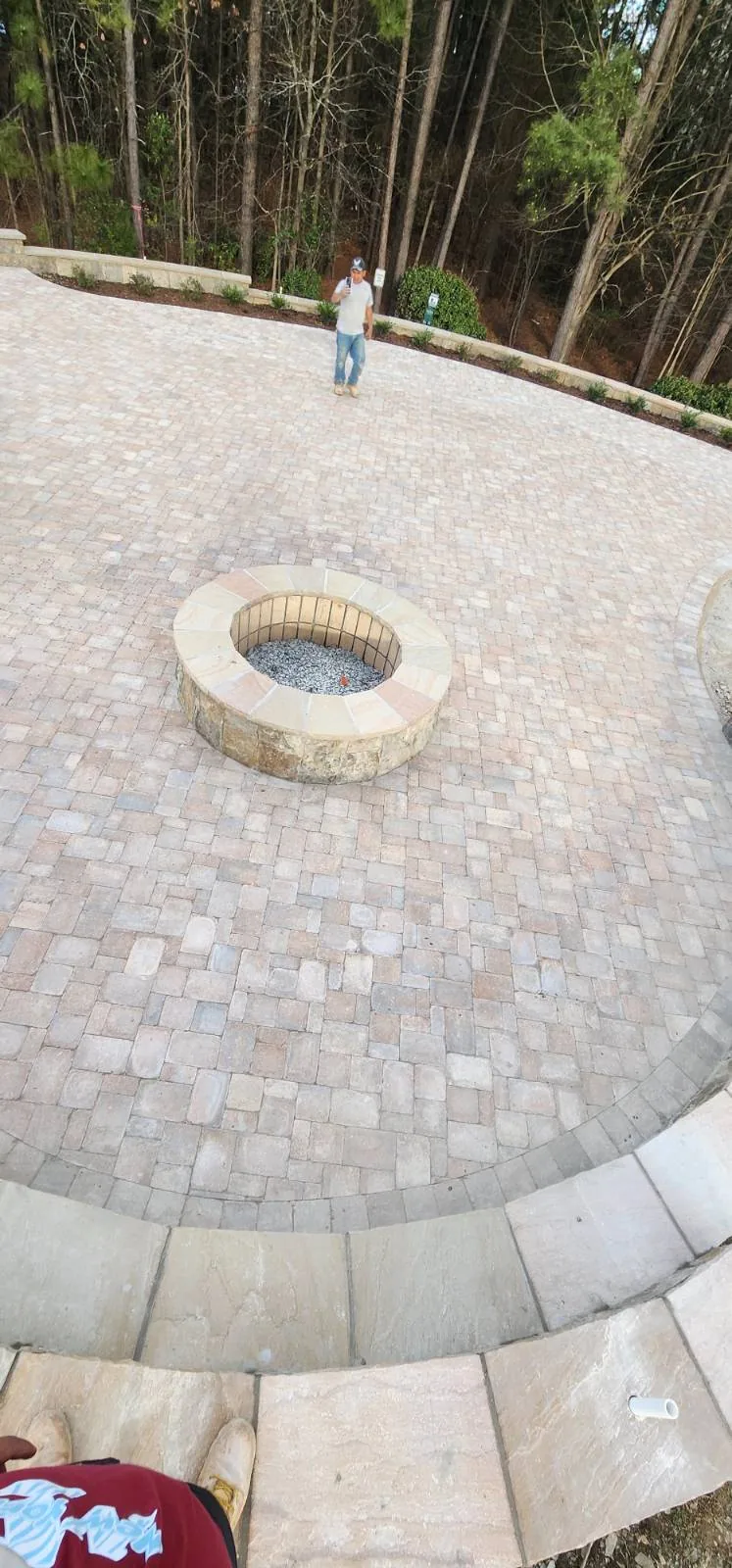
Flagstone in this market usually means one of a few families: Tennessee and Pennsylvania variegated sandstone, regional quartzite, and occasionally a true bluestone if the budget allows. Each has a different thickness, a different cutting behavior, and a different price. Thinner veneer stone laid over an existing slab is a legitimate approach for a covered porch but not for a patio taking foot traffic over mountain clay. Full-thickness stone set on a properly compacted base is the durable path here.
The aesthetic question is real in Waynesville. The downtown and the older residential streets carry a lot of brick and painted wood, so a warm tan or rust flagstone tends to sit easier than a cool gray. If your house is older, matching the existing walk or porch stone ties the yard together and reads as intentional rather than added on. Newer builds on the ridges can carry a cooler palette, but the stone still has to be set with the freeze-thaw cycle in mind.
Remember that stone is a recurring line item, but it is far from the whole budget. Excavation, base, drainage, and wall work often add up to more than the stone itself on a slope lot. If you are starting from scratch, the flagstone patio overview walks through the material families and how they weather here.
Permits, licensing, and who to hire
A patio itself usually does not need a building permit. A retaining wall above a certain height often does, and any work that changes drainage or grading near a structure can trigger review. The NC Licensing Board for General Contractors sets the dollar threshold at which a project requires a licensed general contractor, and hardscape projects that cross that threshold are not exempt just because they are outdoors. Structural code questions route through the NC Office of State Fire Marshal, Code Services.
The practical hiring test in Waynesville: ask the crew to show you a patio they built on a slope lot two winters ago, and ask how the base was built. If they cannot describe lift-by-lift compaction and a drainage plan, they are selling stone, not building a patio. The Waynesville retaining wall and hardscape contractors page covers what to look for in a local crew, including how they handle the clay-heavy subsoils common on the north side of town.
One more line item people forget: access. A lot off a narrow road above town with no equipment path will add hand-carry labor, and that shows up in the quote as a discreet number. Ask about it up front, and walk the proposed patio location with the estimator so surprises surface on the walk, not on the invoice.
Timing the build around mountain seasons
Late spring through early fall is the practical construction window here. Winter ground conditions slow excavation and compaction, and freeze-thaw cycles can complicate curing and settling. Scheduling matters because a patio base needs to be built and compacted under dry conditions to perform through the wet months. A build started in a warm dry stretch will settle better than one hurried in ahead of a front.
If your project involves a retaining wall, plan the wall and drainage as one phase. The EPA guidance on stormwater and runoff is a useful primer for why water management is part of the hardscape, not a separate afterthought. On a slope lot in Haywood County, the wall and the patio are one system: the wall holds the uphill grade, the drainage moves water around the base, and the flagstone sits on top.