Black Mountain lots don't look like Asheville lots
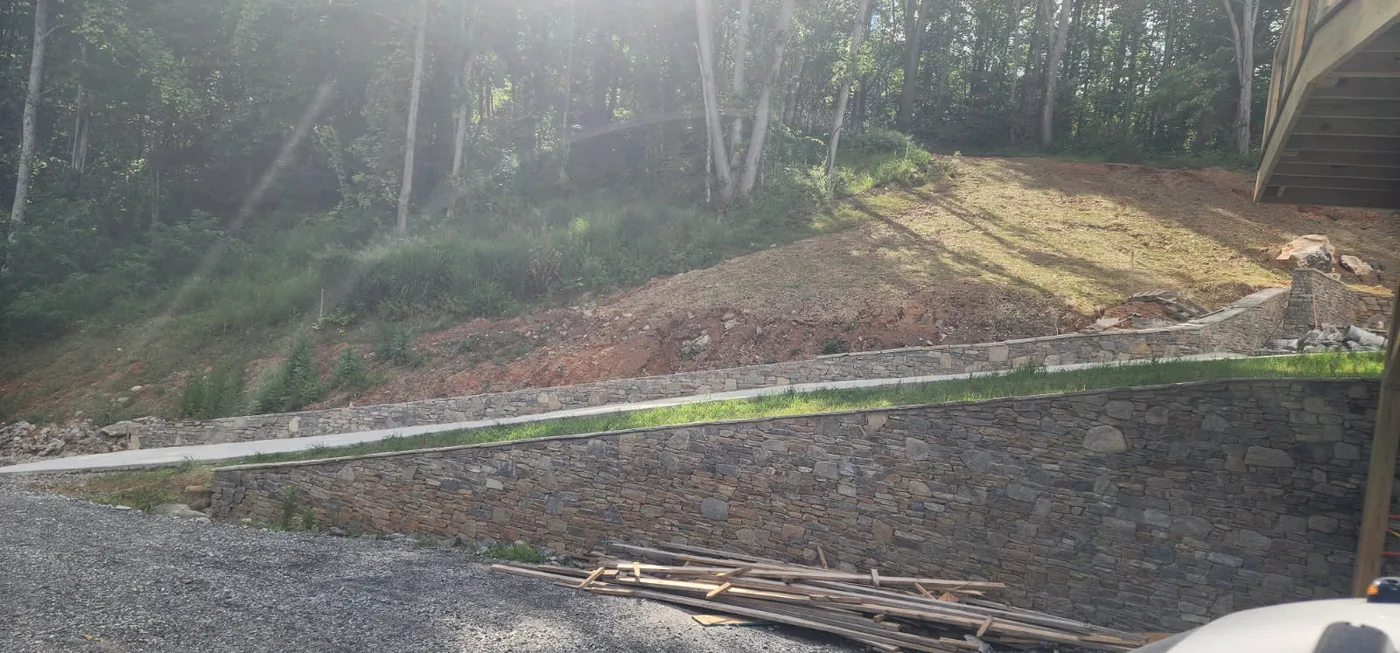
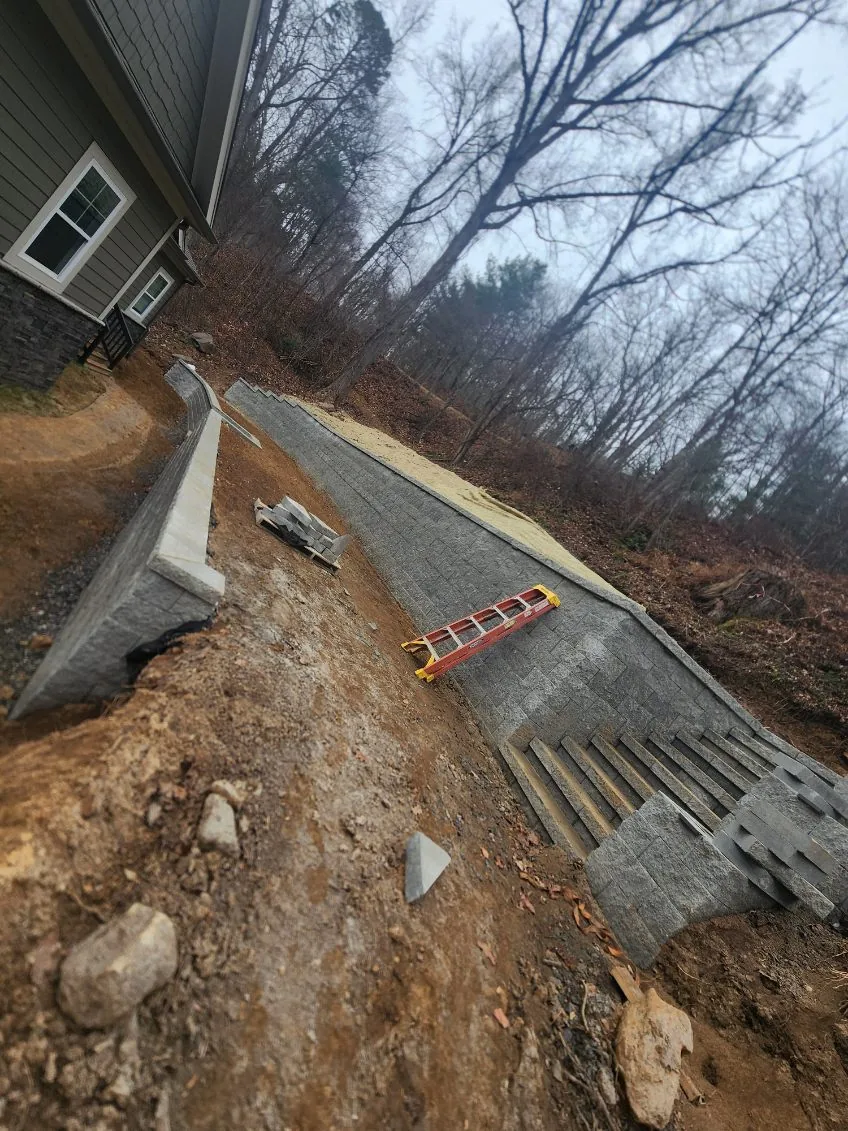
Drive one mile off State Street toward the golf course and you're on flat valley ground with shallow root-bound soil. Drive one mile the other direction, up toward the ridges along the Montreat corridor, and every backyard is a 15-to-30 percent slope with rock and clay under a few inches of duff. Those two Black Mountain backyards need different people and different numbers. The valley lots usually take a normal paver base and a straightforward build. The ridge lots need compacted lifts, engineered retaining that actually holds the cut, and stair-stepped terraces where the homeowner really wanted one flat patio. Knowing which one the site is before the first sketch is what separates a real quote from a wish.
The old houses in the small grid streets near downtown also matter. Many of them were laid out before modern drainage assumptions, with downspouts dumping hillside water straight onto the patio site. Hardscaping a backyard there without solving the water first is a two-year project dressed up as a one-year one.
Asheville proper has its own mix of lots, but the differences show up in the valleys and ridges that ring Black Mountain. Down near the flat ground by the golf course, the soil is often shallow and root-bound, and a paver base can be built with standard excavation. Head up the Montreat corridor or the ridge roads above town, and you hit clay and rock that changes how every lift is compacted and how every wall is pinned. The road widths are narrower, the driveways steeper, and the equipment that can reach a backyard is smaller. Those constraints shape both the crew you hire and the timeline you can believe.
There is also the matter of how these lots were originally platted. Many of the older parcels near downtown were laid out for small homes with modest yards, and the current homeowner wants a patio, a fire pit, a dog run, and a garden in a space that was never designed for all four. The hardscape has to negotiate between the house, the property line, and the neighbor's foundation. On the ridge lots above the Montreat road, the buildable area is often a narrow bench cut into the slope, and every square foot of patio has to be earned with retaining. Knowing which category the lot falls into before any stone is chosen is the first real decision of the project.
Black Mountain hardscape price ranges
These are regional Buncombe County bands, not quotes. A scope sheet matters more than a square-foot number, because on a slope the square footage of the patio is the least interesting figure in the job.
| Scope | What's included | Typical range |
|---|---|---|
| Small patio (150-250 sq ft) | Excavation, compacted base, paver or flagstone, simple border | $6,000-$11,000 |
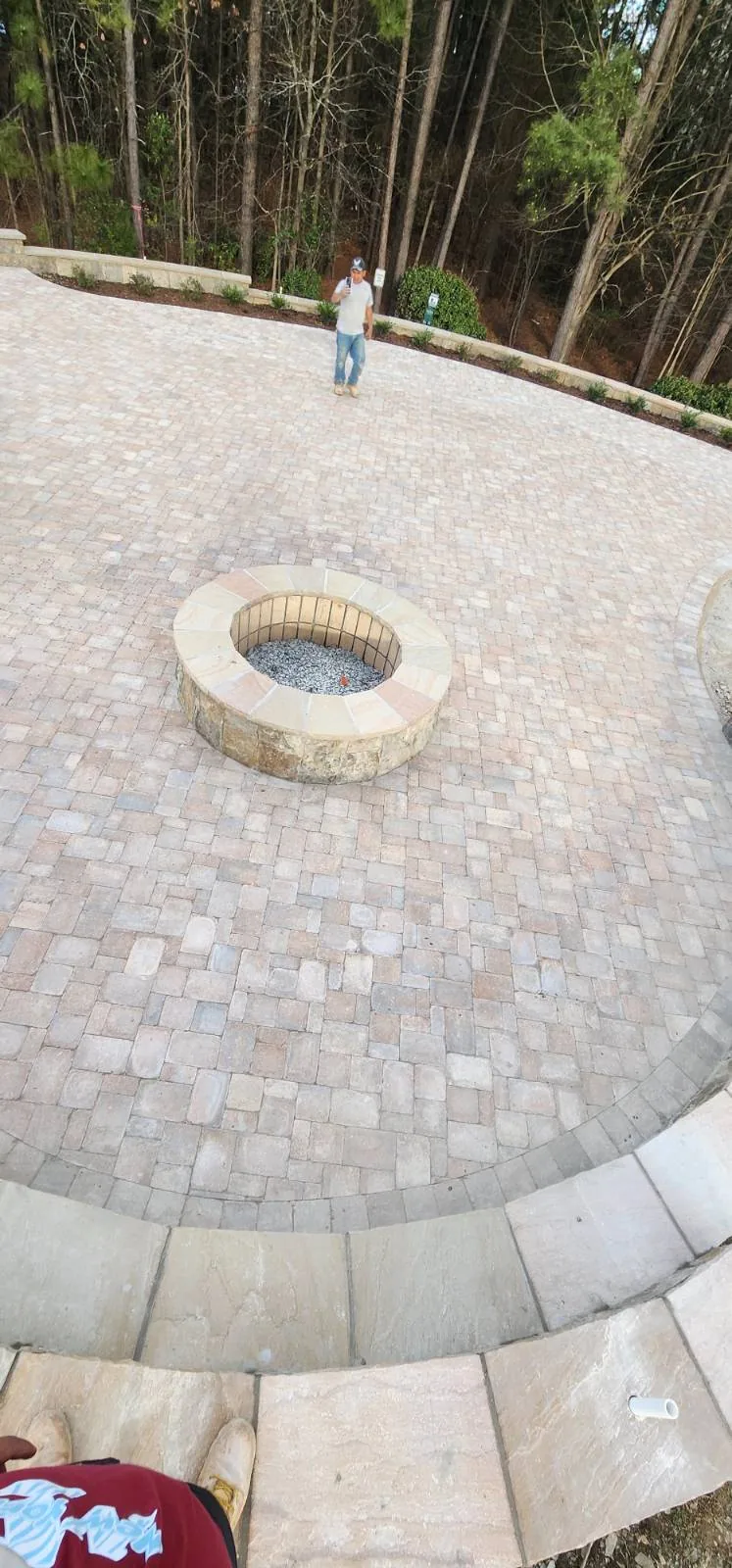
| Mid patio (250-500 sq ft) | Above plus drainage, cut-in steps, one seat wall or fire pit pad | $11,000-$22,000 |
| Low garden retaining wall (<2 ft) | Concrete or stone block, base course, drainage gravel | $4,500-$9,000 |
| Engineered or tall wall (2-5+ ft) | Geogrid, drainage, trench footing, optional engineer | $12,000-$35,000+ |
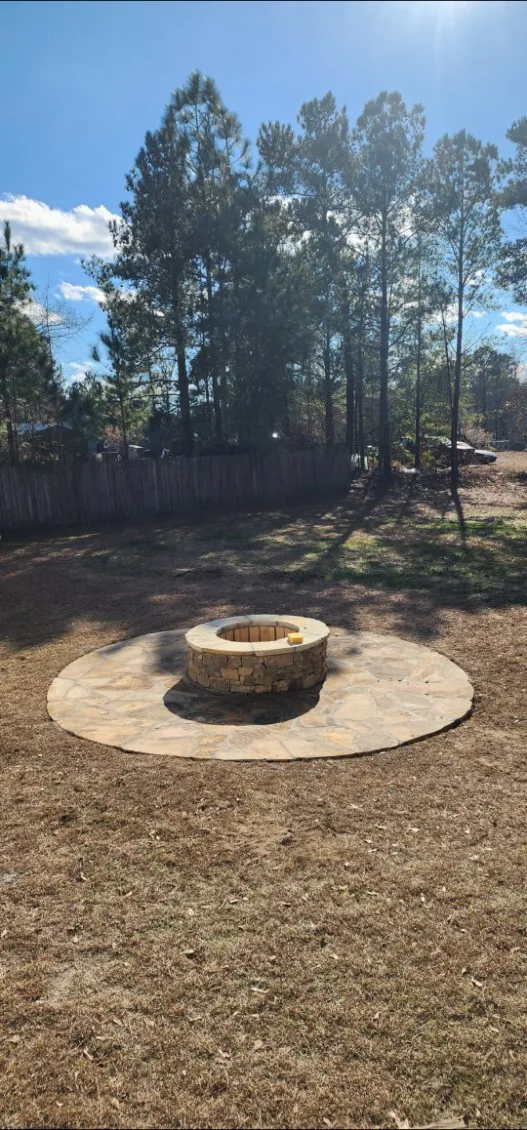
| Fire pit (masonry or kit) | Base, gas or wood, stone or block surround, capstone | $1,800-$6,500 |
| Full backyard rebuild | Grading, walls, patio, fire feature, planting beds | $25,000-$60,000+ |
Taller walls push toward engineering letters and permit review — see the Buncombe County retaining wall cost breakdown for the line-item version. Steep-access sites above the Montreat road carry real haul-off and lifting costs that flatland quotes never show.
On a mid-size patio in the $11,000-$22,000 band, the numbers are usually split between excavation and base, the stone or paver itself, drainage, and labor for cut-in steps or a seat wall. On a hillside lot, excavation can run higher than the stone because the crew is moving more dirt than a flat-lot job and may need to haul spoils off site. A valley lot near the golf course might spend less on excavation and more on finish stone because the homeowner can afford a bigger flat patio. Neither is wrong, but the two estimates should not look alike.
Fire pits sit at the low end of the hardscape budget and often get added to an existing patio, which is why the range is wide. A simple wood-burning masonry pit with a capstone is a different build from a gas kit with a line run from the house and a plumber on site. Both are common in Black Mountain, and both can be quoted honestly once the fuel and the location are settled.
Why water decides the design on this side of the county
The federal disaster record for Buncombe County — 19 declared events across 1973-2026, weighted heavily toward storm and flood categories — explains a lot about Black Mountain hardscaping. Every one of those events pushed water at hillside lots that were already shedding runoff toward the neighbor below. A patio built without grading, without a drainage plane under the base, and without a plan for the uphill water is a future retaining-wall call. The NC Department of Insurance Engineering & Codes division treats retaining and site drainage as structural for a reason, and licensed design thresholds on tall walls exist because they fail catastrophically, not cosmetically. Federal guidance from the EPA on managing stormwater at the lot scale is dry reading but the right frame before you pick stone.
In practice, that means the first conversation on a Black Mountain hillside lot is often about where the water goes today and where it will go after the build. Downspouts, driveway runoff, and the natural seep from the slope above all have to be routed somewhere that is not the new patio base or the neighbor's foundation. On the flat valley lots, the water problem is smaller but not absent, because the soil is shallow and can saturate quickly after a long rain. A drainage plane under the base and a positive grade away from the house are the two details that separate a patio that lasts from one that heaves or settles after a couple of winters.
The freeze-thaw cycle in this part of Buncombe County also matters. Water that sits in a base or behind a wall expands when it freezes, and that movement is what cracks caps and pushes wall faces out of plumb over time. Compacted lifts, proper drainage gravel, and a base that is built for the site rather than copied from a flat-lot detail are how local crews handle it. The stone choice is real, but it comes after the water plan.
Picking a crew that has actually worked Black Mountain grades
A flat-lot installer can learn a valley job fast. A ridge job is a different trade. Ask three questions: have they built on a Black Mountain hillside parcel, not just in Asheville; do they engineer the wall above two feet or hand-wave it; and who takes responsibility if water still reaches the neighbor's foundation after the build. On taller walls and full-site regrades, North Carolina general contractor licensing thresholds kick in, and the NC Licensing Board for General Contractors publishes the current dollar figure. Stone and paver selection matters too, but it is downstream of the site. The full hardscaping service overview covers the stone and layout options once the site question is answered, and the Black Mountain retaining wall contractor guide covers the wall-specific hiring check.
Access is the other question that separates a real local crew from a visitor. Narrow driveways off the ridge roads, low tree limbs, and soft shoulders after a rain all limit what equipment can get to the backyard. A crew that knows the town will ask about access before they bid, because a mini-excavator that fits through a gate changes the labor and the schedule. A crew that bids from a satellite image will not.
It also helps to ask how the contractor handles spoils. On a hillside lot, excavation produces dirt that has to go somewhere, and hauling it off site costs money. Some local jobs can use clean spoils to build up a terrace or a berm, which saves haul-off and puts the material to work. Others cannot, because the spoils are mixed with roots and rock. Knowing which one your site is comes from a walk, not a phone call. That is the same reason a serious estimate starts on the lot and not on the calculator.
What a real first visit looks like
A serious hardscape estimate starts on the lot, not on the phone. Expect the contractor to walk the grade, check where the water goes today, note access width for equipment and delivery, and ask about use — dinner table, dog yard, play space, or all three fighting for one hundred square feet. On sloped lots, expect a discussion of terraces versus one big platform, because those two options price differently and live differently. If a bid arrives with a single square-foot number and no site note, treat it as a placeholder, not a plan.
The visit is also where the stone conversation belongs. Local flagstone and regional granite read differently on a Black Mountain hillside than manufactured pavers, and the honest answer depends on slope, freeze-thaw exposure, and budget. A wall that is mostly a garden edge can use a different block than a wall that is holding back a terrace. A patio that gets full sun and heavy use may want a different surface than one tucked under trees and shaded most of the day. None of that is decidable from a catalog.
Finally, a real first visit should leave the homeowner with a short list of decisions: the use, the budget band, the terrace or platform question, and the water plan. The quote that follows should reference those decisions by name. That is how you know the number was built for this lot and not copied from the last one.