Where the water comes from, and where it has to go
Canton sits in the Pigeon River valley below the steep ridges that ring Haywood County, and that geography decides almost everything about a water feature. Most lots here are either cut into a hillside with a bank behind the house or sitting on valley ground that has been graded flat for a century of mill housing. On the hillside lot, your water source is a pump and a buried basin, and your fall is really a controlled way to move that water back down a slope that already wants to shed it. On the flat lot, you are building a closed system: pond, liner, pump, and an overflow that has to reach a daylight point before the next big rain.
That is the honest framing. A waterfall is a drainage project that sounds nice. Get the destination wrong and you get a muddy washout in the first storm season, a liner edge exposed, and a pump burning out on grit. Get it right and the feature survives years of mountain weather with nothing but a seasonal cleaning.
The Canton and Haywood County price picture
Prices below are working regional bands for stone work set by hand, not kit features dropped in a hole. Slope access, haul distance for stone, and how far the overflow trench has to run are the three line items that move a Canton quote. If a wall is part of the plan, the same crews and stone apply, and the Haywood County retaining wall cost breakdown covers that scope separately.
| Scope | Typical range | What drives the number |
|---|---|---|
| Bubbling rock or small disappearing fall, no open water | $3,800-$6,500 | Basin size, stone type, pump access for service |
| Lined pond, 8x10 ft class, with stone edge | $6,500-$11,000 | Excavation, underlayment, edge stone, overflow path |
| Stacked stone waterfall into pond, 3-5 ft drop | $9,500-$14,500 | Lift height, boulder count, pump vault, lighting |
| Stream and cascade run, 15-30 ft of channel | $8,000-$16,000 | Channel length, grade change, rock quantity |
| Drainage correction or rebuild of an existing feature | $1,500-$5,500 | How much liner and edge has to be redone |
Any quote that does not name the overflow destination, the pump model, and the liner type is a placeholder, not a bid.
Stone, liner, and the parts that fail first
The stone in these features is almost always local: fieldstone and mountain rock with irregular faces, which is exactly why hand-setting matters. A fall built from flat stacked flag looks wrong against a Haywood County bank and sheds water differently than rounded boulder work. The liner is the part nobody sees and the part that ends the project when it fails. A proper build uses a fish-safe liner with a separate underlayment, edges buried and rocked so ultraviolet light and lawn equipment never reach the membrane.
Electrical is where homeowners get surprised. A pond pump, a low-voltage light, and a heater all mean outdoor circuits, and those are permitted and inspected work in North Carolina. The state board that licenses electrical and plumbing contractors is a useful cross-check before you sign: https://www.nclicensing.org. GFCI protection and burial depth are not optional details, and any builder who treats them as such is not a builder you want near your water line. If the pump vault or basin touches the house footing, the work can cross into general contracting thresholds, and the state board at https://www.nclbgc.org is where that line is drawn.
Hillside lots and the overflow problem
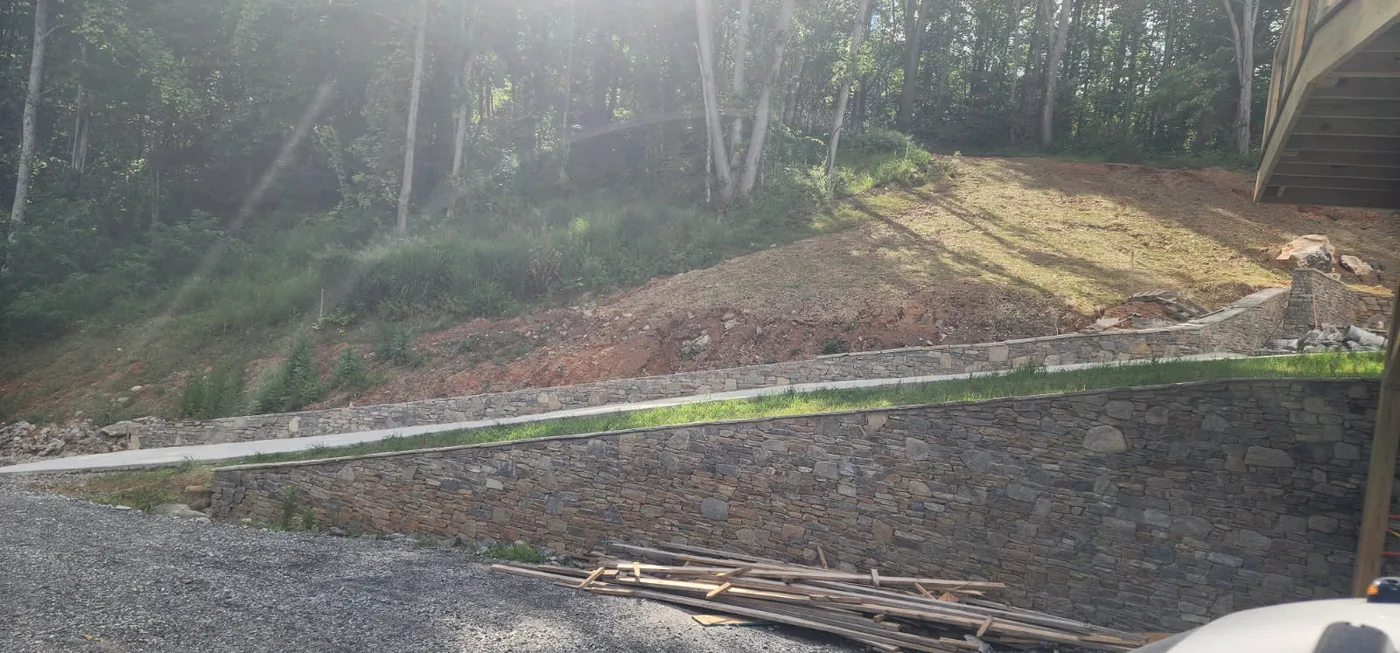
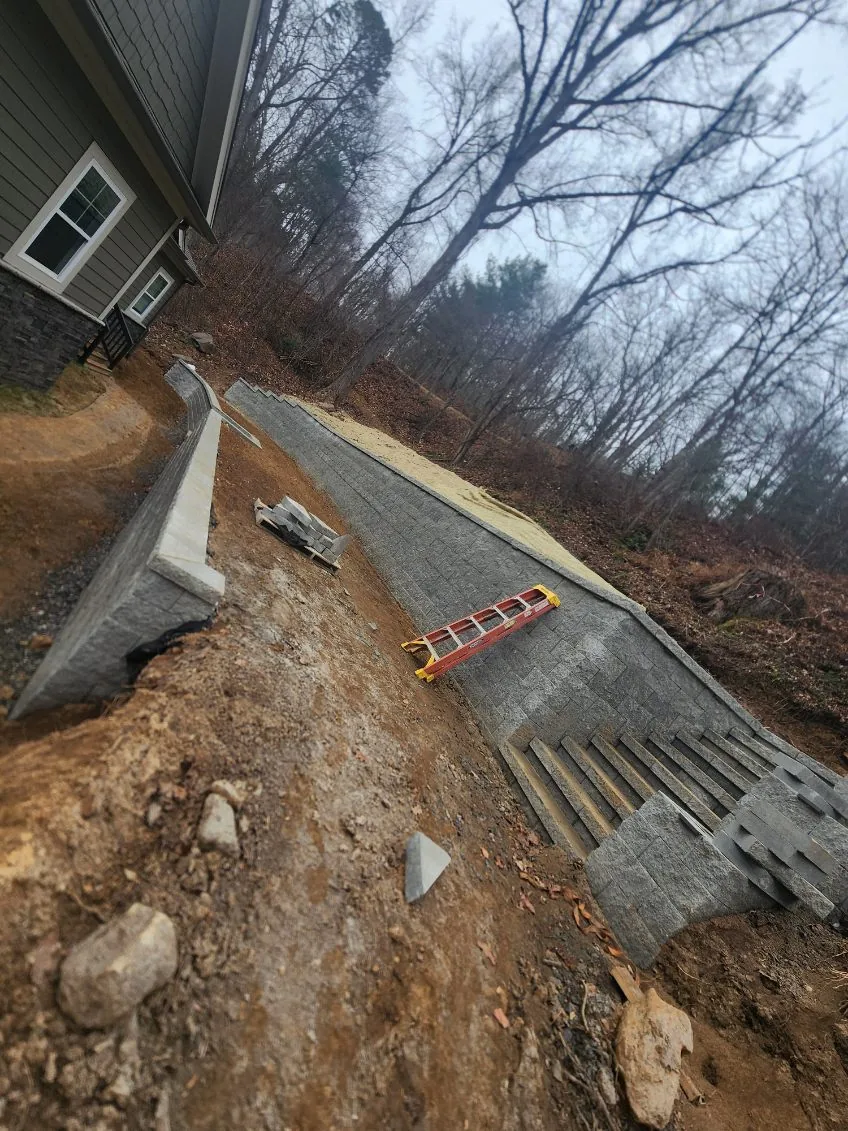
Canton's steep residential ground is a real advantage for waterfalls, because you can build a genuine drop instead of faking one with stacked stone on flat ground. It is also where most failures start. When a fall sits on a bank, the water that exits the pond has to be carried away from the foundation, away from the neighbor below, and away from the slope face itself. That is a graded swale or a buried line to a daylight outlet, and it has to be sized for a real storm, not a garden hose.
The county's storm history makes this concrete. 19 federal disaster declarations reach Haywood County across 1973-2026, and the pattern is water. That record is the reason drainage belongs in the first conversation, not the last, and it is the same reason the National Weather Service at https://www.weather.gov is worth checking before you size an overflow. It is also why a rebuild of a failing feature frequently costs more than a third of a new build. If your project touches a structural wall rather than a garden slope, general contracting thresholds come into play.
What a good first visit looks like
A real site visit happens on your lot, in daylight, with a level and a hose, not on a tablet in a truck. The walkthrough should identify the water source, the electrical source and its distance, the overflow destination, and the access path the crew and stone will use. On a Canton hillside that access question is not trivial: hauling several tons of rock up a steep driveway by machine versus by hand changes the labor line significantly, and any bid that ignores it will change later.
Ask how the builder seasons the feature, because winter in this valley means freezing lines and dormant plants. Ask who services the pump and what the replacement interval looks like. Ask whether the overflow is sized to the watershed above the pond, not just the pond surface. The answers separate crews who have built on mountain ground before from crews who have only built on flat lawns. When you are comparing scope documents, the stone waterfalls and ponds overview on this site lays out what belongs in each. Local crews who also handle hardscape and drainage are listed under retaining wall contractors in Canton, and many of them build water features as well.