Read the feature you already own before you spend
Half the calls that come out of Etowah start the same way: a pond or waterfall was installed years ago, the pump quit, the liner slipped, and now the question is whether to rebuild what's there or tear it out. That question is the whole job. A leaking waterfall is rarely a stone problem. It is a settlement problem, a liner-or-underlayment problem, or a grade problem, and each one prices differently. Before anyone talks you into new rock, somebody has to walk the feature, find where water actually leaves the system, and tell you whether the bones are worth keeping.
Etowah sits in the broad valley ground of Henderson County, just downstream of Hendersonville where the French Broad and its tributaries cut through, and the soil runs heavy clay in pockets and rock ledge in others. Both conditions are hard on buried liner and settling stack. A fall that walked sideways two inches over five winters is telling you about its base, not its stones. That base read, plus a look at how the overflow behaved through the last wet season, is what we do first.
Experience matters here less than honesty does. A crew that walks the feature and tells you the liner is sound will save you thousands; a crew that quotes new stone before testing the base is selling rock, not a fix.
What waterfall and pond work costs in Henderson County
Scope decides price here far more than stone choice. The table below reflects working regional ranges for the trade, not quotes; excavation depth, haul distance, and whether the site needs a retaining structure behind the falls all move the number.
| Scope | Typical range | What drives the price |
|---|---|---|
| Pondless waterfall, small (up to ~6 ft drop) | $3,800-$7,500 | Excavation, liner, pump vault, stone tonnage |
| Lined garden pond with spillway | $6,500-$14,000 | Volume, filtration, edging, access for equipment |
| Stacked stone waterfall over existing wall | $5,500-$12,000 | Rebuild vs. veneer, weepholes, base repair |
| Full rebuild: tear out, re-grade, re-line, re-stone | $9,000-$22,000 | Disposal, drainage correction, electrical re-run |
| Pump, liner, or plumbing replacement only | $900-$3,500 | Access, equipment grade, line length |
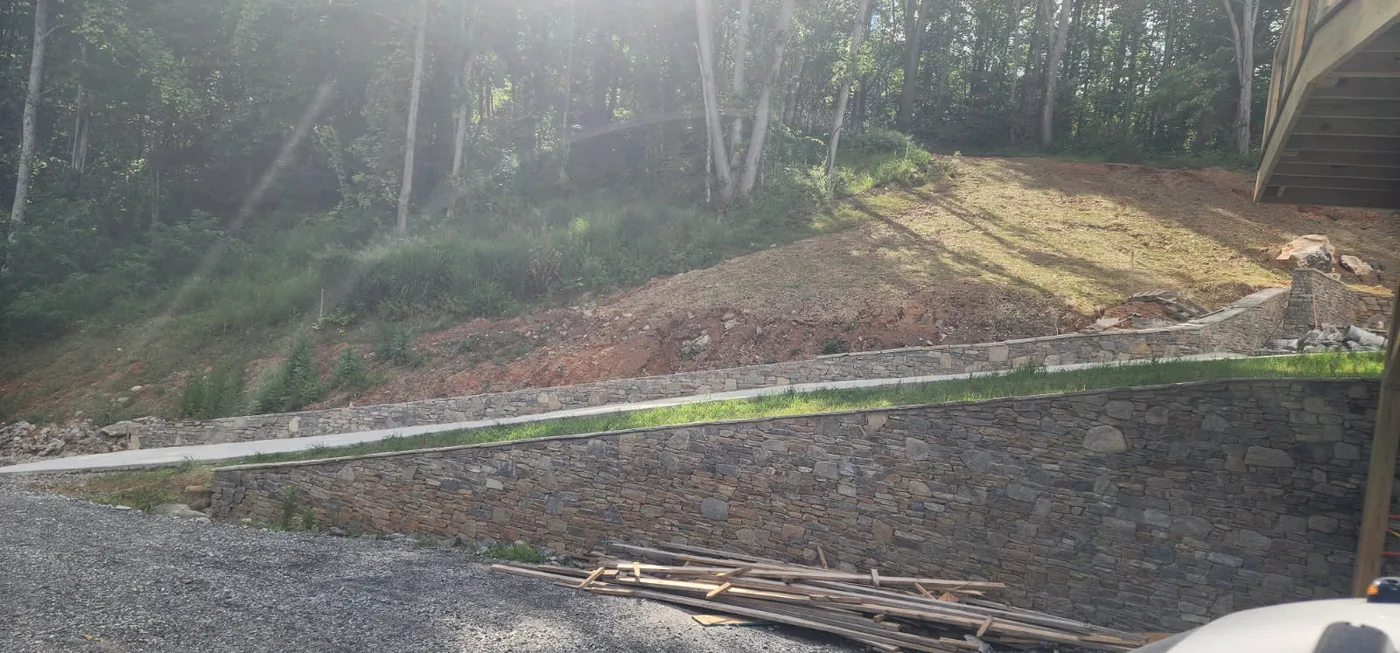
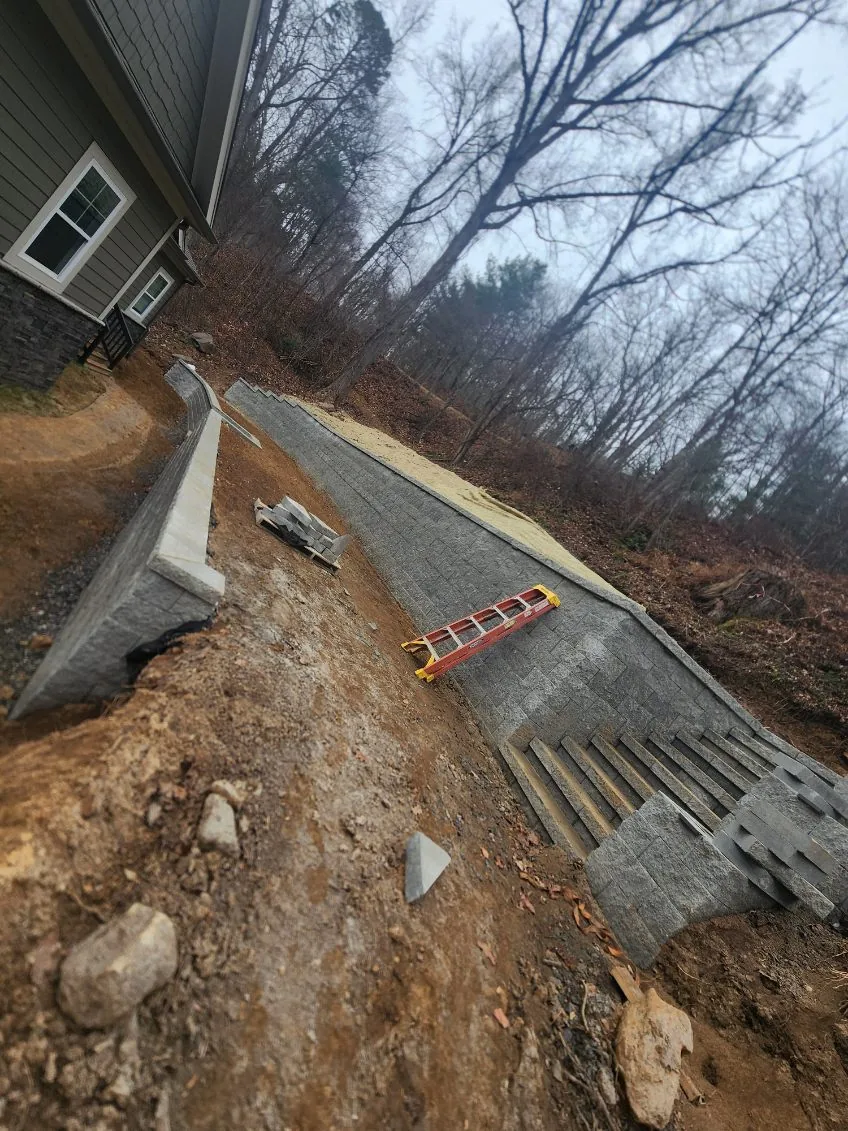
Any fall built against a slope that needed a wall to hold it is really two projects, so if yours is, start with the Henderson County retaining wall cost breakdown before you compare waterfall bids. A waterfall with a failing wall behind it is a wall job with water on top, and the wall line on the estimate usually tells you which kind of contractor you are actually talking to.
Water, grade, and the permit line nobody expects
Etowah drains toward the French Broad and its tributaries, and this corner of the state has a long record of storm and flood family events: 16 federal declarations touch the county across 1978-2026. That history matters to a water feature for one practical reason. Any pond or waterfall that pushes runoff toward a neighbor, a septic field, or a storm path is a complaint waiting to happen, and correcting it after the fact costs more than designing it right the first time.
Two authority checks worth knowing before you sign anything. First, structural work tied to these builds, including walls of real height and footings, can cross the state's contracting threshold; licensing rules are published by the NC Licensing Board for General Contractors. Second, anything that alters a stream, wetland, or shoreline buffer is regulated at the state level, and the NC Department of Environmental Quality is where those rules live. Most backyard Etowah features never touch either, but the ones that do are expensive to unwind. A quick check of the site's floodplain edge through National Weather Service rainfall records can also tell you how much overflow your spillway realistically has to handle.
What separates a rebuild that lasts from one that doesn't
Three questions do most of the sorting. Does the crew correct the water source before setting stone, or just reset what settled? Is the liner protected with underlayment sized to rock, or laid against bare clay and punctured by the first hard freeze? And is the pump accessible for service, or buried under two tons of stack that has to be moved by hand later? A waterfall is a plumbing system wearing stone, and crews that treat it as landscaping will sell you rock and leave you the leak.
On grade, a feature tucked into a slope will need a wall, a bench, or both, and that means engineering the retention as its own problem. Our Etowah retaining wall contractors guide covers how those structures are scoped and inspected, and it is the right place to start if your falls sit on a hillside. For the broader feature catalog, scope ranges, and material comparisons, the stone waterfalls and ponds overview lays out what each build type includes so you can tell a complete bid from a thin one. Bring both scopes to a single walkthrough and the numbers get comparable fast.
When it is genuinely a repair, and when it never will be
Repair makes sense when the liner is intact, the base has not moved more than an inch or two, the pump and lines still work, and the stones only need resetting. That work is usually measured in hundreds to low thousands and can be done in a day or two. It stops making sense when water disappears faster than it should even after a liner patch, when the stack leans because its footing dropped, or when the whole feature was built on bare ground with no underlayment and no plan for where overflow goes.
Owners usually get there by tracking one honest measurement: how much water the feature loses per day with the pump off. Bring that number to the first visit and the read gets much faster, because it separates a slow liner weep from a base that is moving. If the pit holds water overnight, you are likely looking at splash loss or a plumbing leak, not a full tear-out.