Why railroad tie walls fail in Buncombe County
The same mountain terrain that makes Asheville scenic makes short work of railroad ties. Our hillsides drain fast, and the wet, freeze-thaw cycle common above 2,000 feet rots pressure-treated timber in a decade or two. Ties rot from the inside out — they often look fine from the front while the back half is spongy. In Buncombe County's clay-heavy soils, water builds up behind the wall and pushes outward; ties have no structural connection to a footing, so they lean, then bulge, then let the hillside go.
If you're seeing any of the classic warning signs — a tie that crumbles when you poke it with a screwdriver, a wall leaning more than an inch or two, soil spilling over the top — replacement is a matter of safety, not cosmetics. The International Code Council's building code guidance treats retaining walls over four feet as engineered structures. That height triggers a permit and engineer sign-off in most of North Carolina, and for good reason: a failing wall can take out a driveway, a foundation, or worse.
The cost picture for Buncombe County
Replacement costs vary by wall length, height, access for equipment, and what you put back in. The table below shows what we typically see for a residential wall in the Asheville area — your quote may differ, but this gives you a working range:
| Scope | Price range | Notes |
|---|---|---|
| Replace ties only, same footprint (20 ft long × 3 ft high) | $3,500–$5,500 | Includes removal and disposal; no new drainage |
| Replace ties with added drainage (gravel, perforated pipe) | $5,000–$7,500 | Drainage is required to prevent premature failure |
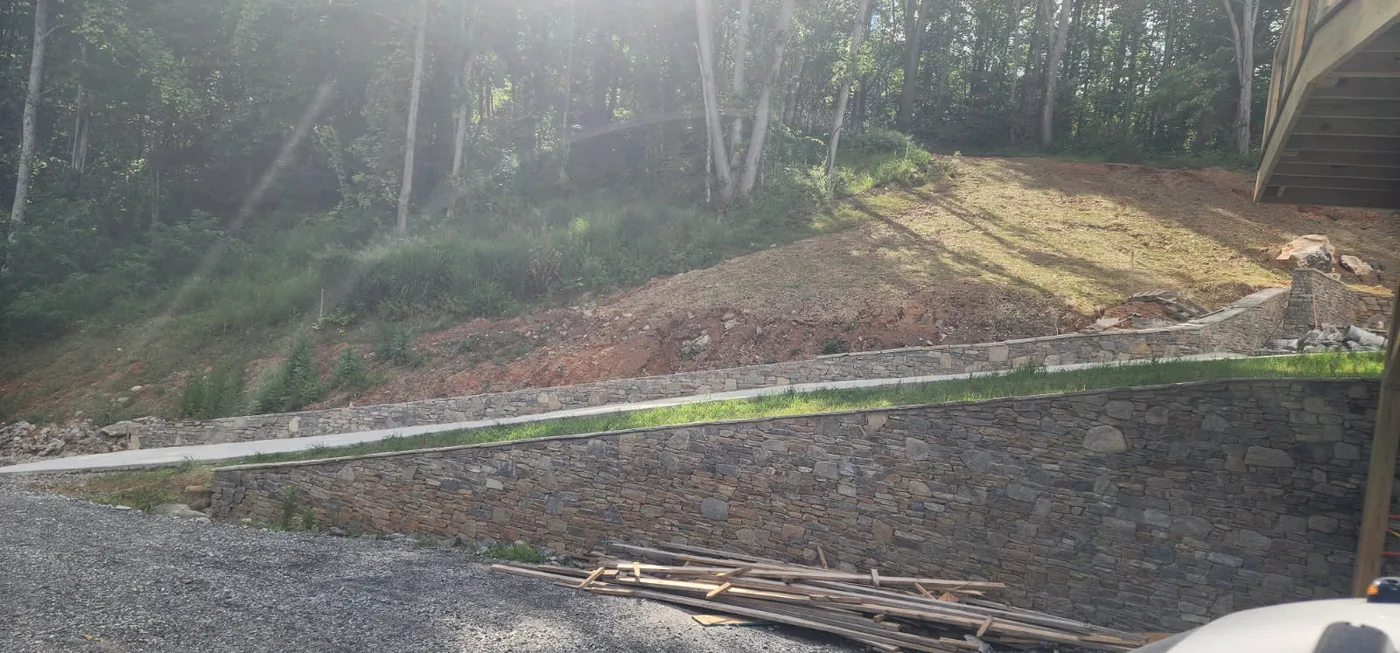
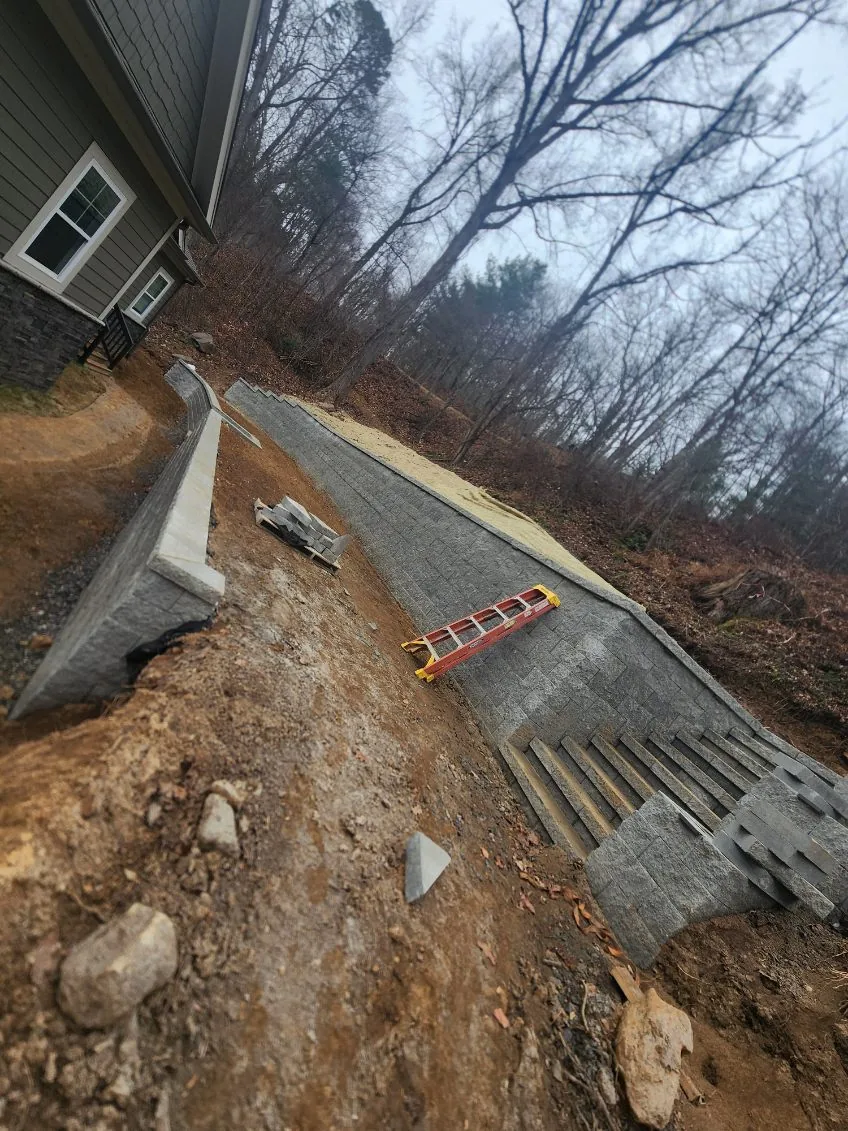
| Convert to interlocking concrete blocks (20 ft × 3–4 ft) | $6,000–$9,000 | Blocks are engineered, last 50+ years, and take less space |
| Convert to natural stone (full veneer or structural) | $8,500–$15,000 | Stone blends with historic neighborhoods and adds durability |
| Engineered wall over 4 ft tall (any material) | From $12,000 | Requires engineer stamp and often a footer and geogrid |
Hauling old ties costs more than you'd think — many are heavy with water and dirt and can't go in a regular landfill. Budget for proper disposal. Also, if drainage was never installed behind the original wall, include it now; it's the single best way to keep your new wall upright. For a broader look, see our retaining wall cost guide.
The Asheville factor: slope, soil, and history
Buncombe County is not flat. A backyard in West Asheville might drop 15 feet over 50; a home off Town Mountain Road could sit on a 30-degree slope that's been re-graded. Railroad ties were often the cheap answer on those steep lots in the 1980s and '90s — and now they're failing all at once. The soil under Asheville is a mix of clay and decomposed granite, and it holds water differently depending on which side of the county you're on. A wall in the flood-affected River Arts District faces different stress than one in the dry oak groves of Fairview.
For most replacements, you'll want a crew that's done this in the mountains before. Ask about their experience with drainage on slope lots, how they sequence removal so the hillside doesn't slump mid-job, and whether they'll haul away the old ties or leave them for a separate contractor. We cover more in our retaining wall repair page, but the short version: replace a failing tie wall sooner rather than later, because the cost only goes up once the hillside starts moving.
Do you need a permit and engineer?
In North Carolina, the answer depends on height and location. As a rule of thumb, any retaining wall over 4 feet measured from the base to the top of the soil side needs a permit and a licensed engineer's design. That applies even if it's just holding back your neighbor's yard. The NC Office of State Fire Marshal adopts the building codes that local permitting authorities enforce; your county or Asheville city office will tell you the exact threshold and application process. The NC Licensing Board for General Contractors also licenses contractors for larger projects, so verify your contractor is properly licensed for the job size.
Many homeowners skip the permit for a tie replacement that's the same size and material. But if you're converting to a different material or increasing height, you're likely triggering a code review. Also, be aware that tie walls are not considered permanent under most codes; they're a temporary measure. If you have any doubts, get a site visit from a contractor who can advise based on your exact setup. Our retaining walls main page has more on what's right for different slope situations.
For current official guidance, see the U.S. Environmental Protection Agency (EPA). For current official guidance, see the U.S. Department of Housing and Urban Development (HUD).
Why replace like for like (or better)?
If you need low cost and the wall is under 3 feet, new railroad ties might make sense — they're the cheapest upfront. But factor in that you'll be back in 8–12 years. Concrete block or natural stone, especially with proper drainage, will outlast you. For a historical home in Montford or Grove Park, stone may be required by neighborhood guidelines or simply fit better. For a cabin up on a ridge, a timber alternative like AC2 pressure-treated landscape timbers keeps the aesthetic but lasts longer than ties. Let the use dictate the material: a wall holding a flower bed is different from one holding a driveway or a walking path.
We're local to Buncombe County and have replaced tie walls across the county — from tight city lots in Asheville to steep drives off of Old Haywood Road. If you're planning a replacement, we'll give you an honest scope and a number that matches the job. The earlier you catch a leaning tie wall, the less it costs. And if you have water pooling behind the wall, mention that on your first call — it changes the repair plan.