Where the water comes from, and where it has to go
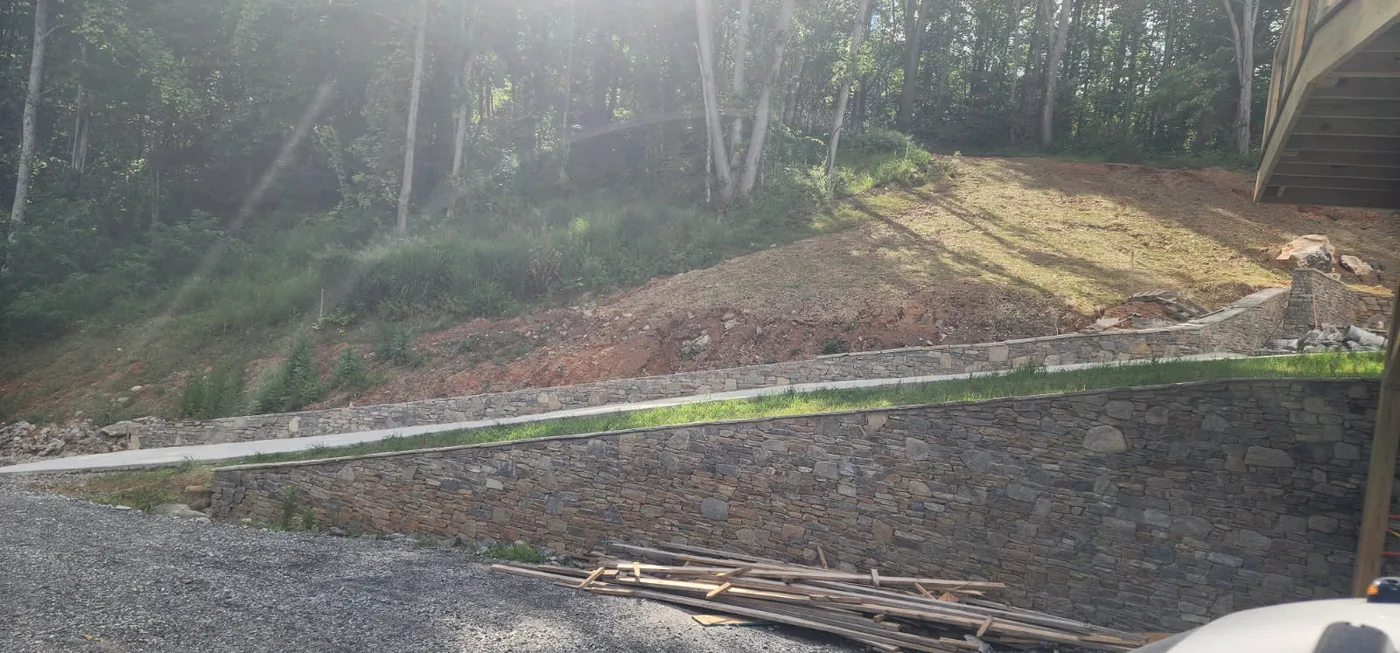
Barnardsville walls sit on slopes that shed water hard and fast. A driveway cut into a hillside off Dillingham Road collects sheet flow from above and dumps it at the wall face within minutes of a summer storm. A wall that looked fine last spring can be bulging by fall because the soil behind it never got a chance to drain. The repair scope that lasts here starts with where that water is routed, not which stone gets reset first.
Every Barnardsville wall has to answer three water questions: where does the uphill flow enter, where does it exit downhill, and what happens when the French drain or weep holes clog. If the answer is "it just runs behind the wall," the wall is carrying a hydrostatic load it was never designed for, and resetting the face is cosmetic work that fails in a year.
The difference between a Barnardsville repair and one in a flatter part of Buncombe County is the volume and speed of that uphill drainage. The valley's benches and hollows funnel runoff into concentrated paths, so a wall that handles a gentle Weaverville slope may be overwhelmed by the same storm here. That is why the diagnostic visit matters so much more than the sales visit, and why any quote that doesn't mention drainage stone, filter fabric, and an outlet is incomplete. If the water has nowhere to go, the wall becomes the dam, and walls make poor dams.
What wall repair actually involves here
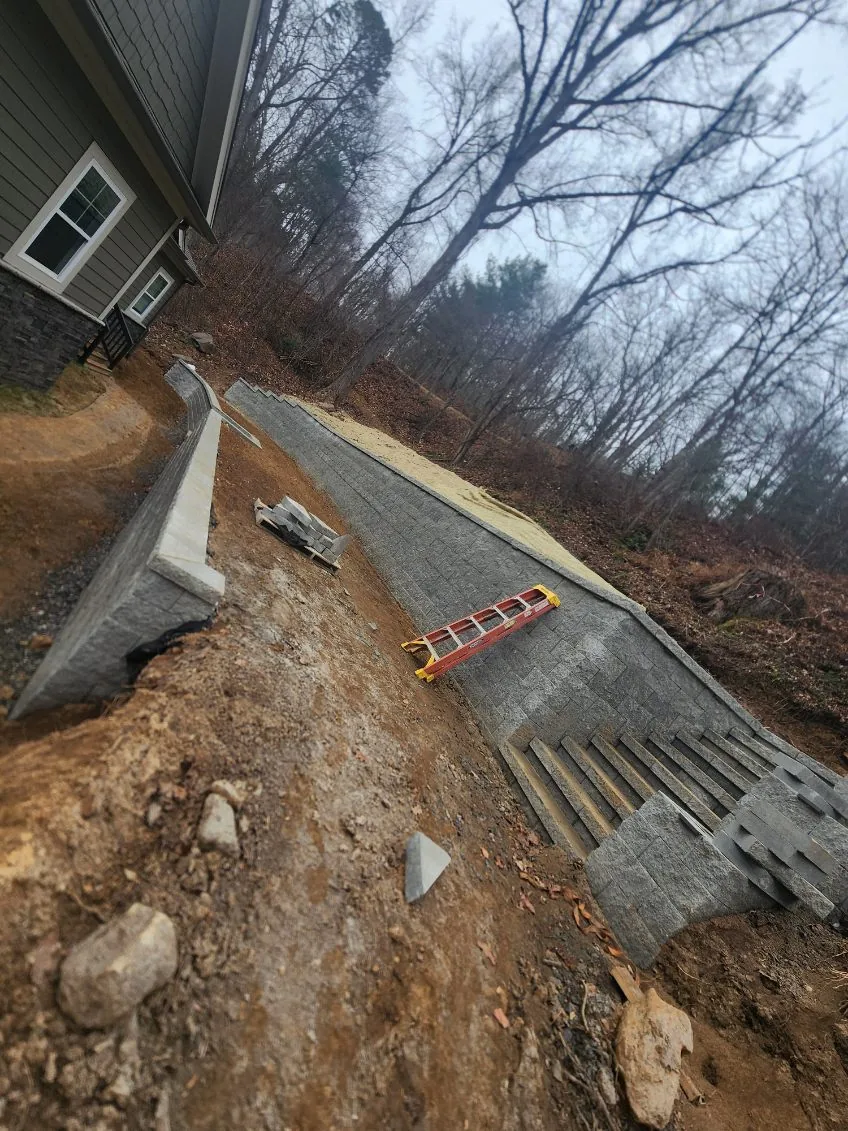
Barnardsville retaining walls are mostly dry-stacked fieldstone, mortared block, or timber, often twenty to forty years old and built without modern drainage detail. When one starts leaning, cracking, or shedding face stone, the fix sorts into three tiers, and pricing follows the tier — see the full Buncombe County retaining wall cost table for the line items. Repair options range from resetting caps and repointing joints to full dismantle-and-rebuild with proper drainage stone, filter fabric, and a perforated drain at the base.
Anything over roughly four feet of retained height, or any wall carrying a driveway or structure load from above, crosses into engineered territory. The North Carolina residential code, adopted through the International Code Council family of codes, treats those walls as structural, and permitting in Buncombe County follows. Treat any bid that skips engineering at that height as incomplete rather than cheap.
Materials matter on these slopes. Local fieldstone is beautiful but irregular, so a dry-stack rebuild demands patience and a skilled eye for batter — the slight backward lean that lets gravity help hold the wall. Block walls go faster but need a proper reinforced base and drainage core. Timber walls, common on older Barnardsville lots, rot at the soil line and rarely survive a full rebuild; most owners replace them with block or stone once the first section gives way.
The Barnardsville repair price picture
Repair pricing here tracks retained height, wall length, materials, and how much drainage work the slope demands. A short re-pointing job is a handyman day; a sixty-foot dry-stack rebuild with drainage stone and a new base is a week of crew time and equipment. The table below shows realistic regional bands. Steep lots and access-limited backyards push toward the top of the range because equipment may not fit and stone has to move by hand.
| Repair scope | Typical price range | What drives the number |
|---|---|---|
| Repointing, cap reset, weep-hole clearing | $700-$2,500 | Length, joint condition, access |
| Drainage retrofit (French drain, stone, fabric) | $1,800-$4,800 | Uphill flow, outlet distance, trench depth |
| Partial rebuild, dry-stack or block, under 4 ft | $2,800-$8,500 | Section length, material reuse, base prep |
| Engineered wall replacement, 4 ft+ retained | $6,000-$14,500+ | Permit, engineering letter, drainage, labor |
| Timber wall replacement with block or stone | $4,500-$11,000 | Wall length, tear-out, new base, drainage |
Local repair crews live in or near the valley, and the ones worth hiring will show you a drainage plan before they quote stone. When you are ready to compare bids, the Barnardsville retaining wall contractors page covers what to ask each crew.
Two cost traps catch Barnardsville owners. The first is a low bid that resets stone without fixing drainage: it looks like a deal until the next big rain. The second is a high bid that includes unnecessary full replacement when a targeted section rebuild would do. A good walk-through separates the two, and it should end with a written scope that names the drain outlet, the stone, and the retained height.
The federal record explains the urgency
The federal disaster record explains most Barnardsville retaining wall calls: 19 declared events touch this county (1973-2026), heavily weighted toward storm and flood family. Every one of those events loaded saturated soil against walls that were never detailed for that kind of water. If a wall moved or cracked during a recent storm, the next one does more damage, and the repair scope grows accordingly. Drainage-led repair is the only version that survives the next stretch of heavy rain.
Water quality rules also matter when you redirect runoff, because muddy discharge into a creek or ditch can run afoul of EPA stormwater guidance that local jurisdictions adopt. A repair that sends sediment-laden water straight downhill is a repair that may create a new problem. The right outlet, riprap, or level-spreader keeps the drainage legal and keeps the wall standing.
Hiring well, and the licensing line
Three Barnardsville-specific checks. First, ask whether the crew has actually worked on this valley's slope-and-spring soils, because the drainage detail on a Barnardsville hillside is different from a flat-lot wall in Weaverville or a river-adjacent wall near Marshall. Second, ask for the engineer's letter on any wall over four feet of retained height, because state licensing rules via the North Carolina Licensing Board for General Contractors kick in once a project crosses the threshold. Third, ask how the crew sequences water relative to stone: crews that rebuild before they redirect water are selling you a wall with a clock on it.
For the full service-angle explanation, including how a first walk-through should be scoped, see the retaining wall repair guide.
One more practical note: ask about access before the crew arrives. Narrow gravel drives, steep switchbacks, and shared easements are common on Barnardsville hillsides, and a machine that can't reach the wall changes both the method and the price. Crews that know the valley plan for this up front instead of discovering it on day one.