On a Buncombe County slope, water arrives from above
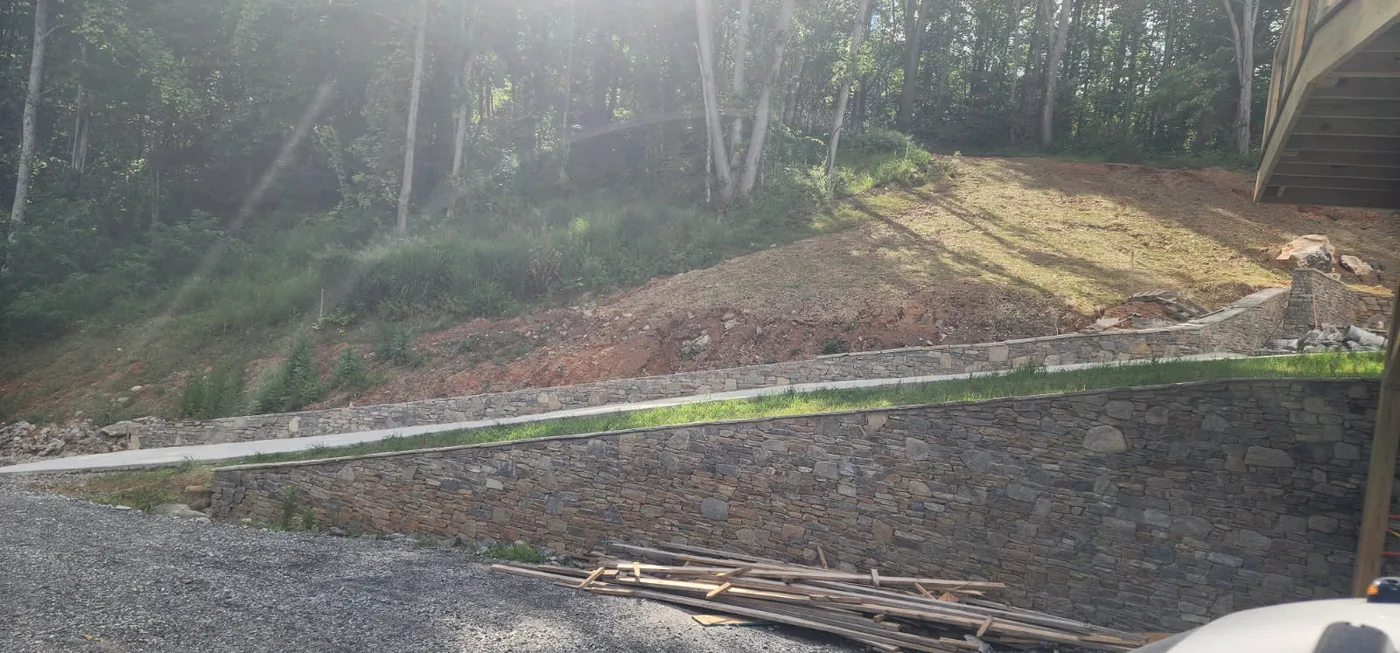
Most lots around Asheville are not flat, and they are not dry. The county seat sits in a bowl where the French Broad and Swannanoa meet, ridge subdivisions step up into the Blue Ridge, and the soil under a lot can be thin clay over weathered rock or a pocket of old fill. That mix means water rarely bothers a fireplace from the front. It arrives from uphill, travels along the surface during a hard rain, and sits against whatever masonry you built because the grade never gave it somewhere to go. A fireplace built on a plateau-grade detail on a ridge lot is a fireplace quietly soaking its footing.
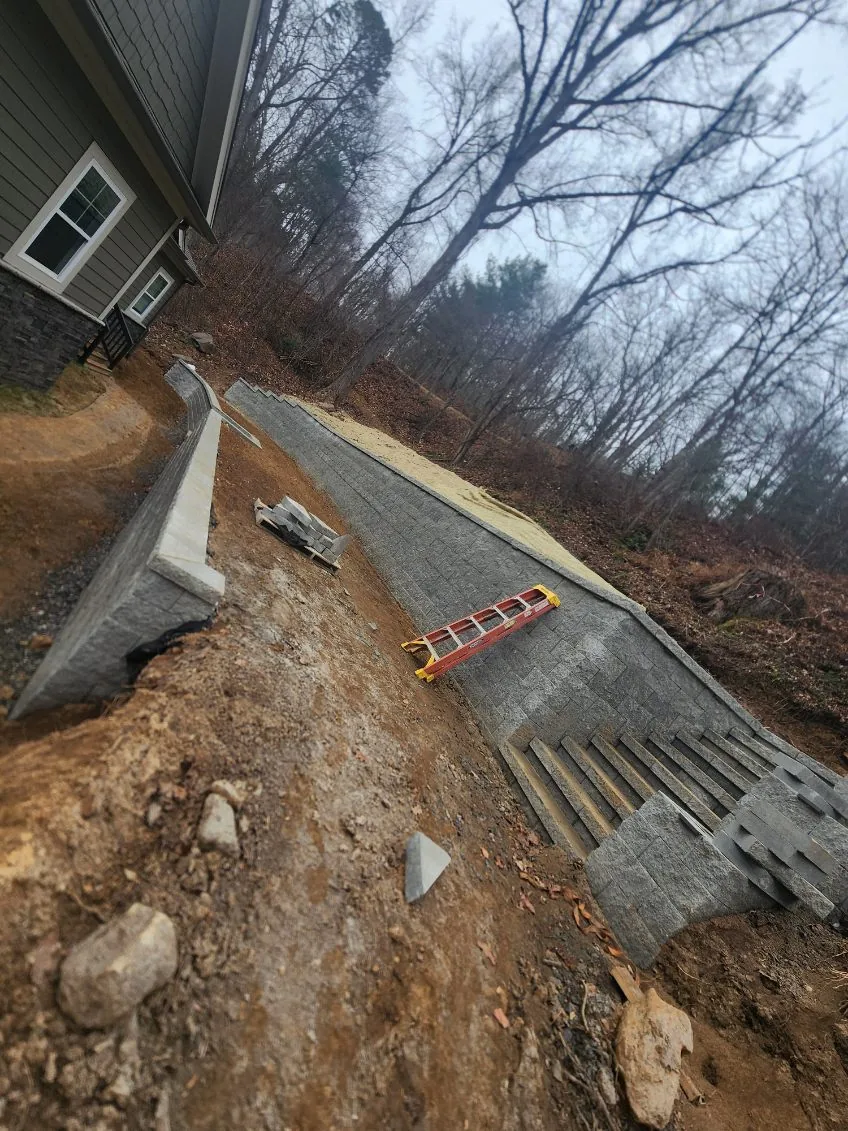
So the first design question here is not color or stone size. It is where the water goes when it leaves the uphill side of the hearth. A swale, a curtain drain, or a graded terrace has to move roof runoff and hillside sheet flow around and below the structure, not through it. Tied into that, an outdoor build wants a footing that reaches below the local frost line and a chimney that clears nearby rooflines and trees. Get those right and the stone is the easy part. Get them wrong and you rebuild the base in five years. The storm and flood record matters too: Buncombe County carries 19 federal disaster declarations spanning 1973-2026, and saturated-ground seasons are exactly when a poorly drained hearth pad shows you the mistake.
Interior veneer versus a full outdoor build
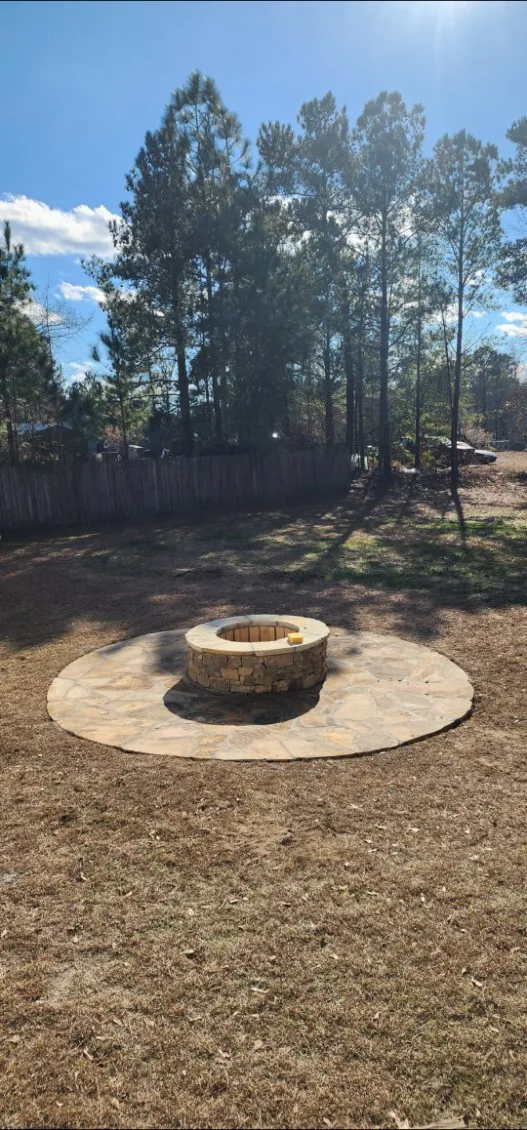
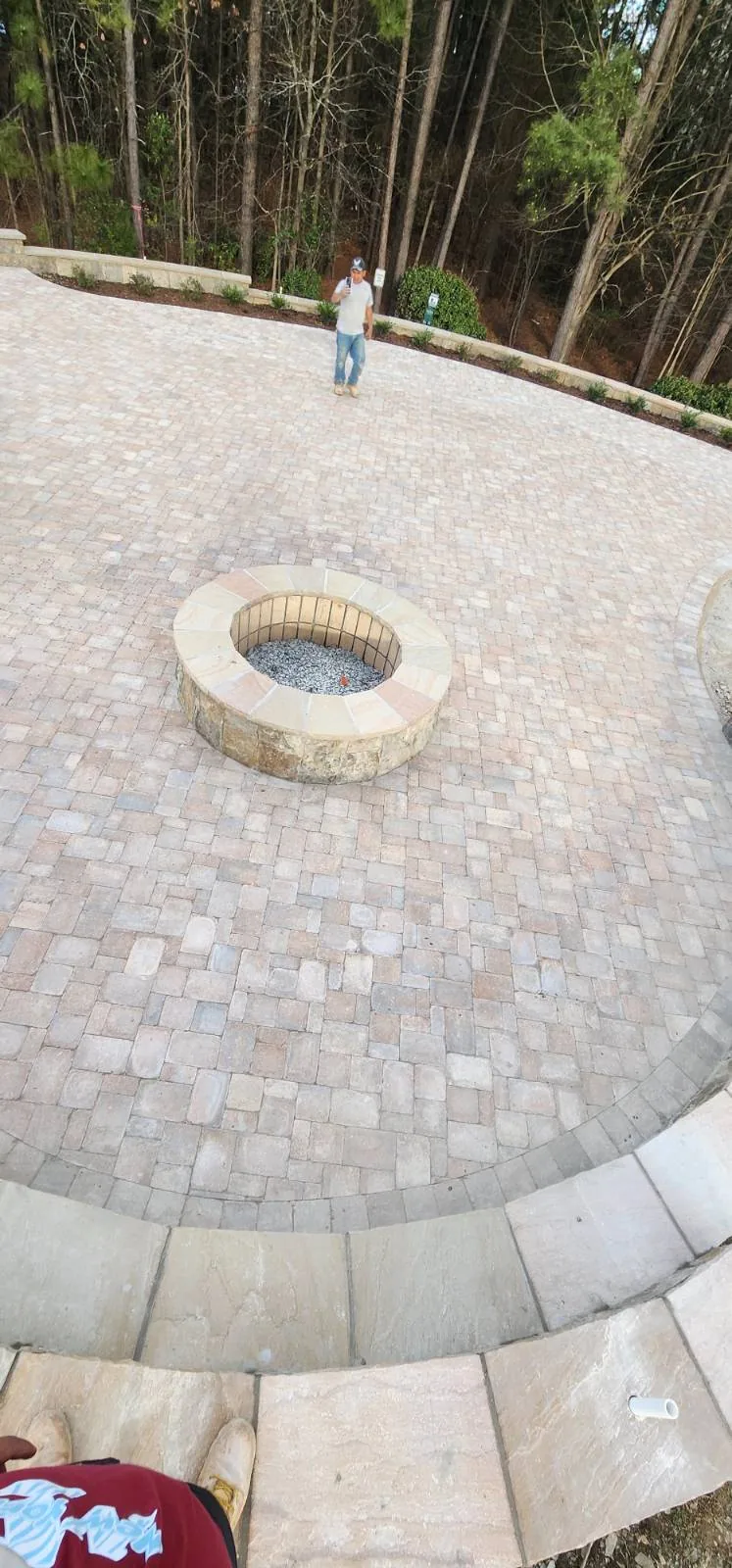
These are different projects and should be priced differently. An interior stacked stone face over an existing fireplace is mostly a finish job: the firebox and flue are already there, so the work is substrate preparation, a noncombustible backer, veneer stone set with proper clearance to combustibles, and a hearth extension. A full outdoor fireplace is a small structure. It needs a concrete footing, a masonry or steel firebox, a chimney that drafts correctly and meets clearances, and often a stone hearth pad or patio around it. If you want cooking, seating, or a full kitchen, that is a different scope again, and the outdoor fireplaces and kitchens page covers how those pieces fit together.
The stone itself is the visible variable. Real stacked ledgestone, thin-cut veneer, and manufactured stone all look different up close, age differently, and cost different amounts. The stone veneer page explains the materials honestly, and the stone veneer cost breakdown is the right place to start if you are still deciding between a full-stone build and a veneer finish.
What stacked stone fireplace work costs in this region
These are installed ranges for the Asheville area, not quotes. Slope access, footing depth, chimney height, and how much drainage correction a lot needs all move the number.
| Scope | Typical installed range | What drives it |
|---|---|---|
| Interior stacked stone face over existing fireplace | $4,500–$9,500 | Face square footage, hearth extension, mantel, clearance work |
| Full outdoor fireplace, single-sided | $8,000–$14,000 | Footing, firebox, chimney height, stone selection, access |
| Outdoor fireplace with cooking or seat wall | $12,000–$18,000+ | Kitchen components, gas or wood, counter and stone quantity |
| Drainage or retaining correction before the build | $1,500–$6,000 | Terrace size, drain length, fill removal, grade change |
The drainage line is the one homeowners skip in the estimate and regret later. On a downhill-access lot, bringing material in and spoil out can add real labor. Ask for the drainage scope in writing even when it is small, because on Buncombe County terrain the water work is what decides whether the fireplace lasts.
Permits, code, and who can legally build it
In North Carolina, fireplace and chimney work touches the state building code, and the county issues permits for new structures and some alterations. The NC Department of Insurance, Office of State Fire Marshal administers the state code, and it is worth reading what applies before ordering stone. For interior work, clearance to combustibles, hearth extension dimensions, and flue condition matter and are inspected. For outdoor builds, the footing, the firebox, and the chimney clearances are the usual inspection points.
Contractor licensing is its own threshold. The North Carolina Licensing Board for General Contractors sets the dollar level above which a project needs a licensed general contractor, and a fireplace plus patio plus drainage package often crosses it. If a quote arrives from someone who cannot explain that threshold, that is your answer about the rest of the bid. Before work starts, confirm who pulls the permit and who pays for the inspection.
Getting a bid that matches this county's conditions
A fair bid here names the stone by type and source, states footing depth and footing width, shows the chimney height against the roof it serves, and includes a drainage line even if the number is modest. It also separates the fireplace from the patio or seat wall so you can see what you are paying for. Two nearby addresses can price very differently because one sits on rock and the other sits on fill, and a contractor who has not walked the uphill side of the lot has not seen the problem.
Before signing, ask three things: where does the water go, does this need a permit, and what happens if the soil under the footing is not what the plan assumed. Those questions separate a builder from a stone stacker. The same standard applies across the region, and it is the reason the foundation inspection page exists for the projects where the footing or the soil is the real story.