What Clyde's housing stock actually sits on
Clyde is a small Haywood County town wedged between the Pigeon River bottomland and the steep, wooded ridges that ring the Waynesville valley. That geography shows up in every patio quote. A lot near the old mill village is often flat, formerly graded, and forgiving; a newer build up on a cut-and-fill bench above the valley is standing on engineered fill with a natural fall that has to be terraced or retained before a single stone is set. Both owners want the same thing — a flat place to put chairs — and the two jobs share almost no line items.
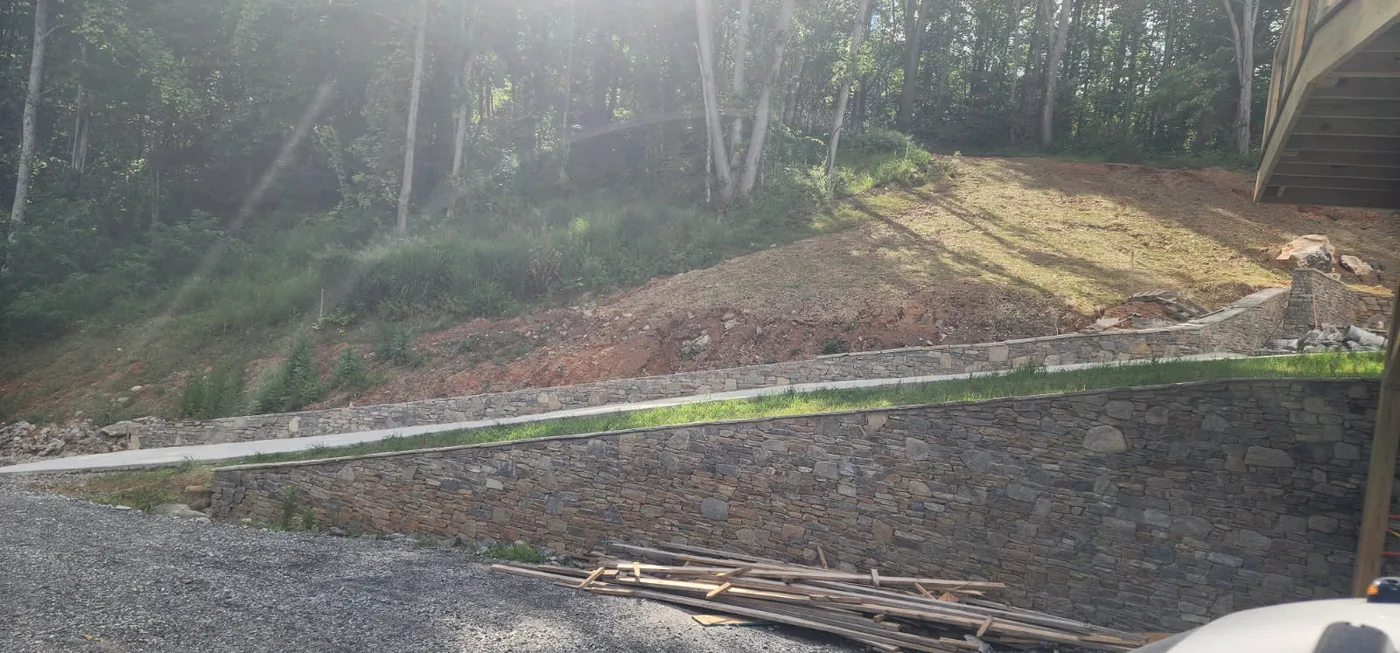
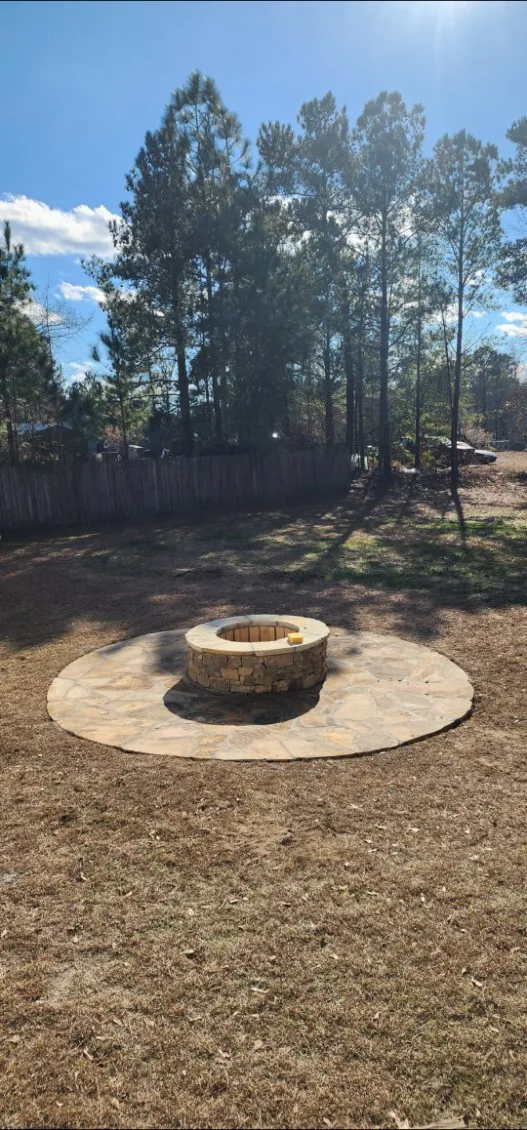
That is why fieldstone and boulder work dominate the local market. Fieldstone, gathered and sorted by thickness, lays into irregular flagstone patterns that suit the older bungalows and cottage-style homes around town without demanding the saw-cut precision that pricier stone implies. Boulders and timber do the heavy lifting on the hillside lots, where a patio is really a small retaining project with furniture on it.
Materials that fit Haywood County budgets and ground
Three material families cover nearly everything here, and each has a different failure mode when the installer cuts corners:
- Fieldstone and irregular flagstone — the workhorse. Random thickness means a thicker, more forgiving bedding layer. If it rocks after a season, the base was too thin, not the stone too thin.
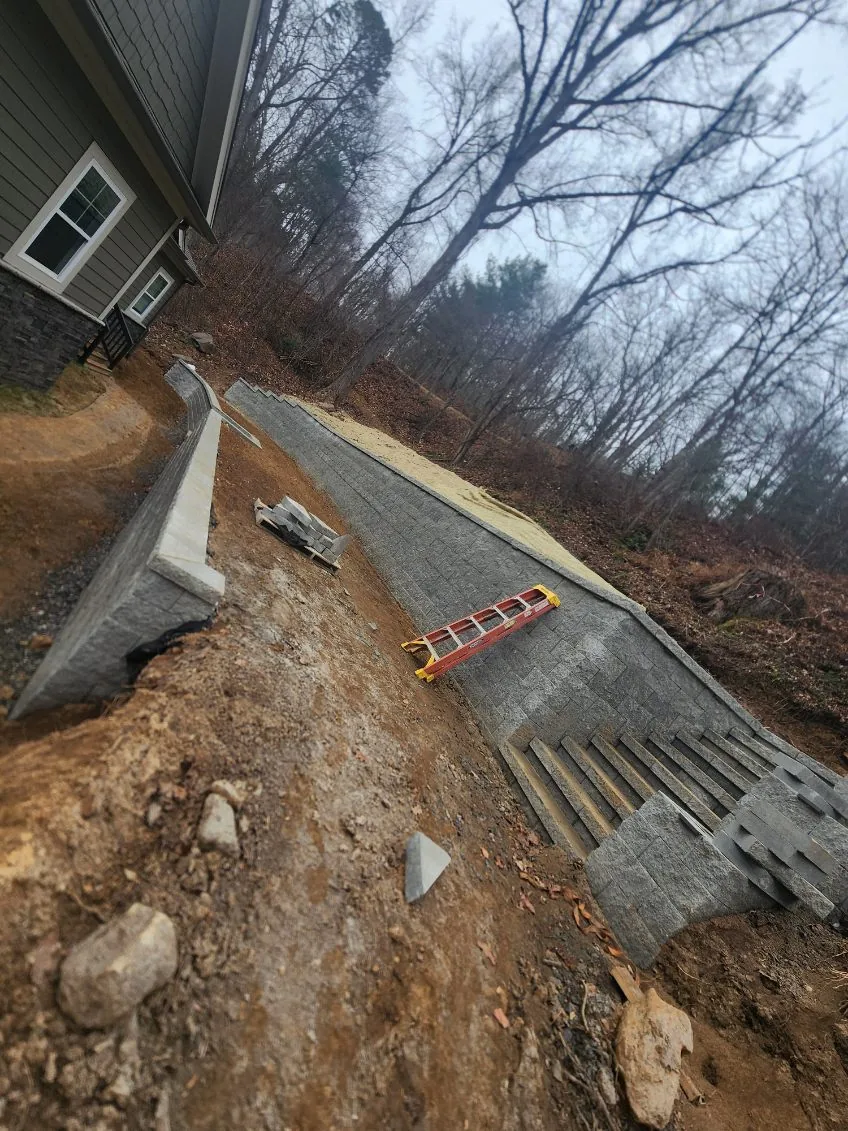
- Boulder and block terracing — boulders set into a slope for the walls, block or stone caps for seating. The wall is the structure; the patio is a surface. Get the drainage behind it wrong and the whole terrace moves.
- Timber-and-stone hybrids — pressure-treated timber for lower retaining runs paired with stone surfacing. A budget answer for moderate slopes, but timber in wet ground has a finite life, and Clyde's rainfall gives it a shorter one than most owners expect.
If your plan requires a wall over a few feet tall, the work crosses into the territory where the NC Licensing Board for General Contractors thresholds apply, and a project of that scale also touches grading and drainage rules under the state's adopted code, administered through the NC Office of State Fire Marshal Code Services. Ask any contractor how they handle that line before signing.
Cost bands you can actually plan against
Regional pricing varies with access, slope, and how much of the base has to be rebuilt rather than just covered. These are working ranges for the Clyde and greater Waynesville area, quoted as installed projects, not material-only estimates:
| Scope | Typical installed range |
|---|---|
| Small fieldstone patio, flat graded lot, simple border | $4,500–$7,000 |
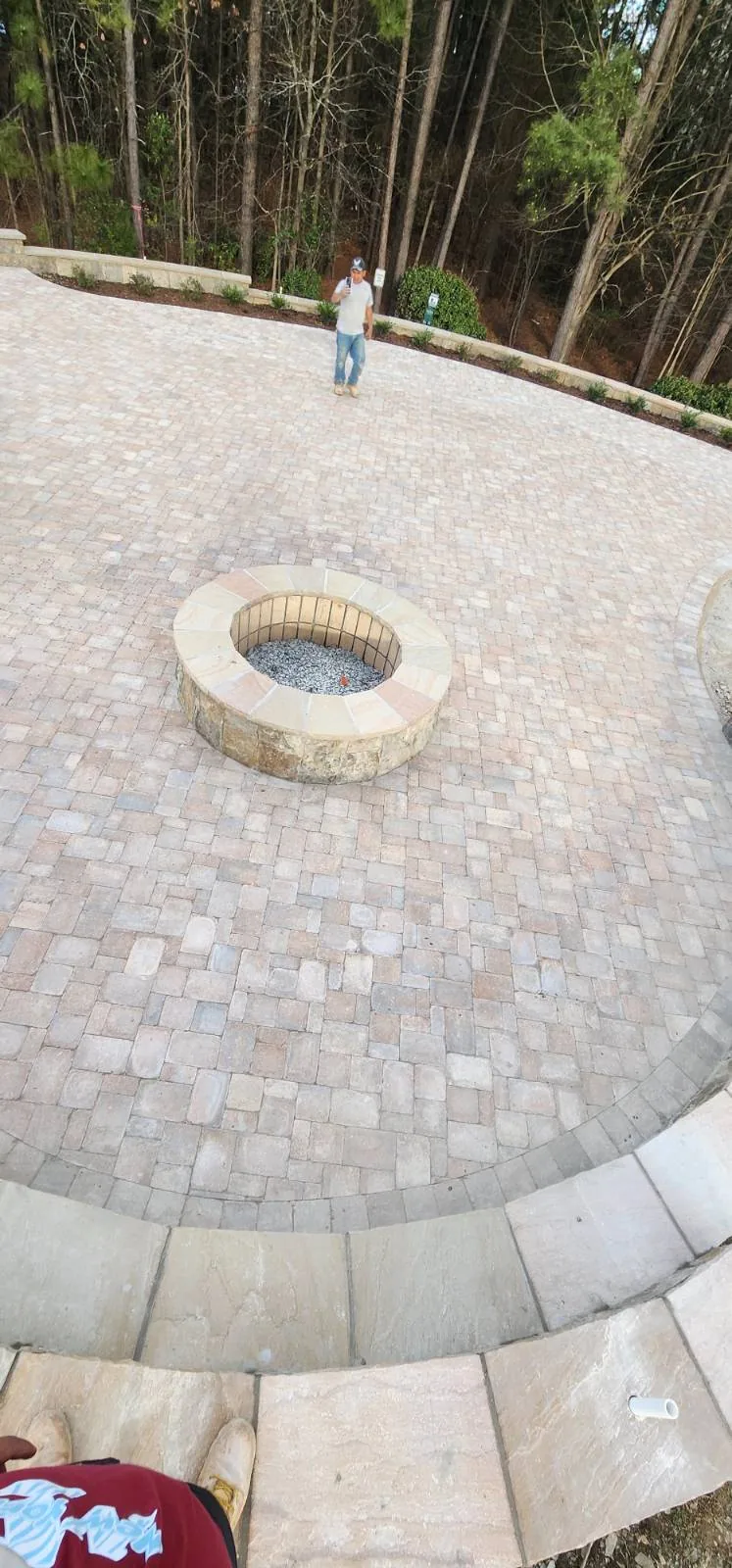
| Mid-size irregular flagstone patio with base repair and edging | $7,000–$10,500 |
| Flagstone patio plus low retaining wall for slope correction | $10,500–$16,000 |
| Boulder-and-timber terraced patio on a steep ridge lot | $14,000–$24,000+ |
| Repair and re-level of an existing stone patio (base rebuild, reset) | $1,800–$5,500 |
These ranges are honest but not final. Access is the silent cost driver: a machine can't reach a backyard off a narrow ridge drive, so stone moves by hand and the labor number climbs. For wall-heavy projects, the line-item detail on our Haywood County retaining wall cost page breaks out what drives that portion of the budget.
Drainage is the buried half of every patio
Haywood County's federal disaster record tells the story: 19 declared events touch this county across 1973-2026, and they lean heavily toward flooding and storm damage. That is not trivia — it is the reason a patio that ignores water fails within two or three winters. Clyde sits in the Pigeon River watershed, where summer thunderstorms drop serious rain fast, and a stone surface with no slope falls apart as freeze-thaw cycles work the bedding loose.
The fix is not exotic. Base course compacted in lifts, a surface that sheds toward a defined outlet, and a plan for where the uphill water goes before it reaches your wall. Owners weighing a rebuild should read our flagstone patio overview for the base preparation standard we work to. A patio installed over a wet base looks fine at handoff and heaves in the first hard freeze.
Choosing a stone crew in the Waynesville area
Stone is a craft trade. A great landscape crew can still lay a bad patio because it is a different skill set. Three questions worth asking before anyone breaks ground:
- Do they excavate to a stable base or lay stone over existing ground? If the answer is the latter, walk away politely.
- How do they handle slope — actual terracing with retained walls, or an attempt to grade the surface level? Improper grading without a wall is a guaranteed callback.
- Do they understand stone sourcing for the region? Fieldstone from local sources matches the local ground; stone trucked in from far away often does not weather the same way.
If you already know a wall is needed before the patio goes in, review the crew background and scope details on our retaining wall contractors Clyde NC page before you interview installers, so you are comparing bids on the same scope.