Read the stone you already have first
Flat Rock patios fail in a specific, familiar way: the stones themselves are fine, and the base underneath them is gone. That distinction matters because it's the difference between a $1,200 repair and a $15,000 rebuild. If you can lift a loose flagstone and see sandy soil or mud instead of compacted gravel, the patio was never built on anything meant to survive a Henderson County freeze-thaw cycle. Pull three or four stones in different areas. If the failure is localized — one corner, one edge near a downspout — you're looking at a repair. If the whole field rocks when you walk it, or if the joints have been swept open season after season, the base is the problem and it won't fix itself.
The other thing worth checking before you call anyone: is the patio shedding water away from the house? A patio that ponds against the foundation has already started damaging a more expensive structure. If you see staining on the siding below the patio line, or if the basement or crawl space smells damp after rain, address that first — the patio is the leak, and repaving stone over a drainage bug just buries it.
What a Flat Rock patio actually costs
The ranges below reflect what Henderson County crews charge for work on the kinds of slopes and clay soils common around Flat Rock and the Carl Sandburg area. Nothing here is a quote — every site has a drainage story that moves the number. The full flagstone patio guide walks through material choices and what drives the upper end.
| Scope | Typical range | Notes |
|---|---|---|
| Reset loose stones over existing base | $900-$2,800 | Only when the base is still sound and the failure is isolated |
| Partial rebuild (one section, new base) | $2,500-$6,500 | Common where one edge has heaved or sunk |
| New patio, 200-400 sq ft, dry-set | $4,500-$11,000 | Natural cleft flagstone, compacted gravel base, sand joints |
| New patio, 400-700 sq ft, wet-set | $11,000-$22,000 | Mortared joints, concrete base — more stable on grade |
| Drainage correction (French drain, regrading, downspout routing) | $1,800-$6,000 | Often required on sloped lots; frequently the real fix |
| Retaining wall associated with patio | See Henderson County retaining wall costs | Priced separately; engineering may apply above 4 ft |
The pattern to notice: the drainage line item appears on most honest quotes for sloped Henderson County lots, and flatland quotes that skip it are usually incomplete rather than cheap.
Clay, slope, and the freeze line
Flat Rock sits on ground that holds water. Henderson County's clay-heavy soils don't drain, and when they freeze they push. A patio installed flat on clay with a thin base will heave within a couple of seasons, which is why every competent crew here excavates deeper than a coastal installer would. The NC Building Code Council sets the frost-depth and footing rules that govern anything structural, and while a patio itself doesn't trigger a permit, any retaining wall above a low threshold does — the NC Licensing Board for General Contractors publishes the dollar threshold that determines when a project needs a licensed general contractor. If your patio build includes a wall holding back a slope, check that threshold before you hire.
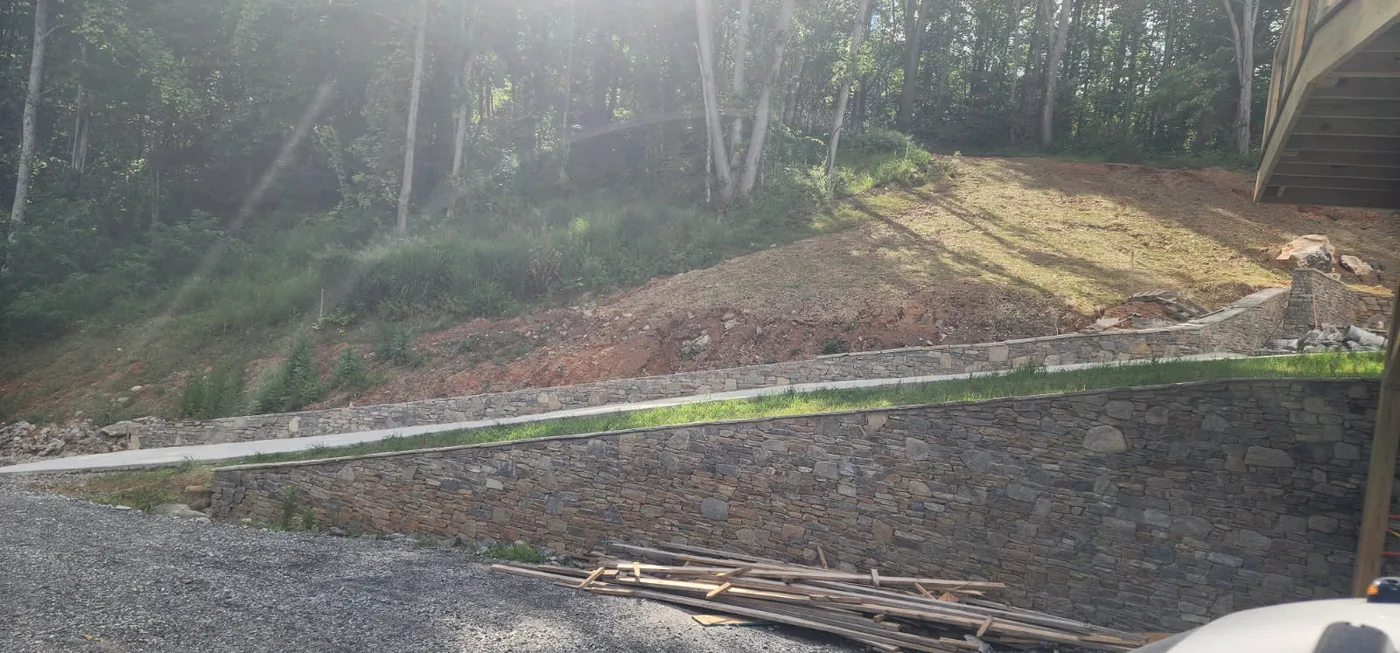
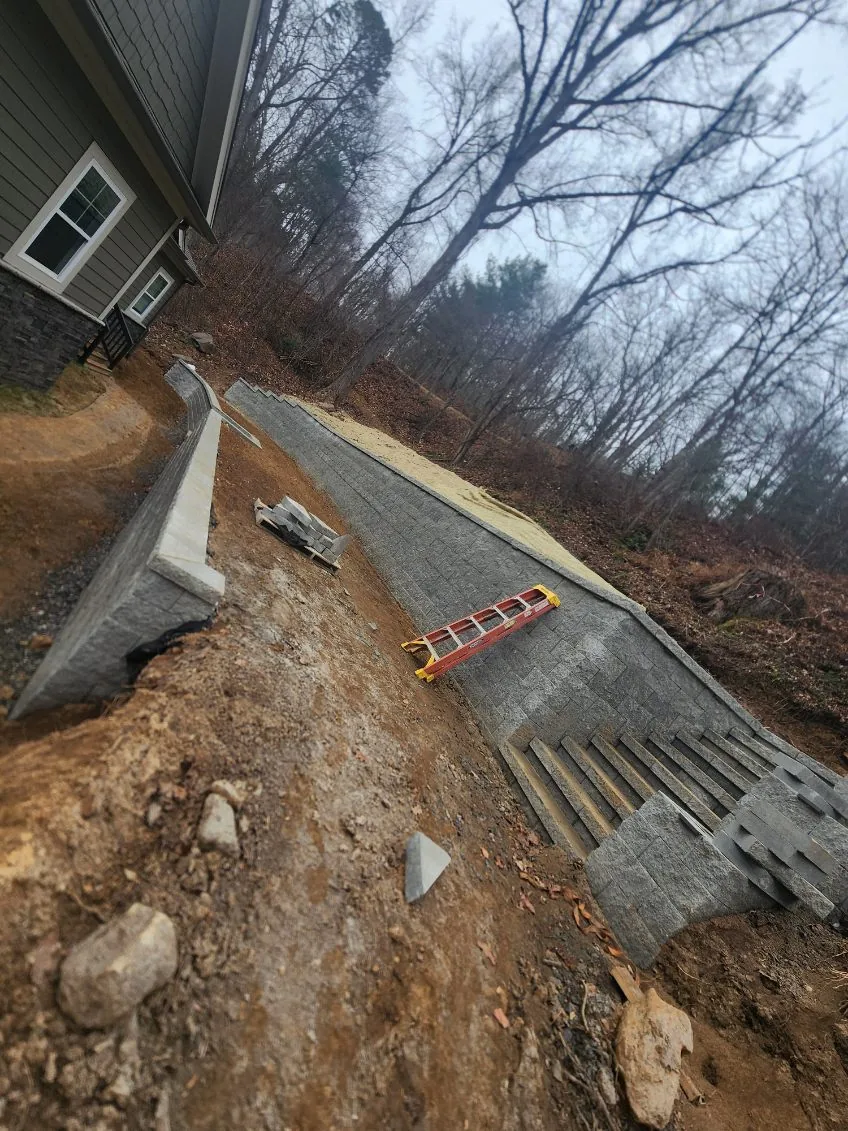
The terrain also answers a question homeowners ask constantly: why is the quote for my yard so much higher than the one I read online? Because a patio cut into a slope needs excavation, a retaining edge, and somewhere for the water to go. A patio on flat ground needs none of those. Same square footage, different job.
Repair or rebuild: the decision that saves the most money
If more than about a third of the stones are moving, or if the base fails a simple probe test with a screwdriver (does it push in easily?), rebuilding the affected area is cheaper than patching repeatedly. If the stones are stable but the joints are ugly and the surface ponds only slightly, re-sanding and leveling may buy you years. The one hard line: if water is reaching your foundation, stop thinking about aesthetics and fix the drainage. Stone is replaceable; a wet crawl space is a much larger bill.
For a proper assessment of whether your patio is repairable, or whether the wall beside it needs work too, the Flat Rock retaining wall contractors we work with assess both together — because on a sloped lot the patio and the wall that holds it are one system, and fixing one without the other just moves the failure downhill.
FEMA's disaster record for this county tells the story of why drainage matters here: 16 federal declarations touch Henderson County across 1978-2026, and the overwhelming majority are storm and flood events. Every one of those pushed water at patios and walls that were built for a drier assumption than they got. That's not a reason to panic — it's a reason to spend your money on grading and drainage before you spend it on stone.
What to ask before you sign anything
Three questions separate the crews that build patios from the crews that sell flagstone. First: how deep do you excavate, and what's the base spec? If the answer is vague, the patio will heave. Second: how does water leave this patio? If they can't point to a grade or a drain on your actual yard, they haven't thought about it. Third: what happens to my existing stone? On a rebuild, most of it can usually be cleaned and reused, which lowers material cost. A crew that automatically hauls everything to the dump is either not thinking about your budget or not planning to reuse anything salvageable.
Get the scope in writing with square footage, stone type, base depth, joint method, and drainage included. Then compare quotes line by line rather than by the total at the bottom.