Why the same wall costs different numbers on two Waynesville lots
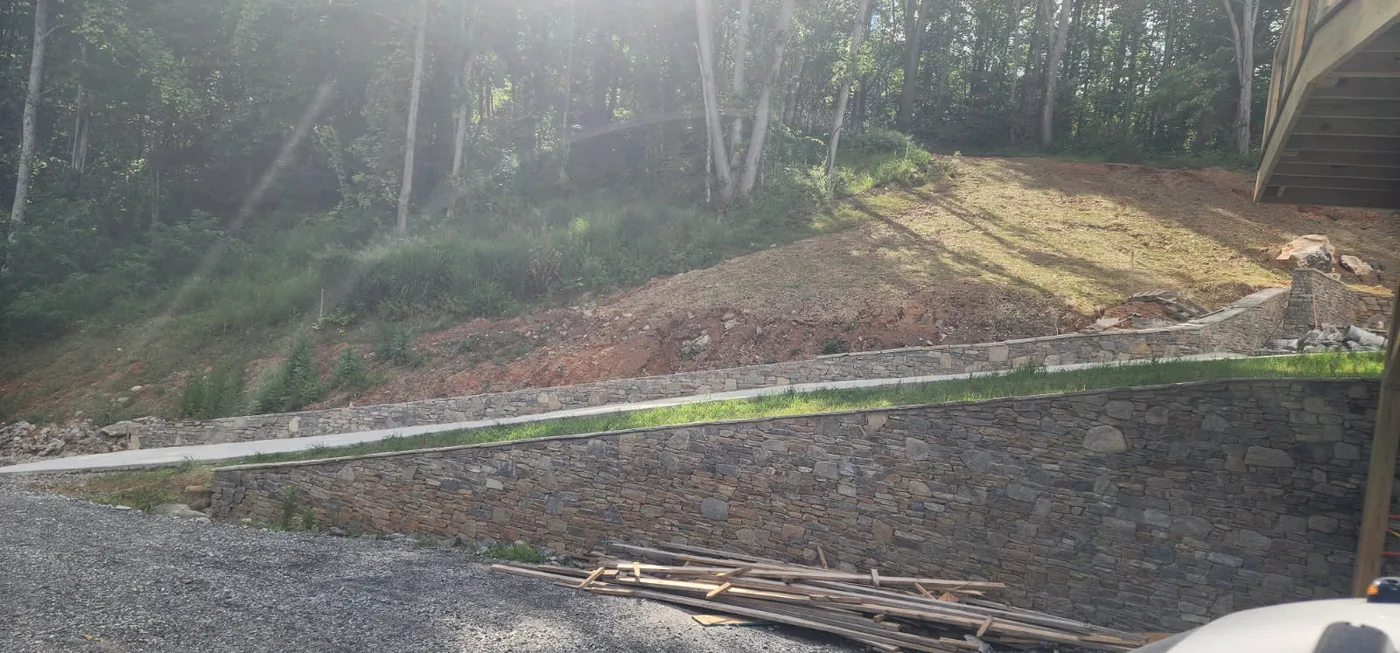
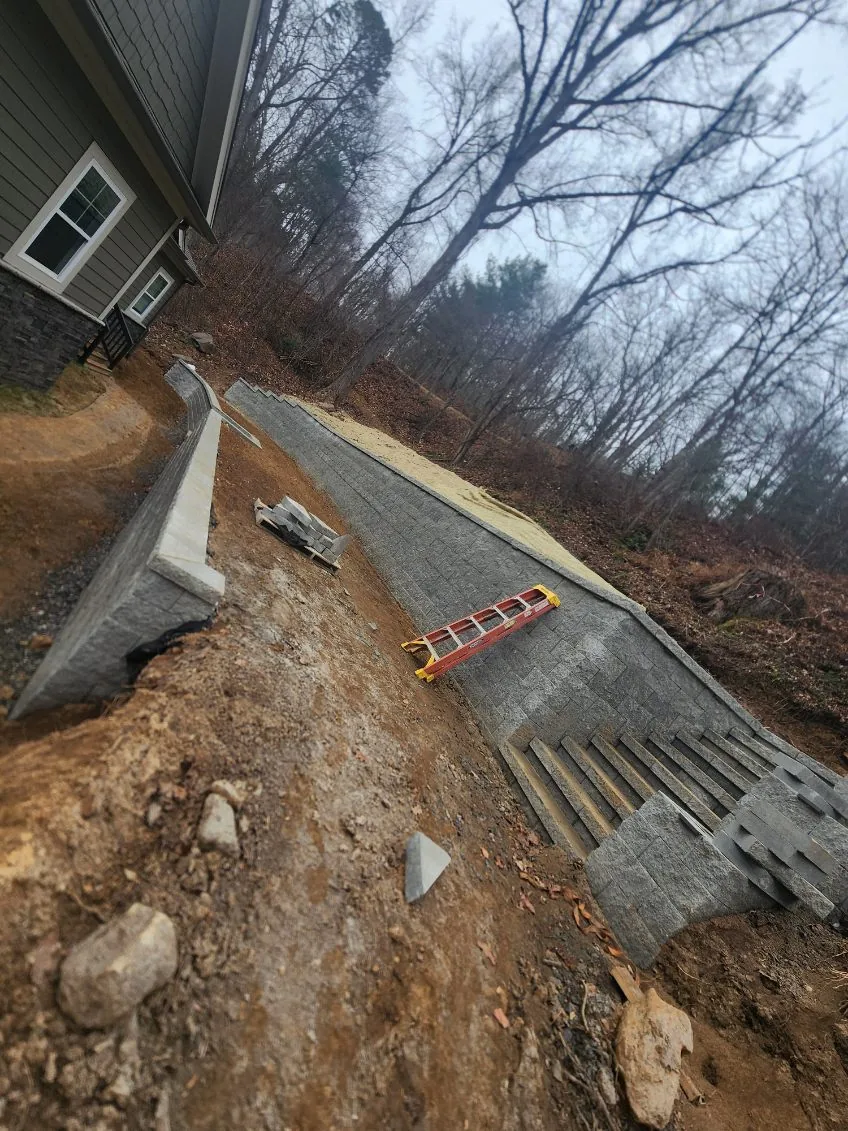
Drive from Frog Level up toward Laurel Ridge and you cross three different construction realities in about a mile. A low garden wall behind a flat lot off Russ Avenue needs a footer, stone, and a day of labor. A retaining wall on a graded slope off Walker Street needs an engineered footer keyed into the hillside, drainage stone and perforated pipe, and a way to get material past a driveway that a dump truck cannot enter. Same square footage of stone face, two entirely different estimates.
The line items that actually move a Waynesville stone masonry number are these: total wall height (not just visible height, since buried base adds cost fast), whether the wall holds soil or just borders it, stone type and haul distance, access for equipment and material, drainage requirements behind the wall, and whether engineering or a permit is triggered. A short stone veneer on a porch foundation is a finish job. A tiered retaining wall with geogrid is a small civil project. Both get called 'stone work.'
What stone masonry costs here, by scope
These ranges reflect typical residential work in Haywood County and the surrounding mountain terrain. They are ranges, not quotes — every lot changes the footer depth, access, and drainage line.
| Scope | Typical price range | What drives the number |
|---|---|---|
| Stone veneer on porch piers or foundation | $3,500-$9,000 | Square footage of face, stone type, substrate prep |
| Garden or landscape border wall (under 3 ft) | $4,000-$10,000 | Linear feet, cap stone, access |
| Retaining wall, 3-6 ft with drainage | $9,000-$24,000 | Height, soil load, geogrid, drainage stone and pipe |
| Engineered / tiered retaining wall over 6 ft | $18,000-$45,000+ | Engineering, permits, excavation, equipment access |
| Stone steps, walkways, and stoops | $2,500-$12,000 | Number of steps, tread material, rail or landing |
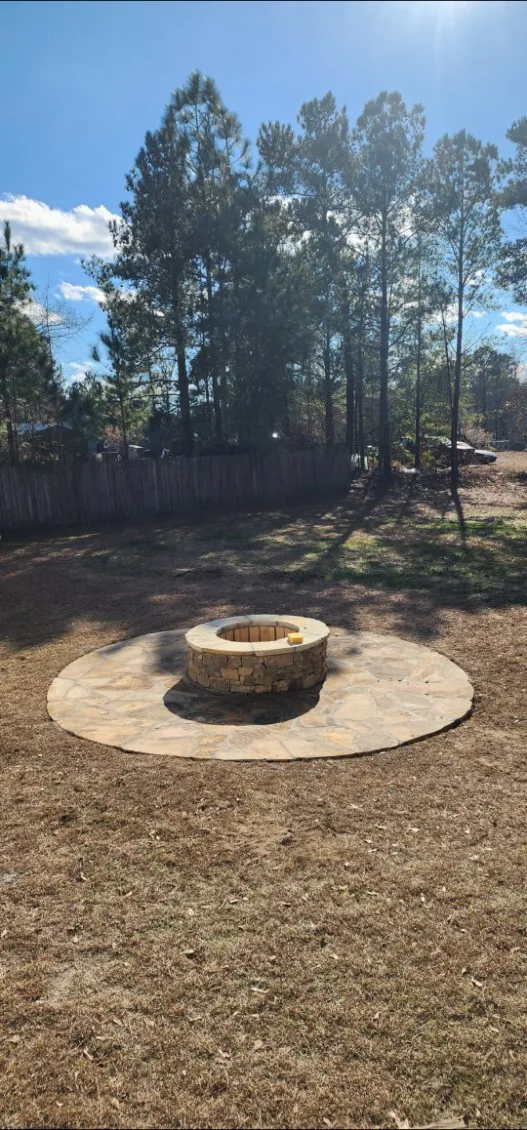
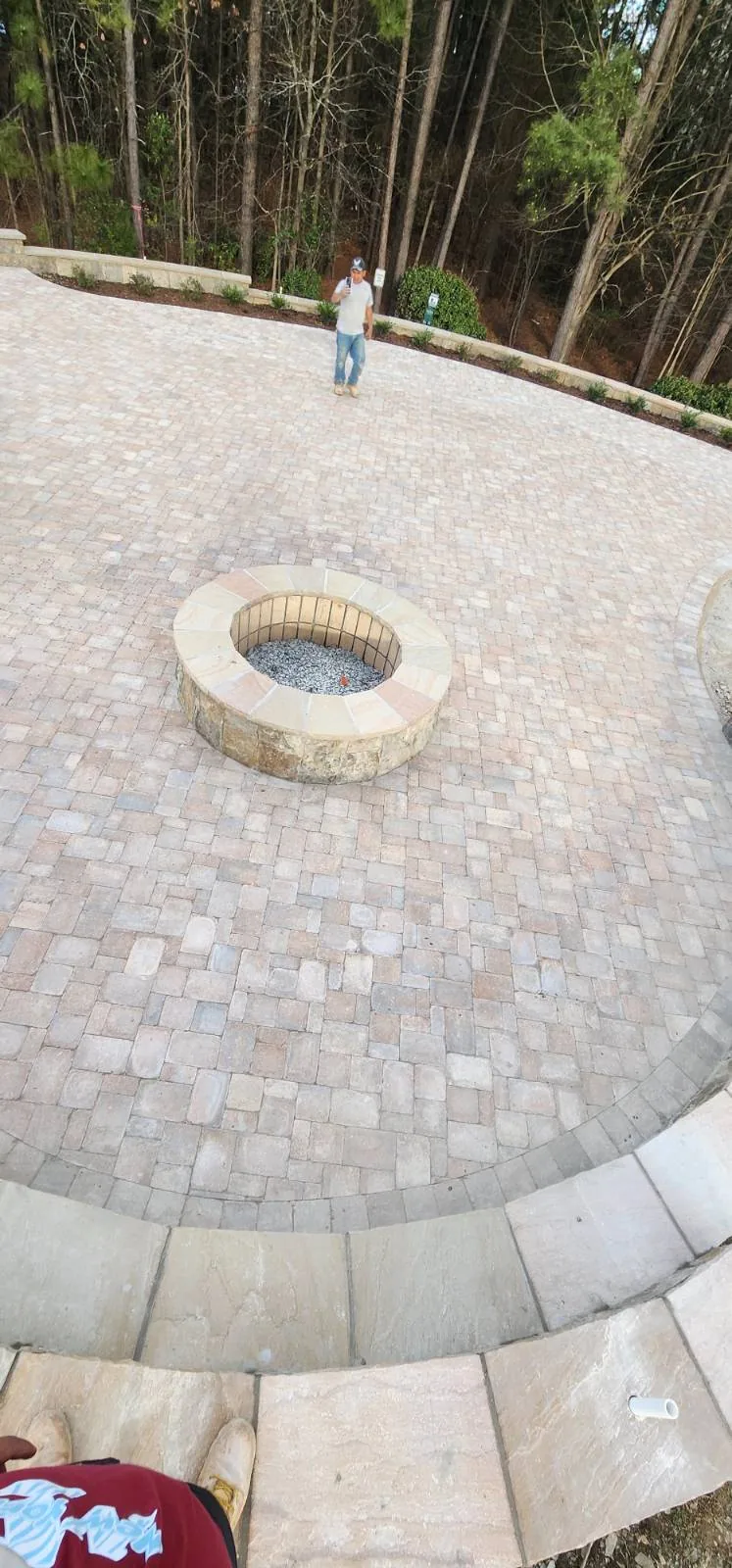
| Stone fireplace or outdoor feature | $6,000-$30,000+ | Design, stone selection, chimney or venting scope |
The most common surprise on a Waynesville bid is the footer. Mountain soil and slope mean a wall that looks four feet tall above grade may need a base two or more feet below it. That buried work is real cost and shows up before a single stone is set. The Haywood County retaining wall cost breakdown walks through how those footer and drainage line items stack up on a typical slope lot.
The retaining wall question comes up on almost every estimate
Most stone masonry calls in this town are really retaining wall questions in disguise. A homeowner sees a wall of local stone holding back a bank and wants the same thing. What they are buying is a structure that resists soil pressure, water, and freeze-thaw cycles. Get the drainage wrong and the wall leans within a few seasons regardless of how good the stonework looks.
Proper retaining walls here include a compacted gravel base, drainage aggregate behind the wall, a perforated drain pipe daylighted to a safe outlet, and often geogrid reinforcing in taller walls. Stone selection matters too: a true dry-stack wall sheds water differently than a mortared wall, and each behaves differently under mountain frost. If you want the full picture of what a build includes, see our retaining wall services overview. For matching a crew to a slope, retaining wall contractors in Waynesville covers what to ask before signing.
Permits, engineering, and when the state steps in
Low landscape walls usually need no permit. Once a wall retains soil above a certain height or sits near a property line, slope, or structure, local review and sometimes an engineer's stamp come into play. The North Carolina Licensing Board for General Contractors sets the threshold at which a project requires a licensed general contractor, and retaining walls that function as structures can fall under that rule. For anything that reads as a building code matter — footings, structural loads, safety — the NC Building Code Council publishes the adopted code the local inspector enforces.
Two other triggers come up on Haywood County slopes. Stormwater management rules can apply when a wall or grading changes how runoff leaves a property, and the EPA maintains the broader stormwater guidance that local ordinances are built from. And any outdoor build involving gas fire features or venting touches the NC State Board of Examiners of Plumbing, Heating and Fire Sprinkler Contractors. None of this should scare you off. It should tell you whether a bid is complete or missing a real line item.
Getting a number you can trust on a mountain lot
A trustworthy stone masonry quote for a Waynesville property does specific things. It separates above-grade stonework from below-grade footer and drainage work. It states stone type and source. It names what happens to water behind and under the wall. On taller or tiered walls, it says whether engineering or a permit is included. A one-line bid on a slope-lot retaining wall is a warning, not a deal.
Ask about frost depth and footing prep, because mountain winters are harder on shallow footers than piedmont seasons. Ask how they will get material to the work area if the driveway is narrow. And ask what the wall is expected to do — hold soil permanently or just border a bed — because the answer changes the build and the price. When you are ready, the contractor guide for this area lays out the questions that separate crews.