What actually moves the number on a Woodfin slope
Woodfin has a specific shape: the town hugs the French Broad River and climbs quickly toward Elk Mountain, and most residential lots were cut into grade rather than graded flat. A front walk here is rarely a straight line of pavers on dirt. It's a grade change from the street to the door, a drainage problem dressed as landscaping, and usually at least one place where the ground wants to keep moving downhill. Because of that, the cost anatomy of a stone project in this town is mostly three line items, and they explain nearly every quote gap.
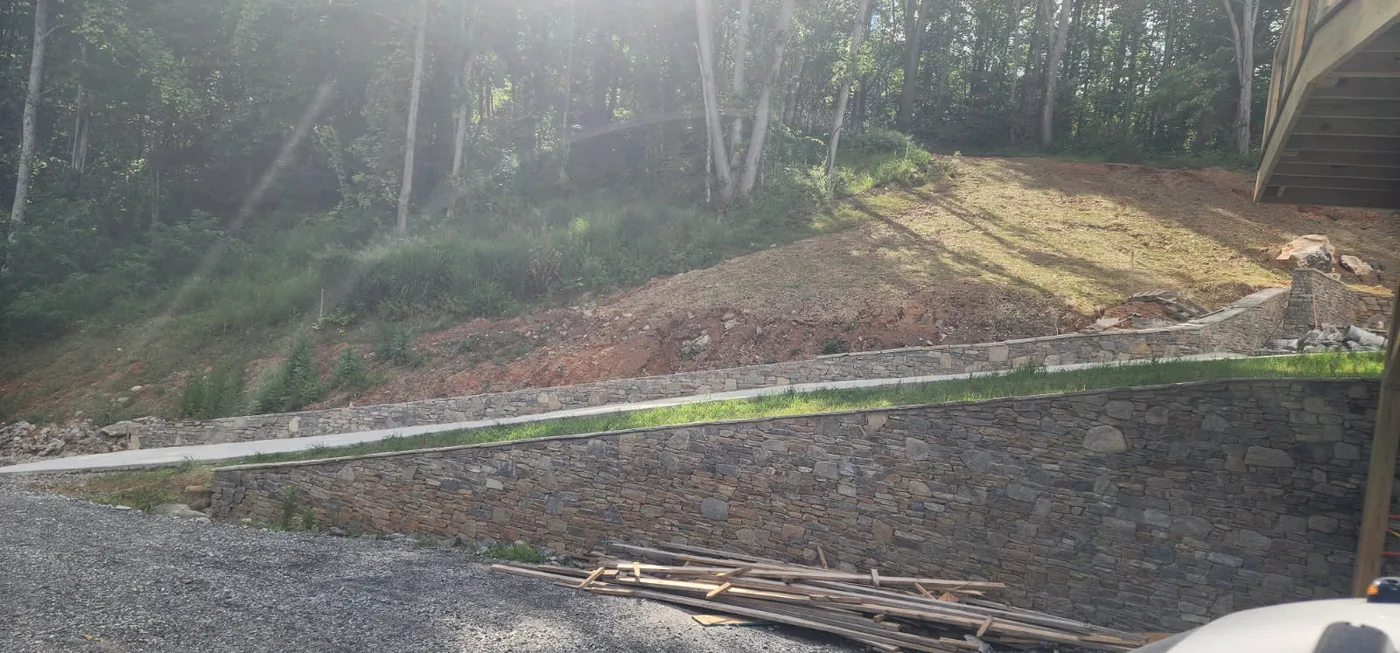
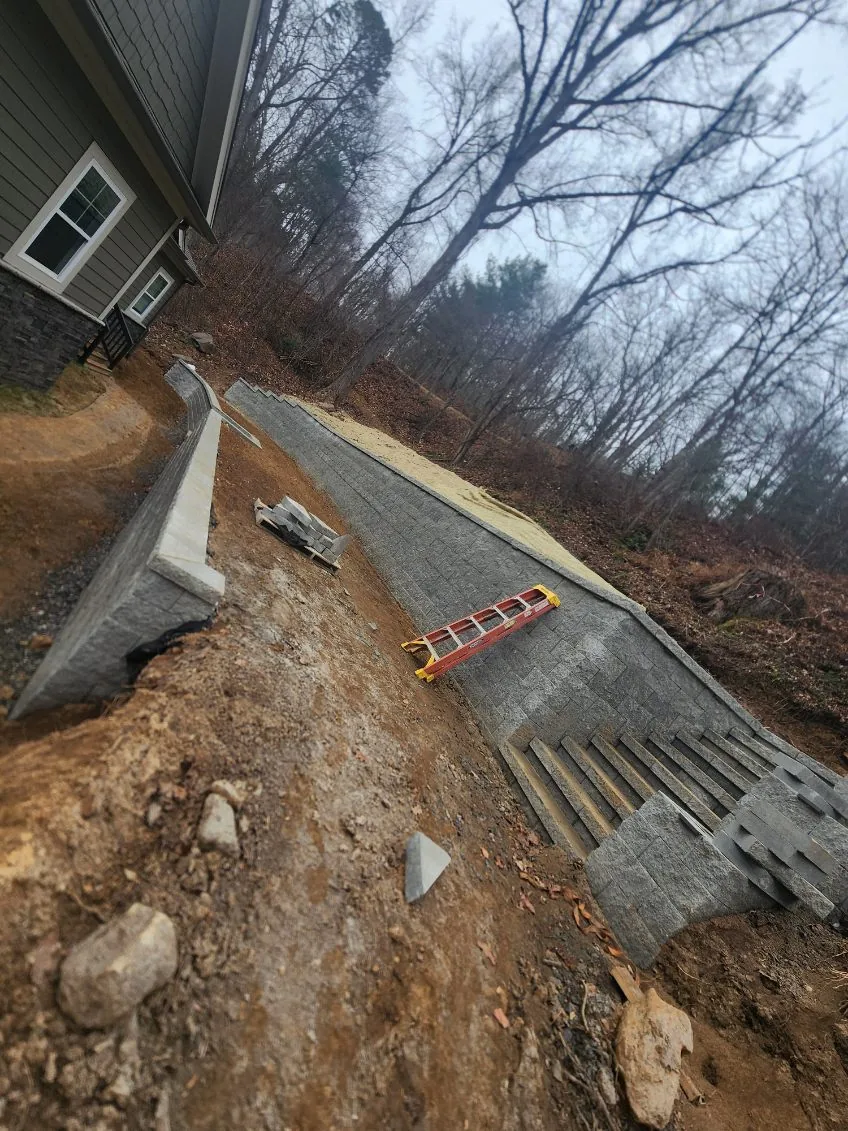
The first is grade and access. A lot where a machine and pallets can reach the work zone prices like a normal job. A lot where stone has to be hand-carried up a switchback path behind the house prices much differently, and that labor is honest labor, not padding. The second is retention. Any walkway cut into a slope needs a low wall holding the uphill side, and that wall is priced by the square face foot. The third is drainage. Steps set without a plan for where water exits become a rill, then a rut. See the county retaining wall cost table for how the wall line items break out around here.
Scope the whole thing as a system, not a set of stone objects: treads, landing, retention, and drainage. A quote missing any one of those is incomplete, not cheap.
Scope vs price: the table that explains most quotes
The rows below are typical regional bands for a genuine, code-conscious installation around Woodfin. They are ranges, not rates.
| Scope | Typical range | What drives it |
|---|---|---|
| Short front step set (2-6 risers), flat approach | $2,500-$6,500 | Step count, tread material, bedding and base prep |
| Hillside walkway, 20-40 ft with grade change | $4,500-$11,000 | Vertical feet, switchback layout, drainage routing |
| Steps + retained hillside above | $8,000-$18,000 | Wall square footage, footing depth, batter |
| Full entry system (walkway, steps, wall, drainage) | $12,000-$25,000+ | Access, engineering if tiered, site restoration |
| Reset or repair of failing existing steps | $1,200-$4,500 | Salvage condition, base failure extent, re-bedding |
The only line item that reliably surprises homeowners is access. On a steep Woodfin lot, moving three tons of stone by wheelbarrow versus by machine can swing a job by a couple thousand dollars on its own, and no phone estimate can see that. That's why a walk of the property precedes any real number.
Steps are the drainage plan, or they are the problem
Mountain ground receives serious rain, and the federal record confirms how often: 19 declared events touch Buncombe County across 1973-2026, predominantly storm and flood family. Every one of those events sent water down slopes that had walkways on them, and the difference between a walkway that survived and one that washed out was almost always drainage. The National Weather Service records the slow, soaking events alongside the fast ones. The NWS data around the southern Appalachians is a useful reality check when a contractor claims drainage is an optional upgrade.
Good practice here: each landing sheds water toward a controlled exit rather than allowing sheet flow to run the steps; the base is on compacted, properly drained subgrade, not bare clay; and where a wall retains the slope, it carries its own drainage stone and weeping path because hydrostatic pressure is what kills retaining walls. The International Code Council standards on exterior stair geometry (rise-run consistency, handrail thresholds) apply as soon as a set of steps is tall enough, and a builder who ignores that is a builder who ignores the rest.
What to check before you sign anything in Woodfin
North Carolina draws a licensing line that matters on stone projects: general contracting work above the state threshold requires a license under the NC Licensing Board for General Contractors, and a retaining wall that is tall, tiered, or holding a surcharge can push a project over that line. Ask before you sign. A reputable masonry and hardscape outfit will answer the licensing question directly instead of pivoting to the weather.
Second: ask who designs the drainage. Third: look at a finished project on a comparably steep lot, not a portfolio photo of a flat patio. Woodfin's slope is the whole story, and a crew that has never worked Elk- or river-side grades is learning on your property. When you're comparing bids, the Woodfin retaining wall contractor guide covers the questions that separate real hillside crews from flatwork outfits. And if the project started as a repair after a washout, they should be willing to explain what failed before they quote what to rebuild.
Repair, reset, or rebuild: choosing the cheaper honest option
Not every failing stone set needs to be torn out. Steps that have settled at one end because the base caught water can sometimes be lifted, re-bedded, and drained for a fraction of replacement, and that is often the right call on an older river-side property. Steps whose treads have heaved, whose base has washed out from underneath, or whose retaining wall is bulging usually get rebuilt, because patching a failed base invites the same failure within a season. The walkway scope itself lives at stone steps and walkways, which frames how the whole assembly fits together.
The honest test is where the water went, not how the stone looks. If the base stayed dry and drained, repair holds. If water sat under the treads, rebuild is the cheaper long-run decision, even though it's the larger number today.