Asheville Stone Masonry

Services

Boulder Retaining Walls in Asheville, NCFire Pit Builders in Asheville, NCFlagstone Patios in Asheville, NCGas Fire Pit Installation in Asheville, NCHardscaping in Asheville, NCOutdoor Fireplace and Outdoor Kitchen Builders in Asheville, NCOutdoor Kitchen Builders in Asheville, NCPaver Driveways and Walkways in Asheville, NCPaver Patio Installers in Asheville, NCRetaining Wall Repair in Asheville, NCRetaining Wall Contractors in Asheville, NCStacked Stone Fireplaces in Asheville, NCStone Retaining Walls in Asheville, NC: Dry-Stack and MortaredStone Steps and Walkways in Asheville, NCStone Veneer Installation in Asheville, NCStone Waterfalls and Ponds in Asheville, NC

Cost & Rules

Backyard Waterfall and Pond Cost in NCBoulder Retaining Wall Cost in NCFire Pit Installation Cost in NCFlagstone Patio Cost per Square Foot in NCHow Much Does a Retaining Wall Cost in NC?Outdoor Fireplace Cost in NCOutdoor Kitchen Cost in NCPaver Patio Cost per Square Foot in NC

Areas

Fire Pit Builders in Arden, NCFire Pit Builders in Barnardsville, NCFire Pit Builders in Biltmore Forest, NCFire Pit Builders in Black Mountain, NCFire Pit Builders in Candler, NCFire Pit Builders in Canton, NCFire Pit Builders in Clyde, NCFire Pit Builders in Etowah, NC All pages → Get a free quote
Buncombe County, NC · Homeowner Guide

Backyard Erosion on a Slope: How to Stop It

Backyard erosion on a slope in Buncombe County usually runs $600-$8,500. See the line items that move the number on a real Asheville-area lot.

Free on-site estimateReal photos of our own workBased in Candler, west of AshevilleSe habla espanolWalls, patios, fire pits, veneer Free on-site estimateReal photos of our own workBased in Candler, west of AshevilleSe habla espanolWalls, patios, fire pits, veneer

Get a free quote

Fast reply — no obligation.

Goes straight to us. We never sell or share your info.

Quick answer
Backyard Erosion on a Slope: How to Stop It

Stopping backyard erosion on a slope in the Asheville area typically runs $600-$8,500, with the spread driven by access, slope pitch, and how much water the fix has to move. Most lots need drainage and grading first, then hard stabilization: boulders, terraces, or a retaining wall. Water is almost always the actual problem.

19
federal disaster declarations on record in Buncombe County
Hurricane Dorian
most notable event in the federal record
1973–2026
span of the declaration record
Asheville
Buncombe County hub

Where the money goes on a Buncombe slope

Two adjacent lots on the same road off Beaverdam or Town Mountain can get quotes thousands apart, and the reason is rarely the rock. It's the line items around the rock. On a typical Buncombe County slope lot, the invoice breaks into four buckets: water control, earthmoving, hard stabilization, and plant or seed cover. Water control is first because everything downstream depends on where the runoff goes. Earthmoving is second because a mini excavator may not fit through a West Asheville side yard or a Crabtree knob driveway, and hand work is slow. Hard stabilization is third, and it's the bucket with the widest range. Cover is last and smallest, but skipping it re-opens the job next spring.

That is why a number without a site visit is a guess. The pitch, the soil, the distance from the street to the failure, and whether a truck can back to it decide more than the type of wall.

The scope-to-price table

These are working ranges for residential lots in the county, not quotes. Steep access and wet soil push toward the top, easy access and dry ground push toward the bottom. Engineered walls above the county's threshold need a design and a permit, and that changes the number again. See the NC Licensing Board for General Contractors for when a job crosses into licensed-contractor territory.

ScopeTypical rangeWhat moves it
Grading, seed, and erosion mat$600-$2,200Square footage, access, seed vs sod
Surface drainage (swale, berm, catch basin, buried outfall)$900-$4,500Outfall distance, rock vs pipe, hand vs machine
Riprap or boulder toe at the failure$1,200-$5,000Stone size, haul distance, machine reach
Terraces with timber or block$2,500-$9,000Height, number of lifts, drainage behind
Engineered retaining wall$6,000-$25,000+Wall height, footing depth, engineering, permit

A wall is a last step, not a first one. Most failing slopes here are fixed by putting the water somewhere else and then covering the ground. The retaining wall page covers when a wall is actually the right answer.

Why this county erodes the way it does

Buncombe's slopes are old, weathered, and often shallow to bedrock or clay. That combination sheds water fast and holds it poorly. Add the federal record — 19 declared events across 1973-2026 in this county, mostly storm and flood family — and the pattern is simple: the ground gets hit with more water than the original grading was built for, and the weak spots fail.

Local rain behavior matters too. Mountain storms drop a lot of water in a short window, and the National Weather Service's forecast and hydrology products are the honest place to check before you plan a fix. If your yard already slopes toward the house, that is a separate and more urgent problem — see yard slopes toward house before you spend on anything cosmetic. If the whole grade is a hill, start with backyard is a hill to sort out which problem you actually own.

The three fixes, in order

First, slow the water before it reaches the failure. That means roof downspouts discharged well past the slope, a swale or berm above the eroded face, and gutters that actually work. Second, get the water that does arrive off the face without a channel forming in it: a buried outfall, a rock apron, or a shallow drainage path that follows the contour. Third, stabilize the face. Boulders keyed into the toe beat loose riprap on steep ground, and terraces beat a single tall face because they break the flow into short drops.

Two rules save money here. Never build a wall before the drainage behind it is solved, and never bury a downspout outfall where the water has nowhere to go but back into the slope. The EPA's stormwater guidance is a useful plain-language check on where runoff should end up.

Permits, engineers, and when it stops being landscaping

Low retaining walls are often treated as landscaping. Cross a certain height, or sit close to a structure or property line, and the county wants a design and a permit. The state code is the source of truth for the structural side — the NC Office of State Fire Marshal maintains the adopted residential code, and the International Code Council publishes the model text behind it. If your slope is failing toward a house, a driveway, or a neighbor's property, get an engineer's letter before you build anything on the face.
Buncombe County, NC: the storm record

Federally declared disaster events19
Named storms in the recordHurricane Dorian, Hurricane Florence, Hurricane Fran, Hurricane Helene, Hurricane Ian, Hurricane Isaias
Incident typesFire, Flood, Hurricane, Severe Storm, Snowstorm
Record span (fiscal years)1973–2026
Source: FEMA OpenFEMA disaster declarations. County-level federal declarations, not individual claims.
Questions people ask

Straight answers

How much does it cost to fix backyard erosion on a slope in Buncombe County?
Most residential jobs land between $600 and $8,500, with drainage and grading usually the first spend and hard stabilization second. Steep access, wet soil, and engineered walls push past that upper number.
Can I just put rocks on the eroded spot?
Sometimes, but only after the water is handled. Dropping rock on a failing face without fixing the runoff above it just relocates the failure downhill.
Do I need a permit for a retaining wall here?
Low walls are often treated as landscaping; taller walls, or ones near a structure or property line, typically need a design and a permit. Check with the county before you build, and see the NC Licensing Board for contractor thresholds.
My yard slopes toward the house. Is that the same problem?
It's related but more urgent. Water aimed at the foundation does structural damage, not just cosmetic. Start with yard slopes toward house before any grading plan.
Will grass alone stop the erosion?
Grass helps hold the surface, but it does not move water or hold a steep face. On a real slope you need a drainage path and hard cover at the failure, with seed or plantings as the finish, not the fix.
How do I know if my slope is actually a hill problem?
If the whole grade is steep and long, not just one eroded spot, read backyard is a hill first. The scope and the cost band are different.
Our work

Our work

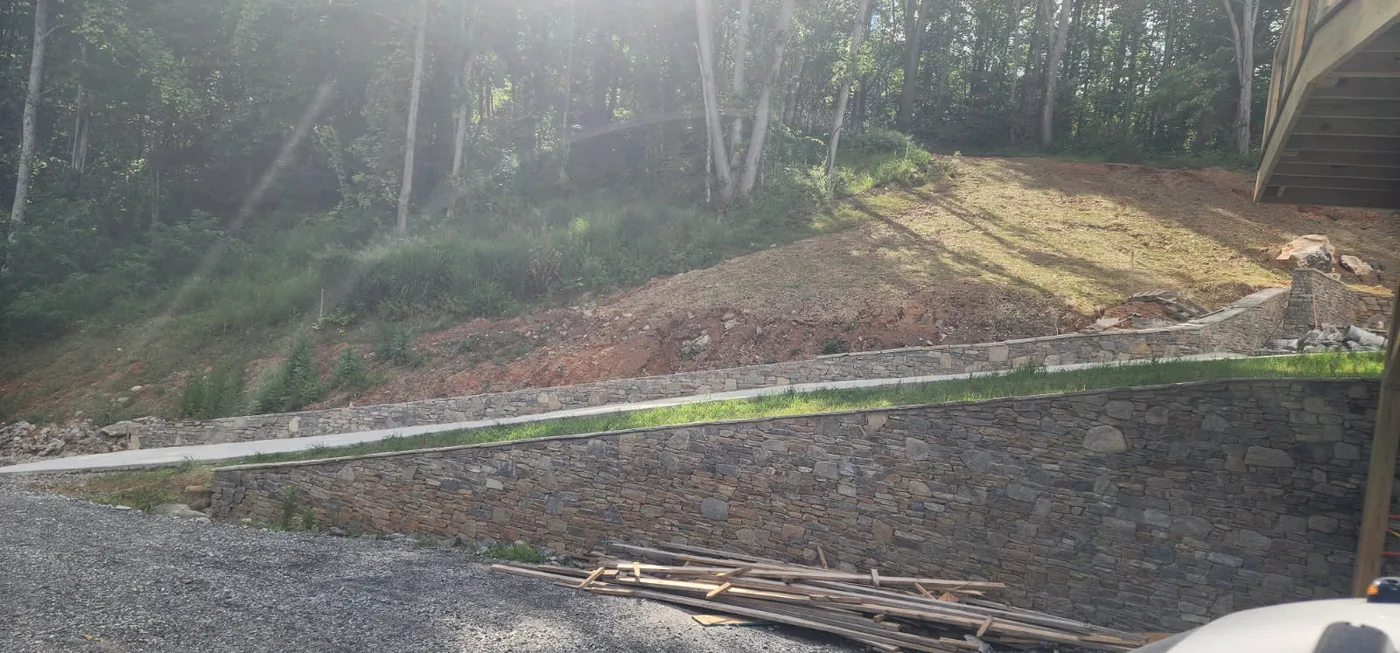
Mortared fieldstone retaining walls stepping up a mountain driveway, with fresh concrete poured between them. Built by Asheville Stone Masonry.
Mortared fieldstone retaining walls stepping up a mountain driveway, with fresh concrete poured between them.
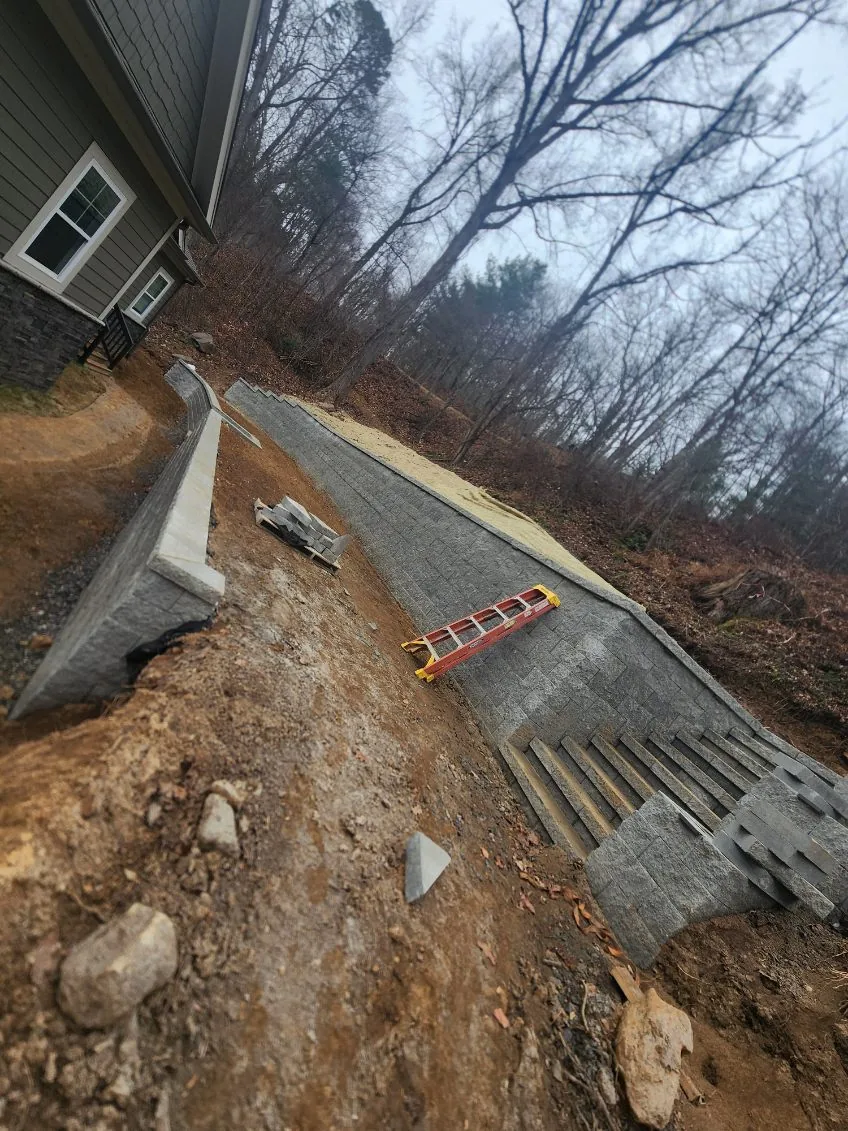
Segmental block retaining wall with a built-in stair run, holding the grade beside a new home. Built by Asheville Stone Masonry.
Segmental block retaining wall with a built-in stair run, holding the grade beside a new home.
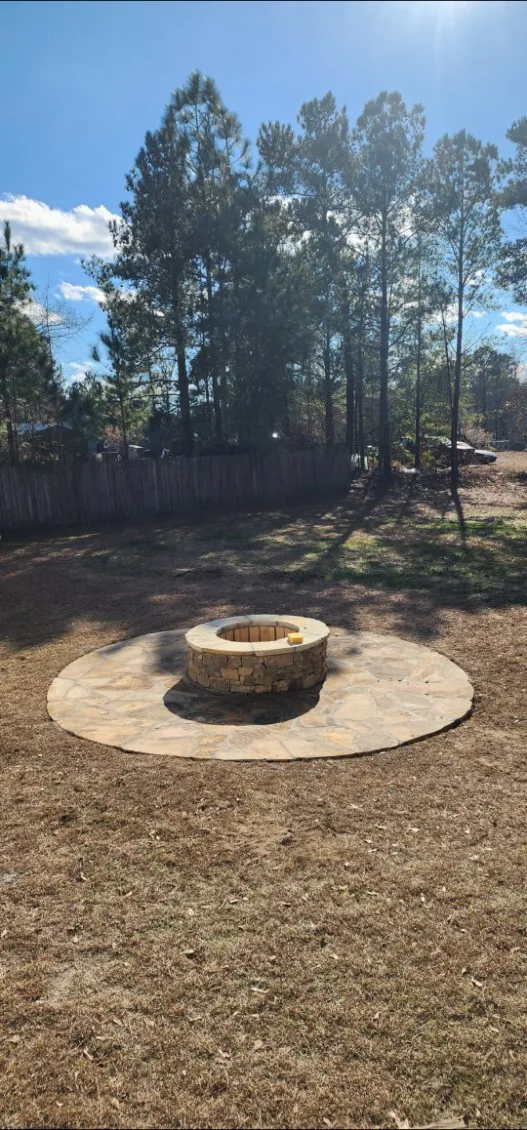
Finished fire-pit patio: a stacked-stone ring with a cut-stone cap inside a full circle of flagstone. Built by Asheville Stone Masonry.
Finished fire-pit patio: a stacked-stone ring with a cut-stone cap inside a full circle of flagstone.
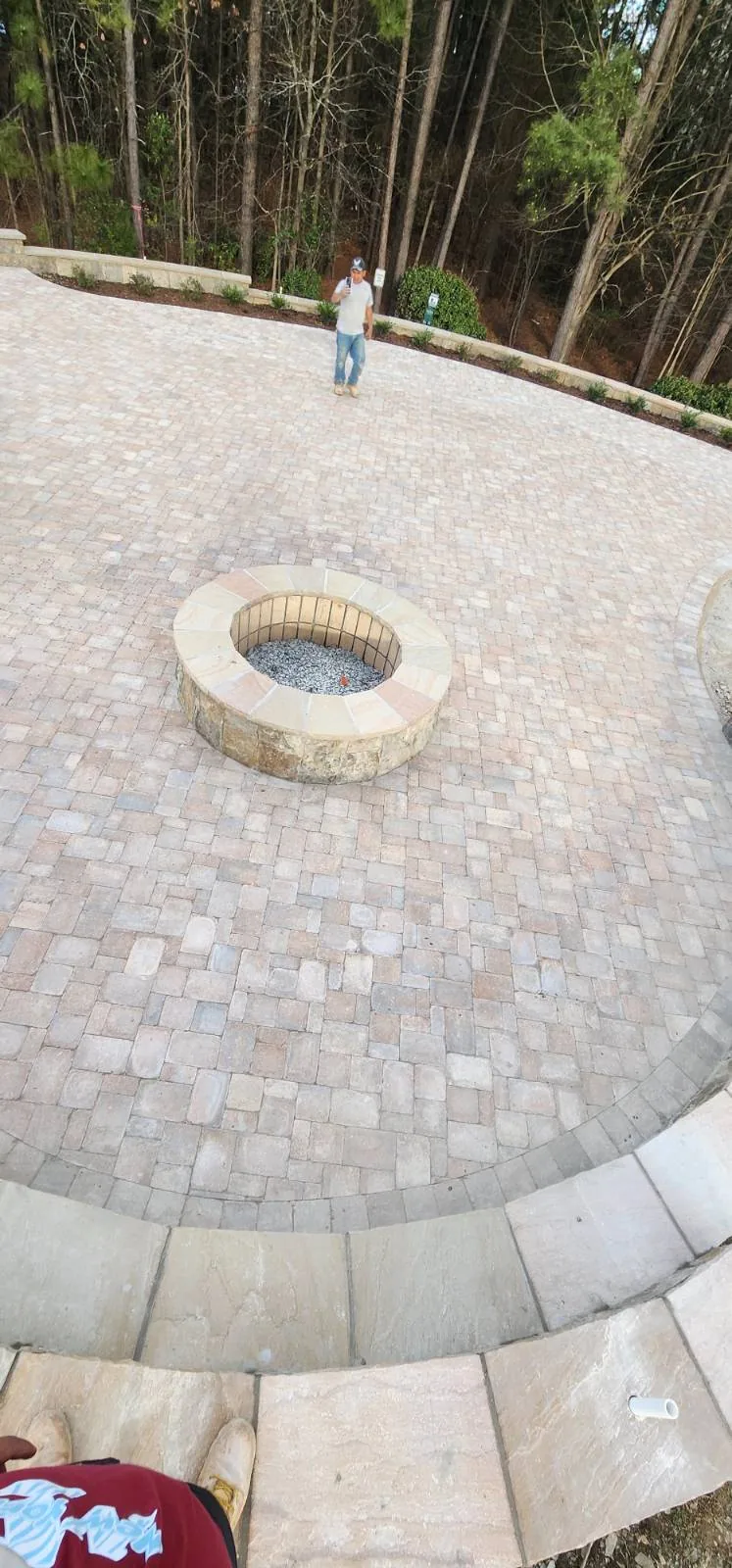
Circular paver patio with a stone fire pit and a curved seat wall at the tree line. Built by Asheville Stone Masonry.
Circular paver patio with a stone fire pit and a curved seat wall at the tree line.
Get a quote

Tell us about your project. We price it straight.

Where it is and what you need — that's all it takes to start. You get a clear scope and an honest number, and your info never gets sold to a list.

Or call — (828) 424-8873

Fast, free quote

Call now Text us