Where the money actually goes on a Buncombe lot
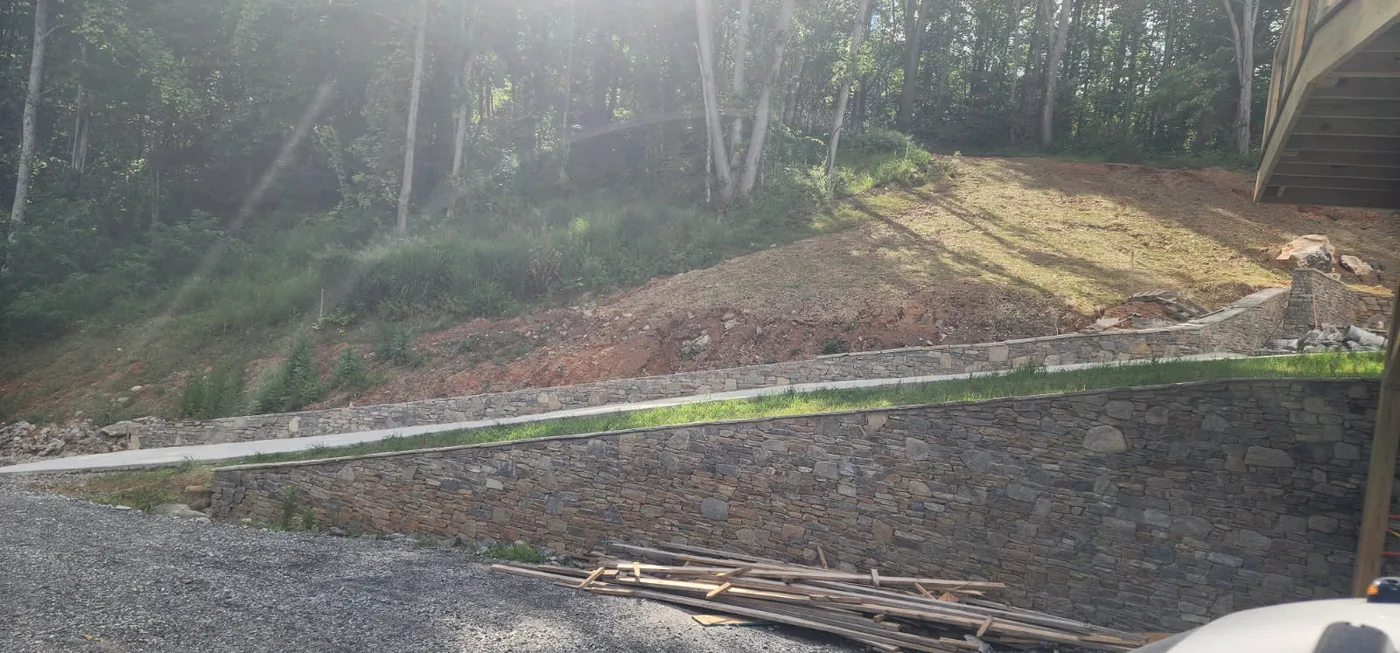
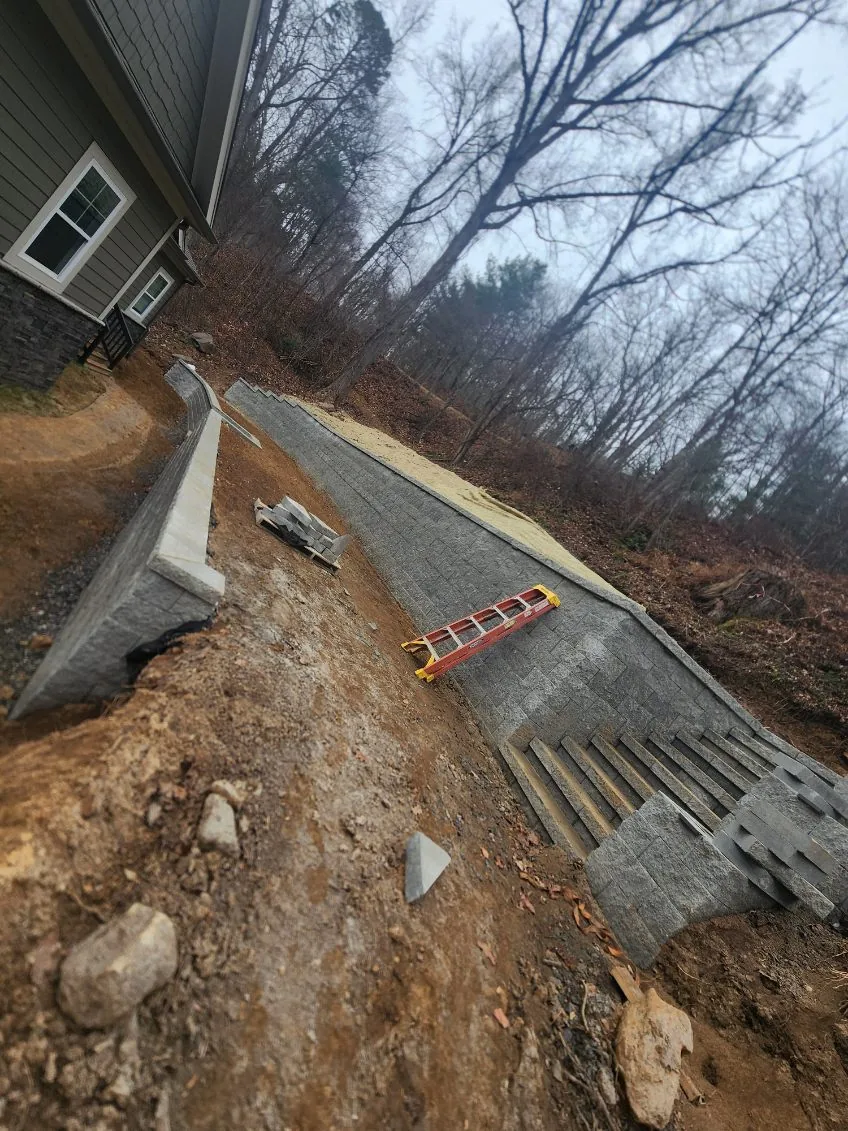
Most fire pit quotes in this county break into four line items, and the one your neighbors underestimate is the base. Asheville sits in a bowl of steep, clay-heavy slopes and fill lots, which means a pit set on anything but a flat pad needs excavation, compacted gravel, and often a short retaining course to hold the grade. That prep can quietly cost more than the pit itself. After base, you pay for the stone (kit or hand-stacked), the fuel (wood, propane, or natural gas), and any buried line or permit inspection.
| Scope of work | Typical Buncombe range | What drives it |
|---|---|---|
| Pre-fab steel or kit pit, existing flat pad | $250 – $900 | size, material, whether you set it yourself |
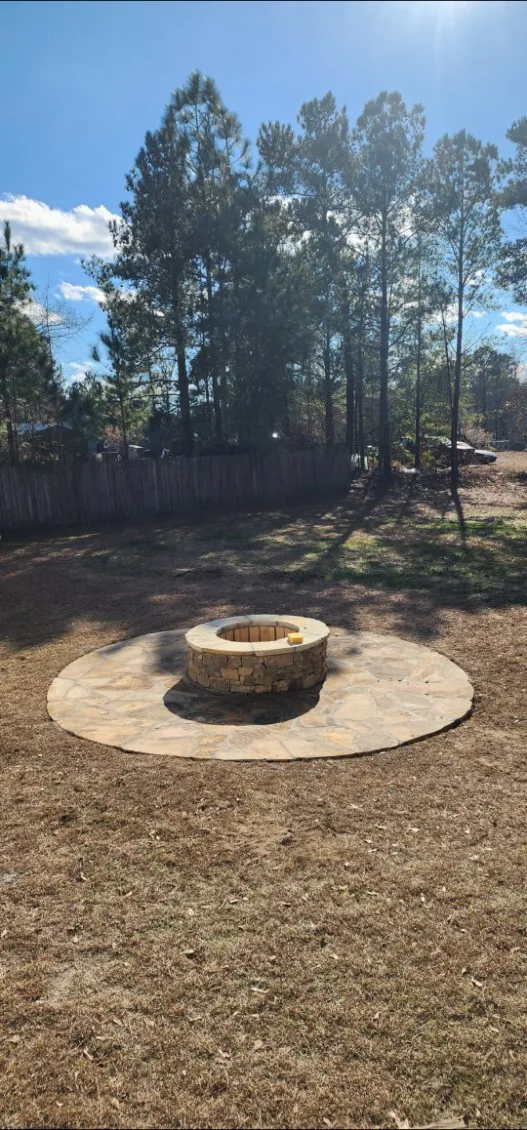
| Block or stone kit pit, fresh base | $900 – $2,800 | excavation, gravel, depth of base |
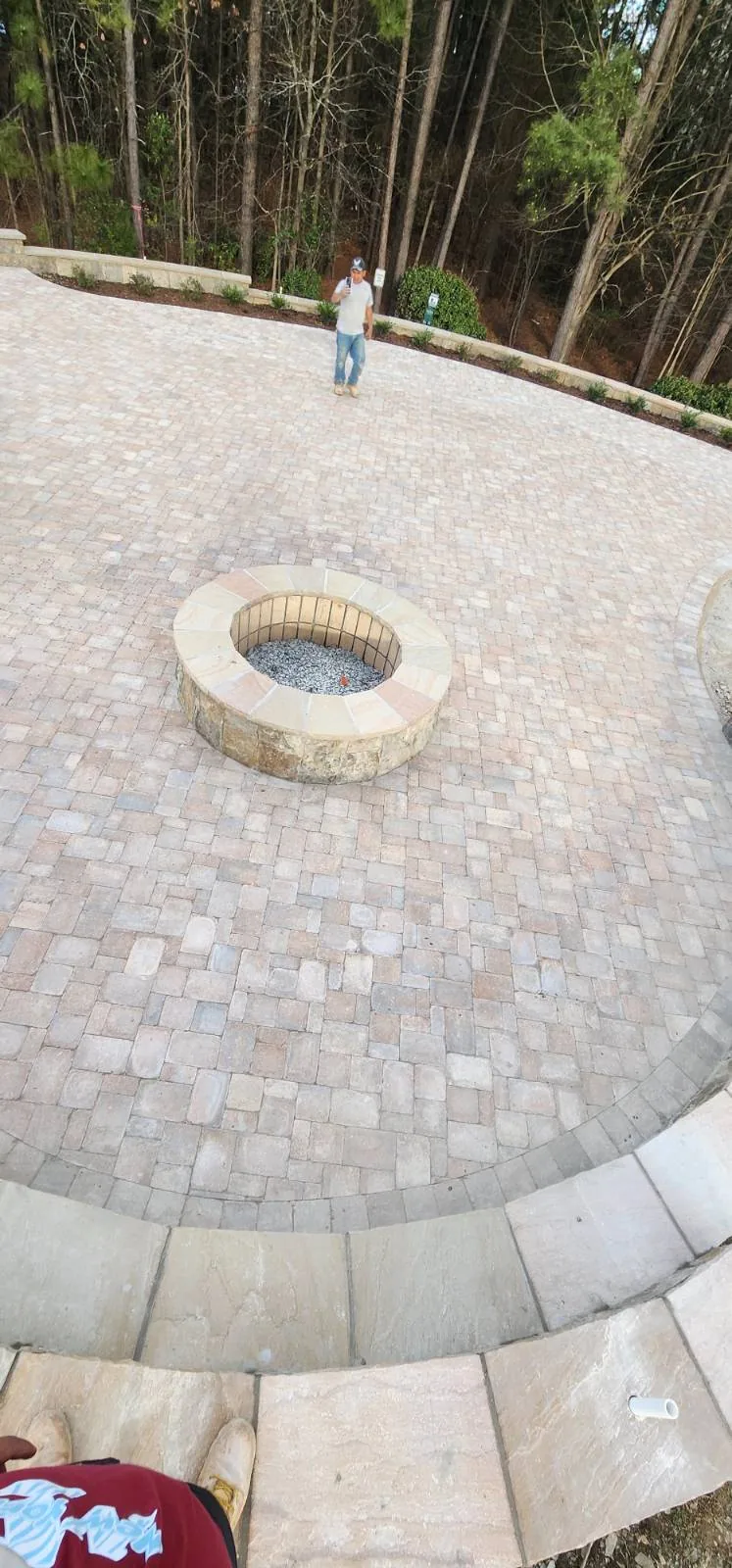
| Hand-stacked stone, mortared, custom shape | $2,800 – $7,500 | stone type, wall height, seat wall tie-in |
| Gas fire pit with buried line | $4,500 – $12,000+ | trench length, burner, plumber and inspection |
A written bid on a sloped lot that does not mention the base is a bid that will grow. Ask what the subgrade looks like under the pit.
In practice, the base line is where two quotes for the same-looking pit diverge. A flat lot in Weaverville or a level corner of Fletcher may need only a shallow scrape and a few inches of compacted gravel. A lot off Town Mountain Road or up in Riceville, where the yard was cut into a hillside to build the house, can need a stepped excavation, a footer poured below frost, and drainage stone behind the pit so water does not pool against the mortar. Those are different jobs with different prices, even though the finished pit looks identical from the patio.
Access matters too. If a truck cannot back to the pit location, stone and gravel get wheelbarrowed or carried by machine, and that labor is real. On narrow mountain drives, it can add a noticeable chunk to the same design a flat-lot crew could build in half the time.
Why grade and stone choice drive the number here
Nearly every property in Buncombe sits on some kind of incline, and the county's storm record explains why the ground is so often wet: 19 federally declared disaster events have touched this area (1973-2026), most of them storm and flood family. On a hillside yard, a fire pit is a small water-management project before it is a masonry project. Uphill runoff needs to be diverted, and the pit needs a footprint that will not settle after the first big rain.
Stone choice compounds this. Local fieldstone and granite look right on an Asheville lot but vary wildly in weight and shape, so hand-stacking takes longer than a uniform block kit. If the pit ties into a seat wall or a retaining wall to manage grade, the labor adds up fast. The design section of our fire pit guide walks through shapes and materials that hold up on sloped ground.
There is a look to Western North Carolina stone that homeowners ask for by name: the grays, tans, and occasional rust tones of fieldstone pulled from local ground, or the more uniform gray of a granite that reads as native here. That character is one reason a hand-stacked pit costs more than a molded block kit. A mason sorting irregular stone for a tight fit is doing slow, skilled work, and the wall thickness needed for a stable stack is greater than what a hollow block kit requires. Both can be beautiful. Only one is built to look like it grew out of the hillside.
Climatic swings in this valley also matter to the mortar and stone. Buncombe sees freeze-thaw cycles in winter and humid summers, and a pit built with the wrong mortar mix or without a proper cap can spall and crack within a few seasons. That is not a scare tactic; it is why experienced masons here budget for materials rated for wet-freeze exposure. The cheapest stone quote is sometimes cheap because it skips that detail.
Gas lines, permits, and who has to sign off
Wood is the cheap route. Gas is where the price and the paperwork both jump. A natural-gas line from the meter to the pit requires a licensed plumbing or heating contractor, and North Carolina regulates that work through the State Board of Examiners of Plumbing, Heating and Fire Sprinkler Contractors. Propane avoids a meter run but needs a tank, regulator, and safe clearances.
On the building side, many simple wood pits need no permit, but a permanent gas appliance, a masonry structure tied to a wall, or a pit built into a retaining system can trigger local review. The International Code Council publishes the model codes that North Carolina's residential code is built on, which is why clearances to structures and combustible materials matter. For larger hardscape projects, North Carolina requires a licensed general contractor once a job crosses the state threshold set by the NC Licensing Board for General Contractors. Ask your contractor how they handle permits.
Clearances are not fussiness. A fire pit placed too close to a wooden deck, a vinyl-sided wall, or overhanging branches is a real safety problem, and code distances exist because of it. In older Asheville neighborhoods, where lots are tight and houses sit close together, the practical placement options shrink. A pit that fits comfortably in the middle of a half-acre Weaverville yard may need to shift ten feet on a small lot in West Asheville to satisfy both code and common sense.
If a gas line is part of the plan, sequence it correctly. The trench gets dug, the gas line gets run and pressure-tested, the pit gets built, and the burner gets connected and tested. Trying to build the pit first and fish a line through later is how projects get expensive. A contractor who lays out that order clearly at the start is usually a contractor who has done it before.
What separates a wood pit from a gas build on cost
The fuel decision is the single largest fork in the road for a fire pit budget in this county, and it is worth understanding why the gap is so wide. A wood-burning pit is essentially a masonry project: dig, prep, stack, done. There is no burner, no regulator, no trench, no licensed trade beyond the masonry crew. A gas pit adds an entire second trade and an inspection layer on top of the masonry work.
For natural gas, the run from the meter to the pit is the variable that surprises people. A short run on a flat lot with easy trenching is one thing. A long run around a driveway, under a walkway, or up a slope is another. Trench length, soil conditions, and whether the line crosses anything that requires restoration all move the number. Propane sidesteps the meter run but introduces a tank and its clearances, which on a tight lot can be its own puzzle.
Burner quality is the other quiet cost driver. A basic burner and a fully featured one can differ substantially in price, and the difference shows up in flame pattern, control, and how well the unit handles wind, which matters on exposed ridge lots around Asheville. Homeowners who have lived through a cheap burner on a windy evening tend to upgrade the second time.
Wood remains the lower-cost build, and for many people the crackle and smell are the point. Gas wins on convenience: no hauling, no ash, no relighting. Neither is wrong. The expensive mistake is deciding after the pit is built, because converting a finished wood pit to gas later means redoing work you already paid for.
Making a Buncombe quote comparable
Two bids for the same fire pit can differ by thousands because one is measuring the pit and the other is measuring the site. Three ways to compare honestly:
- Ask for a line-item breakdown. Base prep, stone, fuel, and any electrical or gas labor should each be its own line, not bundled into one number.
- Confirm the base scope. How deep is the excavation, and what gravel and compaction are included? That answer tells you whether the price is real.
- Settle the fuel now. Deciding wood versus gas after the pit is built is the most expensive way to do it. The fire pit cost guide compares the two.
If a quote lands well outside the table above, ask what is unusual about the lot. Sometimes the answer is legitimate slope or access. Sometimes it is a padded number.
It also helps to know the seasonal rhythm here. Spring and fall are the busiest stretches for outdoor masonry in Buncombe, and crews book out. Scheduling in a slower window can sometimes mean more attention and less rush, though the price of the work itself rarely changes much with the calendar. What does change is availability, and a rushed crew on a complex sloped site is not the crew you want.
Finally, walk the site with each contractor and watch what they notice. A bidder who immediately asks about runoff, soil, and access is reading the lot. A bidder who only asks where you want the pit and hands you a number is pricing a catalog photo. On Buncombe ground, that distinction usually predicts how the project goes.