Read the existing run before you quote a rebuild
Most stone steps in Marshall get torn out that never needed to be. On the steep lots around downtown and up the valley walls off Highway 25, a run of fieldstone treads can read as failed when the actual problem is a settled base course, a washed-out landing, or a downspout dumping water at the first step for twenty years. The stone itself is usually fine — Appalachian granite and the old split ledge stone don't wear out, they get knocked out of place.
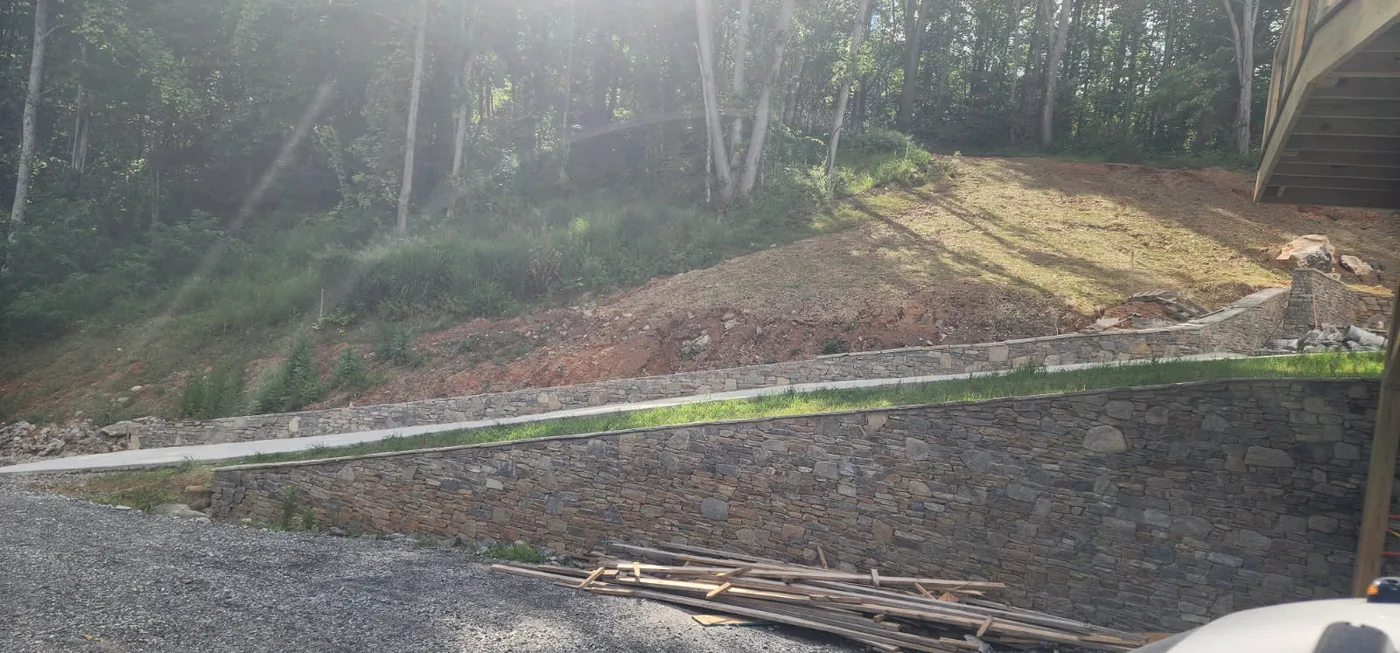
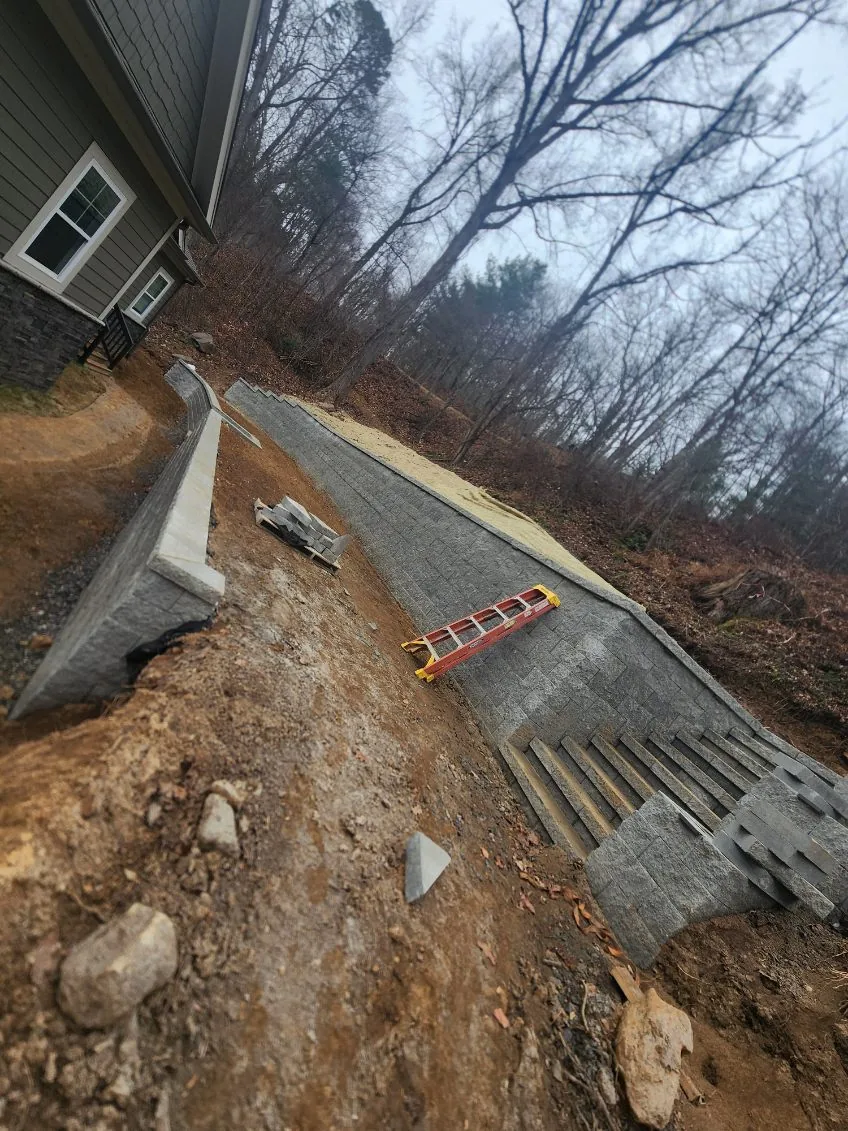
What we look at first: whether the treads still sit level relative to each other, whether the riser stones are still locked into the slope, and where water actually goes when it rains. A wall or step run that moves season to season is a drainage and bedding problem. A run that has moved once and held is a repair. A run with cracked treads, a bowing retaining face, or treads walking downhill off the base is a rebuild. Three different scopes, three very different numbers — and the honest read is worth more than the fastest bid.
If your steps are tied into a retaining wall along the same run, the wall gets read first. See the Madison County retaining wall cost breakdown before assuming the steps are the whole job.
What changes a Marshall stone step price
Madison County terrain does most of the pricing. A flat walkway from a driveway to a front door is a different trade than a switchback run climbing a 30-degree bank above the French Broad. The table below is the working range for realistic scopes here — not a quote.
| Scope | Typical range | What drives it |
|---|---|---|
| Reset existing steps (relay treads on repaired base) | $1,800–$4,200 | Number of treads, base repair needed, access for a mini machine |
| Repair single failed tread or landing | $600–$1,800 | Matching stone, whether base course below is intact |
| New stone steps, 4–8 treads, on grade | $3,200–$6,800 | Stone type (field vs. dimensional), depth of footing |
| New stone steps on steep slope, with landing | $5,500–$11,000+ | Excavation, haul-off, wall tie-in, drainage line |
| Stone walkway, per linear foot, dry-laid | $45–$95 / ft | Width, base depth, edging, pattern |
| Drainage correction tied to steps or wall | $800–$3,500 | Where the water goes now, where it needs to go |
Steep-lot jobs above the valley routinely carry a drainage line item that flatland quotes never show. Treat any bid without one as incomplete rather than cheap. Frost depth in this part of the mountains matters too, and the International Code Council publishes the frost and footing provisions that local inspectors work from.
Water is what moves stone in this county
The federal disaster record tells the story of why so many steps and walls here fail: 21 declared events touch Madison County (1978-2026), overwhelmingly storm and flood family. Every one of those events pushed water at steps and walls built for a drier assumption. Before any new tread goes down, the drainage question has to be answered — where the uphill neighbor's runoff goes, where the gutters discharge, and how the run handles a hundred-year rain.
That's not a sales point, it's a design constraint. The EPA publishes guidance on managing stormwater at the residential scale that's genuinely useful here — the goal on a Marshall slope lot is to move water past the run instead of through it. Get drainage wrong and the prettiest new stone steps in the county will be out of level within two winters.
Hiring well for stonework around Marshall
Three checks specific to this market. First, ask whether the crew works with the stone you already have — matching existing fieldstone or split ledge is a different skill than laying a new dry-laid patio from a pallet of dimensional stone, and the best result is usually reuse wherever the original stone is sound. Second, ask how they handle excavation access on a slope lot; a mini excavator and a wheelbarrow crew are different price structures.
Third, understand the licensing threshold. North Carolina has specific rules on when a project stops being a handyman job and requires a licensed general contractor, and those rules live at the NC Licensing Board for General Contractors. If the job is big enough to touch a retaining wall or major grade change, verify the license before you sign anything. For an honest read on a wall along the same run, see retaining wall contractors in Marshall. And to see how the full service fits together, start with stone steps and walkways.
What a first visit should actually include
A real first visit to a stone step job takes an hour, not fifteen minutes. The estimator should walk the whole run, probe the base course, look at where water currently discharges, and tell you plainly whether the stone is worth saving. You should get a scope that names a specific number of treads, the base prep method, and how water will be moved off the run. If the pitch is verbal and vague, the quote will be too. Nobody can quote a rebuild honestly without seeing the base — anyone who does is guessing, and the guess comes with your money.