Candler's lots are not Asheville's lots
Drive out Smoky Park Highway past the Enka clock and the terrain tells the story: Candler sits on rolling valley ground and creek-bottom flats west of the city, where lots tend to be wider and flatter than the steep ridge parcels inside Asheville proper. The trade for that flatness is soil — heavy clay that swells when it holds water and shrinks when it doesn't. A paver patio here lives or dies on excavation and base compaction, not on the face of the pavers. An Asheville hillside job pays for slope drainage; a Candler job usually pays for haul-off of wet, unstable subgrade and for imported stone that actually compacts. Installers who quote only the surface are quoting half a job.
The other Candler factor is lot character. Many parcels here are older working lots with mature trees, existing concrete pads, gravel drives, and outbuildings the owner wants the patio to sit between. That means more saw cutting, more grade matching to existing thresholds, and more hand work in tight spots. It's honest work, but it doesn't price like a clean square of lawn in a new subdivision.
Neighborhood by neighborhood, the ground changes under you. Near the Hominy Creek bottomlands west of the Enka plant, the water table sits high enough in wet months that a patio cut two feet down can hit muck — crews learn to over-excavate and bring in clean crushed stone rather than fight the native soil. Up the gentle benches toward Hominy Valley and the ridges off Pisgah Highway, the clay is drier and shallower, sometimes with rock close enough to the shovel that a job stops being excavation and starts being chipping. Same mailing address, different job. Any contractor who prices all of Candler off one formula is guessing, and the guess usually lands on the homeowner's side of the ledger.
What a Candler patio costs, line by line
Paver work prices by the square foot plus what the ground under it demands. The base table below reflects typical Buncombe County ranges — not a quote, but close enough to sanity-check one. For the same line-item logic on the walls that usually flank these patios, see the county retaining wall cost breakdown.
| Scope | Typical installed range |
|---|---|
| Patio, 200–300 sq ft, simple square, good access | $6,000–$11,000 |
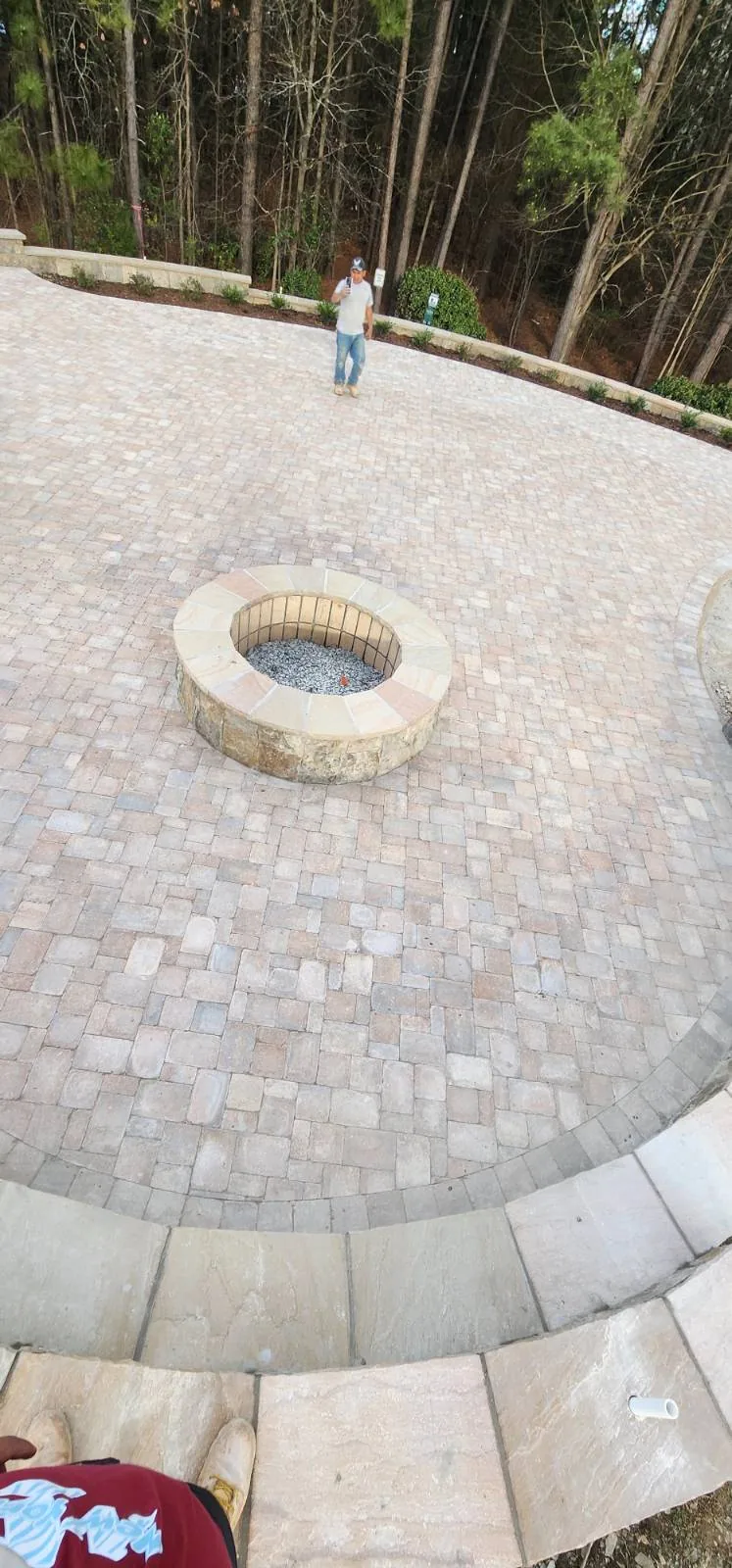
| Patio, 300–500 sq ft, with curves or border course | $11,000–$20,000 |
| Walkway or stoop extension | $2,500–$6,500 |
| Clay subgrade correction: over-excavation, geotextile, imported base | $3–$9 per sq ft |
| Drainage: French drain, curtain drain, regrade away from house | $1,800–$7,500 |
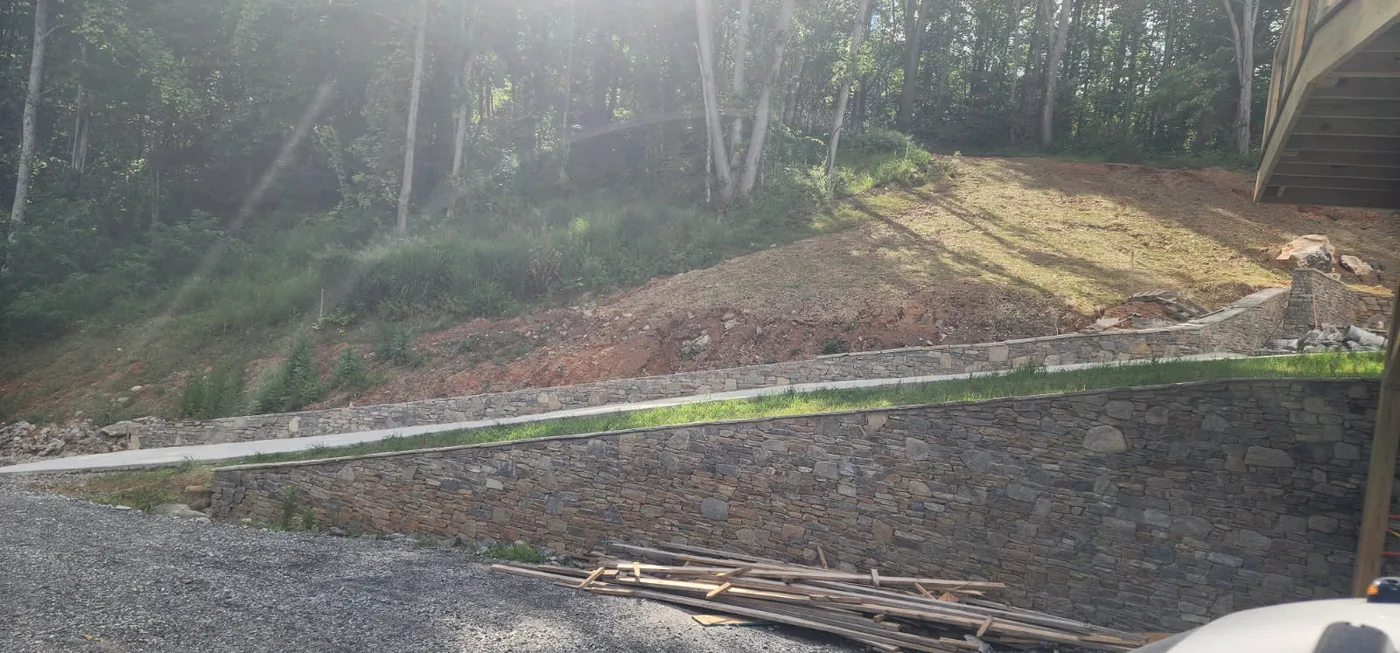
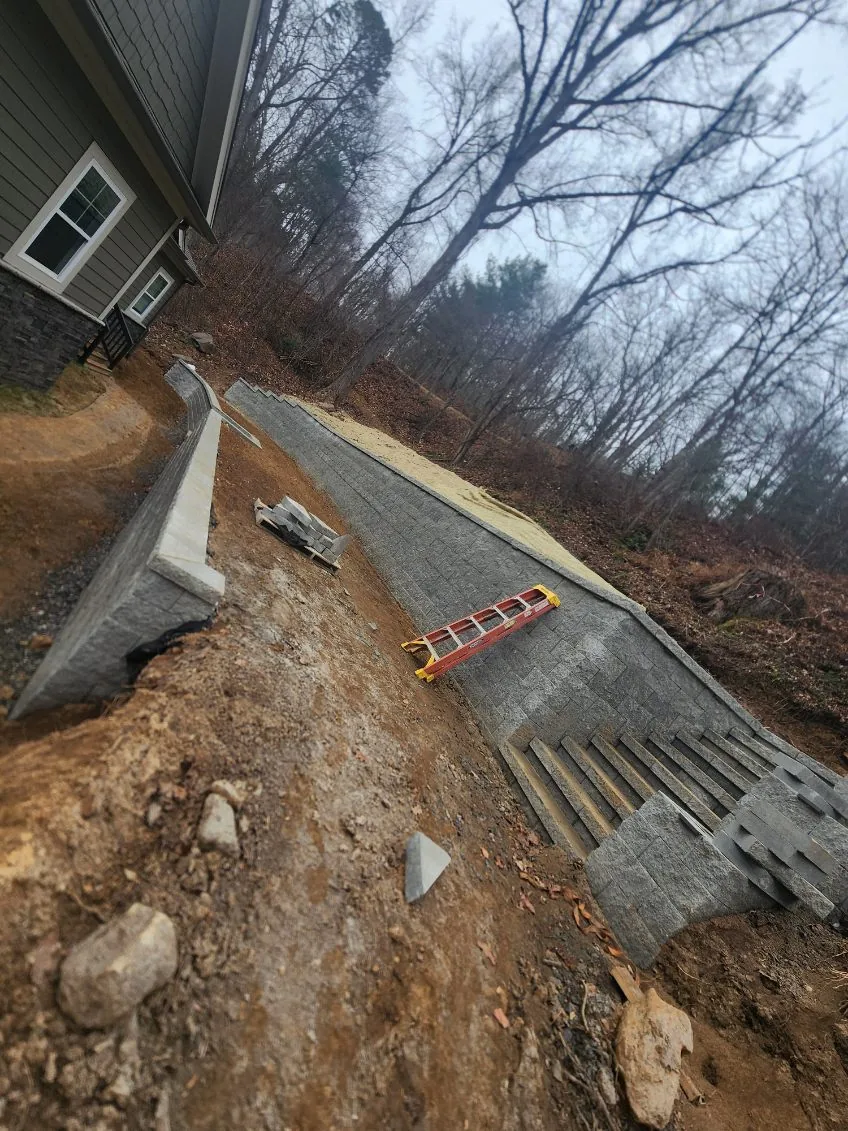
| Terraced patio with segmental retaining walls | $22,000–$45,000+ |
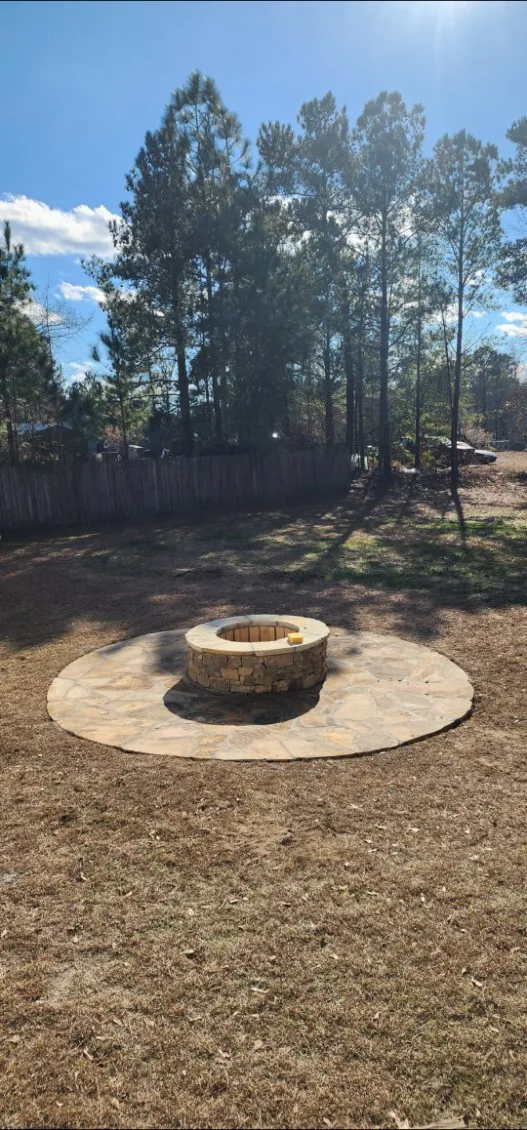
| Fire pit, seat wall, or step build-out | $1,500–$9,000 |
The two rows that decide most Candler quotes are subgrade correction and drainage. If a contractor skips both in writing, the bid isn't cheaper — it's unfinished.
Access is its own line item on these lots, and it rarely shows up on a written quote until it does. A wide gravel drive off a county road lets a skid steer and a dump trailer pull right to the work zone. A narrow drive shared with a neighbor, a slope that drains across the only truck path, or a mature oak canopy low enough to catch equipment all change the labor. Hand-carrying base rock and pavers in wheelbarrow loads from the street is real work, and it adds hours a clean-access job never sees. Ask any bidder how they expect to get material onto the site — the answer tells you whether they walked it or just measured it on a map.
Material choice moves the number less than most homeowners expect. Concrete pavers, clay pavers, and the tumbled and textured finishes all land in a similar installed band in this market because the labor and base work dominate the cost. Where material genuinely changes the price is at the edges: intricate patterns that require many cuts, tight-radius curves, and border courses with contrasting color all add cutting and layout time. On a Candler lot with root zones and grade breaks to work around, those edges show up more often than they would on a blank subdivision pad.
Base depth is a code-adjacent question, not a preference
Paver patios aren't buildings, but the assemblies under them follow the same logic the model codes apply to exterior improvements: proper subbase, compaction, and positive drainage away from the structure. The International Code Council publishes the residential provisions most NC jurisdictions reference, and the NC Office of State Fire Marshal maintains the state's adopted codes. A patio that sheds water toward the house is not a patio problem; it's a foundation problem waiting two winters. On Candler's clay, the standard answer is a compacted crushed-stone base six inches and up plus a fabric separation layer, but the right depth depends on soil and use. Ask any installer to state, in writing, their base specification and how they verified the subgrade. When retaining walls enter the picture — common on these graded lots — NC licensing thresholds and code rules start to bind; the Candler retaining wall contractors page covers that side in detail.
Compaction is the part homeowners can't see and contractors can't fake for long. A plate compactor working in lifts of a few inches at a time does the job; dumping a foot of stone and running over it once does not. On clay, the subgrade itself usually needs to be proof-rolled and any soft spots dug out and replaced, not just covered. That step is why two patios with identical pavers and identical square footage can carry different prices — and why the cheaper one often settles at the corners within a couple of seasons.
Water history out here is real
Candler's position along Hominy Creek and its tributaries means the federal disaster record for Buncombe County — 19 declared events spanning 1973-2026 — is dominated by storm and flood family events. That's not a scare line; it's a design input. It means gutters should discharge well past the patio edge, finished grades should pitch away from the house, and any patio sitting in a low corner of the lot needs a drainage plan before pavers go down. The National Weather Service tracks the rainfall patterns that drive this; local crews feel them every season. The cheap version of this conversation is a contractor who looks at the lot after a rain and knows where the water wants to go. Hire that person.
The practical moves are unglamorous. Extend downspouts to daylight well beyond the patio. Build the finished surface a fraction of an inch per foot away from the house so sheet flow leaves the wall instead of pooling at the sill. Where a patio butts against a slope, a curtain drain uphill of the pavers intercepts groundwater before it reaches the base. Around Hominy Valley, where lots back up to wooded slopes that stay damp through the wet months, that uphill drain is often the difference between a patio that stays tight for a decade and one that heaves after the first hard freeze-thaw cycle.
Hiring well for a Candler patio
Three checks before signing anything. First, does the quote itemize base, compaction, edging, and drainage — or is it one lump number? Second, for any wall over the state's threshold, does the contractor hold the proper NC general contractor license? The NC Licensing Board for General Contractors has the lookup and the threshold rules. Third, can they show you a patio they built within a few years and let you ask the owner about water? A patio that has been through two wet seasons says more than any brochure. If you want the full service overview first, start with our paver patio guide.
Two more habits worth keeping. Get the sequence in writing — excavation, base, compaction, edge restraint, pavers, polymeric joint sand, and how the crew protects the finished work from the next trade on site. And ask what happens if they uncover soft subgrade after demo has started. Good crews price that contingency openly; shaky ones discover it mid-job and hand you a change order with no discussion. On Candler clay, that discovery is common enough that a straight answer about it is a fair test of who you're dealing with.