In Flat Rock, the driveway decides the price before the stone does
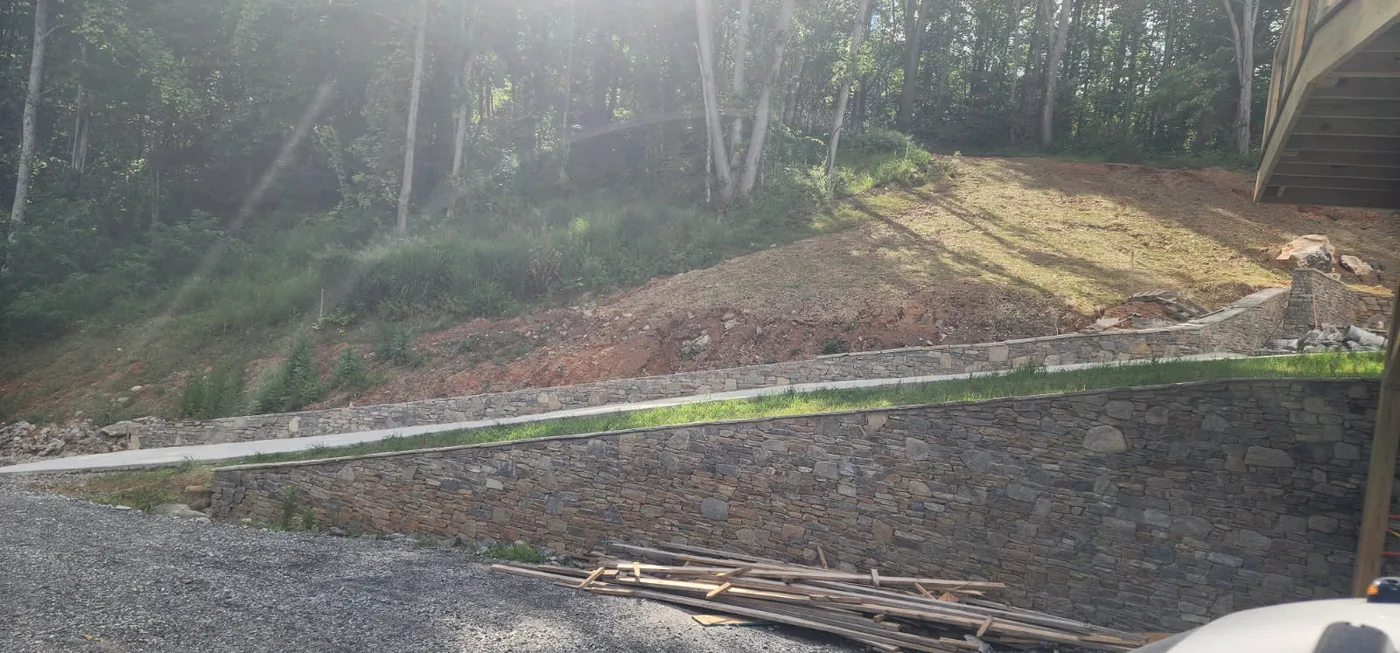
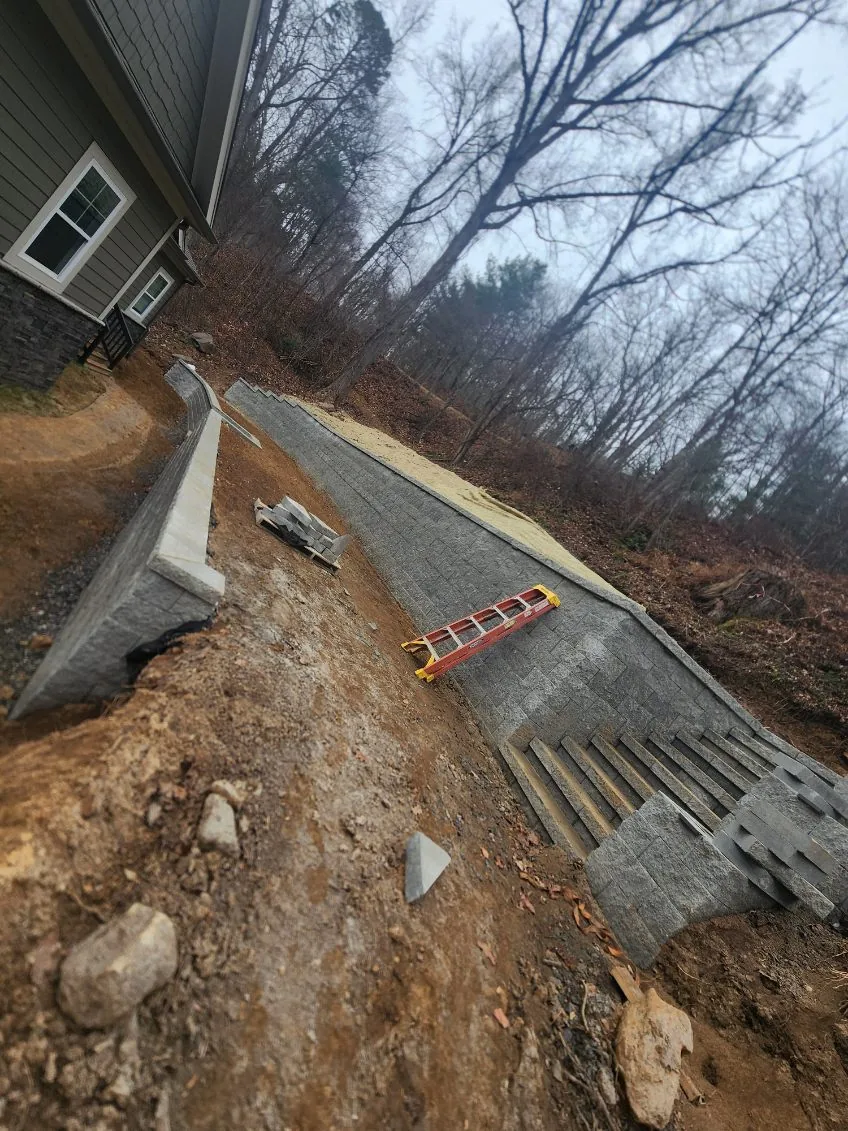
Flat Rock was laid out on the lower slopes of the Blue Ridge, and the lots that carry retaining walls are the ones cut into a grade: terraced yards off Greenville Highway, driveways dropping steeply toward a creek, walls holding a shoulder of road where the property line was never level. That terrain is why wall repair quotes here vary so widely for what sounds like the same job. A wall at the top of a switchback driveway that a dump truck cannot climb costs more to fix than an identical wall on flat ground, because the material has to be staged by machine, by conveyor, or by hand.
Haul distance is the second half of that equation. Stone that reads as local still travels from quarries in and around Henderson County, and a truck that makes one round trip per hour adds hours to a rebuild. On a small repair this is background noise. On a full wall replacement, access and haul can add 15% to 30% to the number before anyone touches a single unit of stone.
What a repair scope actually contains
Most "retaining wall repair" calls in this county fall into three buckets: the wall has bulged or rotated, it has settled at the base or along a section, or it is weeping and failing at the drainage plane. Which bucket you're in determines whether the answer is stabilization or reconstruction. A wall that has moved an inch since spring but hasn't moved further is usually a drainage and footing problem; a wall leaning into the yard with an open vertical joint is a rebuild.
Any scope that earns its price answers the same three questions: where does water go behind and under the wall, what holds the base, and what does the wall drain through. The International Code Council treats retaining wall design and drainage as an engineering question above certain heights and loads, and North Carolina picks that up in its own building code through the NC Building Code Council. A wall over roughly four feet of retained soil, or one carrying a driveway or structure above it, usually needs an engineer's stamp before anyone rebuilds it.
Scope vs. price ranges in Flat Rock
The following table is a working picture of Henderson County pricing, not a quote. Every number depends on access, wall height, and whether the repair is stabilization or a rebuild.
| Scope of repair | Typical price range | What drives the number |
|---|---|---|
| Spot repoint or cap reset, single section | $1,200–$3,000 | Height of wall, hand access, matching existing stone |
| Drainage correction, weep holes, backfill regrade | $1,800–$5,500 | Linear feet, excavation depth, how the truck reaches the wall |
| Section rebuild, 10–20 linear feet | $4,500–$9,000 | Wall height, footing condition, haul distance |
| Full rebuild, 20–40 linear feet, engineered | $9,000–$18,000+ | Engineering, drainage redo, crane or conveyor staging |
| Anchor or tieback installation (failed tall wall) | $6,000–$20,000+ | Depth, geotech report, equipment access |
Two things worth noticing. First, none of these ranges is a rate per square foot, because in this terrain the square footage rarely predicts the labor. Second, the drainage line item shows up in every honest scope. The full Henderson County cost breakdown carries the same table with expanded notes.
Water is the recurring villain — and the FEMA record shows why
Henderson County has been touched by 16 federally declared disaster events across a 1978-2026 record, and the pattern is overwhelmingly storm and flood family. Flat Rock sits at the foot of the Blue Ridge escarpment, which is a polite way of saying the county drains a lot of mountain onto a little valley. Every one of those events pushed water against walls that were designed for a drier assumption. Before a rebuild quote, the water question has to be answered: where does the uphill runoff go, does the wall have working drainage behind it, and does the grade above the wall still shed away from it.
A wall that fails after a wet season is almost never a stone problem. It is a water problem with stone on top. The EPA publishes guidance on stormwater and erosion control that is required reading for anyone considering a wall on a slope with an upstream neighbor — the rules are not optional when the wall is holding back water as well as soil.
What to check before you hire
North Carolina's general contractor licensing threshold applies to projects above a certain dollar value, and it applies to wall rebuilds the same as to any other structural work — the NC Licensing Board for General Contractors is where to verify a license before you sign anything. Beyond the license: ask whether the crew has built in this terrain, on walls of this height, with these materials. A crew that mostly installs walls on new flat-lot construction will be learning on your slope.
Ask, too, for the engineer's letter on any wall over four feet of retained soil, or any wall holding a driveway or structure. If the contractor pushes back on that, that is the answer. And ask how they plan to stage material — the answer tells you immediately whether they have actually looked at your driveway. When you are ready, the Flat Rock contractor shortlist and the wall repair service overview cover what a good first visit looks like.