Why access decides the number before the design does
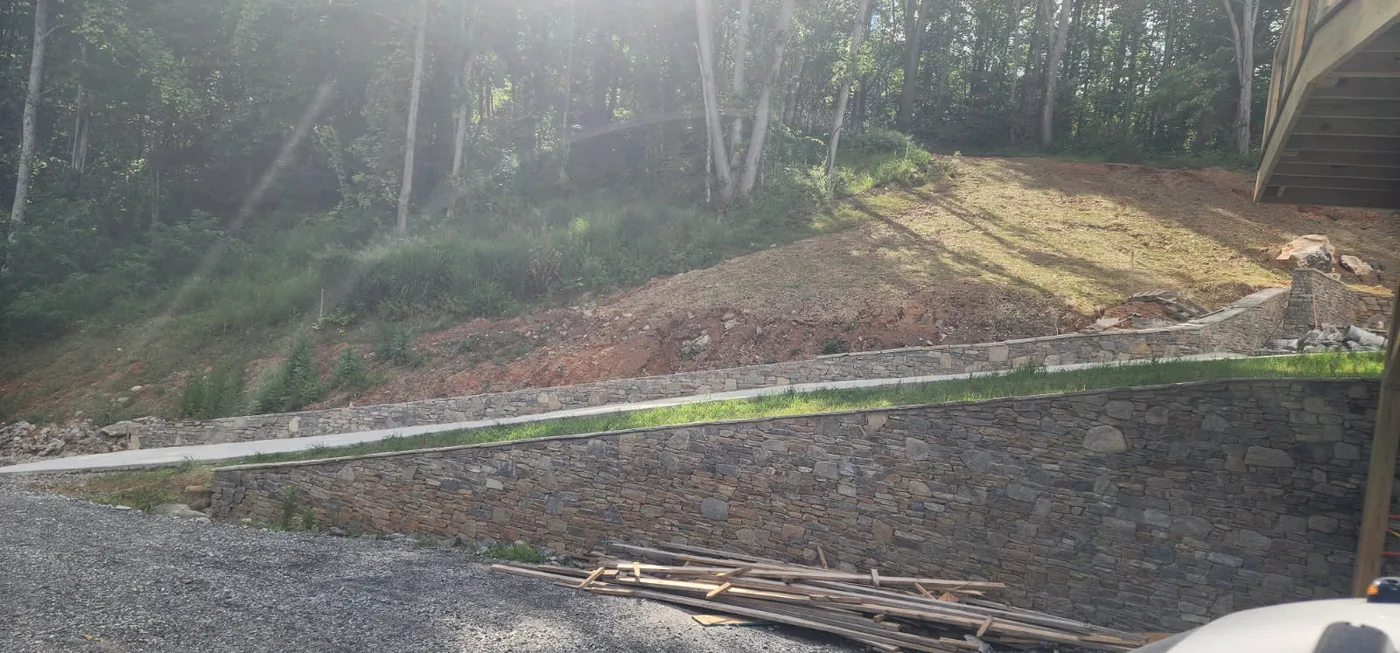
Two Waynesville yards can ask for the same ten-foot cascade and get bids eight thousand dollars apart, and the difference is almost never the stone. It is the driveway. A lot off a graded county road with a flat pull-through lets a dump truck and mini excavator work beside the dig. A hillside place up a narrow gravel drive, or a property off a switchback above town, means every pound of Tennessee fieldstone and every bucket of spoil moves by machine that can fit, or by hand. That labor is the line item nobody quotes on the phone.
Add haul distance. Most builders here pull stone from quarries in the region, and the round trip over mountain roads is slower and costlier per ton than a Piedmont job assumes. Spoil is the mirror problem: what comes out of a pond excavation has to go somewhere legal, and on a steep Haywood County lot there is rarely a flat corner to lose it in. When you read the ranges below, read them as access-adjusted, not as a menu.
Stone waterfalls and ponds pricing in Haywood County
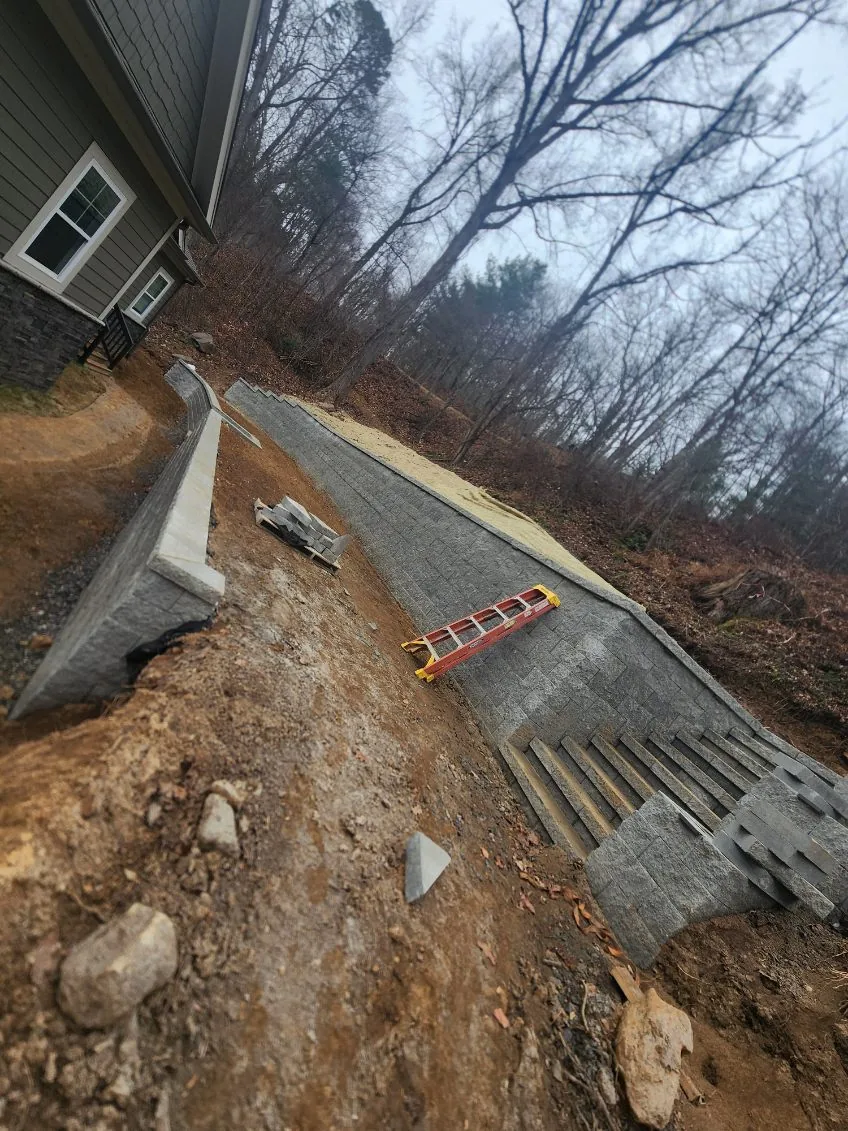
These are installed ranges, not quotes. A real number needs a site visit, because grade, access, and utility locates move the total more than the feature itself. For any work that crosses into structural retaining — a pond terrace cut into a slope, a boulder wall holding a cascade — see the Haywood County retaining wall cost breakdown, since that scope prices differently and often needs its own engineering.
| Scope | Typical installed range | What moves the price |
|---|---|---|
| Small disappearing waterfall (boulder, no open pond) | $4,500-$8,000 | Boulder count, slope, hose-and-pump run |
| Pondless stream and cascade, 8-15 ft drop | $8,000-$16,000 | Linear feet, rock tonnage, haul distance |
| Lined koi or goldfish pond with falls | $12,000-$28,000 | Volume, liner and underlayment, filtration, edging stone |
| Pond plus bog filter and planting | $18,000-$35,000 | Filtration design, native plantings, electrical run |
| Repair or reline an existing feature | $1,500-$7,000 | Leak source, access to the liner, pump and plumbing condition |
Electrical is its own scope. Pumps and lighting need a properly permitted circuit, and any contractor touching wiring beyond a plug-in cord is working under state rules — the NC State Board of Examiners of Plumbing, Heating and Fire Sprinkler Contractors and local inspection authority govern that part, not the stonemason.
Reading a slope lot before anyone digs
Waynesville sits in a bowl of ridges, and most properties here are either on a grade or at the bottom of somebody else's. That shapes the design. Water always wins: a pond built at the low point of a yard that takes runoff from an uphill neighbor will be fighting silt and overflow forever unless the build includes a way to divert that water first. A cascade, by contrast, can be the better fit on a steep lot, because it uses the fall instead of fighting it.
Before breaking ground, confirm where the water goes in a storm, where the utility lines run, and whether the feature sits over a septic field or leach line. Disturbing those is a far more expensive mistake than any stone order. Where a build touches grading, drainage, or a retaining structure, the crew should be able to say plainly which inspections and permits apply. Thresholds for contractor licensing are set by the NC Licensing Board for General Contractors, and local code administration follows the NC Building Code Council — ask any bidder how they handle that side.
Storm history and why liner and overflow get built heavy here
Haywood County's federal disaster record is mostly storm and flood family: 19 declared events touching this county across 1973-2026. That history is not abstract for a water feature. A pond with an undersized overflow or a liner edge set too low becomes a washout in one heavy night, and the repair costs more than building it right the first time. Builders who work here routinely overbuild the overflow, set the liner edge above the expected high-water line, and arm the spillway with rock. Ask about it directly.
Federal guidance on stormwater and site runoff is worth skimming before you approve a plan — the U.S. EPA publishes plain-language material on managing runoff at the property scale, and it explains why diversion matters more than filtration on a hillside lot.
What a serious bid includes, and what it leaves out
A complete proposal here names the pump, liner type and thickness, underlayment, and whether the price includes hauling spoil off-site. It lists the electrical scope and who pulls the permit. It shows a plan view of the feature on your actual lot, not a catalog photo. And it separates the water feature from any retaining or grading work, so you can see what you are paying for.
If you want the wider catalog of what these builds can look like, browse the full range of stone waterfalls and ponds we build. And if your project includes a wall holding a pond terrace, the Waynesville retaining wall contractors page covers how those crews are vetted, since the wall is usually the part that has to pass inspection. An honest bid should read like a construction plan, not a sales sheet — and if it does not, that is your answer.