What actually drives the number on a Lake Junaluska lot
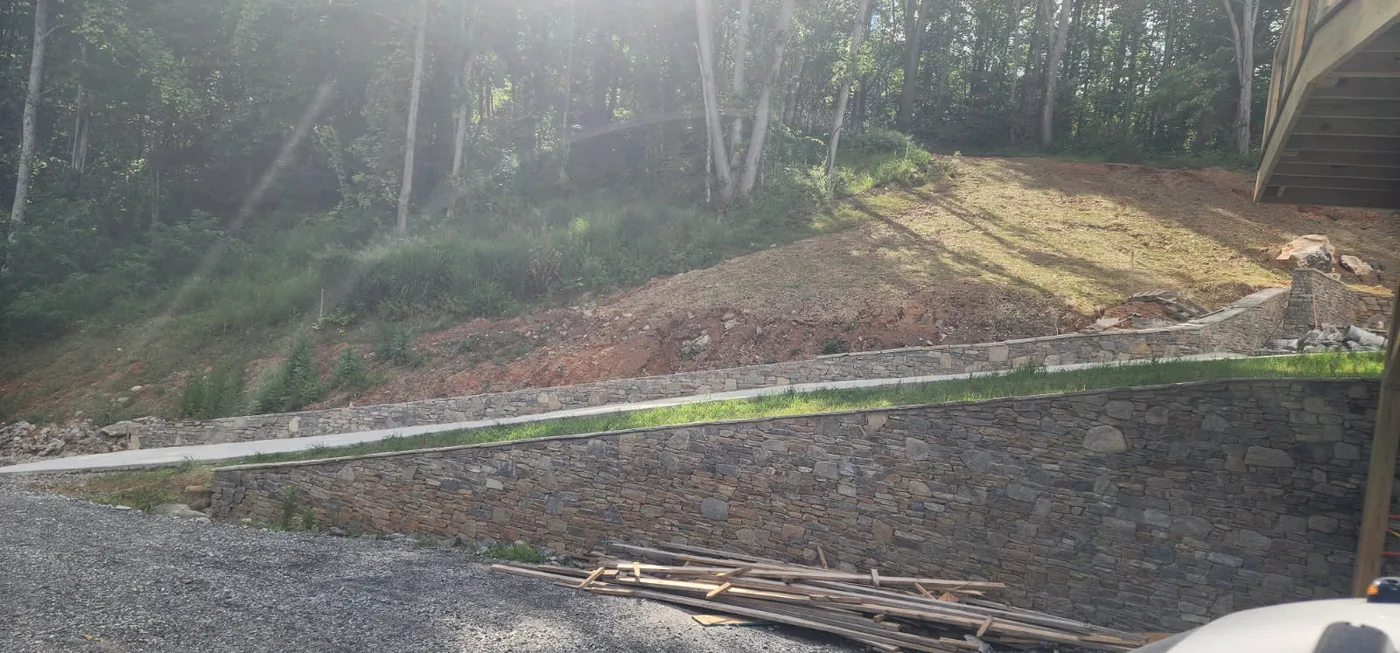
A stone quote in Lake Junaluska rarely breaks on the stone itself. It breaks on access. Lots here climb away from the lake, and many sit on terraced ground with a neighbor's retaining wall already holding the hill above them. That means the line items that move the price most are the ones a homeowner never sees on a sample photo: how the stone gets from a truck to the wall face, how much ground has to be dug and re-compacted behind it, and whether the wall needs a permit because it crosses a height threshold.
On a flat Oak Park lot, a dry-stack garden wall might run $55–$85 per square foot of face. The same wall on a slope off Highway 209 with a 40-foot carry and a footing that has to step down grade can run $95–$160 per square foot before drainage is added. Same stone. Different lot.
The line items, broken out
Here is how a typical Lake Junaluska wall or stone-hardscape quote breaks into ranges. These are regional bands for Haywood County work — every job is scoped to its own lot, and a written quote should show each line separately rather than one lump sum.
| Scope item | Typical range | What moves it |
|---|---|---|
| Dry-stack garden wall (per sq ft face) | $45–$85 | Wall height, stone size, cap detail |
| Mortared veneer wall (per sq ft face) | $55–$110 | Stone thickness, backing prep, footing depth |
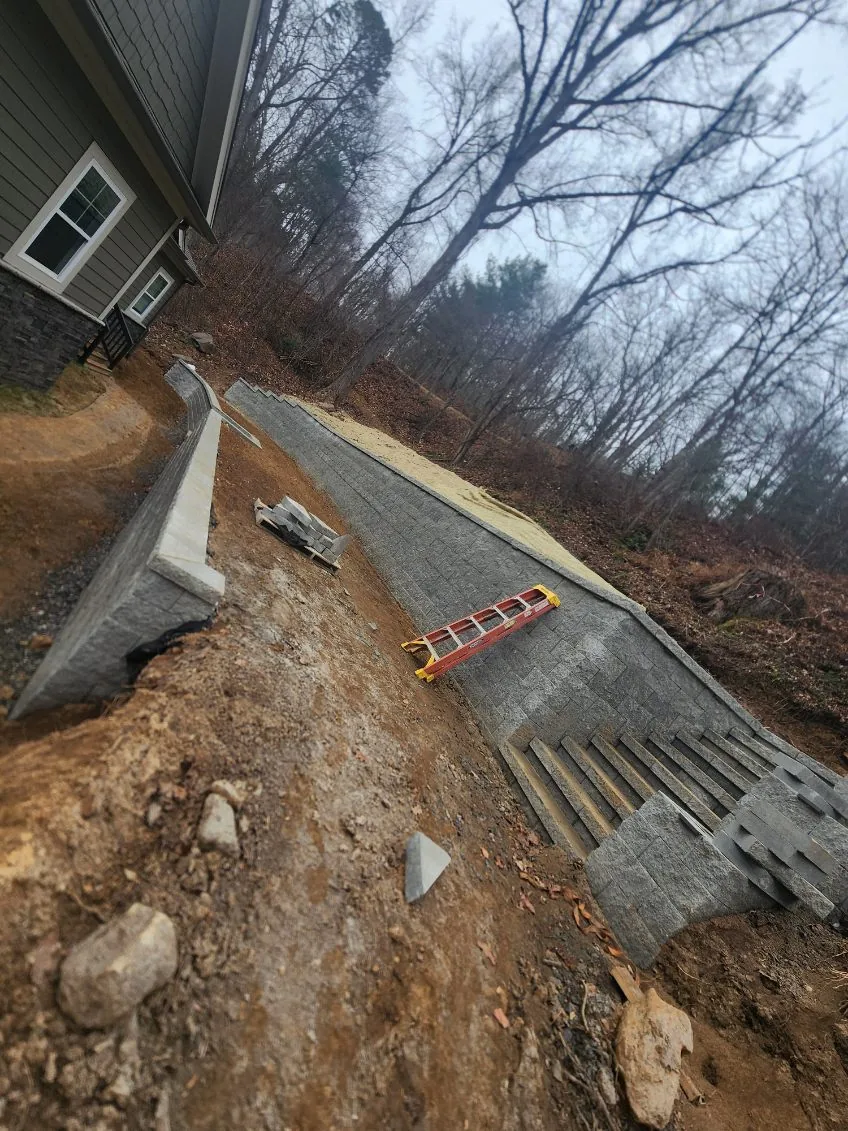
| Engineered retaining wall (per sq ft face) | $75–$160 | Height, slope surcharge, engineer stamp, geogrid |
| Stone steps (per step) | $400–$1,200 | Rise, width, tread stone, handrail |
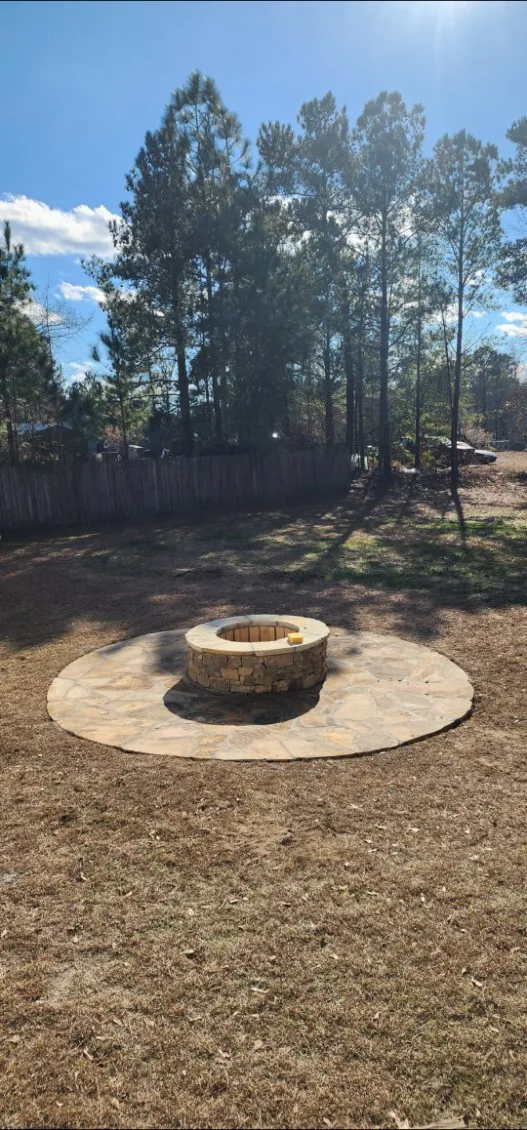
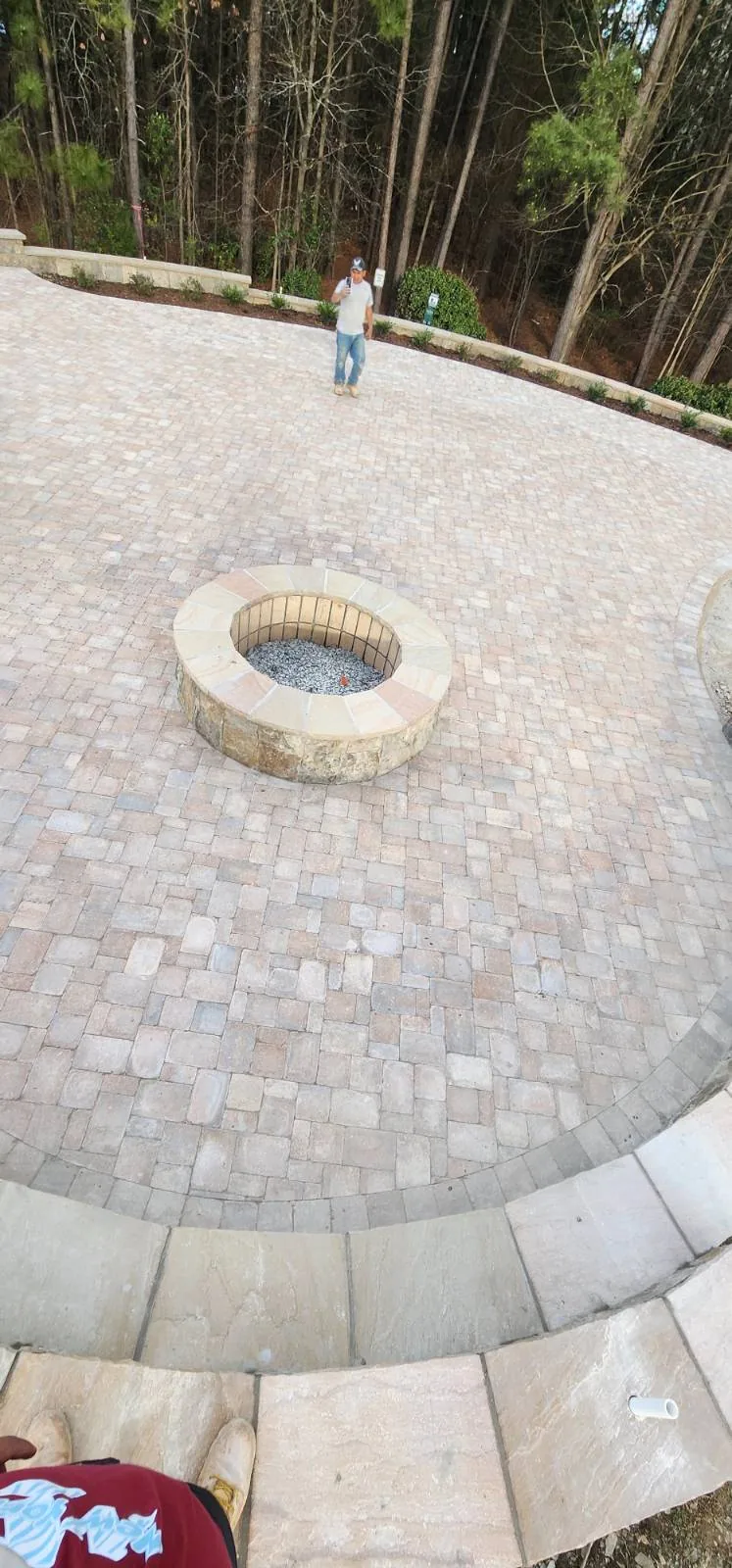
| Stone patio or walkway (per sq ft) | $20–$55 | Base depth, joint method, pattern, drainage |
| Drainage behind wall (per linear ft) | $15–$45 | Pipe, gravel, filter fabric, outlet route |
| Stone delivery and site haul (per ton or per load) | $90–$350 | Distance, access width, staging area, crane or conveyor |
Those last two rows are the ones that surprise people. Drainage and haul together can add 20–35% to a quote in this town, and skipping them is why a wall that looked cheap at signing is leaning three years later.
Why slope and water decide the price here
Haywood County is mountain terrain around a lake basin, and Lake Junaluska sits in a bowl. Water moves down toward the water. That means almost every retaining wall on a residential lot here is doing two jobs: holding up soil and managing water. The National Weather Service's regional precipitation data for the southern Appalachians is a fair guide to why — this county sees regular high-intensity rain, and the federal disaster record shows 19 declared events touching the area across 1973-2026 years, mostly storm and flood family. A wall that ignores that record is a wall that gets rebuilt.
Two code and safety realities shape the quote on any wall over a few feet tall. First, [NC residential code](https://www.iccsafe.org) and local permitting treat retaining walls above a threshold height (often 4 feet in many NC jurisdictions, but check with the town) as structures that need engineering, not just a mason's judgment. Second, [NC DEQ](https://www.deq.nc.gov) rules govern how close you can build to streams, the lake edge, and stormwater paths — shoreline and buffer rules apply near Lake Junaluska's water. Any mason quoting a lakeside wall without asking about buffers is quoting half a job.
Picking stone that fits the house and the hillside
Three stone families dominate work in this town:
Local fieldstone and rip-rap — harvested from the region, irregular, heavy, and usually the cheapest per ton but the most labor to lay. Good for rustic walls and slope stabilization.
Quarried veneer and ashlar — cut to consistent thickness, clean lines, much faster to install. Pairs well with the brick and shingle architecture common near the Methodist assembly grounds and the older lakeside homes.
Manufactured stone veneer — lightweight, uniform, and often the only practical option on a frame house that cannot carry full-bed stone. It is not the same product, and a quote should say which one it is pricing.
Ask your mason which stone they are quoting and where it comes from. A 90-minute haul from a quarry outside the county adds real money to the delivery line — see the [retaining wall cost guide for Haywood County](/retaining-wall-cost-haywood-county-nc/) for how that appears on paper.
How to compare two mason quotes without getting burned
In North Carolina, masonry work itself does not require a general contractor license, but projects over the state threshold — and most retaining walls that need engineering — fall under [NC Licensing Board for General Contractors](https://www.nclbgc.org) rules. Any wall that requires a stamped design should be done by a contractor who can pull the permit and carry the insurance to back the work.
Three questions separate a real quote from a guess: (1) Is there a drainage line item, and where does the water go? (2) Is the footing depth and width written down, or assumed? (3) If the wall over 4 feet, who stamps the design? A quote that answers all three in writing is one you can compare to another. A quote that answers none is a number, not a scope.
For walls that tie into steps, patios, or a full hardscape plan, start with the [retaining walls overview](/retaining-walls/) and then look at specific builders via [retaining wall contractors in Lake Junaluska](/retaining-wall-contractors-lake-junaluska-nc/). Those pages cover footing specs, permit paths, and questions to ask on site.