Why sloped yards in Asheville cost what they cost
Buncombe County’s terrain is the whole story. Most residential lots in Asheville — from Montford to Oakley to the ridge lines off Town Mountain — sit at grades that flatland suburbs never deal with. A typical backyard here isn’t just uneven; it’s a hillside. That means leveling isn’t a matter of spreading topsoil. It’s an earthmoving project with three moving parts: cut (digging into the high side), fill (building up the low side), and something to hold the fill in place — which in most cases means a retaining wall.
The cost figures below assume you hire a licensed contractor, pull the necessary permits (walls over 4 feet and most grading that alters drainage require approval), and use fill that passes compaction tests. The NC Licensing Board for General Contractors verifies credentials for this type of work — cut corners on any of those and you’ll pay twice: once to redo it, once to fix the neighbor’s runoff complaint.
The real scope of a leveling job in Buncombe County
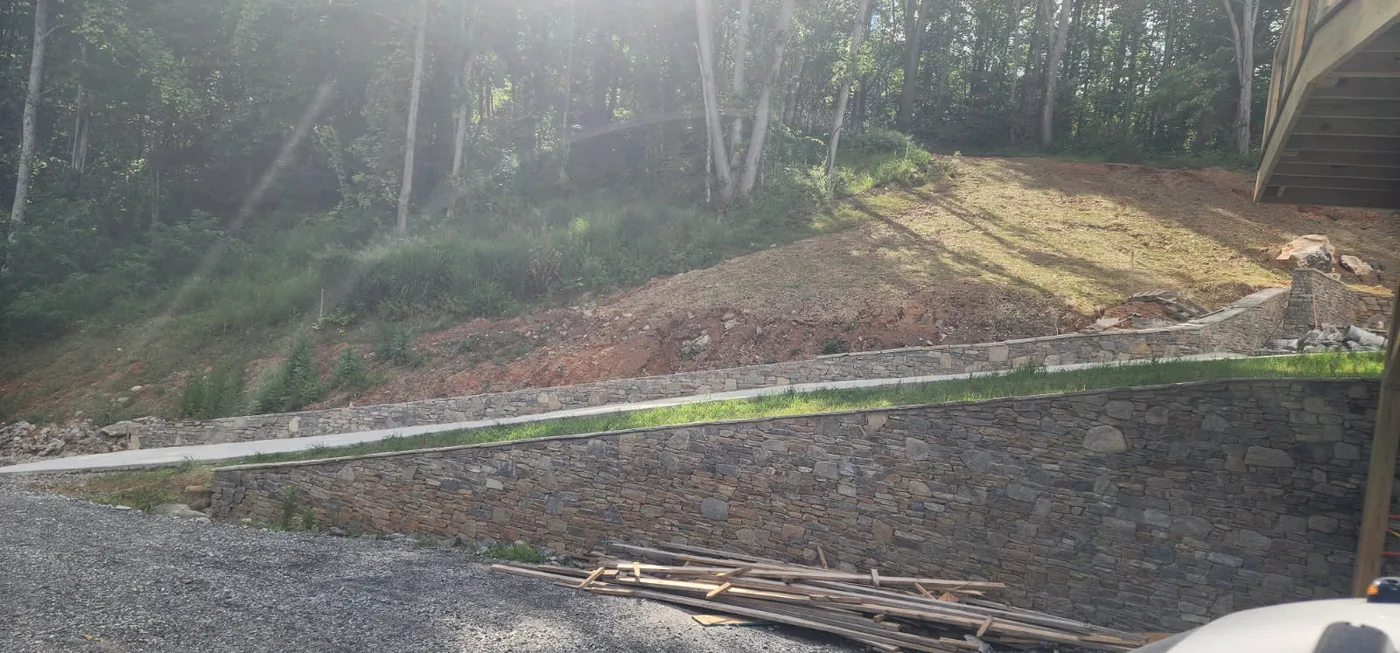
Leveling a sloped backyard here isn’t one task — it’s a sequence. First, the site is cleared and topsoil stripped. Then the high side is excavated, and the spoil is either hauled off or used as structural fill on the low side. Fill must be placed in 8- to 12-inch lifts and compacted with a vibratory roller; skipping that step is how future settlement cracks your patio or wall. Finally, a retaining wall (often 2–6 feet tall) is built at the lower edge, with drainage behind it to keep hydrostatic pressure from pushing it over.
On steep lots — say, over 15% grade — you’ll likely need an engineered plan, especially if fill exceeds 3 feet or the wall tops 4 feet. The International Code Council publishes the structural and drainage standards behind these decisions. The wall is usually the biggest single line item; see our detailed retaining wall cost guide for a breakdown.
Buncombe County price picture: what to expect per scope
Here’s a realistic cost table for leveling a sloped backyard in the Asheville area. Figures are ranges, not quotes, and assume an accessible city-standard lot (not a mountaintop with no road). We’ve also linked our full retaining wall design guide and paver patio installation article for line-item details.
| Scope | Typical price range | What’s included |
|---|---|---|
| Light regrade (low slope, no wall) | $1,800 – $4,500 | Cut-and-fill for a gentle 2–5% slope, minor recompaction, re-seed or sod |
| Cut-and-fill leveling for lawn or patio | $4,500 – $12,000 | Excavation, fill placement, compaction, drainage swale, topsoil and seed |
| Leveling with low retaining wall (≤4 ft) | $8,000 – $20,000 | Engineered wall (segmental or poured), gravel base, backfill, drainage pipe, fabric |
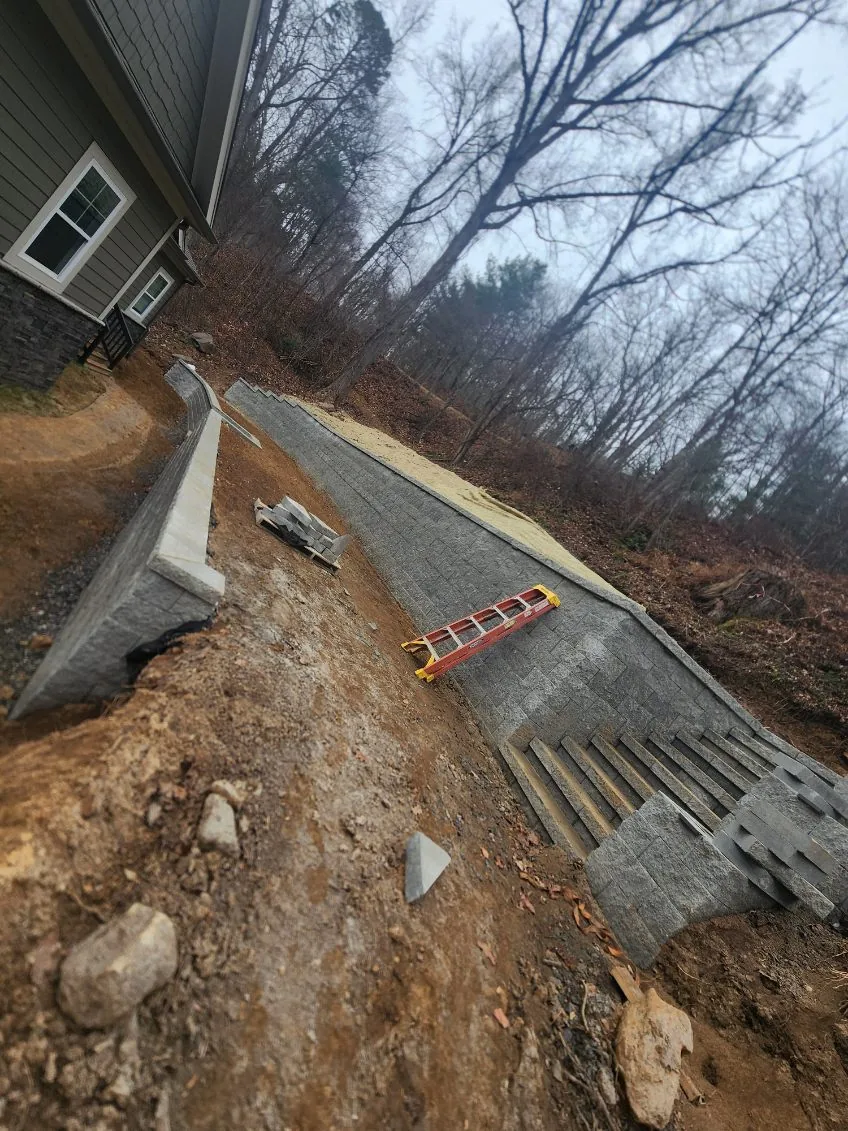
| Steep slope terrace (2+ walls, stairs) | $20,000 – $40,000+ | Multi-wall system, engineered design, drainage, possible geogrid, complex access |
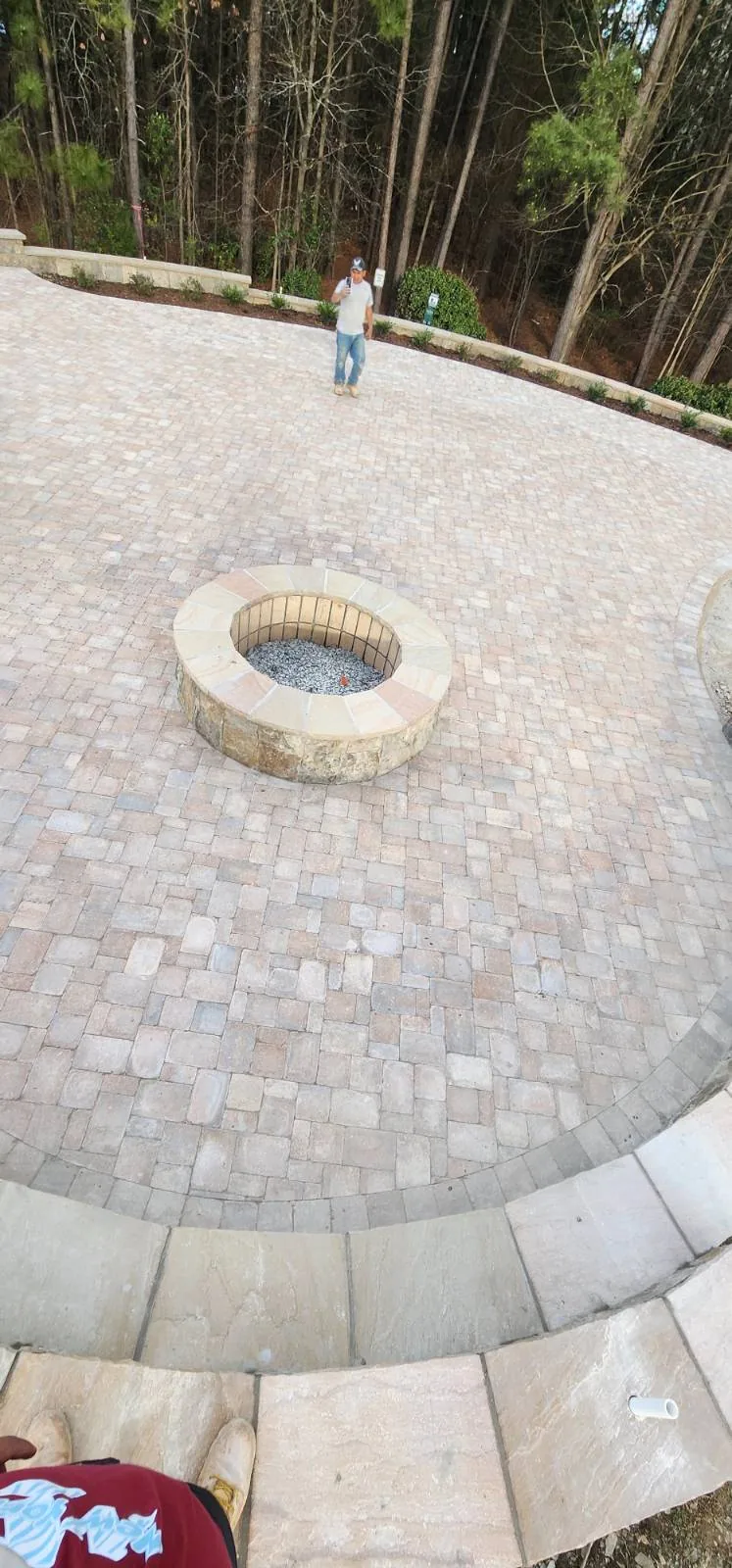
Those numbers have held up across recent Asheville projects. Costs also climb if you’re laying a paver patio on the new flat area — compaction must hit 95% proctor, a stricter standard than for grass.
Water is another factor. This region has seen repeated storm and flood events over the years — 19 federal disaster declarations since 1973-2026 — which means our soil is often clay-heavy and occasionally saturated. If your slope has poor drainage or springs, budget $1,500–$4,000 extra for a French drain or underdrain.
Cut-and-fill vs. retaining walls: what your slope dictates
For slopes under about 10%, a simple cut-and-fill grading can work without a wall, leaving a gentle 3:1 slope or flatter. But anything steeper in Asheville almost always needs a retaining structure. Soil has a natural angle of repose around 1.5:1 to 2:1; flatten it further and it wants to slide. The International Code Council sets the standards for geotextile and gravel behind walls to prevent failures.
On a typical Asheville slope lot (15–25% grade), we recommend a stepped terrace approach: two 3-foot walls with a flat landing between beats one 6-foot wall for both cost and appearance. That reduces excavation volume, often keeps walls below the 4-foot permit threshold, and creates usable yard space. That’s why the table shows a big jump for “steep slope terrace” — it involves more engineering and more time, not just extra materials.
Hiring a leveling contractor in Asheville: what to ask
Three questions matter before you sign. First, ask if they’ll pull a grading permit — in Buncombe County, most projects that change drainage require one. Second, ask how they handle compaction testing: a proper job will have soil tested by a third party (often a geotech) if structural fill exceeds 2 feet. Third, ask about drainage plans for uphill runoff — leveling your yard can redirect water to a neighbor, which is a legal liability in NC. Verify any contractor’s license through the NC Licensing Board for General Contractors before you commit.
We serve all of Asheville and Buncombe County’s towns — Weaverville, Black Mountain, Swannanoa, Fairview, and points in between. We’ve seen plenty of “level this yard” jobs turn out to be retaining wall projects, and we’ll tell you on the first visit which one you actually need. Get a quote through the form and we’ll walk the slope with you — honestly, with no guesswork.