Where the water comes from and where it has to go
Clyde sits low in the Pigeon River valley just east of Waynesville, and most yards here are either river-bottom flat or climbing a hillside that drains onto them. Put a patio in the wrong place and rain from the ridge above crosses your pavers, reaches the edge, drops off, and pulls the base sand with it. That is why the first real question on any Clyde patio is not the paver shape. It is where the runoff enters the site and where the finished grade sends it.
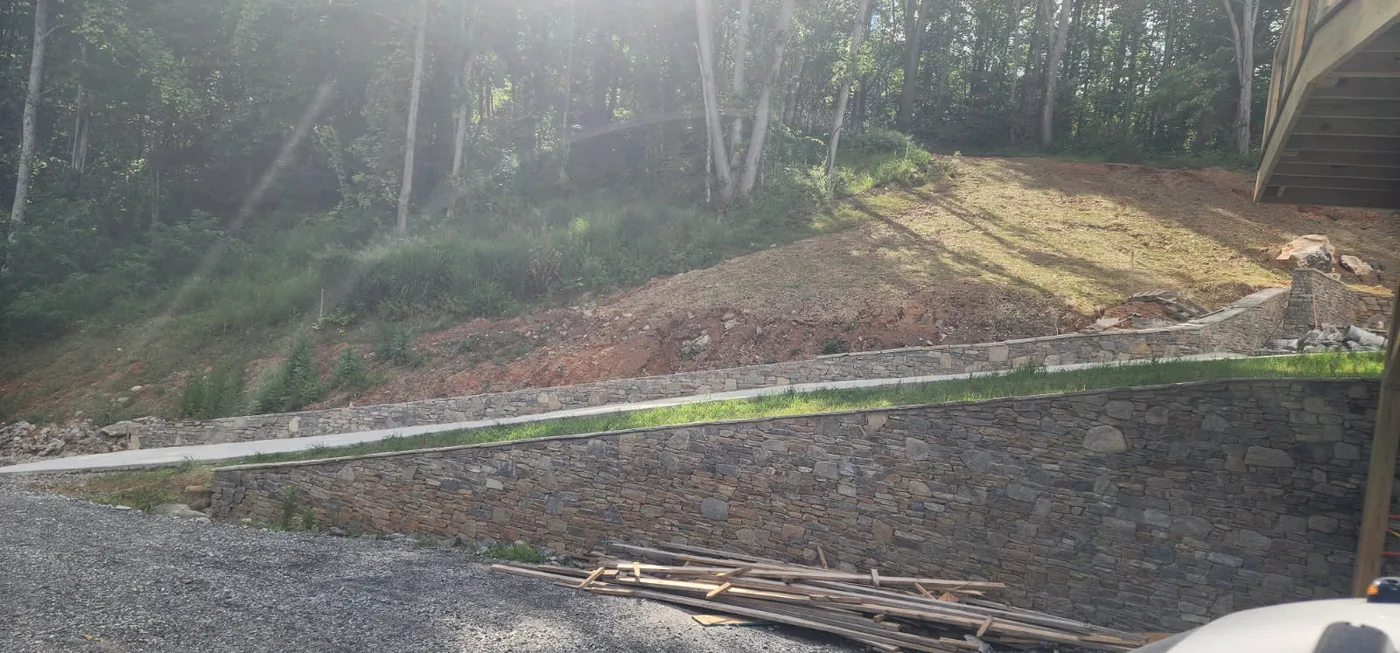
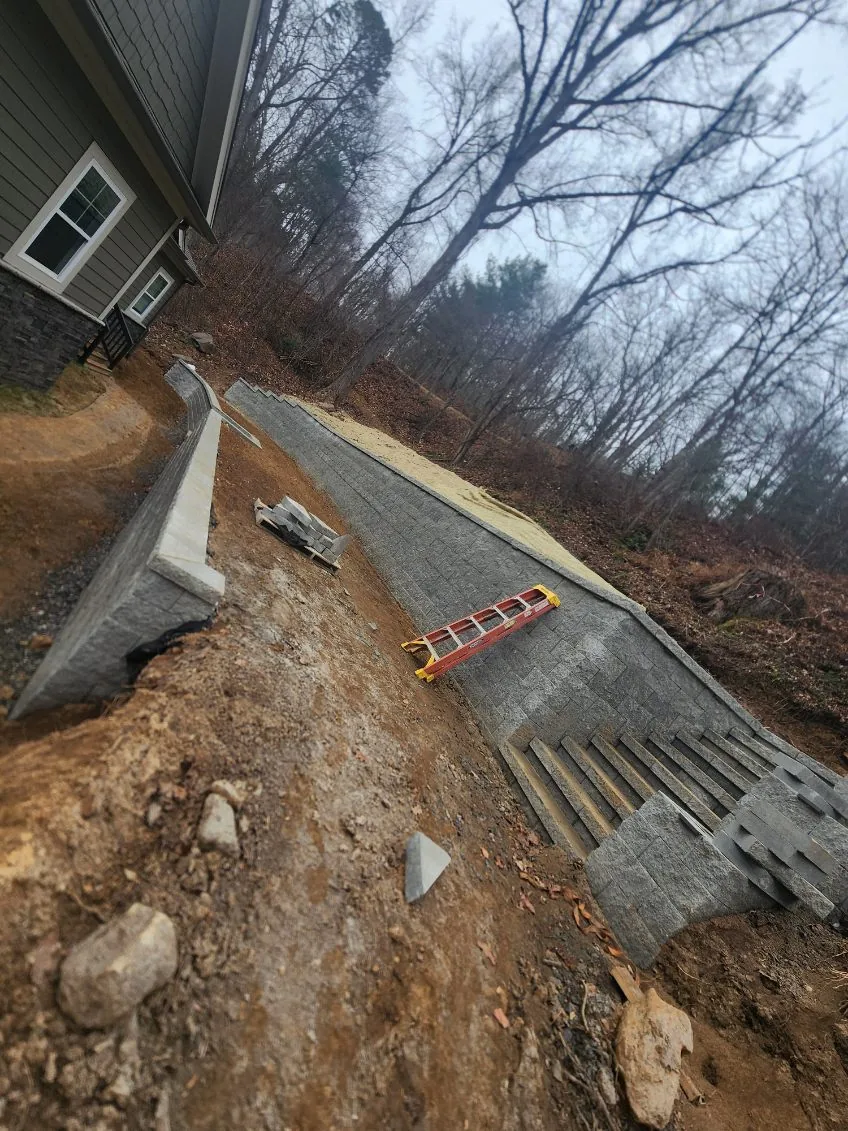
On valley lots the answer is usually a gentle fall toward a ditch, a dry well, or a curtain drain behind the patio. On hillside lots it is a swale or a small retaining wall upslope so the water gets collected before the patio rather than through it. Much of Clyde's housing stock sits on old farm parcels that were graded for tobacco or pasture, not for drainage engineering, so the natural fall lines are not always obvious until you dig. A lot that looks flat from the road may actually shed water toward the house foundation because the original builder cut the pad into the slope and left the uphill side higher than the downhill side. Get that sequence right and the patio lasts decades. Get it wrong and you will be resetting pavers in three years, usually after a wet spring when the ground stays saturated for weeks.
What the base actually costs in this soil
Haywood County yards carry a mix of river gravel, red clay, and rock, and none of them compact like the clean crushed stone a paver base needs. A court-standard patio is a compacted granular base with the pavers on top, and the depth depends on how much fill the slope demanded to reach a usable flat. See the paver patio construction guide for the full layer breakdown.
The short version: excavation and haul-off, a compacted stone base (often 4 to 8 inches, deeper on grade changes), bedding sand, the pavers, edge restraint, and polymeric joint sand. On a hillside Clyde lot, add drainage and possibly a low retaining edge. That is the difference between a quote that holds and one that grows after the first hard rain.
In river-bottom sections, the soil can be silt-heavy and holds moisture, so the base may need a geotextile separation fabric to keep fines from pumping up into the stone. On the hillside lots, you often hit rock shelf at two feet, which means more excavation time and sometimes a jackhammer, but the rock also gives you a solid undisturbed subgrade that will not settle. Each soil type changes the equipment, the haul-off volume, and the labor hours, which is why two Clyde patios of identical square footage can price thousands apart.
Scope versus price, line by line
Regional pricing for Clyde and the wider Waynesville area falls into predictable bands once you know the scope. These are installed ranges, not flat rates, and slope plus drainage access move them the most.
| Scope | Typical range |
|---|---|
| Small patio, 150-200 sq ft, walk-out grade, simple rectangular layout | $6,000-$9,500 |
| Mid-size patio, 250-350 sq ft, some prep and edge restraint | $9,000-$14,000 |
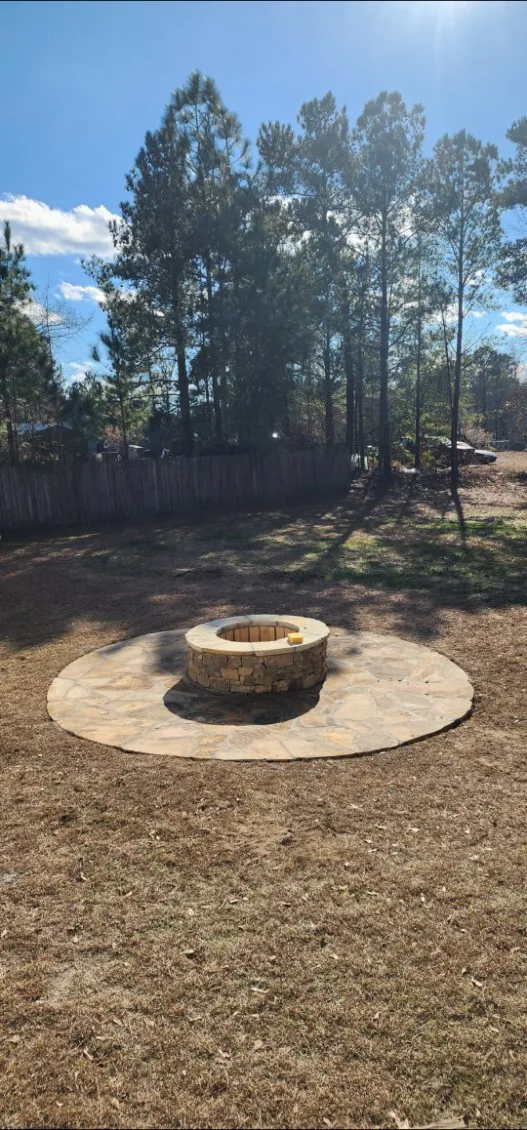
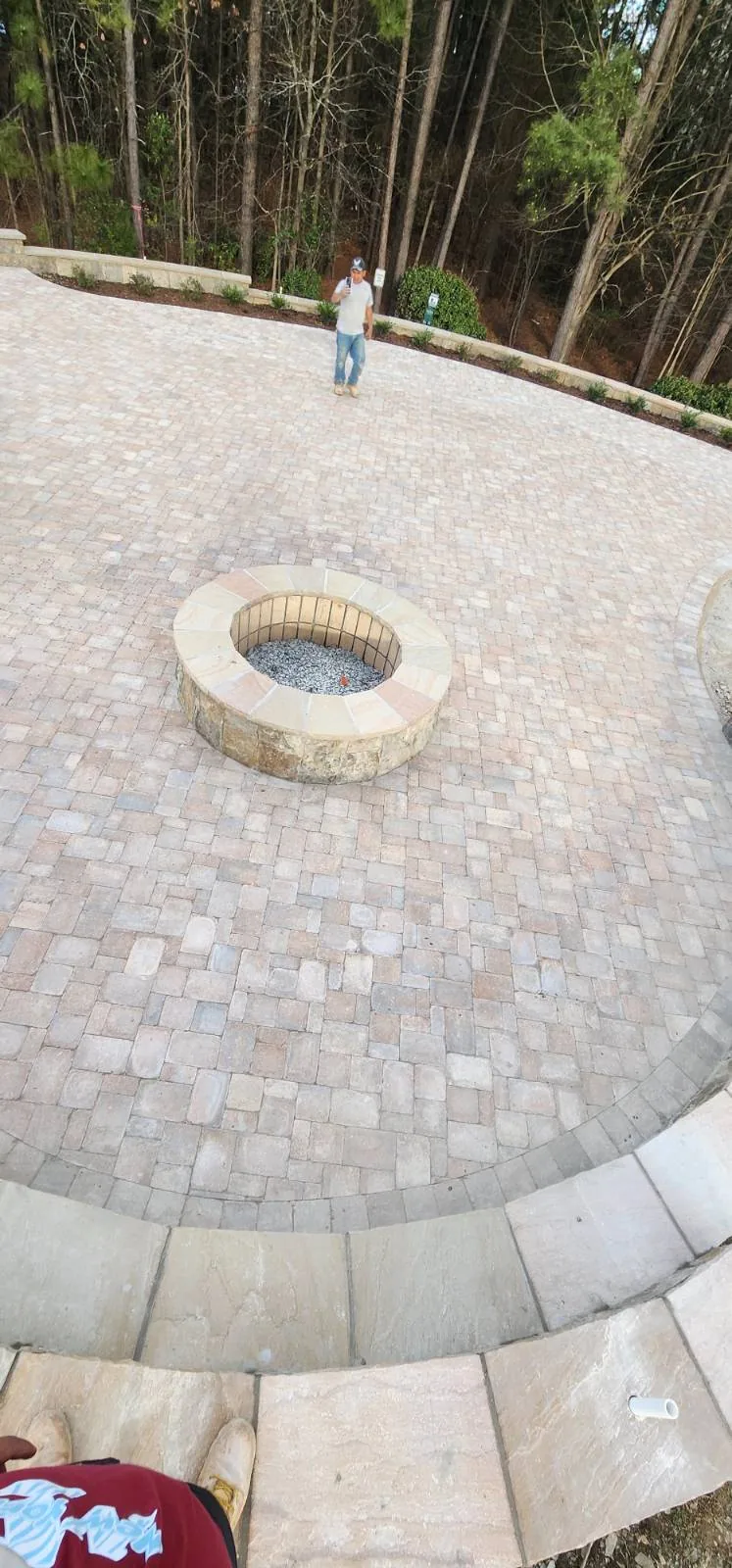
| Large patio, 400-600 sq ft, seat wall or fire pit footing | $14,000-$22,000 |
| Hillside build with drainage swale or upslope retaining | add $3,000-$9,000 |
| Permeable or clay-heavy soil correction | add $2,000-$6,000 |
Anything that touches grading, retaining, or a fire pit footing is also where the cost bands tie back to Haywood County retaining wall cost, because a wall that holds the patio grade up is priced like the wall it is. Access matters too. A Clyde lot with a narrow drive or a steep bank between the road and the build area means smaller equipment and more hand work, which adds labor hours without adding a single paver. If a dump truck cannot back to the excavation, the stone gets moved twice.
Permits, contractor checks, and code
Simple ground-level patios in Haywood County usually need no building permit, but the moment a project includes a retaining wall above a low height, a roofed structure, or changes to site drainage, the local permitting office wants a look. The state licensing rules from the NC Licensing Board for General Contractors apply once a job crosses the dollar threshold for general contracting, so ask any crew to state their licensing position plainly. Hardscape edge restraint, base compaction, and paver surface in a yard are also covered by the International Code Council family of codes adopted in North Carolina, which is what an inspector or an engineer will point to on a drainage or wall question.
When a wall is part of the plan, the Clyde retaining wall contractors page covers how that trade is bid here. It also helps to know that North Carolina does not license hardscape installers as a separate trade, so the license a paver crew holds may be a general contracting license or none at all. That is legal for a simple patio on private property, but it means the homeowner carries more of the risk if the base fails. Ask for proof of insurance and a written scope that names the base depth, the drainage plan, and the edge restraint system. Those three items are where a thin quote hides.
Why storm history shapes this market
The federal disaster record is the other reason drainage leads the design. 19 declared events touch Haywood County across 1973-2026, overwhelmingly storm and flood family, and the Pigeon River corridor has taken repeated hits. That history is why experienced installers here over-build the drainage, not the pavers: positive fall away from the house, a defined outlet, and a base that will not soften when the ground saturates for a week.
Homeowners who lived through the floods remember water in places they never expected it. That memory drives the questions they ask a paver crew, and the crews who do well here have answers ready about freeboard, outlet sizing, and what happens when the downstream ditch is already full. The U.S. Environmental Protection Agency has good guidance on managing runoff and permeable surfaces through its EPA stormwater resources, which is worth a read if you are weighing permeable pavers against standard ones on a wet lot. Permeable systems can help, but they still need an outlet for extreme events, and in Clyde the extreme events are the ones that matter.