Why Etowah yards build differently than Asheville's
Etowah sits in Henderson County's bottom country, where the French Broad flattens out after its run through Transylvania, and the lots show it. Much of the town's housing stock is post-1980 subdivision build on graded ground, with a scattering of older farm parcels still holding pasture fence and mature hardwoods. That combination changes what a fire pit job looks like compared to a Montford or West Asheville build: fewer hundred-year foundations to work around, more questions about how the yard drains after a grade change, and subdivision setbacks that put the fire feature close to a fence line or a screened porch.
The soil is the other half of the story. Henderson County's upland clay holds water hard, and a shallow pit dug into it will turn into a bowl of standing water after a summer storm. The first thing worth measuring on any Etowah lot is not square footage — it's where the water goes when it rains and how much fall the yard already has. A pit set into a flat graded lot with clay subsoil needs a different base and drainage approach than one built on a slope where the grade naturally sheds.
What actually drives the price on a Henderson County build
The working cost table below reflects regional bands for Etowah and the surrounding county. Line-item pricing varies with material haul distance, whether a gas line gets trenched, and how much site prep the yard needs. Most builders quote this as a package, so ask for the scope broken out — the pit itself is rarely the expensive part.
| Scope | Typical price range | What moves it |
|---|---|---|
| Single paver-block pit, dry-stacked, gravel base | $1,200–$2,800 | Diameter, block style, site access |
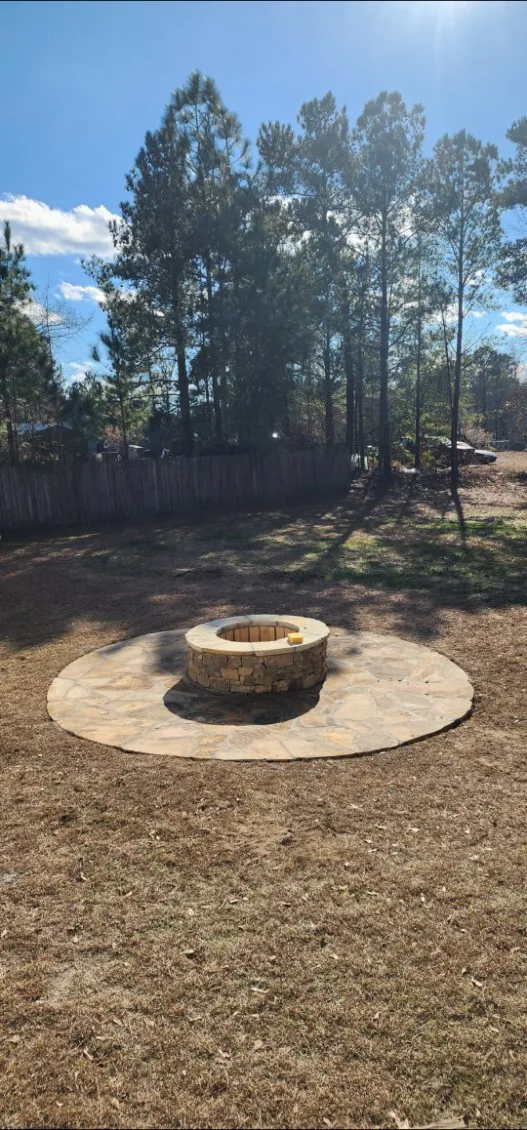
| Mortared natural stone pit, larger diameter | $2,500–$4,500 | Stone type and haul distance, mortar detailing |
| Gas line trench and connection | $800–$2,500 | Trench length, permit, propane vs. natural gas |
| Seat wall or built-in bench ring | $900–$3,000 | Length, cap material, footing depth |
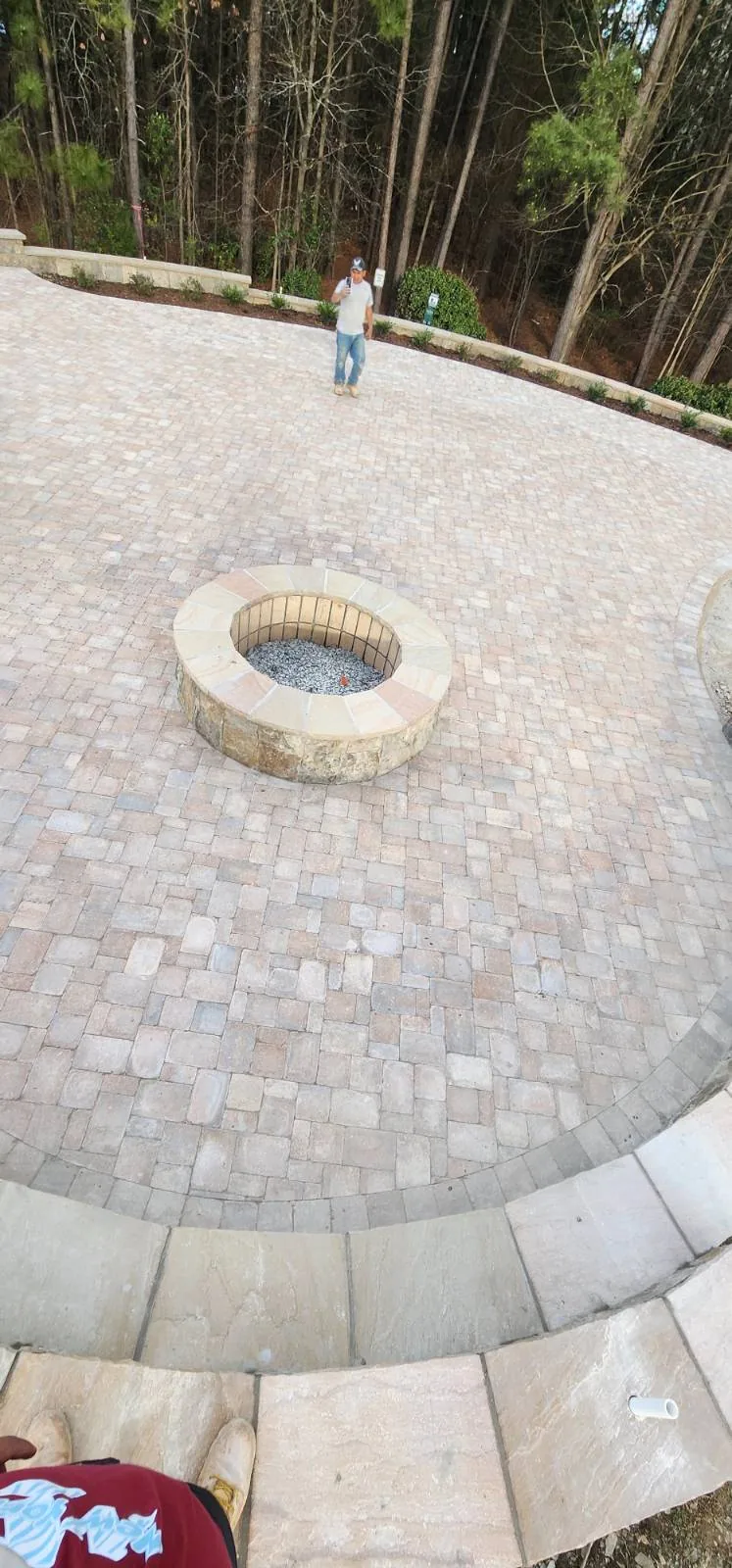
| Surrounding patio or hardscape pad | $2,000–$8,000+ | Square footage, paver vs. flagstone, base prep |
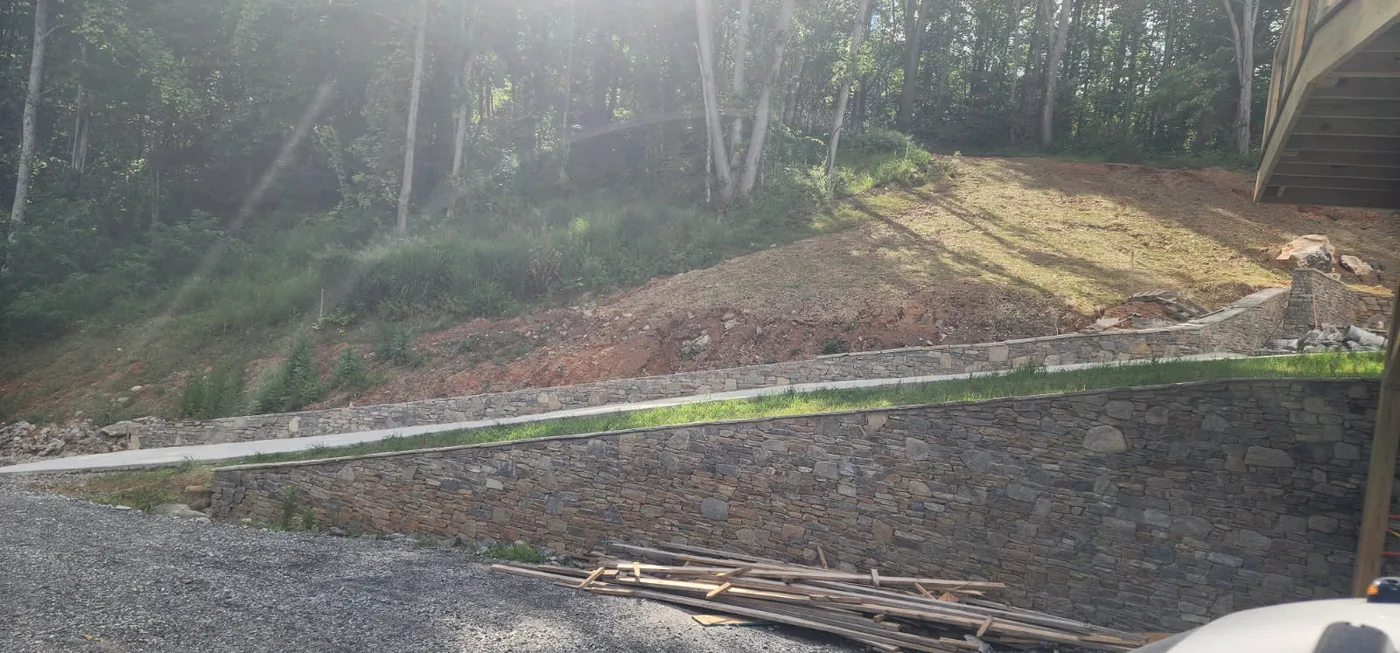
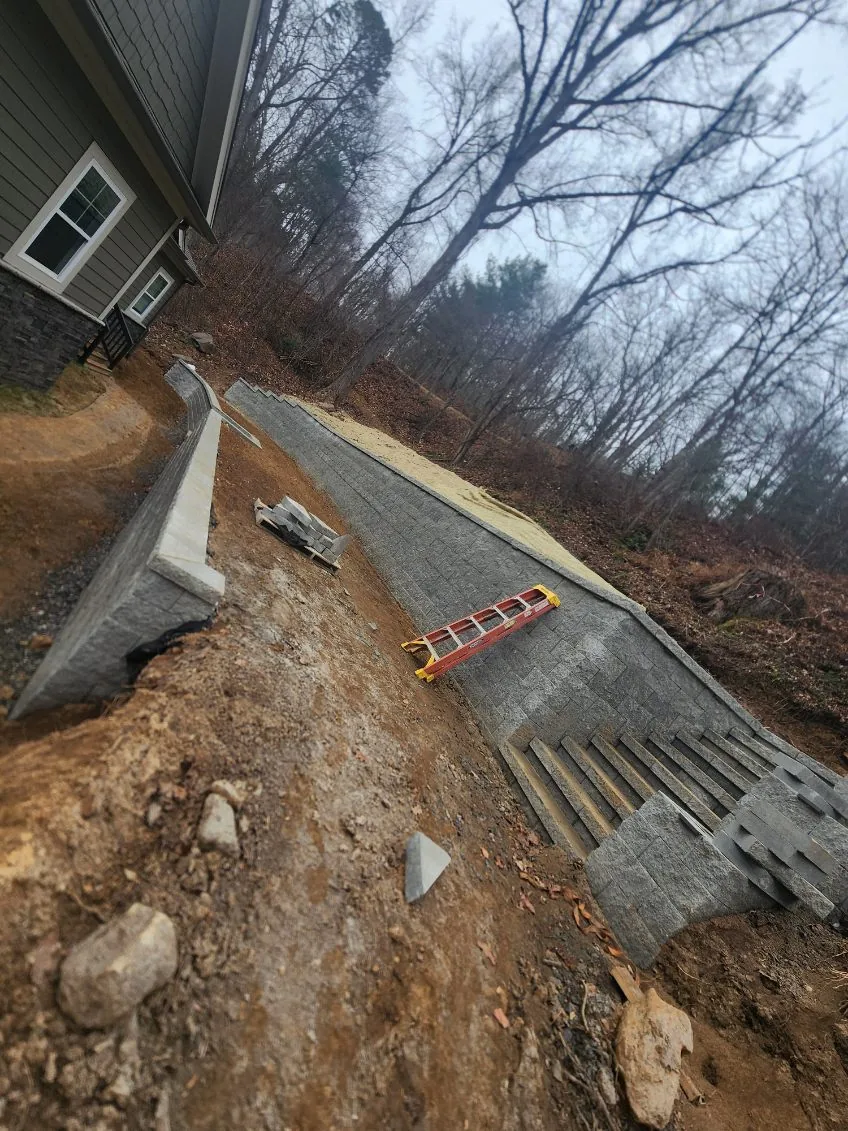
For context on the hardscape side, the Henderson County retaining wall cost breakdown uses the same logic — base prep and drainage line items separate a bid that holds from one that fails in two winters.
Codes, clearances, and the burner question
North Carolina's residential code, published through the International Code Council family of standards that the state adopts, treats outdoor fire features as an accessory structure question. That means local Henderson County review can trigger on setbacks, clearances to combustibles, and any permanent gas connection. A wood-burning pit on a residential lot usually clears with basic setback respect and no open-burn ban in effect; a piped gas burner is a utility connection and pulls in permitting. If your yard already has a propane tank or a natural gas stub, that shapes the build more than the stone choice does.
Open burning in North Carolina also runs through the state's air quality rules, administered by NCDEQ. Residential cooking and small recreational fires are generally exempt, but the exemption is about the fire, not about a contractor installing a gas line without the right inspection. Ask any builder to state plainly which parts of the job they pull permits for and which they don't.
Matching the build to the yard you actually have
Three common Etowah situations, three different answers. A flat subdivision backyard with clay subsoil wants a raised pit with a compacted gravel collar and a drain path away from the ring — the pit sits above grade so water never pools in it. A sloped lot that drops from the house to the tree line wants the pit cut into the grade with a short retaining edge on the downhill side, which is where the Etowah retaining wall contractors page becomes relevant because a fire pit seat wall on a slope is really a small retaining wall with a cap. A larger property with mature trees wants the pit placed on the downwind side of the house and clear of root zones, since digging a footing into a 60-year-old oak's root plate is a problem you cannot undo.
The fire pit builds we scope all start from the same question: is this a weekend gathering spot or a permanent outdoor room? A weekend pit can be dry-stacked and modest. A permanent one gets mortared joints, a proper footing below frost line, and a gas line that a licensed tradesman ties in. The price gap between those two answers is real and worth deciding before the first quote.
Water, weather, and why the base matters most
Henderson County's federal disaster record tells the relevant part of this story: 16 declared events touch this county across 1978-2026, and the overwhelming majority are storm and flood family. Etowah's position along the French Broad floodplain and its clay soils mean a fire pit base that doesn't shed water will heave, crack, and settle after one wet winter. The National Weather Service keeps the local precipitation and flood record, and it's worth a glance before committing to a low, flat pit design.
The practical rule: compacted base first, drainage second, stone third. Any builder who leads with the stone style before asking where the water goes is selling a look, not a build. And for any gas connection, confirm the tradesman carries the right state license — the NC Licensing Board for General Contractors sets the threshold, and utility work routinely crosses it.