The four-foot line that decides Lake Junaluska wall jobs
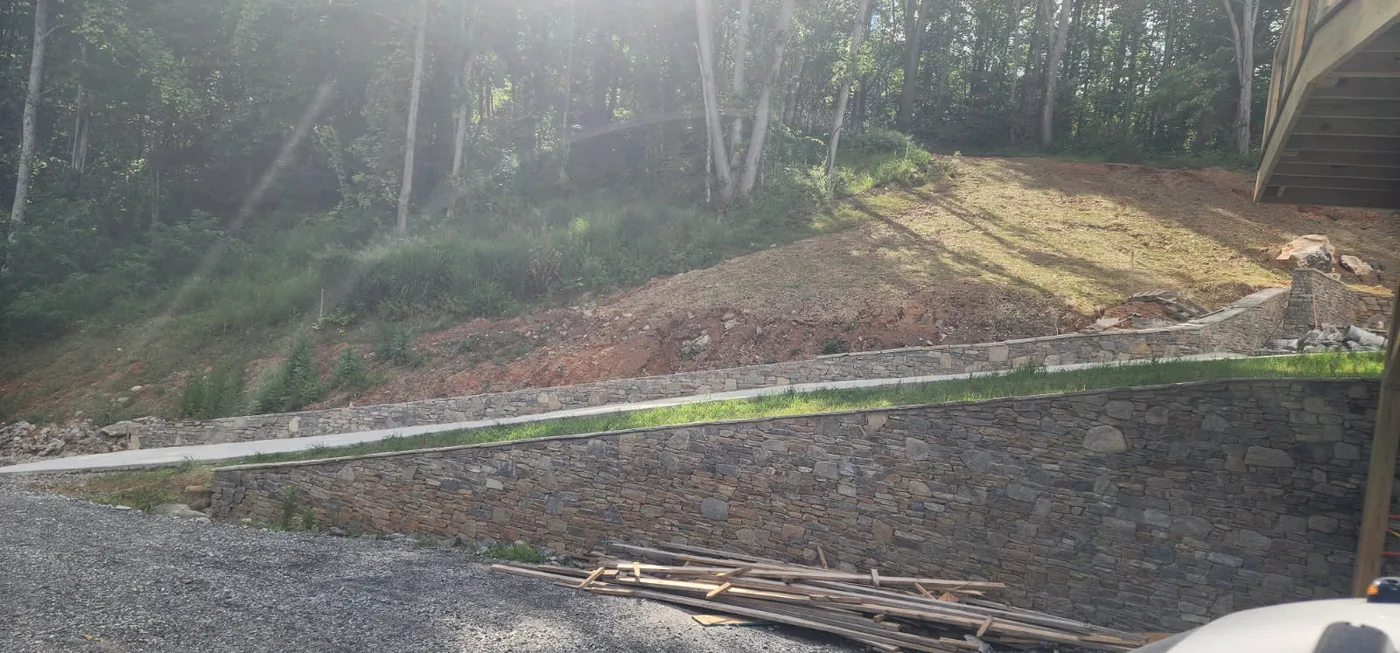
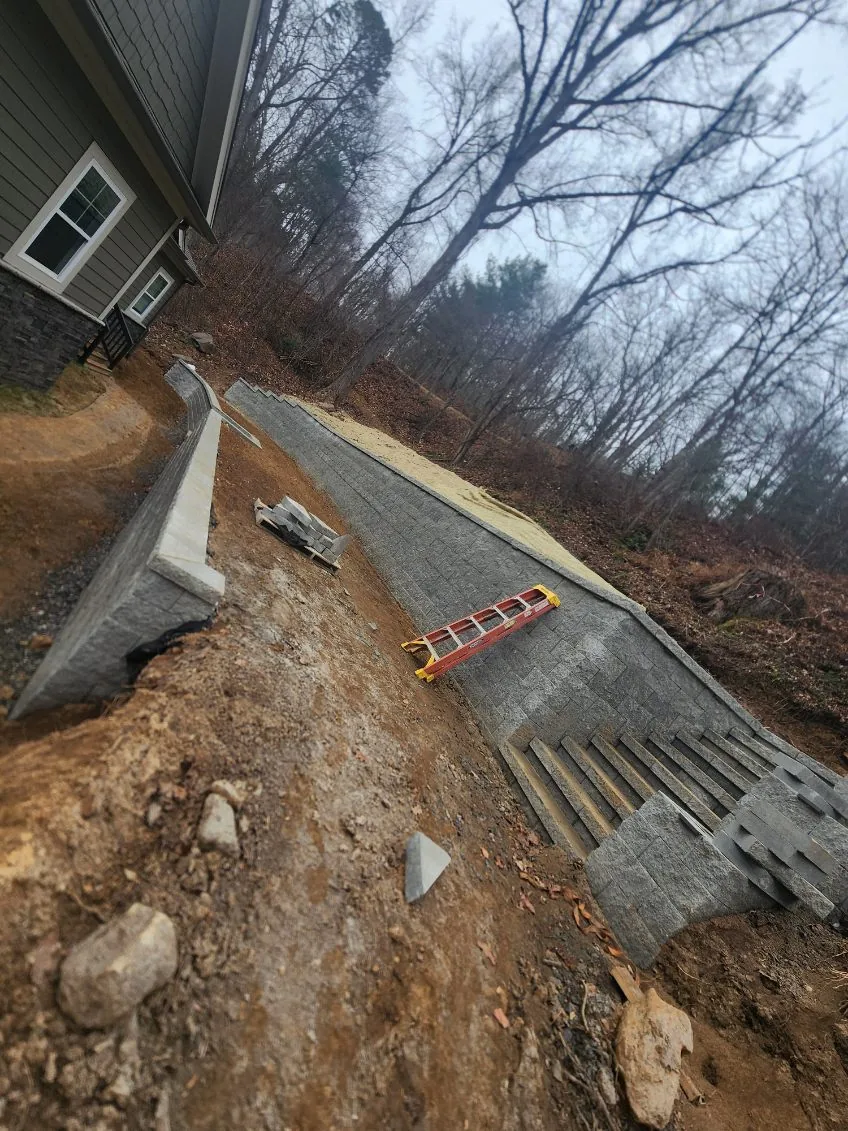
Walk any of the lanes around the lake and the retaining walls divide cleanly at one height. Below four feet, a wall is mostly a drainage and craftsmanship question. At four feet and above, measured from the bottom of the footing to the top of the wall, North Carolina steps in: that is the threshold where engineered design, stamped plans, and a permit typically enter the job under the state's adopted building code. Lake Junaluska's lakeside lots sit on the graded slopes left by the lake's shoreline, so a surprising number of walls that look modest from the street hit four feet on the downhill face. That gradient is where budgets quietly double.
The practical fallout: an engineered and permitted wall commonly adds $1,200-$3,500 in design, engineering, and inspection costs on top of the structure itself, and it moves the schedule from days to weeks. A tiered pair of three-foot walls, stepped back into the slope with proper drainage, often costs less than one five-foot wall and sidesteps the engineering threshold entirely. That design decision is the single biggest cost lever on most Junaluska yards, and it should be made before anyone orders block. Licensing thresholds for larger site work run through the NC Licensing Board for General Contractors, which is worth checking against any crew bidding significant structural work.
What patios, walls, and fire pits actually cost here
Haywood County pricing sits close to the middle of the Western North Carolina market, but Junaluska's access conditions push some jobs up: narrow drives, shared lake access, and hillside backyards where every pallet of pavers gets moved by hand or mini-machine. Expect the following bands for typical residential scopes, with the low end reserved for flat, easy-access sites and the high end for slope with engineered walls.
| Scope | Typical range |
|---|---|
| Paver or flagstone patio, 250-400 sq ft, flat access | $6,000-$14,000 |
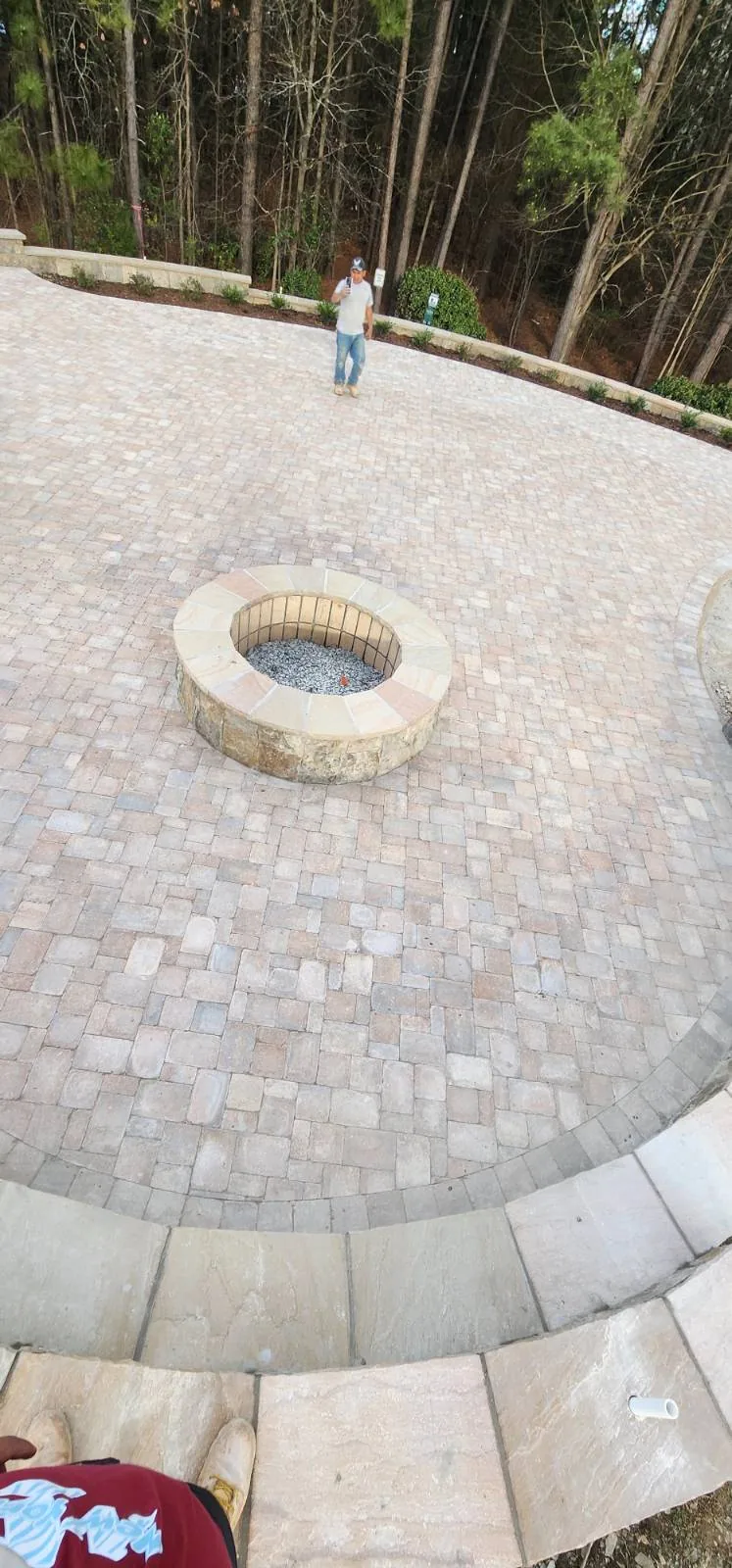
| Patio with steps, seat wall, or fire pit cut-in | $12,000-$22,000 |
| Segmental block retaining wall under 4 ft tall | $45-$70 per sq ft of wall face |
| Engineered wall 4 ft and taller (incl. design & permit) | $65-$95 per sq ft of wall face |
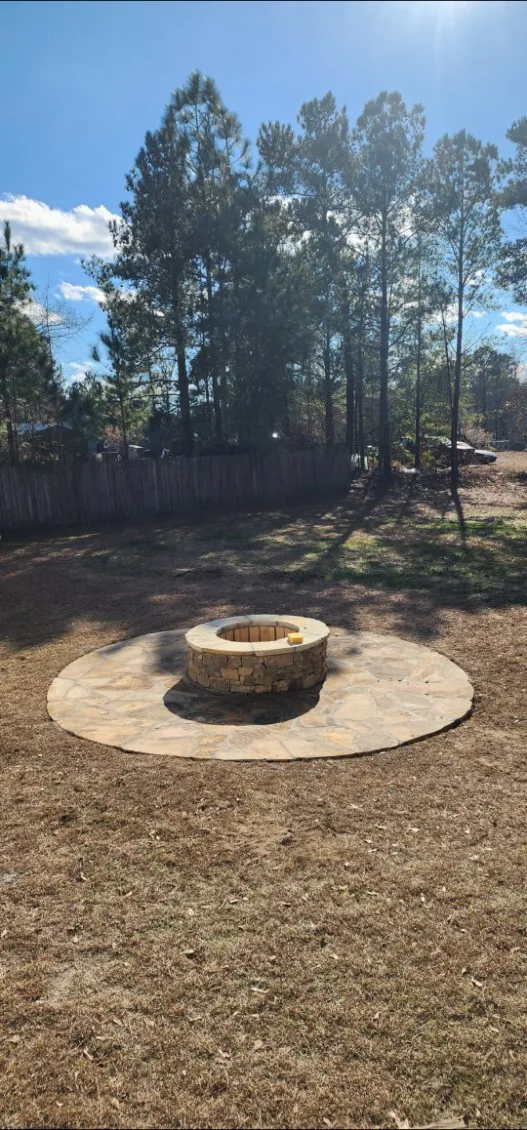
| Fire pit, masonry, with gas line or wood-burning insert | $2,000-$6,500 |
| Full backyard hardscape plan, tiered walls + patio + fire pit | $25,000-$60,000 |
The full county-by-county line-item picture lives in the Haywood County retaining wall cost breakdown, which is the honest place to start before requesting bids. Two rules keep Junaluska quotes clean: make sure the number includes excavation, base stone, compacted lifts, and drainage behind the wall, not just the finished face; and confirm whether engineering and permitting are carried by the contractor or come back to you as a separate line.
Water off the hill is the real hardscape problem
The federal disaster record for Haywood County is dominated by storm and flood events: 19 declared events reach this county across 1973-2026 of record, and a hardscape that ignores how water moves over the property will show the damage within a couple of seasons. Junaluska's terrain sends runoff down from the ridges above the lake and across yards whose previous owner never had to think about it. A wall without a footing drain and clean stone backfill becomes a dam; a patio poured flat against the house invites water under the slab. The fix isn't exotic, but it has to be built in: perforated drain behind the wall base, graded patio slope of roughly 1 to 2 percent away from the house, and a plan for where the water goes when it hits the bottom of the hill. National Weather Service outlooks at weather.gov are the local reference point for how heavy the rain loading actually runs in this part of the mountains.
The state takes drainage and erosion control seriously enough that larger projects may touch permitting under NCDEQ rules, particularly where work changes runoff toward a waterway like the lake. For anything within sight of the shoreline, check with the county before breaking ground. The Lake Junaluska retaining wall contractor guide walks through how to screen crews for drainage competence, not just stone selection.
What the stone and paving choice changes
Junaluska's housing stock runs from mid-century lake cottages to newer second homes, and the material palette splits accordingly. The mountain vernacular look leans toward native stone, irregular flagstone, and dark-toned segmental block that sits quietly against the hardwood canopy. Concrete pavers are the workhorse for patios: consistent thickness, uniform joint lines, easy repair if a section settles. Natural stone costs more in material and much more in labor because every piece gets fit on site, and the price difference for a 300-square-foot patio often runs into several thousand dollars.
Two choices that matter more than the surface material: base preparation and edge restraint. A paver patio is only as good as the compacted aggregate base beneath it, and an unsecured edge lets the field spread within a year. Ask any bidder how deep they excavate and how they confine the edges, and the answer tells you whether the patio will still be flat in five years.
Screening contractors before you sign
Hardscaping has a low barrier to entry in Western North Carolina: the same crew that pressure-washes a driveway can be bidding a retaining wall next week. Three questions separate them. First, ask what happens below the wall face and behind the patio base, because the answer reveals whether they understand how water damages hardscape in a mountain climate. Second, ask for the wall-height and engineering conversation up front, before any sketch or quote, so the four-foot threshold is priced honestly. Third, ask to see a completed job at least two years old and walk it in the rain, if you can; drainage failures show themselves then, and well-built work still looks intentional. When you're comparing scopes and want the general process laid out first, the hardscaping service overview is the right starting point.