Why Biltmore Forest jobs don't quote like Asheville proper
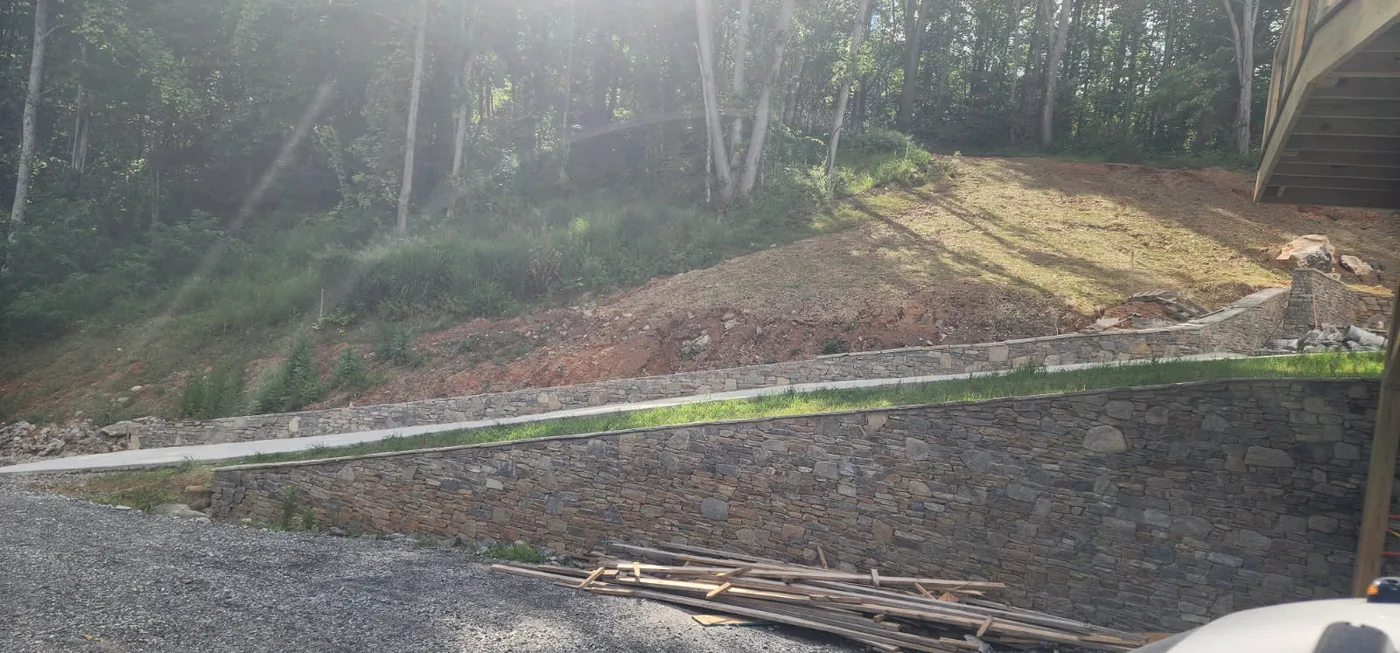
Drive the streets south of Biltmore Village and the difference is immediate: half-acre to two-acre lots, long curved frontages, mature hardwoods, and a grade that rarely sits still. Most Biltmore Forest parcels were subdivided from what was once the Vanderbilt estate's wooded perimeter, and the resulting lot shapes — deep, narrow at the street, wide at the back — push stone veneer work onto retaining walls, porch foundations, and chimney exteriors rather than the clean, flat house fronts common in West Asheville renovations. You order stone by the pallet, but you build it by the elevation.
The second local factor is that a large share of the town's housing is older masonry. Brick and stone that has been settled for decades presents a different substrate than new construction frame. Windowsills, lintels, and existing mortar joints must be read before a single scratch coat goes on, because matching a 1960s stone wall isn't about picking a color — it's about matching depth, joint profile, and coursing rhythm.
What actually drives the price of a stone veneer project here
Three variables dominate: wall area, wall height above grade, and how much prep the substrate needs. A curved knee wall across a Biltmore Forest frontage might run 40 linear feet and finish at three feet; the same footprint in a neighboring town could sit flat and square. Rough openings, corners, caps, and exterior chimney runs each carry their own labor multiplier. Freeze-thaw exposure on exposed west-facing walls off the ridge also matters — the NC residential code treats moisture management and flashing details as code items, not extras, and the International Code Council publishes the family of provisions most local inspectors reference.
Below, the honest regional bands for scopes common in Buncombe County. Treat these as planning ranges; a real number follows a site visit.
| Scope | Typical range |
|---|---|
| Single accent wall (100–200 sq ft, flat grade) | $9,000–$16,000 |
| Full house front facade (400–700 sq ft) | $18,000–$38,000 |
| Exterior chimney veneer (full height) | $6,000–$14,000 |
| Retaining wall, veneered face (per sq ft of face) | $45–$90 |
| Entry column and cap stone set | $2,500–$7,500 |
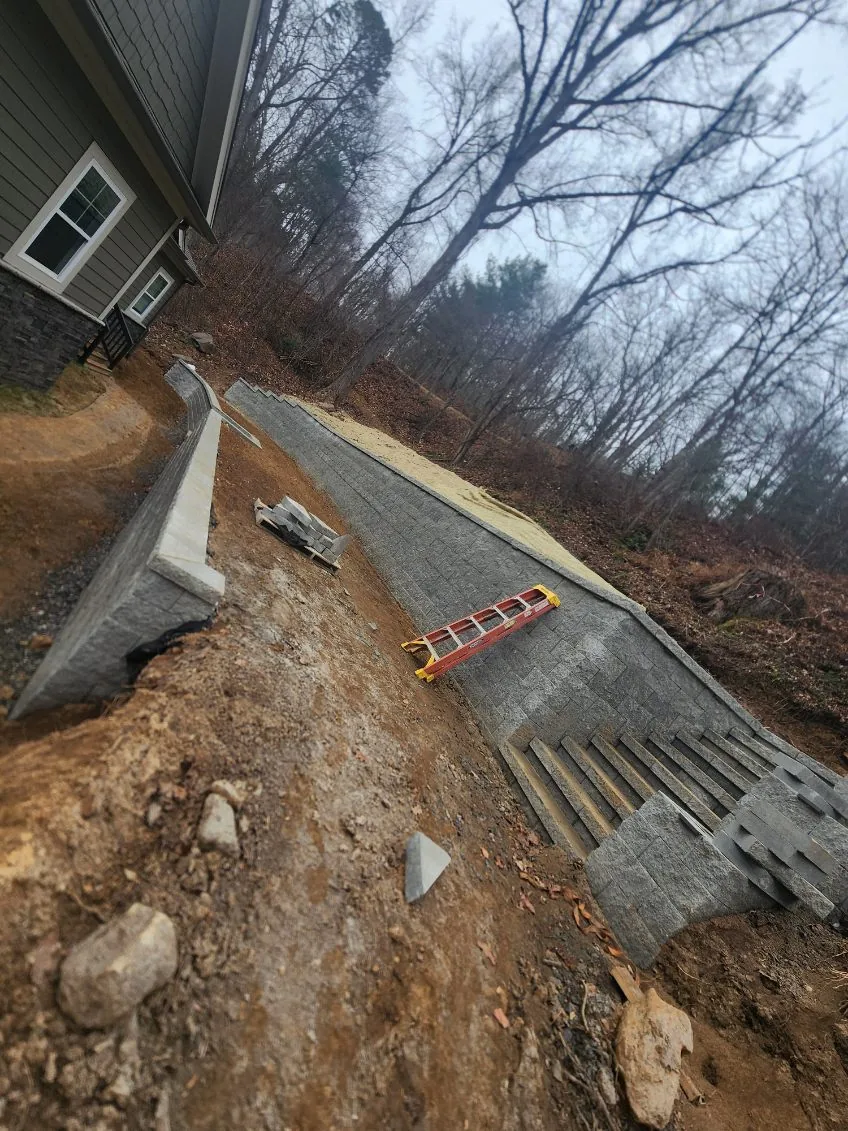
If your project includes a structural retaining wall behind the veneer, the wall itself prices separately — see the Buncombe County retaining wall cost breakdown for those line items, because combining the two into one bid is where homeowners most often overpay.
Water, slope, and the substrate nobody sees
Biltmore Forest sits in a bowl of ridges draining toward the French Broad River, and the federal record reflects it: 19 declared events have touched Buncombe County across 1973-2026, most of them storm and flood family. For a veneer project that matters in a specific way — water that reaches the back of the scratch coat causes efflorescence, spalling, and eventual delamination, and the fix is not more mortar, it's proper weep screeds, drainage planes, and flashing. Any bid that doesn't mention those details is a bid that will look fine for two years and wrong for the next twenty.
Before the veneer conversation, we ask about the retaining wall, the gutter discharge, and where uphill runoff goes. A veneered wall over a failing base is money spent twice. The retaining wall contractors serving Biltmore Forest page covers how the structural side sequences with the finish side, which matters when both trades work the same elevation in the same season.
Stone type, sourcing, and mountain-region expectations
Biltmore Forest expectations run conservative. Thin-cut natural stone in Tennessee fieldstone and North Carolina granite palettes dominates the town's newer work because it reads as indigenous. Full-bed stone — the thick, load-bearing cousin — is reserved for structural applications and is priced and installed very differently. Manufactured veneer has improved dramatically and now competes on both appearance and durability, and when it includes recycled content it can contribute to a project's environmental profile under EPA guidance on recovered materials.
What doesn't change across stone types is the sequence: moisture barrier, lath, scratch coat, stone, grout, and cap. Compressing that sequence to save days is the single most common cause of callbacks in this trade. Ask any crew you interview how they handle corners — a true corner stone set shows the coursing wrapping the wall, not a caulk line doing the work.
Licensing thresholds and how to vet a crew here
North Carolina draws a general contractor licensing line by project value, and the NC Licensing Board for General Contractors publishes the current threshold and the searchable license roster. Stone veneer alone may fall below the line, but the moment a project bundles structural work, the rules typically apply — which is common in a town where veneer and retaining walls are usually one plan. Ask for the license number, the insurance certificate, and at least two completed projects on similarly sloped ground. Biltmore Forest has no flat-lot shortcuts; a crew that has only worked gentle grades will struggle with the elevations the town actually has.
Also confirm how the crew intends to protect existing landscaping during the build. On a wooded lot with hundred-year-old oaks, staging damage is a real cost, and the best crews plan truck paths and stone drops before the first pallet arrives. When you're ready to compare bids on equal footing, the stone veneer service overview lists the scope items every quote should include.