Access changes everything before a single stone is set
A pond build off Lakeshore Drive and one on a switchback gravel driveway above Waynesville can look identical on a sketch and price thousands apart. Around Lake Junaluska, the county's terrain does most of the negotiating. Stone is heavy, and every ton that has to be moved by machine up a grade costs less than a ton that has to be wheeled by hand down a slope so soft a loaded dump trailer would rut it to the axles. That is why the first honest question a good builder asks is not what the waterfall should look like, but where the truck stops and where the digging starts.
Haywood County's stone is not imported from a catalog in the abstract. It comes from regional quarries, and the haul distance plus the number of trips a truck can actually make onto your property sets a floor under the price before design is even discussed. A wide, gently graded driveway near the bottom of the valley off US 19 or NC 209 keeps those trips cheap. A steep, narrow, wooded approach near the lake's higher residential rows can turn one day of stone delivery into three, and the labor line grows accordingly.
This is also where North Carolina licensing thresholds start to matter: once a project crosses the general contracting dollar figure, or once a retaining structure is tall enough to need engineering, the scope stops being a decorative install and starts being a small construction job. Knowing that line early keeps a backyard pond from quietly becoming a permit problem.
What stone water features actually cost here
Prices below reflect typical regional bands for the trade in and around Haywood County, not quotes. They move with access, grade, liner size, pump size, and how much of the stone has to be placed by hand. A feature that looks small on paper can carry the same excavation cost as a larger one if the digging is tight.
| Scope | Typical price range |
|---|---|
| Small bubbler or single-rock falls, short run | $3,200–$5,500 |
| Mid-size pond and cascade combination | $6,000–$11,000 |
| Larger multi-tier pond with wide access | $11,000–$18,000 |
| Hand-carry stone up steep grade (adds to above) | $1,500–$4,000 |
| Integrated retaining wall behind a raised feature | Priced per the county wall table |
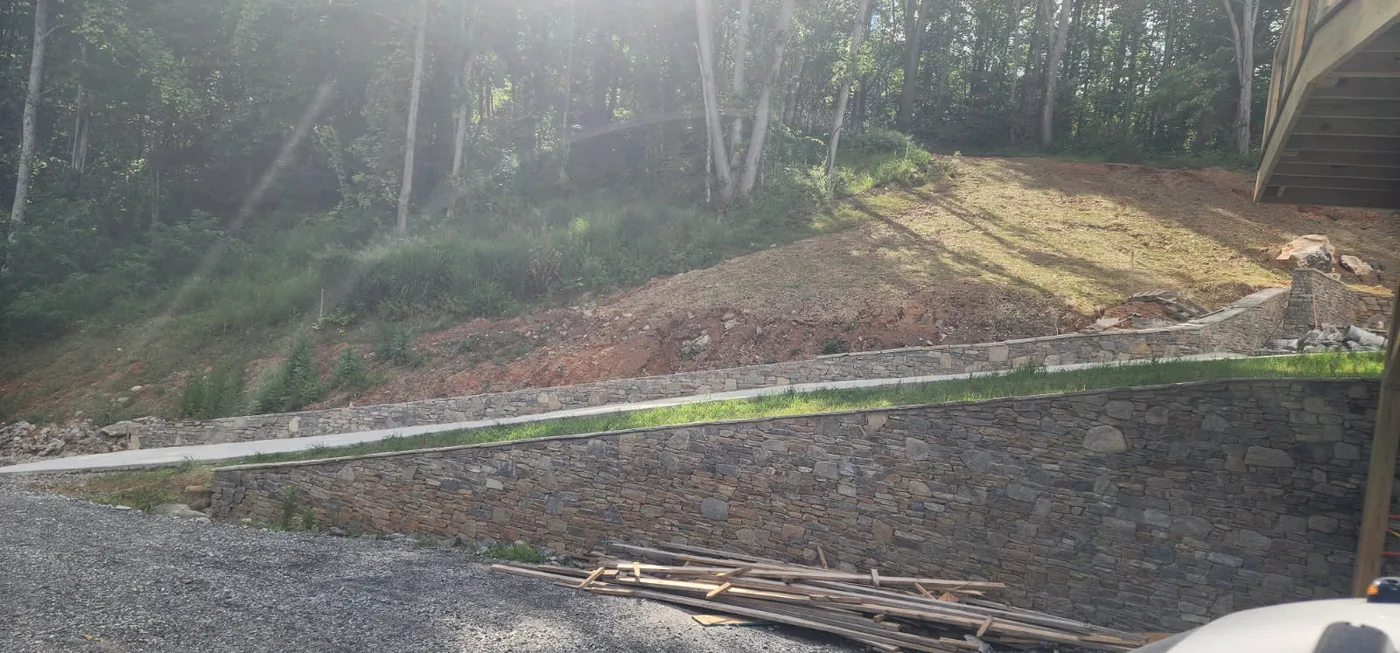
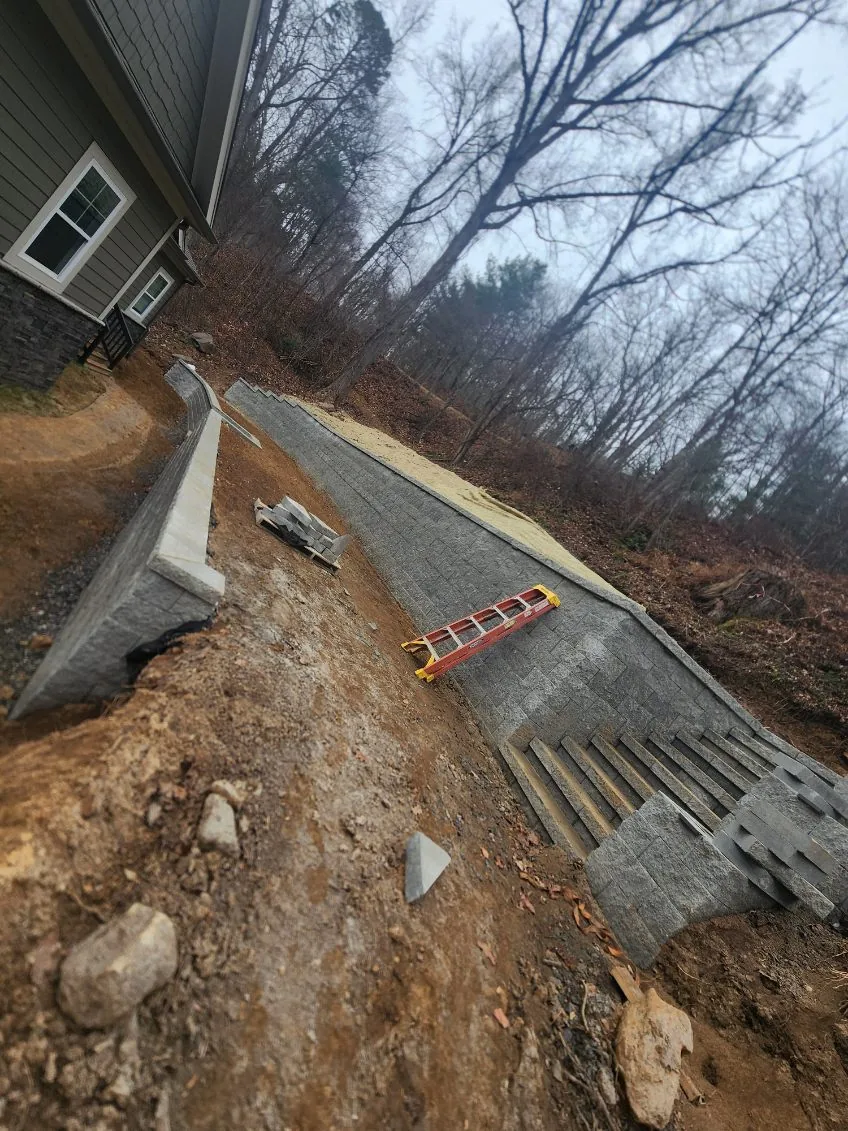
The last row is worth reading carefully. A raised pond or a waterfall set into a slope almost always needs a retaining structure, and retaining walls follow their own logic and their own pricing. The Haywood County wall cost breakdown covers how those numbers are built, and it pays to understand it before a pond quote bundles a wall into a single lump sum you cannot itemize.
Siting a falls into a mountain county slope
Lake Junaluska sits in a bowl of the Blue Ridge, and the water table, the freeze-thaw cycle, and the runoff from uphill neighbors all write the design whether the builder admits it or not. A waterfall pushed into the hillside behind the house needs a pond liner that will survive the ground moving, a pump sized for the total lift and run, and a spillway that lives through the freeze-thaw cycle that defines western North Carolina. The International Code Council codes carried by the state on grading and stormwater give planners a predictable frame here; runoff that pours through a pond instead of around it is the most common reason a beautiful first-year install becomes a repair the second year.
Honest builders in Haywood County will spend real time on the water test. Where does your gutters discharge? Where does the uphill neighbor's runoff go? Does the pond have an overflow, or will the next downpour from a Blue Ridge cell decide it for you? The trade-level answer is that a pond without a planned overflow point is not finished. The weather here has told that story often enough that the National Weather Service's own records on mountain rainfall are part of why water-feature installation in the region is a wet-season-aware trade, not a cosmetic one.
Ponds, grading, and where storm water is allowed to go
Haywood County's federal disaster record — 19 declared events over 1973-2026, overwhelmingly storm and flood family — is the honest context for any water work here. That history does not forbid ponds or waterfalls; it just means the design has to account for the county's actual rainfall rather than an average. An overflow that is buried or missing is the same failure waiting either way.
On larger properties, moving the volume of dirt a big pond requires can trigger grading and stormwater expectations. The North Carolina Department of Environmental Quality and your county planning office are the reference points for what crosses into a permit or a sediment-control plan. A good stone crew builds the feature; a good project also knows when the grading is large enough to bring in a civil set of eyes. Mixing those up is how a weekend water garden ends up flagged, and how a legitimate large build gets slowed down unnecessarily.
For the smaller builds most Lake Junaluska homeowners actually want, the standard is simpler: controlled overflow, an accessible pump vault, a skimmer or intake you can clean, and stone set so it does not shift on the first freeze. Those four items decide whether you are calling someone in three years or in ten.
Choosing a crew on this side of the county
Ask a stone crew two questions before looking at a portfolio. First: how do they move stone onto a property like yours, and how do they decide when the machine is not worth the damage it will do? That answer tells you whether they have priced the haul honestly. Second: what does the overflow do in the worst rain event they have seen on a job? If the answer is vague, the design has a hole in it.
The rest is normal due diligence. Written scope, insurance, a real start date, and a clear line for who handles any wall or grading work that strays into licensed territory. The EPA guidance on stormwater and containment is useful background even for a residential pond, because the principle that runoff should go where you decide, not where gravity decides, is exactly what separates a feature that lasts from one that fights the hill every spring. When a project includes a real retaining component, the local retaining wall contractor page is the right cross-reference for how those crews are vetted, and the broader stone waterfalls and ponds service overview lays out what a full build actually includes from start to finish.