What actually drives the price on a Laurel Park yard
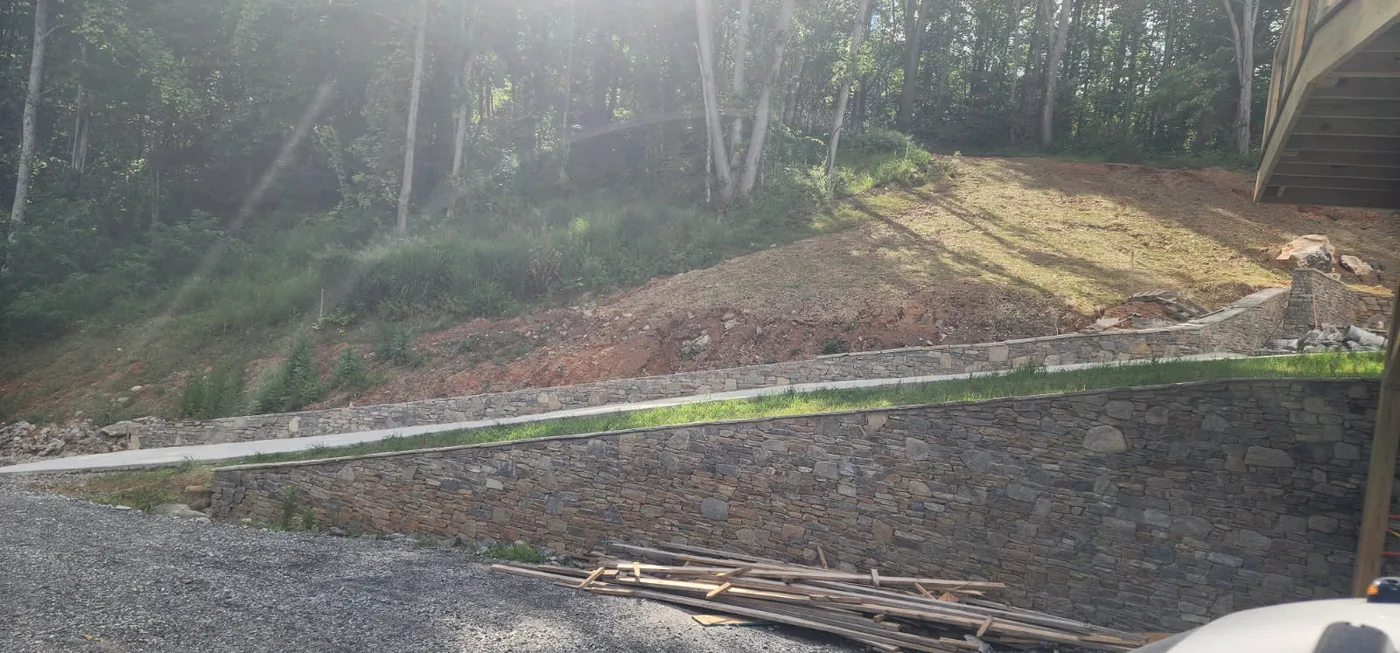
Almost no lot here is flat, and that single fact writes most of the estimate. Laurel Park climbs the ridges south of Hendersonville, so a patio that would be a straight dig-and-pour in a flat subdivision becomes a cut-and-fill project with a retaining edge, a drainage plan, and more base stone than the homeowner expected. The line items that move a Laurel Park number, in order of impact: excavation and haul-off (rocky, root-bound hillside soils), retaining structure (either at the patio edge or uphill of it), drainage (French drains, swales, and where the neighbor's runoff exits), base and compaction, then the surface material itself.
Notice that the pretty part — pavers, flagstone, wall cap — is usually the smallest swing. Two bids that differ by eight thousand dollars are almost never arguing about stone. They are arguing about how much dirt gets moved and how the water leaves.
On a typical Laurel Park lot off Laurel Park Highway or up toward Jump Off Rock, the driveway is often steep and narrow, which adds another quiet line item: access. A mini-excavator may fit, a full-size machine may not, and every yard of base stone that has to be moved by hand or by conveyor adds labor hours. Bids that ignore access tend to come back as change orders once the crew sees the site.
Soil matters too. Hillside ground here is often a mix of clay, decomposed granite, and rock ledges that show up mid-dig. When a ledge appears where the patio was supposed to sit, the options are to pin into it, break it out, or redesign the layout around it. None of those are free, and none of them show up in a bid that was priced from a satellite photo.
The line-item picture, in ranges
| Scope | Typical range | Main cost mover |
|---|---|---|
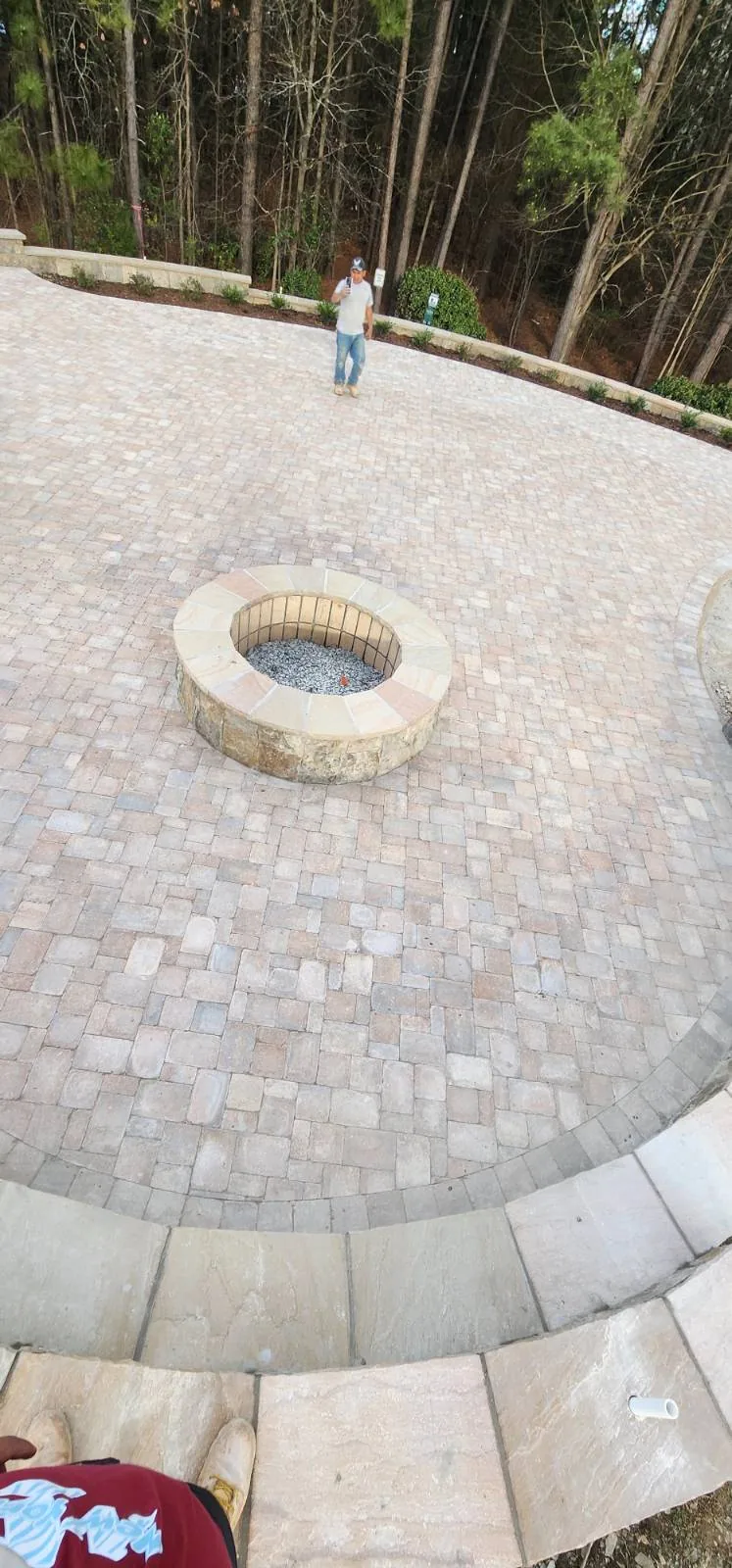
| Paver patio, simple grade, 250–400 sq ft | $6,000–$13,000 | Base depth and access |
| Patio with cut-and-fill on a slope | $12,000–$22,000+ | Excavation, retaining edge |
| Natural stone or flagstone surface | adds $8–$25/sq ft over pavers | Material and hand-setting |
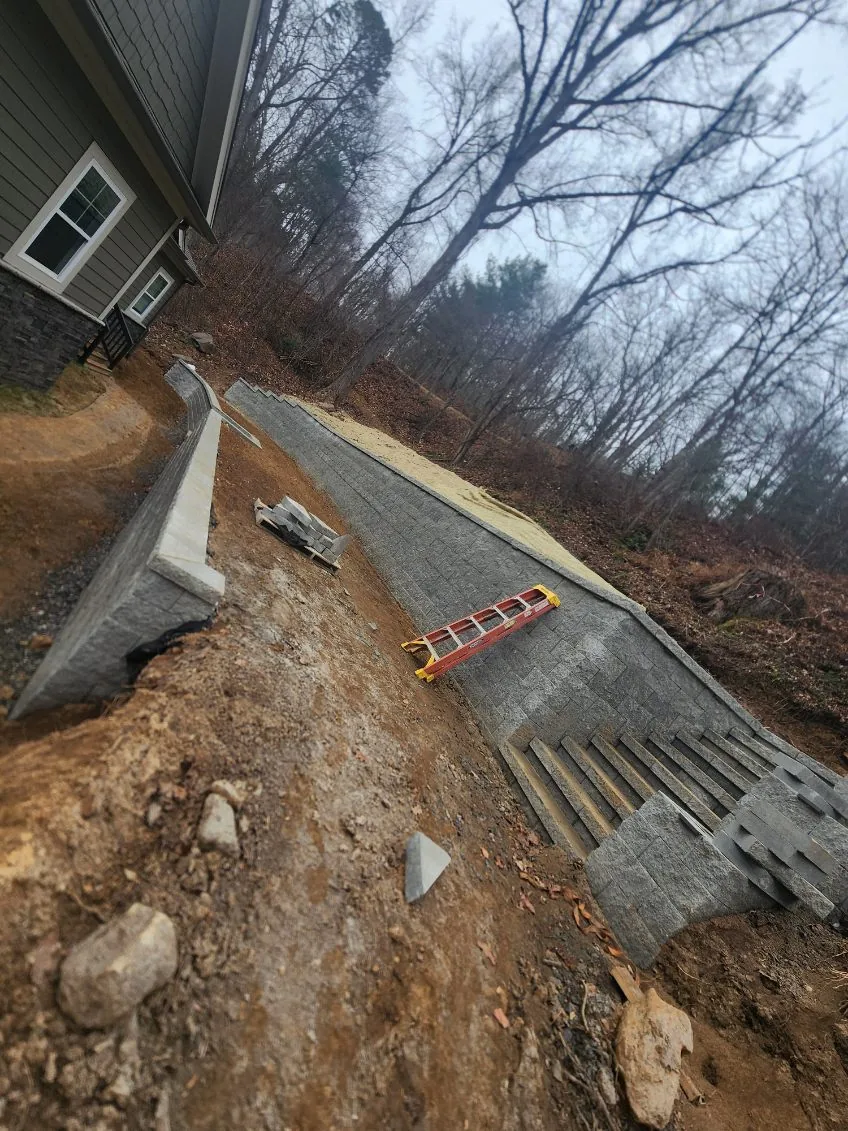
| Segmental retaining wall, under 3 ft | $35–$55/sq ft of face | Block type, backfill |
| Engineered wall, 3 ft and over | $55–$75+/sq ft of face, plus engineering | Design, geogrid, drainage |
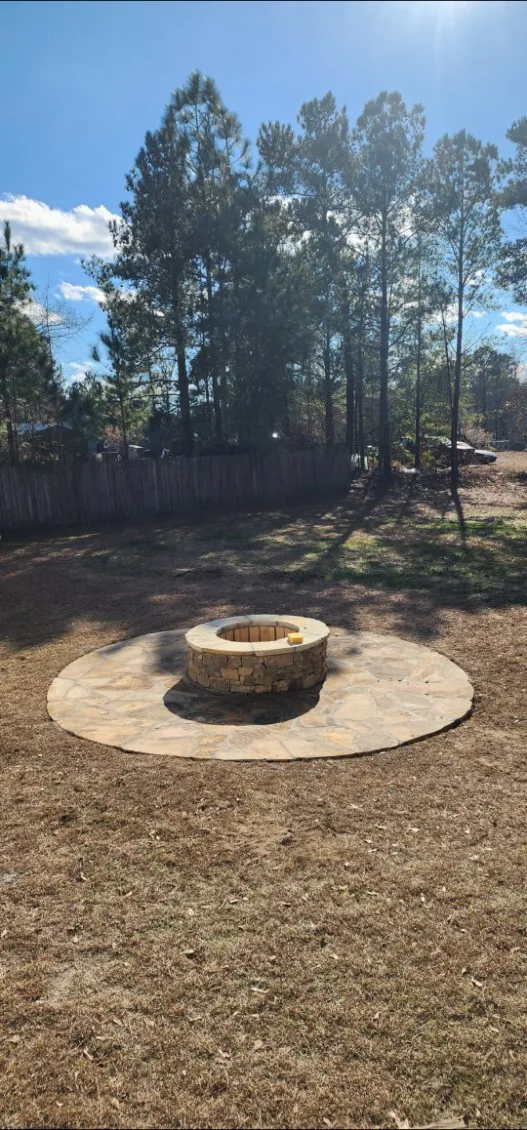
| Fire pit with seat wall | $1,500–$6,500 | Gas line, stone, seating run |
| Drainage tied to the build | $1,200–$5,000 | Run length, outlet |
These are working regional bands, not quotes. The full Henderson County wall cost breakdown goes deeper on the wall rows, since walls do most of the arithmetic on a hillside here.
One pattern shows up again and again in Laurel Park: the wall is not an add-on, it is the thing that creates the flat space in the first place. A 20-foot-by-20-foot patio on a 15 percent slope needs either a cut into the hill or a fill held by a wall, and often both. That is why a patio and a wall are frequently priced as one scope here, and why comparing a Laurel Park patio bid to a flat-lot patio bid from somewhere else is apples to oranges.
Water is the whole conversation on these ridges
Henderson County has taken repeated federal disaster hits over the record span — 16 declared events across 1978-2026, heavily storm and flood family. That history is not trivia for a hardscape build; it is the design brief. When the ground above your patio sheds toward the house, an improperly drained wall becomes a dam, and a patio base becomes a bathtub. This is why the slope and drainage line items exist, and why a bid that omits them is incomplete rather than cheap.
Good practice follows code and manufacturer guidance rather than improvisation: retaining structures get proper base, compaction, and backfill drainage, and any wall the builder can't safely hand-stack goes to an engineer. The International Code Council standards for segmental retaining walls are the reference point. In watershed-sensitive spots around Laurel Park, stormwater and sediment rules can also apply, and the EPA maintains the national stormwater guidance those local rules draw from.
In practice, that means a Laurel Park wall almost always includes gravel backfill, a perforated drain at the base, and a daylight outlet somewhere downhill. If a bid shows a wall with no drainage detail, the missing piece will show up as a wet, leaning, or stained wall within a few seasons. The drainage run itself can be the difference between a $1,200 and a $5,000 line on the same wall, depending on how far the water has to travel to reach a safe outlet.
When the job needs a licensed contractor
Small decorative work often doesn't cross the licensing threshold. But hardscaping on a hill regularly does: retaining walls over a certain height, structural site work, and anything pulled under a general contract can trigger North Carolina licensing rules. The place to check is the NC Licensing Board for General Contractors, which publishes the thresholds and lets you verify a contractor before you sign. If a build includes gas to a fire pit, the plumbing and fuel-gas side falls under the NC State Board of Examiners of Plumbing, Heating and Fire Sprinkler Contractors. Two-minute checks, and they separate the crews who know the rules from the ones who learn them on your job.
For materials, layout, and what a first visit should cover, our hardscaping overview lays out the process, and the Laurel Park retaining wall contractors page is the place to start if a wall is the centerpiece.
It also helps to know what a first site visit should actually cover. A good one measures the slope, finds where water enters and leaves the property, checks access for equipment, and talks through how you want to use the space. A visit that only discusses stone color and square footage is missing the parts that determine whether the build holds up.
How to read a bid on a slope lot
Ask three questions. What happens to the water that currently crosses this spot? How deep is the base, and how is it compacted? And what supports the uphill edge? A crew that answers all three with specifics is pricing the real job. A crew that answers with the material name is pricing a photo. On a Laurel Park hillside, get the drainage and the retaining plan in writing before anyone orders stone, because those two lines decide whether the build looks the same in five years as it does the week it's finished.
It also pays to ask what happens if rock is hit during excavation, and whether that is included or billed as extra. On these ridges, hitting rock is common enough that it should be a known possibility, not a surprise. A bid that acknowledges site conditions honestly is usually a bid from a crew that has worked this terrain before. A bid that treats every lot as flat is a bid that will be renegotiated in the first week.