How a Waynesville fire pit build actually runs, start to finish
On most Waynesville jobs the calendar looks like this. Day one is layout and utility scanning: paint the circle, confirm property setbacks, and call in the locate so nobody drives a shovel through a gas or irrigation line. Day two is excavation and base — dig below frost influence, compact a crushed-stone base in lifts. Day three or four is the masonry or block course work, and that's where the clock really depends on material. A dry-stacked kit may be one afternoon of setting; a mortared stone build with a cap, veneer, and a gas burner insert can run five to eight working days. Cure time for mortar and any counter or cap adhesive tacks on another day or two before the first fire.
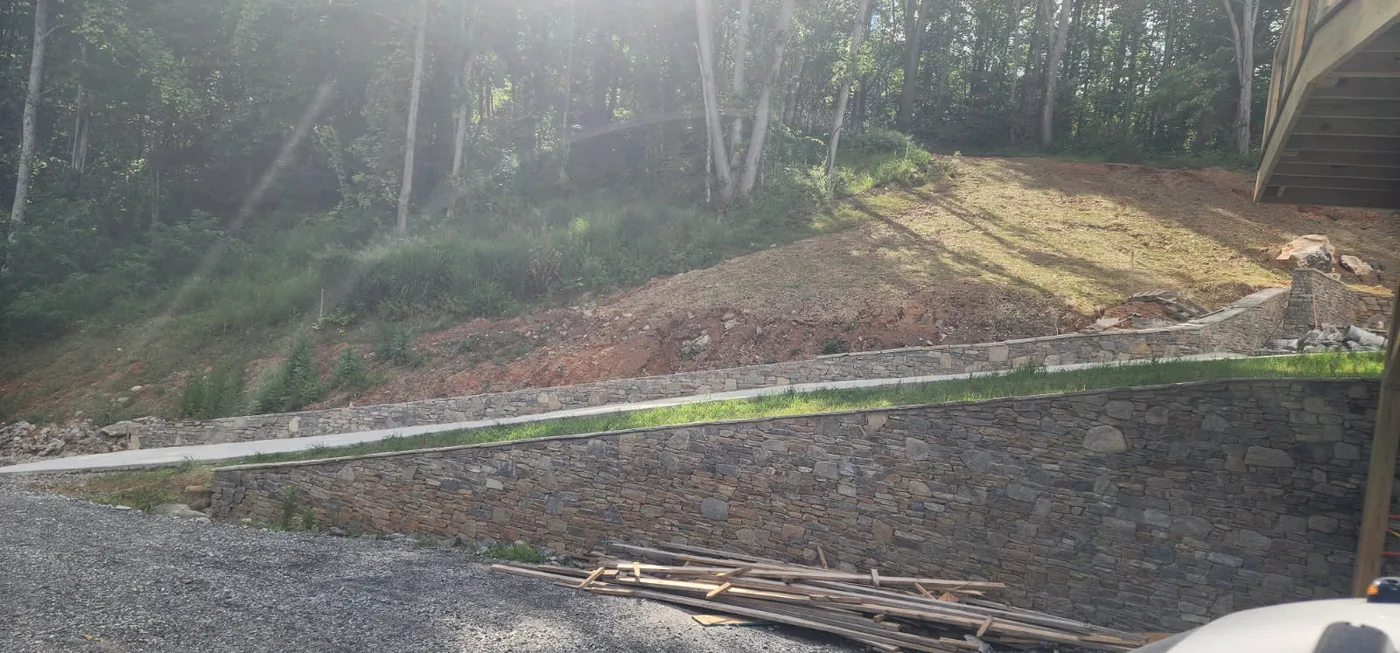
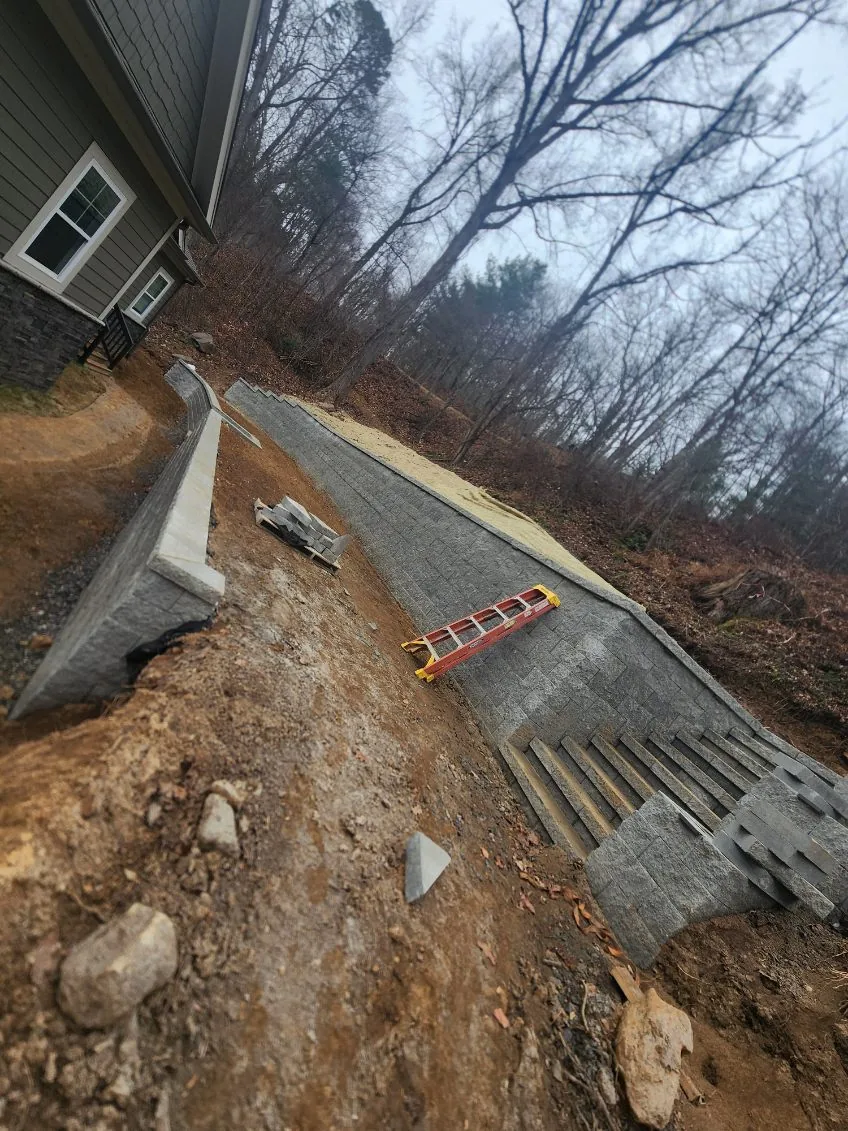
Terrain is the variable that reroutes everything here. Waynesville yards climb and drop — a lot split off Russ Avenue or a hillside lot near the recreation park rarely has flat ground waiting. If the site needs a level pad, that's a grading day added before the first stone is set, and it's why our Haywood County retaining wall cost breakdown is relevant reading: many fire pit projects turn into a terraced hardscape project, and the wall gets built before the pit, not after.
What the money buys: scope against price range
Quotes in this valley swing on four things — fuel, material, base prep, and access. Use the table below as a working benchmark, not a bid.
| Scope | Typical range | Timeline |
|---|---|---|
| Precast or block kit on existing level pad | $600-$1,800 | 1-2 days |
| Mortared block pit, gravel base, cap | $1,800-$3,500 | 3-5 days |
| Natural stone pit, mortared, with seat wall | $3,500-$7,500 | 1-2 weeks |
| Gas-fired insert with line and burner | +$1,200-$3,000 | +2-3 days |
| Graded pad or terrace on slope lot | +$800-$4,000+ | +1-5 days |
One honest note: a pit on a steep Waynesville lot can cost more than the pit. If the ground has to be cut, retained, or drained first, that work is the real project. Get the sequencing priced separately so you can see which line items are the fire feature and which are the site.
Stone, block, or steel: matching material to a mountain yard
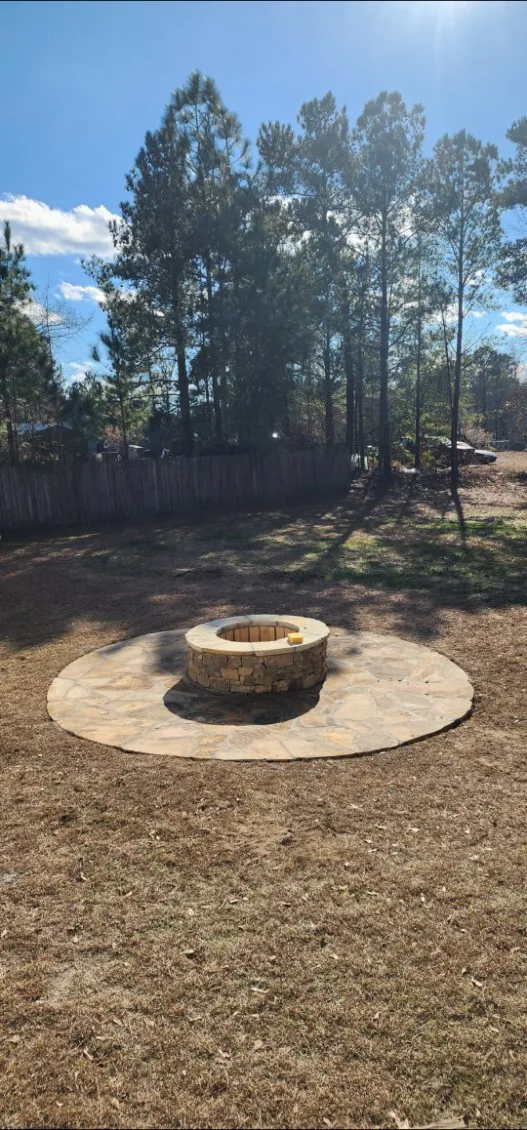
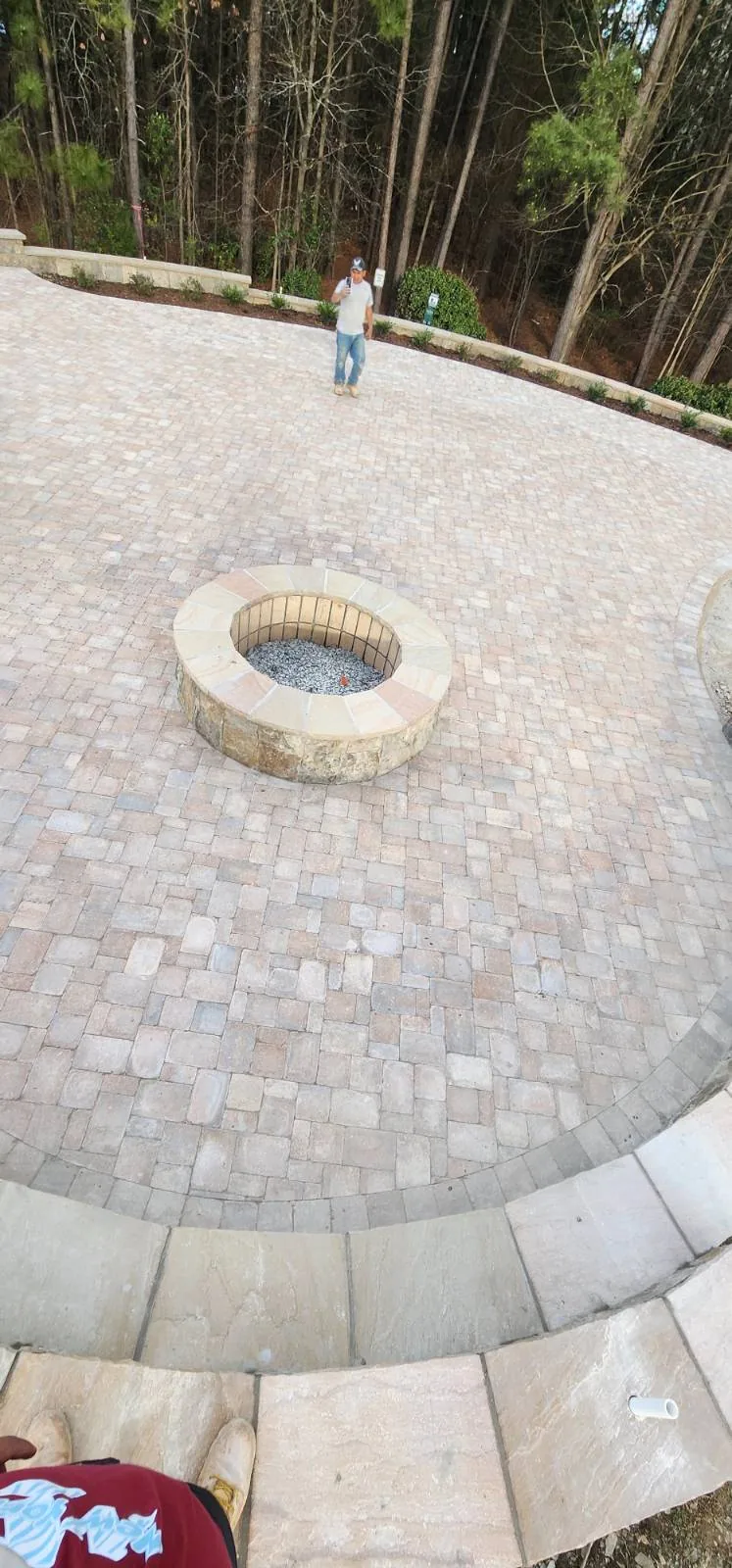
Local stone is the obvious emotional pick and a defensible practical one — a mortared fieldstone or Tennessee-style stacked pit handles freeze-thaw cycling better than thin veneer over a kit shell, and it can be repaired course by course instead of replaced whole. Block units are faster and cheaper and look clean, but they need a genuinely flat, compacted base or the joints open in a season or two. Steel inserts save money and set quickly, but in an exposed Waynesville yard with wind and wet snow, they rust and they get replaced, not repaired.
Whatever the material, the governing document for setback and burn safety is the adopted code family the county enforces, published through the International Code Council and applied locally. That's why the pit gets measured off the structure line and the tree canopy before anybody orders stone. If you want the material comparison in more depth before you commit, our fire pit design and material guide walks through the same tradeoffs we quote from.
Water, slope, and the weather record behind most rebuilds
A fire pit that fails in Haywood County usually fails from underneath. Saturated soil heaves a base that wasn't drained; runoff off a hillside cuts a channel and the ring settles out of level; the cap cracks, then water gets in, then a winter freeze opens it further. The county's federal disaster history makes the point — 19 declared events span 1973-2026 here, mostly storm and flood family. That is a lot of water cycling through the same soil your pit sits on.
So the ordering discipline matters: grading and drainage first, base second, masonry third, gas line fourth, fire last. If a builder proposes to set the ring before answering where water goes, that's the tell. General contractors crossing the state's cost threshold for a full hardscape build should be licensed — the rules live at the NC Licensing Board for General Contractors — and any open-flame feature should be positioned with defensible clearance from structures and dry vegetation per the applicable fire code.
Questions to settle before the first stone is placed
Four decisions drive the whole calendar. Fuel: wood is cheaper to build and free to run; gas costs more upfront and ends the ash and the smoke complaints. Size: most family use lands in the 36-44 inch inside-diameter range, and bigger means more stone, more base, more curing time. Seating: bench walls and capstone add a day or two each and change the excavation footprint. Access: if a machine can't reach the backyard, everything is hand-carried, and that shows up in labor days.
Then there's the sequencing partner question. If the yard needs a wall, terrace, or steps to make the pit sit right, comparing retaining wall contractors in Waynesville before signing a fire pit contract is the move — one crew doing the whole sequence usually beats two crews handing off mid-excavation.