Access is the first quote question in Hot Springs
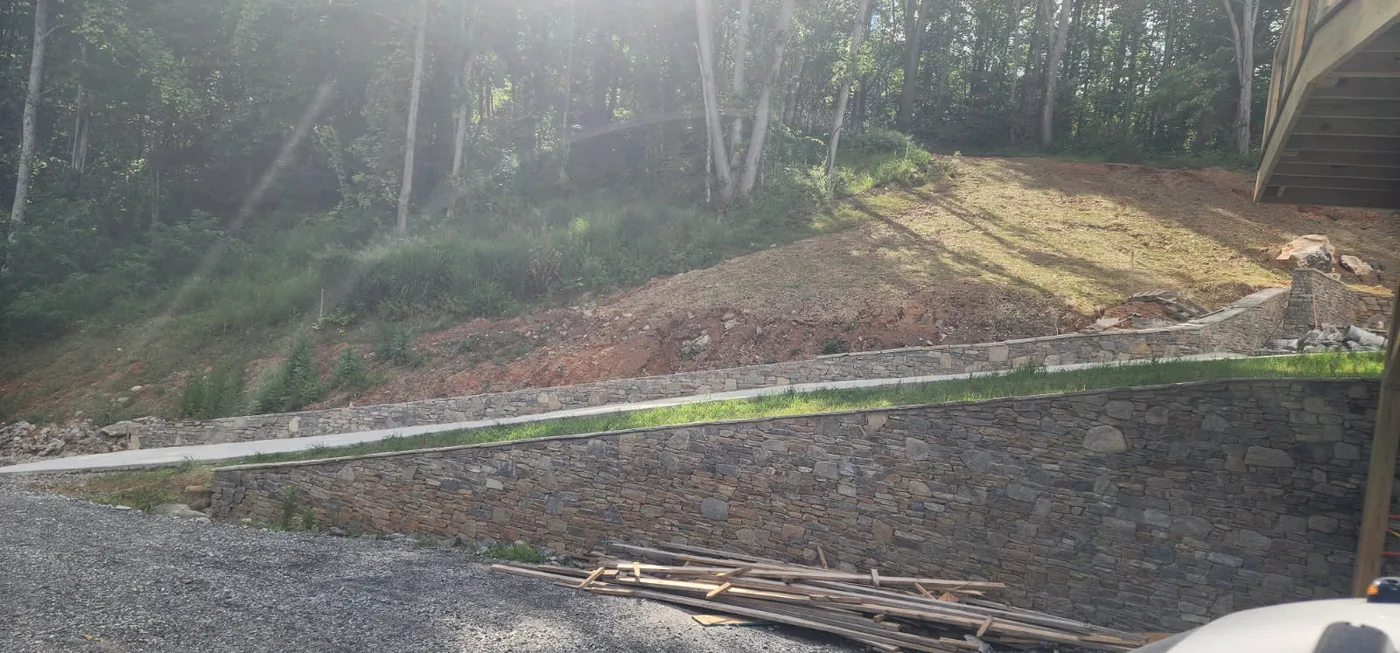
Hot Springs sits where the French Broad cuts through Madison County, and the roads climbing away from the river tell the story: switchbacks, single-lane gravel, driveways that end in a switchback no tandem-axle truck will take. Before any mason talks stone, they should ask how a machine and a pallet of material actually get to the work area. Distance to the nearest supplier matters too; the run in from Marshall or Weaverville adds haul time that a flatland quote never carries. A wall at the top of a steep gravel drive can cost meaningfully more than the same wall beside a paved turnaround, and that gap is access, not stone.
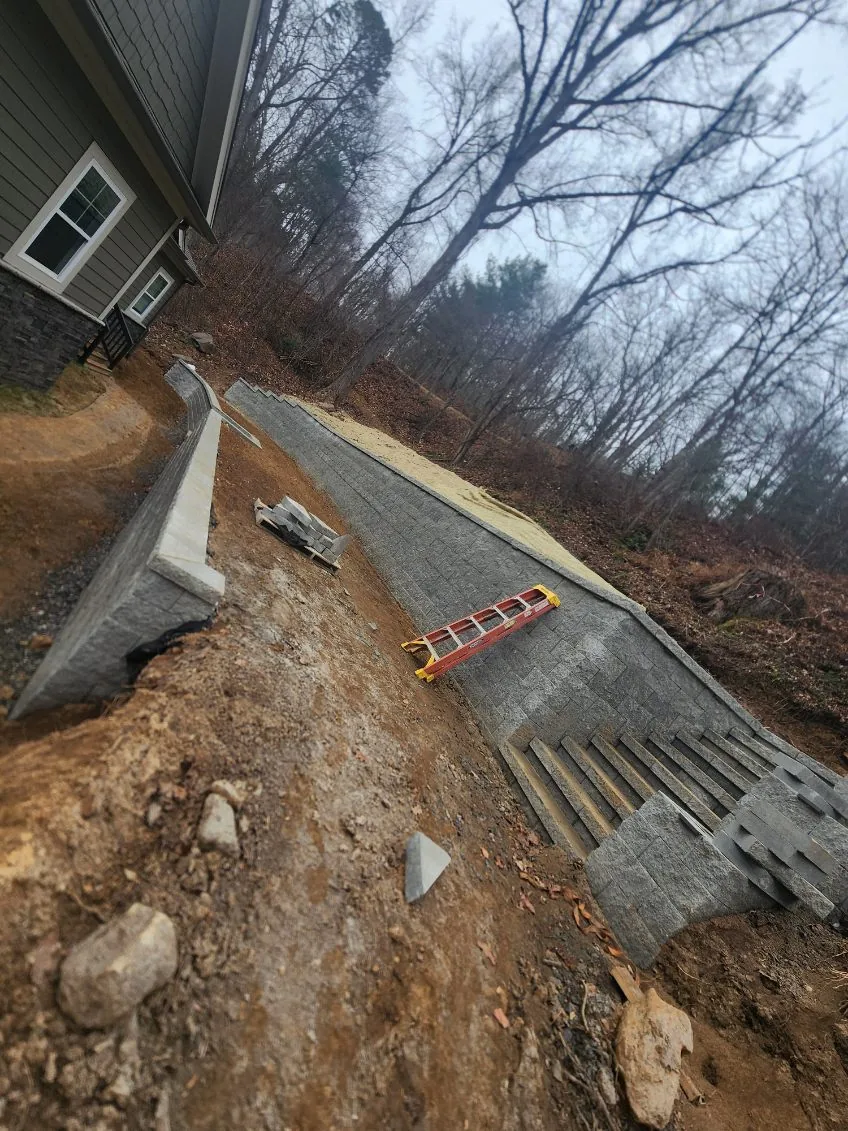
Terrain also decides what kind of hardscape makes sense. Sloped yards off the river corridor usually want terraced retaining walls before they want a patio, which is why the hardscaping overview starts with grade and drainage rather than finishes.
Consider what a contractor is actually bringing up your drive: a mini excavator or skid steer, a plate compactor, pallets of segmental block or flagstone, and tons of compacted gravel base. On a lot off Lover's Leap Road or a steep hollow above the valley, that equipment may have to be smaller, which means more days and more labor. Spoil removal is the other hidden cost. Excavating a patio on a slope generates dirt that has to go somewhere, and if there is no flat spot to spread it, every yard leaves by truck.
What Madison County hardscape work actually costs
Regional pricing for this trade is broad because access, excavation, and drainage swing the number more than the material. The table below shows honest working ranges for typical scope on a Hot Springs lot. Treat the low end as a flat, easily reached yard and the high end as a steep site needing machine work, haul-off, and drainage corrections.
| Scope | Typical range | Price movers here |
|---|---|---|
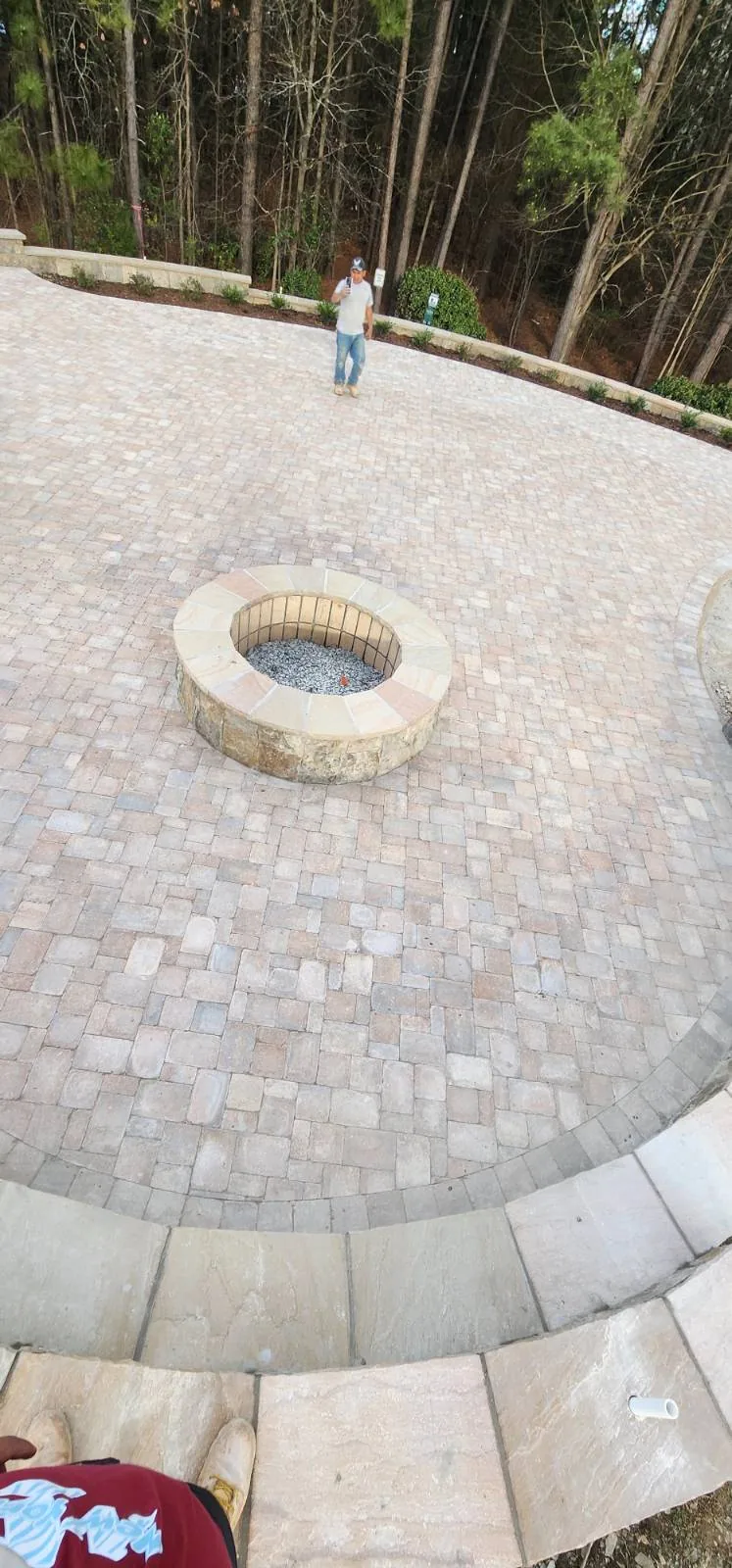
| Patio (400–600 sq ft, pavers or flagstone) | $9,000–$22,000 | Base prep on slope, drainage, haul distance |
| Segmental retaining wall (under 3 ft, per sq ft of face) | $35–$65 | Terracing, footings, machine access |
| Engineered wall (over 4 ft, per sq ft of face) | $55–$95 | Engineering, drainage, permits |
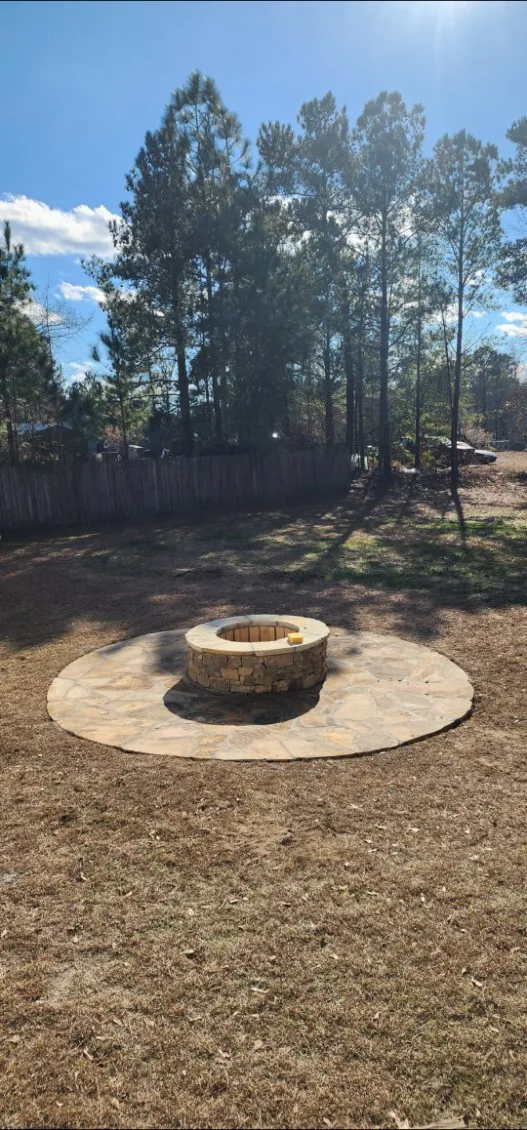
| Fire pit with seat wall | $3,500–$9,000 | Gas vs. wood, stone type, base work |
| Walkway or steps (per linear ft) | $60–$130 | Grade change, cut, retaining edges |
For a fuller wall-specific breakdown by town and wall type, the Madison County retaining wall cost table drills into footings and drainage line items that these ranges only summarize.
The material itself is a smaller share than most homeowners expect. A pallet of segmental block or a load of Tennessee flagstone is a known cost, but the base stone, geogrid on taller walls, filter fabric, drain pipe, and compaction effort add up quickly. On a steep lot, base prep can be more than half the labor. That is why two bids for the same square footage can differ by thousands: one priced the visible surface, the other priced what holds it up.
When water decides the design
This stretch of Madison County has seen 21 federally declared disaster events over 1978-2026, and the pattern is dominated by flooding and severe storms off the Blue Ridge. That history matters for hardscaping because a patio or wall built without a water plan becomes a dam the first time the French Broad backs up or a summer cell dumps two inches in an hour. Slope, soil, and where runoff leaves the property should drive the layout before a single paver is set.
Walls over a certain height and any structure near a floodplain need to respect state and local rules. The NC Licensing Board for General Contractors sets the threshold where a project legally needs a licensed general contractor, and floodplain or streamside work may trigger permitting through NCDEQ. Getting that sorted early is cheaper than rebuilding after a high-water event.
Good drainage detail on these lots usually means a compacted gravel base, a perforated drain pipe behind any retaining wall, and a clear path for surface water to move around the patio instead of through it. On a river-corridor lot, designers sometimes set patios slightly above grade and slope them away from the house so a rising creek has somewhere to go. Walls should be backfilled with clean gravel, never clay spoil, and taller walls need geogrid tied back into the slope. These are not upgrades; they are what keeps a build in place through a wet decade.
Choosing a crew that knows mountain lots
The tell of a good hardscape crew here is not a stone catalog; it is questions about your driveway, your slope, and where the water goes. Ask whether they have built on grades like yours, how they handle machine access and spoil removal, and whether the bid includes drainage and base compaction or just the visible finish. A wall that looks right for one season but lacks proper footing depth and backfill will lean within a few years on these soils.
If you have not picked a builder yet, the Hot Springs retaining wall contractor guide covers what to look for and what a defensible bid should contain.
A defensible bid in this county usually lists excavation, base material, compaction, drainage, and wall or paver quantities separately, so you can see where the money goes. If a quote is one lump sum with no mention of how the site is accessed or where spoil is going, ask. On a steep Hot Springs lot, the answer to those two questions is most of the project. It also helps to walk your property with each bidder and watch whether they notice the same grade break, the same wet corner, and the same narrow spot in the drive that you do.