Read the wall before you rebuild it
Most hardscape money in Mars Hill gets spent twice, because the first wall, patio, or fire pit was built without reading the ground it sat on. Mars Hill sits in Madison County at the base of the Shelton Laurel and Big Bald country, where freeze-thaw cycles run harder than they do twenty minutes down the valley in Marshall, and where a south-facing slope can shed water for weeks after a rain. A wall that was fine in June can be leaning by March — not because the block was wrong, but because the base was set at frost depth for a different climate.
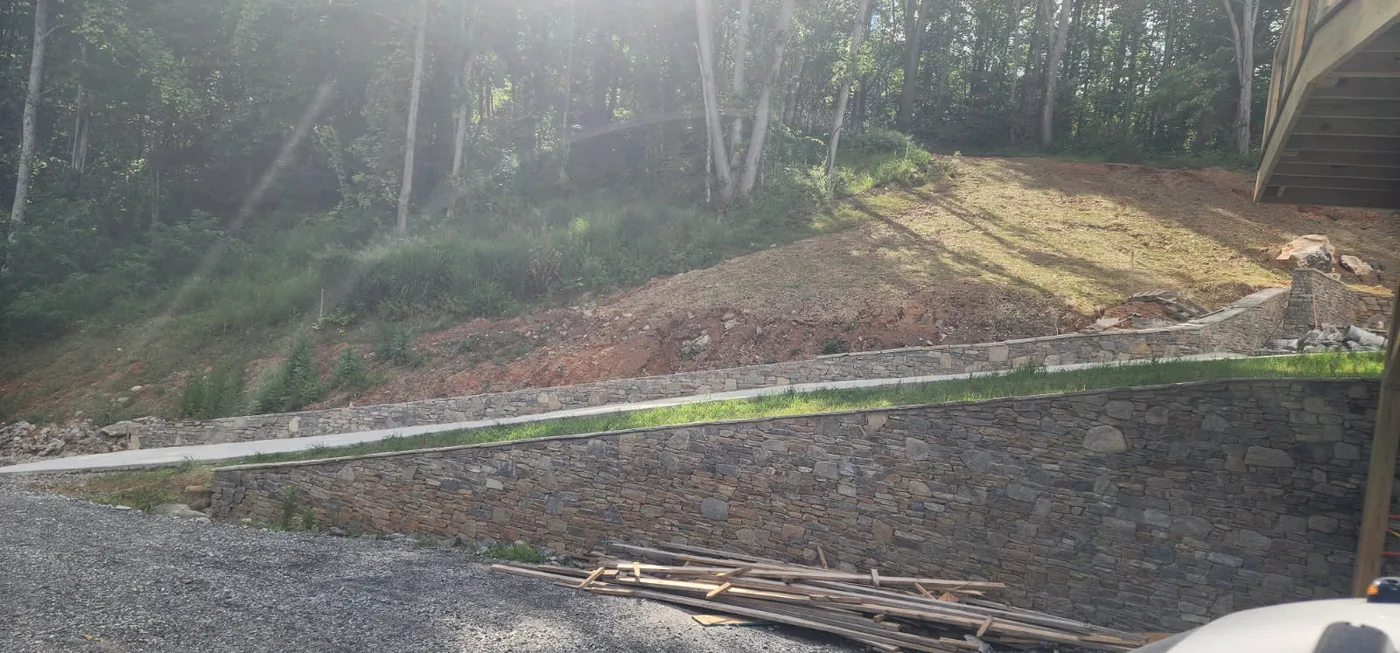
Before any contractor quotes replacement, the useful questions are these: is the wall bulging at the base (footing problem) or tipping at the top (backfill or drainage problem)? Is the patio settling in a corner (poor compaction) or cracking across the middle (a soil issue below)? Is the fire pit smoke-staining one side (draft and placement)? A leaning wall that still holds grade can sometimes be pinned, drained, and rebuilt from the top down for a fraction of full replacement. A wall that has already lost its footing cannot — and knowing which one you have is the difference between a $900 repair and a $15,000 rebuild.
This is the same read-first discipline we apply on every hardscaping project: understand the existing assembly, then decide whether it gets repaired, rebuilt, or replaced.
What Mars Hill stone actually costs
The table below reflects working regional ranges for Madison County. They are ranges, not quotes — a wall on a 20-percent grade above the Shelton Laurel valley prices differently than one on flat ground off NC-213, and nobody can give you a real number without standing on the site.
| Scope | Typical range | What moves the price |
|---|---|---|
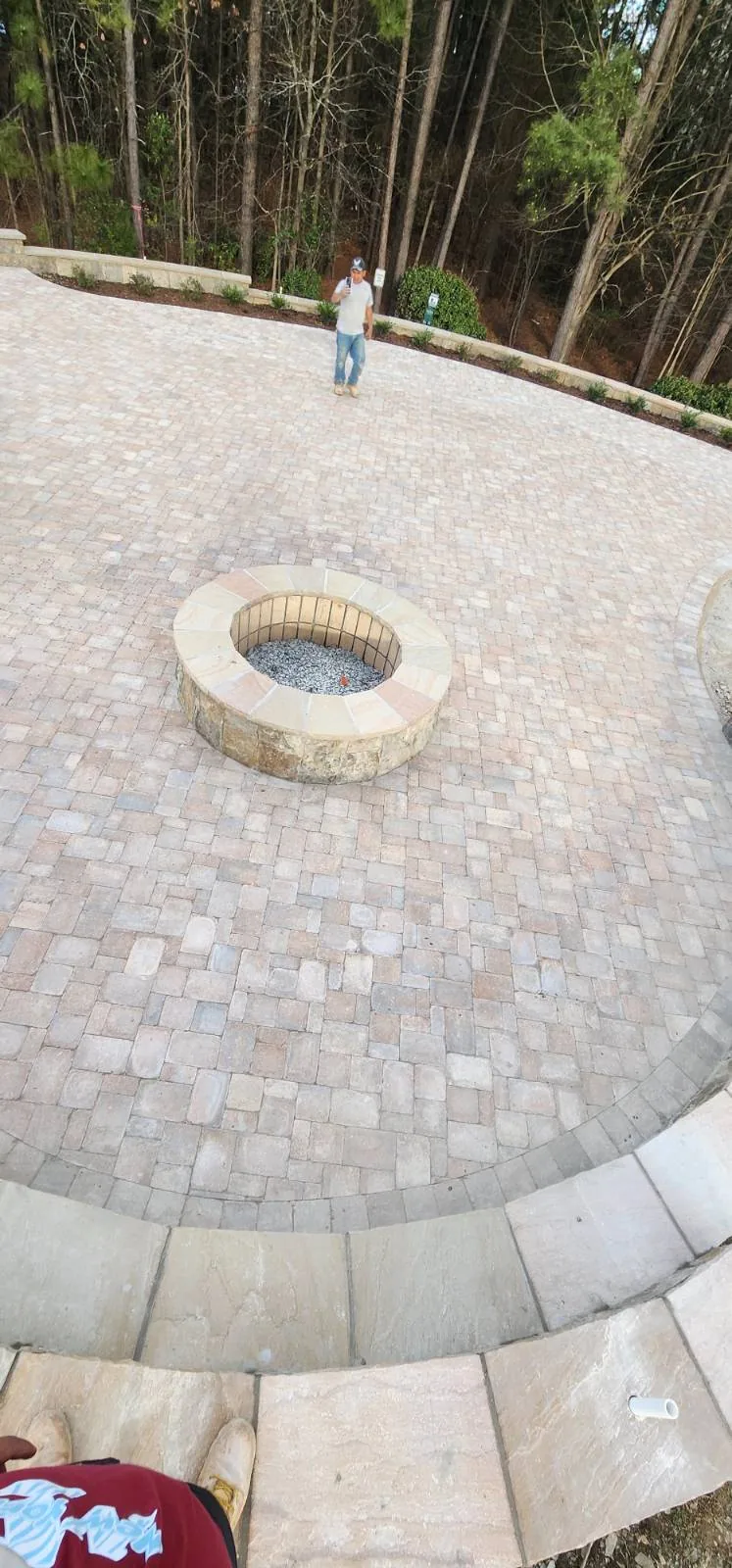
| Paver or flagstone patio, small (up to ~200 sq ft) | $6,000–$12,000 | Base prep, drainage, stone type |
| Paver patio, mid-size (200–500 sq ft) | $12,000–$26,000 | Excavation, slope, edge restraint |
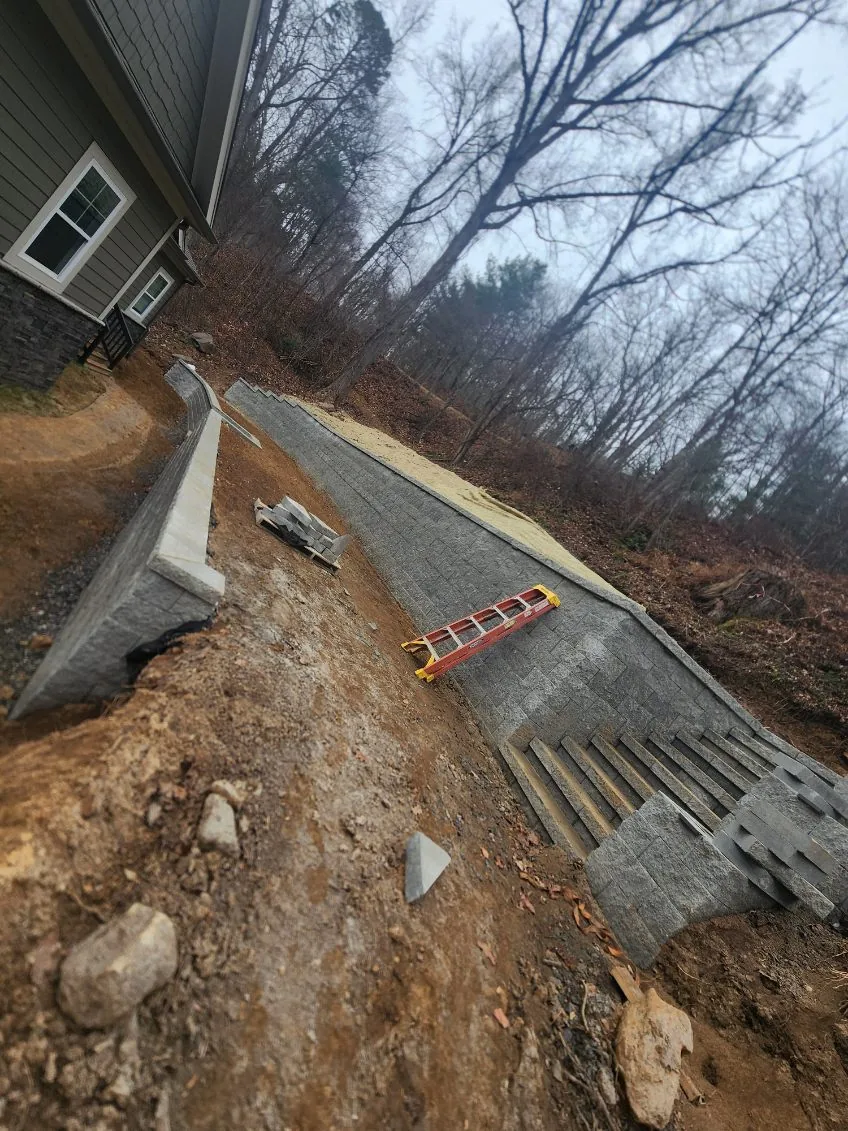
| Segmental block retaining wall, per face foot | $35–$70 | Height, batter, geogrid, drainage |
| Natural stone wall, per face foot | $50–$110 | Stone source, mortar vs dry-stack |
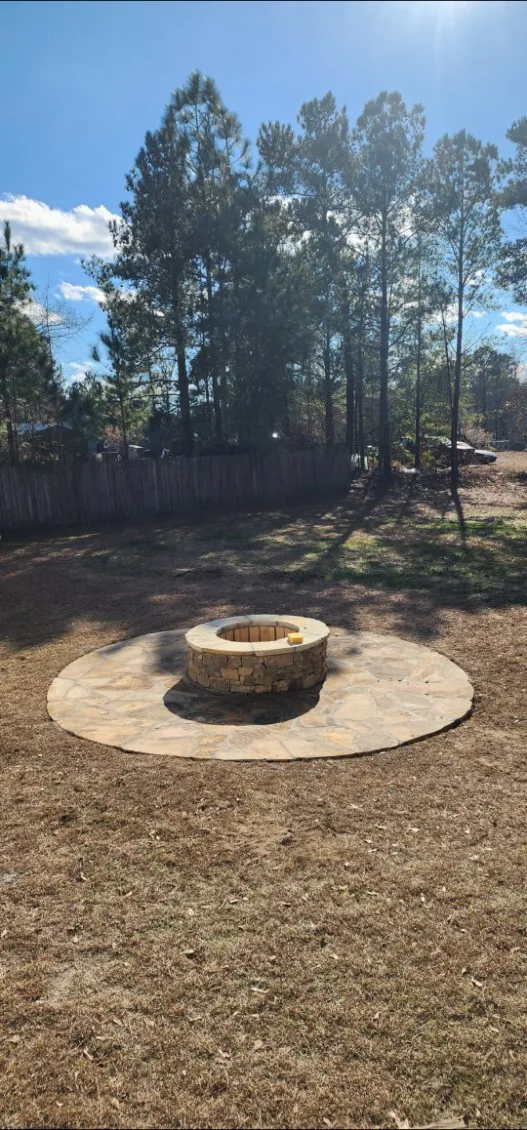
| Fire pit, kit or masonry | $1,800–$6,500 | Gas line, seating wall, veneer |
| Walkway, per linear foot | $28–$65 | Width, stone type, edging |
| Repair — pin, drain, and reset existing wall | $900–$6,000 | Access, how much is reusable |
Walls over four feet of retained height, or any wall carrying a driveway or structure above it, usually cross into engineered-territory — see the full Madison County retaining wall cost breakdown for the working ranges and what triggers an engineer's stamp. Approach stairs, walls near the street, and any work crossing a right-of-way in Mars Hill can also pull in a town permit conversation once the scope is defined.
Slope, water, and frost set the real budget
Madison County's terrain means water management is rarely optional. The federal disaster record is blunt about it: 21 declared events have touched this county since 1978-2026, and the overwhelming majority are storm and flood family. A patio that doesn't drain, or a wall without proper backfill and weep points, is not just a cosmetic problem — it's a future insurance claim and a future rebuild.
Three practical implications for Mars Hill jobs:
Frost depth matters. Footings have to sit below the local frost line or the freeze-thaw cycle will lift them. This is why a wall that looked cheap in an out-of-county quote often fails here within a few seasons. The International Code Council publishes the residential code that governs footing depth and wall construction; local inspectors apply it regionally.
Surface and subsurface water both need a path. Gutters, swales, and French drains route water away; perforated pipe behind the wall and clean gravel backfill handle the rest. Skipping either is the single most common reason a Mars Hill wall leans.
Steep-lot access changes labor. When equipment can't reach the backyard, everything moves by hand or by conveyor, and that cost shows up in labor hours, not in materials.
Licensing, permits, and who should be on the job
In North Carolina, the threshold for needing a licensed general contractor is set by project value and scope — the NC Licensing Board for General Contractors publishes the current dollar thresholds and what counts as a regulated project. Any hardscape job that includes a gas fire pit crosses into plumbing and gas-fitter territory, and those trades are separately licensed through the NC State Board of Examiners of Plumbing, Heating and Fire Sprinkler Contractors. Ask who holds which license before work begins, and make sure the gas connection is done by someone who can legally do it.
For Mars Hill specifically, the town and Madison County each have their own permitting for work that touches stormwater, right-of-way, or grading. A patio or wall that stays in the yard and under the height threshold is usually exempt; anything that changes drainage patterns toward a neighbor, sits in a floodplain, or crosses a setback line usually is not. The cleanest path is to define the scope, then confirm with the local permitting office which parts need a sign-off.
EPA guidance on stormwater and runoff is also worth reading if your project drains toward a creek or the French Broad watershed: https://www.epa.gov. Sediment from a poorly contained job site is a real violation risk in this county.
When to repair, when to rebuild
The repair-or-rebuild decision usually comes down to three things: how much of the existing assembly is sound, whether the failure is water-driven or footing-driven, and what the wall or patio is being asked to do. A fire pit with a cracked firebox and good masonry can be relined. A wall with a bulging face and a failed footing cannot be saved by repointing. The crews worth hiring will tell you which category you're in before quoting, and the good ones will show you the failure point on site rather than on an invoice.
For a second opinion specifically on walls, the Mars Hill retaining wall contractor guide walks through what to look for in a bid and what questions separate a repair-first builder from a replacement-first one.