Why Marshall fire pits start with the slope, not the stone
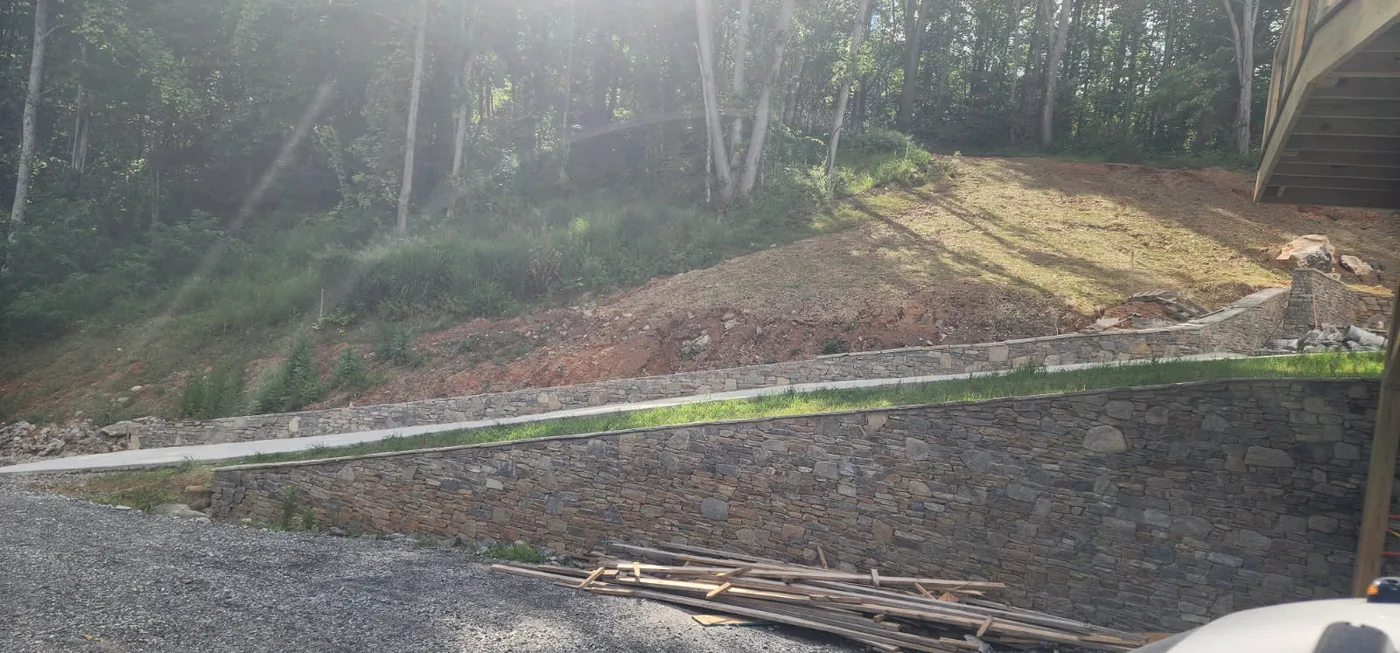
Marshall grew up in the river bottom, and the buildable ground reflects it: narrow lots stepping up from the French Broad, rock shelves just under the sod, and backyards that pitch hard enough that a level patio is a construction project before it is a gathering space. Around town and down into the county, the dirt is often residual clay over bedrock, which drains poorly on its own and shifts when it stays wet. A fire pit dropped onto that grade without a footing plan will tip, crack, or trap water against your house within a season or two. So the first question a real builder asks here is not what stone you like but where the water goes and where the flat spot will be.
That reality shows up in the lot shapes, too. Many properties in Marshall and the surrounding hollows are long and skinny, following the river or a creek, with the house pinned close to the road and the usable yard stacked uphill in terraces. There is rarely a broad, flat lawn waiting for a pit. Instead, you find a bench cut into the slope, a shelf of rock that has to be drilled or pinned, or a bank that sheds water straight toward the foundation. A pit that works here is placed deliberately: off the drainage path, on a base that will not heave, and far enough from the house that embers and smoke are not a nuisance. That is the conversation before any stone is chosen.
You can see how the same terrain drives the rest of the outdoor work in our fire pit and hardscape guide — the pit is usually one piece of a bigger grade-and-drainage conversation.
What Madison County fire pit work actually costs
Regional pricing for a built-in pit, delivered as ranges rather than a flat rate. Steep-lot jobs near Marshall carry grading and retaining line items that flat-lot quotes out toward Asheville never show, and those are the numbers that move the total.
| Scope | Typical range |
|---|---|
| Kit-style block pit, homeowner pours the base | $400–$900 |
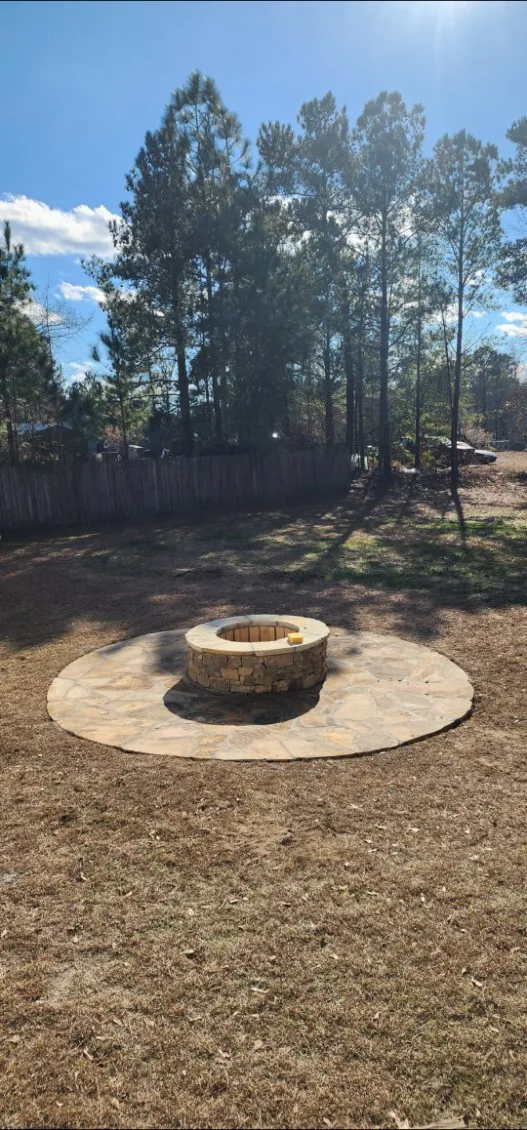
| Dry-stacked local stone pit, wood-burning, level site | $1,800–$3,200 |
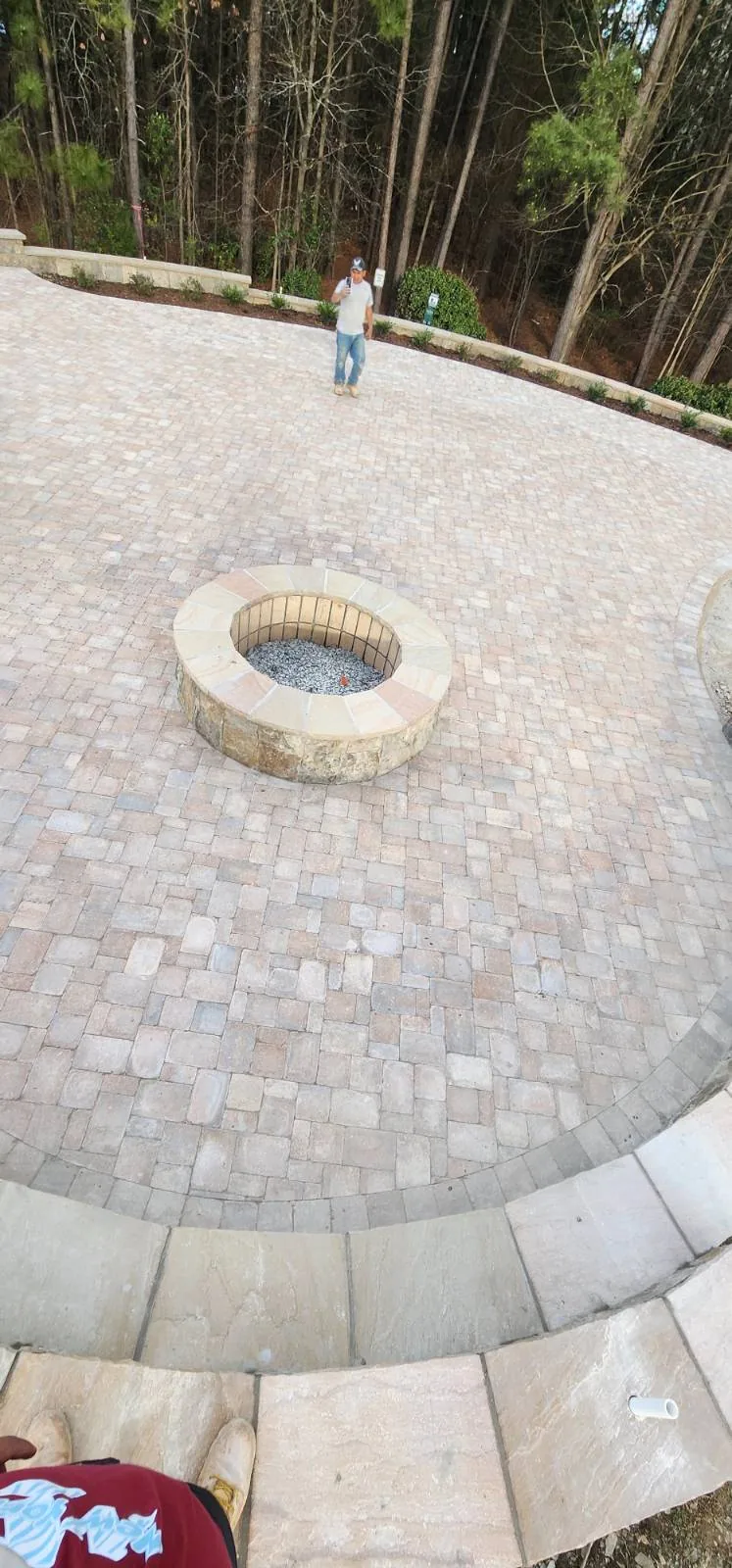
| Mortared stone pit with steel insert and cap | $2,800–$4,800 |
| Gas plumbed pit with burner, key valve, and lava rock | $3,500–$6,500 |
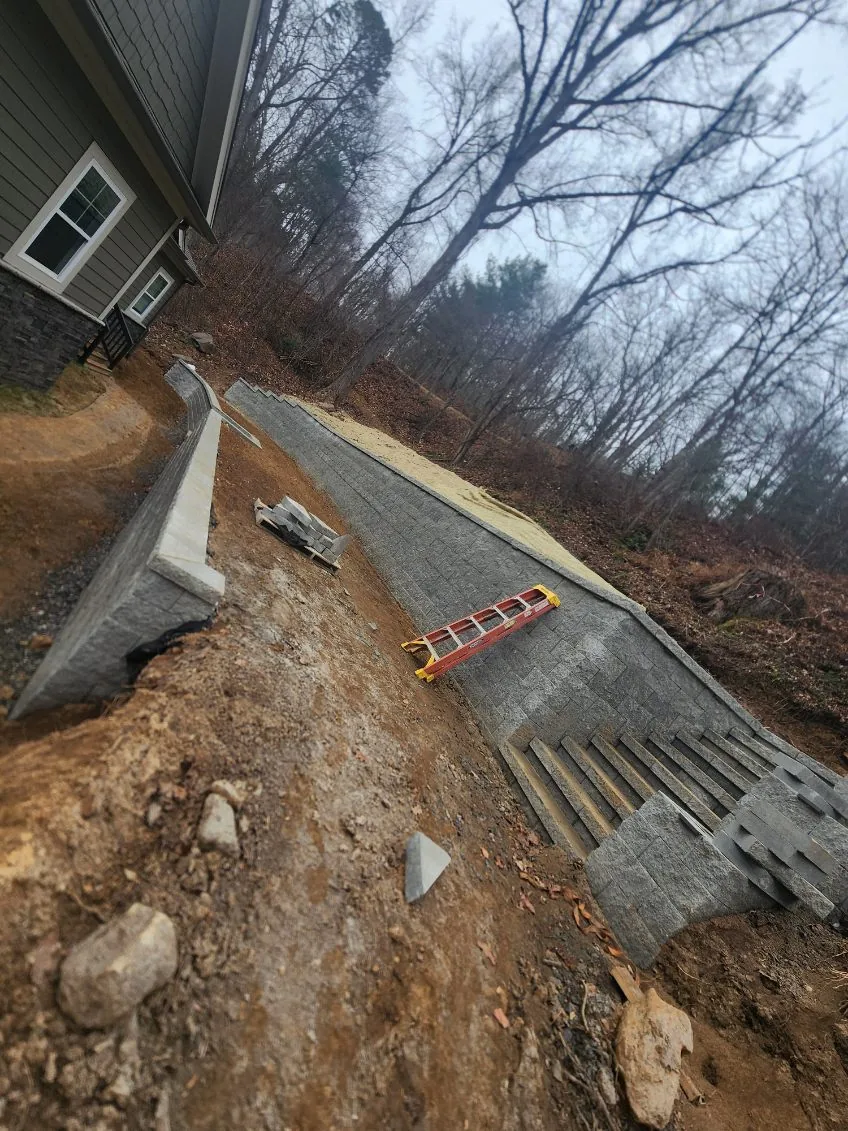
| Grading, stepped base, and small retaining to create the flat spot | $1,500–$5,000+ |
Compare that retaining line to our Madison County retaining wall cost breakdown — on these hillsides the seat wall and the pit are often the same project priced together.
Two other cost drivers are worth naming. First, access: if a truck cannot back to the work zone, stone and spoil move by wheelbarrow or mini-track, and labor climbs. Second, utilities: a gas pit needs a trench from the meter or a tank, and that trench may cross rock or a retaining structure. Neither is unique to Marshall, but the combination of tight access and shallow bedrock makes both more common here than on a flat suburban lot. Get the base scope written out and compare quotes line by line, not just at the bottom.
Stone choice: local vs. brought-in
Madison County sits on some of the best native stone in the region, and using what comes off your own excavation keeps trucking costs down. The trade-off is that local rock is irregular, so a dry-stacked pit built from it reads rugged and takes more labor to fit; a mortared pit with a manufactured steel insert burns cleaner, lasts longer, and looks more uniform. Fire safety matters in both cases: clear combustibles well back from the rim, put the pit on a non-combustible base, and check your burn rules before you build — open burning is regulated in North Carolina, and the NC Department of Environmental Quality is the place to confirm what applies in your area. A gas pit sidesteps burn bans but still needs the same clearances.
Marshall's stone has a look you do not get from a pallet of manufactured block. The native rock tends toward grays, tans, and rust tones, often with a rough face that stacks into a pit with real character. Homeowners who want that character usually accept the trade: a dry-stacked native pit sits a little less perfectly level, sheds mortar-free, and may need occasional re-fitting as frost moves it. A mortared pit with a steel insert trades some of that rustic look for a cleaner rim, easier ash cleanout, and a longer service life. Neither is wrong; they are simply different answers to the same hillside.
Whichever you choose, think about the seat wall at the same time. On a sloped Marshall lot, the wall that creates the flat spot is often the same wall people sit on, so the stone and cap you pick for the pit should carry over to the seating. That consistency is why the fire pit and hardscape guide treats the pit and the surrounding hardscape as one project rather than two.
Hiring on these hillsides
Ask any crew how they handle water before they handle stone. A builder who starts with drainage, footing depth, and slope is a builder who has worked Madison County ground before. For larger projects that combine grading, retaining, and utilities, check whether the job crosses the threshold that requires a licensed general contractor under NC Licensing Board for General Contractors rules. And if you are placing a pit on a steep bank, confirm the setback from any slope or waterway — the county and state have a say in what you can build where. Our Marshall retaining wall contractors page covers the grading side of the same conversation.
Practically, that means a few questions worth asking before you sign anything. How will you handle the water that runs down this slope? What is the footing depth, and what is it sitting on — soil, rock, or fill? If the pit is gas, where does the line run and who inspects it? If the job needs a retaining wall over a certain height, who stamps or approves the design? A crew that answers these plainly is a crew that has built on ground like yours. A crew that only talks about stone color is selling a picture, not a build.
It also helps to know the local approval landscape before you dig. Grading, retaining, and utility connections are the items most likely to trigger review, and the rules can vary with proximity to slopes, streams, or the river corridor. Confirming that early keeps a good project from stalling mid-build.
Storm history shapes the base you build on
Madison County has seen 21 federally declared disaster events over 1978-2026, mostly flood and storm family, and the French Broad corridor through Marshall has taken the worst of it. That record is why a fire pit here needs a base that tolerates saturated ground and a placement that does not sit in a drainage path. Check the National Weather Service outlook before scheduling a pour or a mortar set, and build the base for the wet year, not the dry one.
For a fire pit, that translates into concrete choices. A base that sits below the frost line and on compacted, well-drained material will hold through freeze-thaw cycles that crack shallow pads. A pit placed on a low spot or in the path of a seasonal creek will undermine itself no matter how good the stonework is. And a gas line or electrical run needs to be protected from the same water. None of this is dramatic; it is just the difference between a pit that lasts decades and one that needs rebuilding after a wet spring.
Thinking about the wet year also means thinking about where the fire actually sits relative to the house. On a tight Marshall lot, the safe clearances and the smoke path both matter, and a spot that looks level in July may be a puddle by March. A builder who has worked this county will point that out before you commit.