Where the water comes from, and where it has to go
Montreat sits in a cove where the mountains drain toward the Swannanoa, and almost every lot here tilts. A waterfall built into a 20-degree slope off Kentucky Road is not a decoration — it is a water-management structure that happens to look beautiful. The spring that feeds your feature in April can turn into a torrent in a summer storm, and the overflow has to be sent somewhere deliberate: a French drain daylighting downhill, a dry creek bed, or a reinforced outfall that won't undercut the neighbor's driveway.
The federal record explains the caution: 19 declared events touch Buncombe County (1973-2026), overwhelmingly storm and flood family. Every one of those events pushed water at features that were sized for a gentler assumption. Before anyone quotes you a pond, they should walk the uphill side of the lot and answer where the storm flow goes. The National Weather Service maintains the local precipitation data that sane sizing is based on.
In practice, that walk turns up the same patterns over and over. On the shady north-facing lots tucked behind the assembly grounds, groundwater seeps out mid-slope all winter and the soil never fully dries, so a liner laid on native clay without a drainage blanket will float or wrinkle. On the sunnier lots up toward Greybeard, the issue flips: fast sheet flow off the road cut above the house dumps into the backyard in minutes during a cell, and the feature becomes the first thing that flow hits. The design answer is different in each case. One lot wants a toe drain and a cleanout; the other wants a swale and a hardened spillway before the water ever reaches the stone.
That is also why a Montreat pond rarely ends at the pond. The liner, the pump, the stone stack, and the outfall are one system, and the cheapest bid is almost always the one that stopped pricing at the stone.
What a Montreat build actually includes
A real scope here has four layers, and cheap bids usually skip two of them. Excavation and base: benching the slope so the feature has something to sit on that won't creep downhill after a wet winter. Liner and plumbing: EPDM or reinforced liner sized to the feature, with a pump and skimmer rated for the vertical lift your slope demands — lift is what kills undersized pumps. Stone work: local granite, fieldstone, or quarried Tennessee boulder set so the waterfall reads naturally rather than stacked. Water management: the overflow, the drain, and the grading that keeps the feature from turning your foundation into a storm drain.
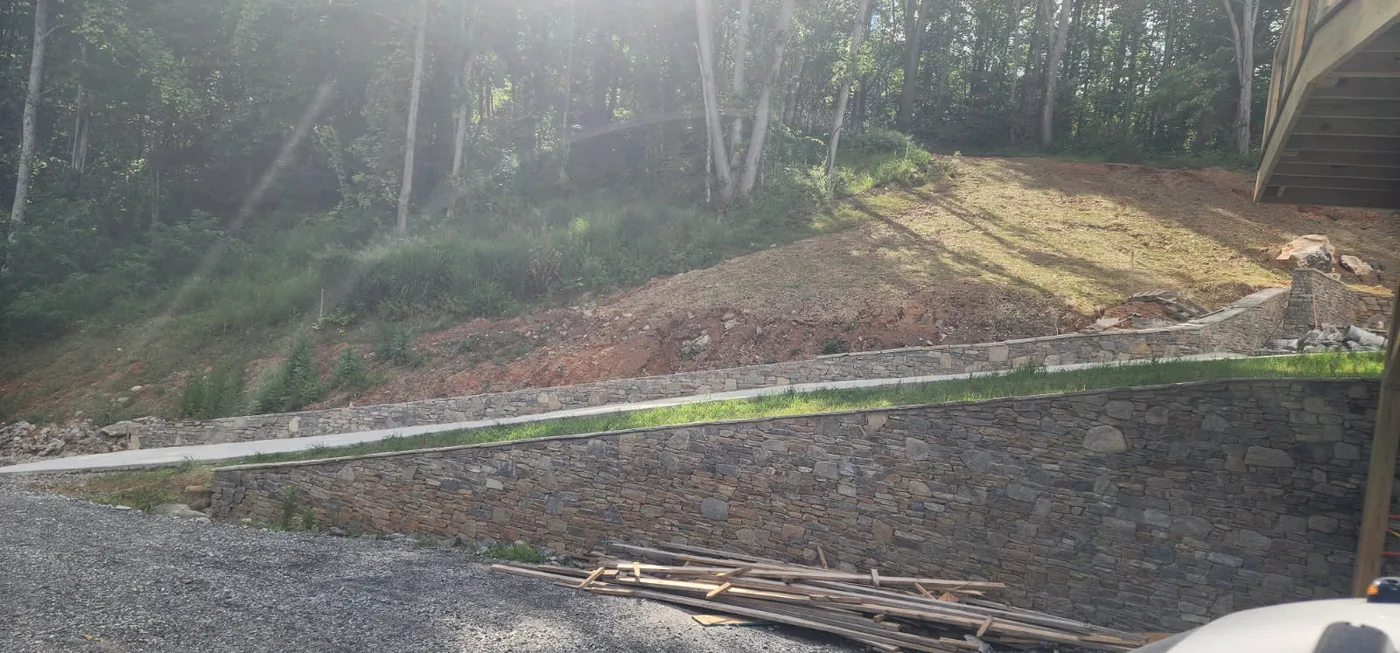
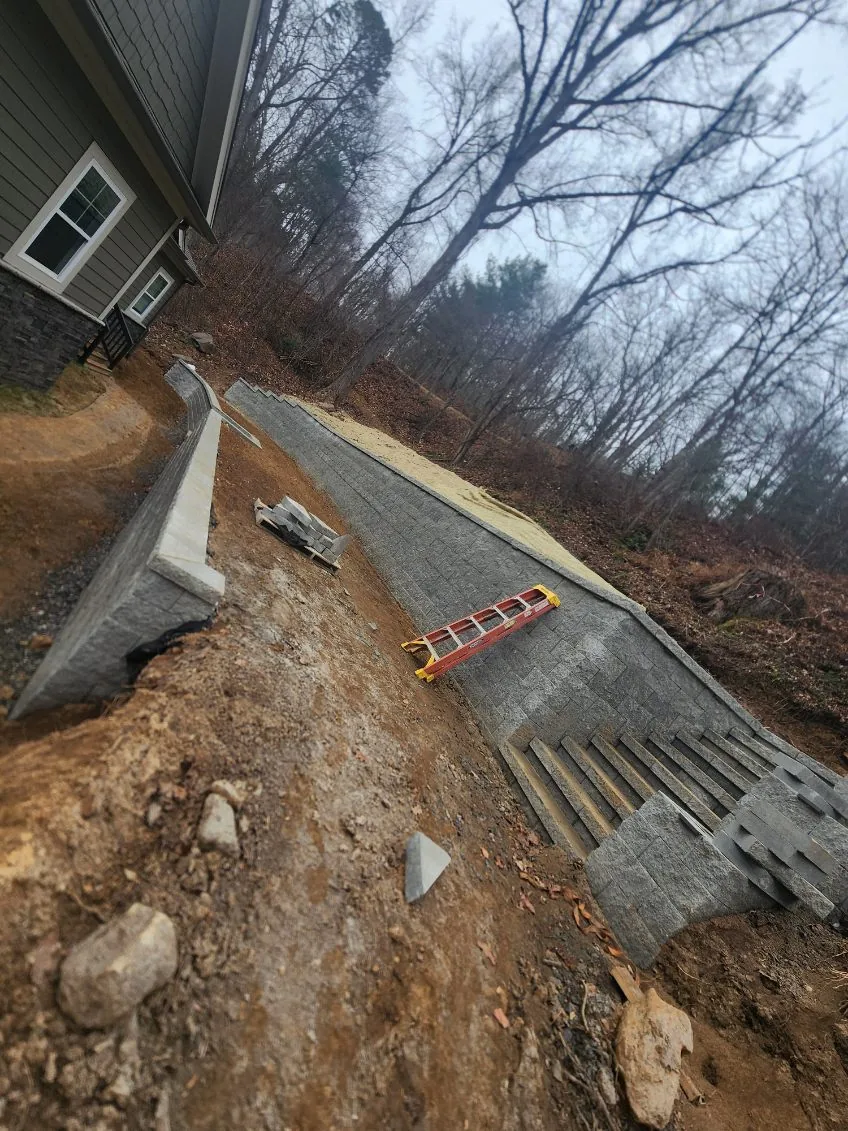
That last layer is where the Buncombe County retaining wall cost breakdown becomes relevant — most waterfall builds on these slopes need at least one small retaining element, and pretending otherwise is how ponds slide.
Stone sourcing matters more here than in flatland work. Fieldstone pulled from the lot itself is the cheapest and most natural-looking option when the homeowner wants it, but it has to be sorted and cleaned, and not every lot has enough usable rock. Quarried Tennessee boulder runs a longer haul up the mountain and shows up in the access and delivery line of a bid. Local granite is the middle path. A builder should be able to tell you which of the three they are pricing and why, because the choice affects both the look and the labor.
The plumbing side deserves the same honesty. Pump sizing is a lift calculation, not a guess: total vertical rise from the water surface to the top of the waterfall, plus friction loss through the hose run, plus the flow rate the stone wants. On a Montreat slope the hose run is often longer than the drop is tall, and that is exactly the detail an undersized pump hides until the waterfall dribbles instead of crashes. Skimmers matter too. The leaf load under these hardwoods is heavy, and a pond without a skimmer and a fall leaf plan silts in fast.
Scope versus price range
Bands below reflect typical Montreat-area work with local stone and mountain-grade drainage. Steep access, long hose runs from the road, and hand-carry only lots push toward the top of each range.
| Scope | Typical range |
|---|---|
| Small bubbling rock or single-drop feature, liner + pump, 3-5 ft | $3,500-$6,500 |
| Pondless waterfall, 6-10 ft drop, boulder set, drainage outfall | $7,000-$14,000 |
| Pond with waterfall, liner, pump vault, skimmer, 100-300 sq ft surface | $12,000-$22,000 |
| Large multi-drop waterfall with integrated retaining and full site drainage | $20,000-$28,000+ |
| Pond maintenance, liner repair, pump replacement | $300-$2,500 |
Access is the wild card. A lot reachable only by a narrow drive off Assembly Drive can add meaningful labor, and any bid that ignores it is guessing.
Two more variables decide where a project lands inside its band. First, how much of the drainage is new versus existing. If the lot already has a working swale and a daylighted outfall, the water-management layer is lighter. If the feature has to solve a problem the lot never solved, the scope grows, and that growth is legitimate rather than padding. Second, how much stone has to come from off-site. A homeowner with a usable rock pile and a willingness to let it be sorted can sometimes shave the stone line noticeably. Neither of those is a discount gimmick; both change real labor and haul hours.
Codes, licensing, and what to ask before you sign
Water features themselves sit lightly in the code, but the earthwork around them does not. Retaining structures over a certain height, grading that changes drainage patterns, and any work touching a stream or wetland can pull in permits. The NC Licensing Board for General Contractors sets the dollar threshold above which a project needs a licensed GC — waterfall builds with structural retaining frequently cross it, and a handshake crew that can't pull the permit is a liability waiting to happen. If your lot touches a creek or the feature discharges toward one, the NC Department of Environmental Quality governs what you can move and where it can go.
Three questions for any builder: How do you size the pump for my lift? Where does the overflow discharge in a 100-year storm? Who handles the retaining permit if we need one? The crews that answer all three without flinching are the ones whose ponds still hold water in year five. Our stone waterfalls and ponds overview walks through what a proper first visit covers.
It also helps to ask for the scope in writing, layer by layer, so you can see which of the four layers a bid actually includes. A quote that lists stone and liner but never mentions an outfall is telling you something. So is one that prices a pump without a lift number behind it. Good local builders will put the water-management line in the proposal, even when it is the least glamorous part of the job.
Montreat-specific reality check
This is a small town inside a cove, and it has its own patterns. Lots near the assembly grounds tend to be tighter and shaded, which affects algae and pump sizing. Higher lots off Greybeard Road see heavier leaf load and faster spring runoff. Both facts change the design. A pond that works in a flat Weaverville yard will silt in two seasons up here without a properly sized skimmer and a fall leaf plan. If you want a second opinion on the retaining side, the Montreat retaining wall contractors guide covers how slope work and water features intersect on these lots.
Season timing is its own local quirk. Late fall is leaf season, and a feature built before the leaves drop needs a plan for that first autumn rather than a surprise. Spring is runoff season, and a feature built in a dry August has not yet seen what the cove can send downhill in April. Neither is a reason to wait; both are reasons to build the drainage a little heavier than the driest week of the year would suggest.
And the honest bottom line for this town: the prettiest waterfall on the ridge is still a drainage structure. Build it like one, and it looks good for years. Skip that part, and it becomes a repair project.