Access is the first number, not the last
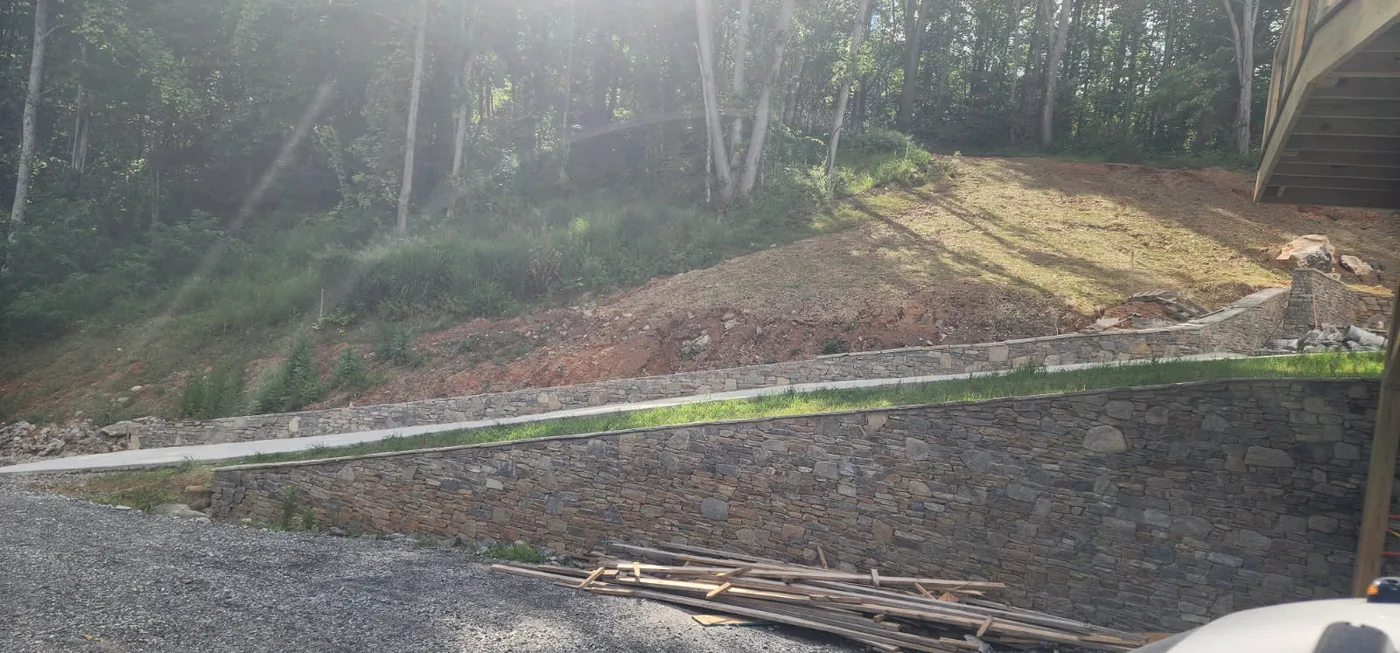
Anyone who has driven Soco Road on a summer afternoon knows the terrain that made Maggie Valley what it is: steep side slopes, tight lots, long gravel spurs up to the house. That terrain is also the reason two walls of the same length here can differ by thousands of dollars. A retaining wall is only as cheap as the path your excavator, your tamp, and your block truck can take to reach it.
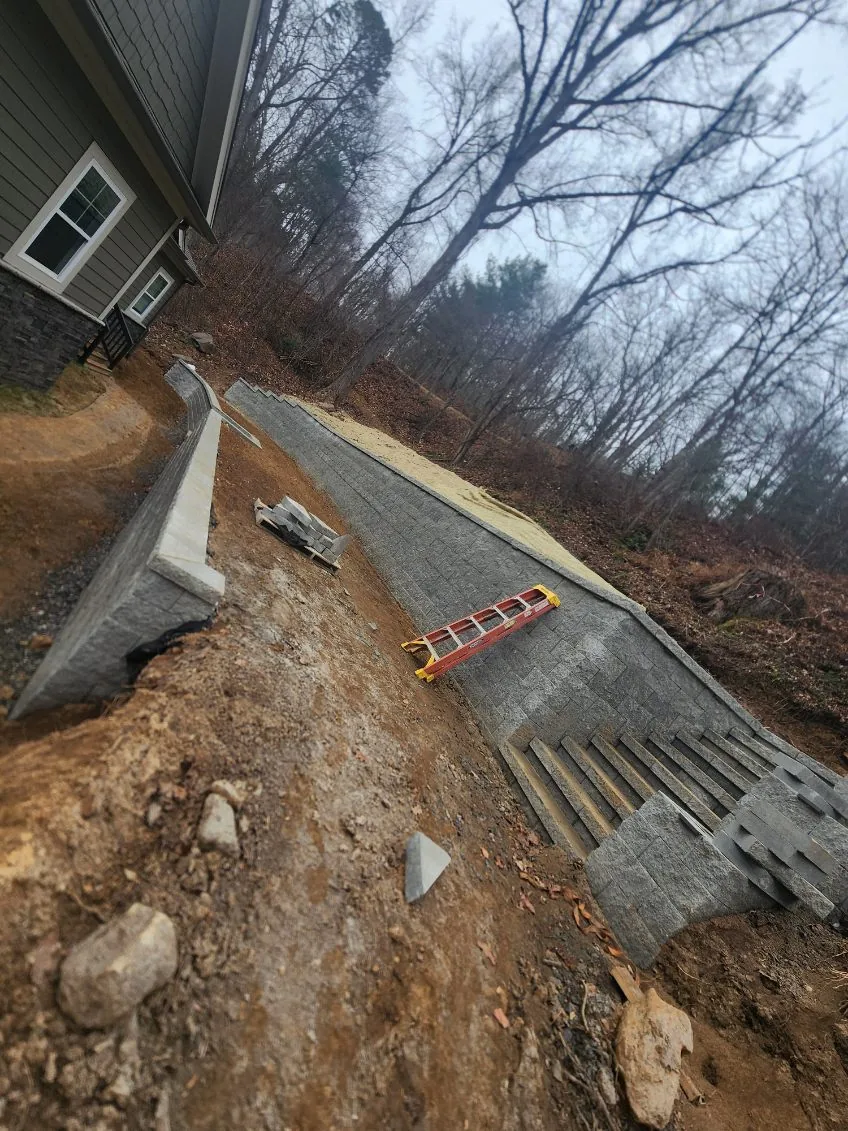
On a flat-sited Waynesville lot, a wall crew rolls a compact track loader from the trailer to the cut and starts work. Up here, the same job may mean a narrow switchback a dump truck cannot climb, a driveway that holds one vehicle at a time, and a spoils pile that has to be carried down as fast as it is dug. On short runs, hand-carried base and hand-placed block are still normal, and they show up in the labor line, not as a surprise. Before you compare bids, look at the bids' access assumptions. A bid built on a wide-open lot is going to grow the day the contractor sees your driveway. The retaining wall services overview walks through how the crew plans access and staging before the first shovel.
How grade, soil, and water change the scope
Haywood County has two broad dirt histories. Valley-floor soils around the town of Waynesville and the lower county tend deeper and more forgiving. Hillside ground, which is most of what Maggie Valley sits on, tends shallower to rock, and rock changes the answer quickly: you either excavate it at real cost or you pin your wall into it and design for that.
Drainage is the other variable. Every retaining wall that fails does so because water reached the backfill first. On a steep side slope, water is arriving from above, not just trickling down your foundation. If a wall is meant to hold ground, it should also be planned to release water, and the code thinking behind that lives in the residential code the state adopts, tracked through the NC Department of Insurance codes office. If your existing wall is bulging or shifting, the honest first move is usually repair, not replacement. The problem is generally water pressure in the backfill, and retaining wall repair addresses that before the wall comes down.
Where the material comes from, and why that matters here
Most modern retaining walls in this area are segmental block on compacted base, but natural stone and timber still show up on mountain lots. Either way, block and stone are heavy, and hauling them is part of the price. A block plant or stone yard within reasonable distance of Haywood County makes small and mid-size jobs feel normal. A loadout that has to thread a narrow access road, or a lot where the only place for material is at the bottom of the driveway, adds handling time that no catalog price reflects.
That is why the market here prices by project and not by the pallet. Concrete and block haul, spoils haul-off, and any tree or fence that must come out before work starts all sit in the same cost column. Review retaining wall cost in Haywood County when you want the county-level table and the line items that move it, then use this page for the Maggie Valley side of the equation.
What a real scope looks like versus a cheap one
A bid that lists only the wall face is a bid that leaves the expensive parts unnamed. A complete scope includes excavation and haul-off, a compacted base, drainage behind the wall, geogrid or other reinforcement as the height requires, block haul and placement, and a cap. It also states who handles the uphill grade, the downslope, and any restoration of the ground torn up by equipment.
Engineered walls, the ones over about four feet or where a slope pushes against the wall, should come with design detail. Most wall work around here is residential and does not require a state general-contractor license on its own, but the license threshold matters once the job expands into grading and structures, and the rule set is public at the North Carolina Licensing Board for General Contractors. If a contractor quotes a tall wall with no reference to reinforcement, drainage, or an engineered design, that is the signal to slow down.
What a wall costs here, in ranges you can use
These are honest regional bands rather than quotes. The variable that moves a Maggie Valley wall the most is access. A short wall below a lawn, reachable by a small machine, prices near the low end. A tall wall pinned into a steep lot with a tight driveway and hand-carried material prices near the top.
| Scope | Typical range | What moves it |
|---|---|---|
| Decorative border wall, under 2 ft, easy access | $1,800-$5,500 | Length, block choice, whether machine can reach it |
| Low retaining wall, 2-3 ft, residential | $5,000-$14,000 | Base depth, spoils haul, drainage behind wall |
| Mid-height wall, 3-4 ft, occasional geogrid | $12,000-$26,000 | Height and reinforcement, hillside excavation |
| Engineered wall, over 4 ft or against a slope | $22,000-$45,000+ | Design, rock excavation, access, haul distance |
| Repair of a shifting or bulging wall | $1,200-$9,000 | Cause, wall length, whether rebuild is required |
Get two or three bids on the same scope. Compare access assumptions and the drainage line, not just the headline price.
Water has rewritten the rules on mountain lots
Haywood County has seen 19 federal disaster declarations across 1973-2026, and the events that bring water to these slopes are not rare. A retaining wall is often the first structure a storm challenges on a hillside lot, and when the drainage is right, it holds. When the drainage is wrong, it slides and takes the grade with it. If a slope is moving after heavy rain, treat it as a drainage and soils question first. The repair section has guidance on stabilizing a failing wall, and any restoration work tied to a declared event should be checked against FEMA guidance before you assume insurance or assistance applies.